 ProMapRanker
Best RingCentral Alternatives in 2026


All-round small business switch · Pricing starts at: $15 per user per month
Key takeaways
- Nextiva and Zoom Phone are the most direct all-round replacements for a standard RingCentral setup, with clear per-user pricing.
- Dialpad suits teams that want AI transcription and summaries on every call without buying a separate add-on.
- Grasshopper and Google Voice fit solo operators and tiny teams that need a professional number, not a full contact center.
- Vonage suits teams that may later build on voice and messaging APIs, though some standard features cost extra.
- Always add taxes, regulatory fees and texting limits to the headline price, since those items change the monthly bill more than the plan name suggests.
Quick comparison
| Pick | Great for | Pricing starts at | Free tier | |
|---|---|---|---|---|
| Nextiva | All-round small business switch | $15 per user per month | No | Visit |
 Zoom Phone | Teams already using Zoom | $10 per user per month | No | Visit |
 Dialpad | AI transcription and coaching | $15 per user per month | Free trial | Visit |
 Vonage | API-ready phone teams | $13.99 per user per month | Free trial | Visit |
 Ooma Office | Simple setup for small offices | $19.95 per user per month | Free trial | Visit |
 Grasshopper | Solo operators | $14 per month | Free trial | Visit |
 Google Voice | Google Workspace teams | $10 per user per month | No | Visit |
 Quo | Text-heavy small teams | $15 per user per month | Free trial | Visit |
 8x8 | International calling | See website | Free trial | Visit |
The best RingCentral alternatives
RingCentral is a full unified communications platform, so the best replacement depends on whether you need that full platform or just reliable calling and texting. These nine services cover both ends, plus solo and global options. We compared calling features, texting, pricing and integrations.
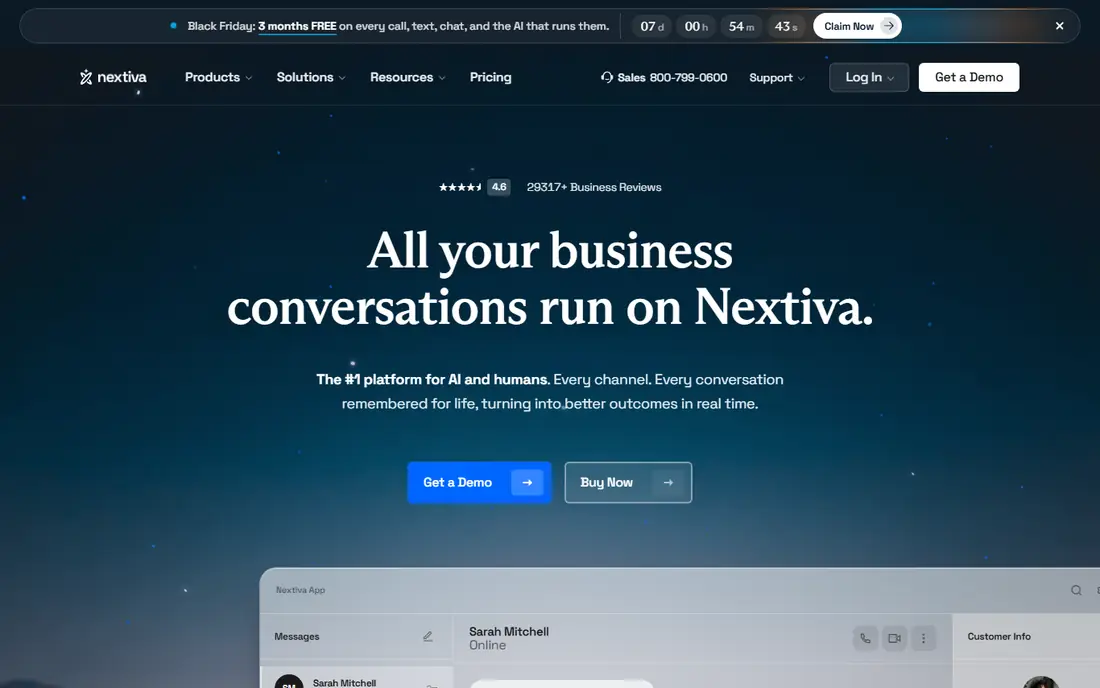
Nextiva is the safest all-round switch for a small business that wants phone, messaging and video without a complex setup. The entry plan covers the core calling features most teams use daily, and the interface is straightforward for staff who are not phone-system experts. Support is a frequent reason teams cite for choosing Nextiva.
The entry plan does not include everything. Call recording and some advanced features sit on higher plans or add-ons, so check the plan details against your must-have list. For a standard office or remote team, Nextiva covers the job with little fuss.
- Reliable calling and team messaging
- Good support reputation
- Clear small-business plans
- No free trial on some plans
- Call recording is an add-on on the entry plan
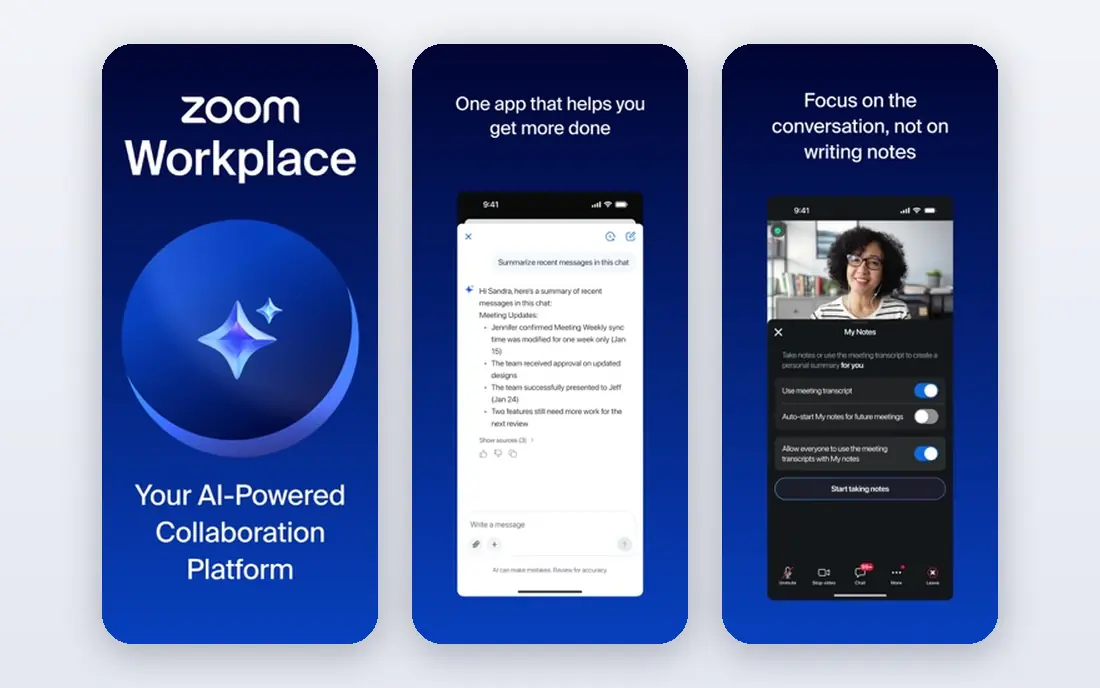
Zoom Phone makes sense when your team already meets on Zoom every day. Adding calling to the same app removes a second login and a second vendor, and the entry price is among the lowest on this list. For a team that mainly needs reliable calling plus video, that simplicity is valuable.
Dedicated phone platforms offer deeper call queues, routing and supervisor tools, so larger support or sales teams may find Zoom Phone thin. Check the bundle carefully too, since metered and unlimited calling options change the total. For most small Zoom-based teams, it is a strong, low-cost switch.
- Low entry price
- One app for video and calling
- Simple setup for Zoom teams
- Call routing depth is thinner than dedicated platforms
- Bundles can confuse pricing
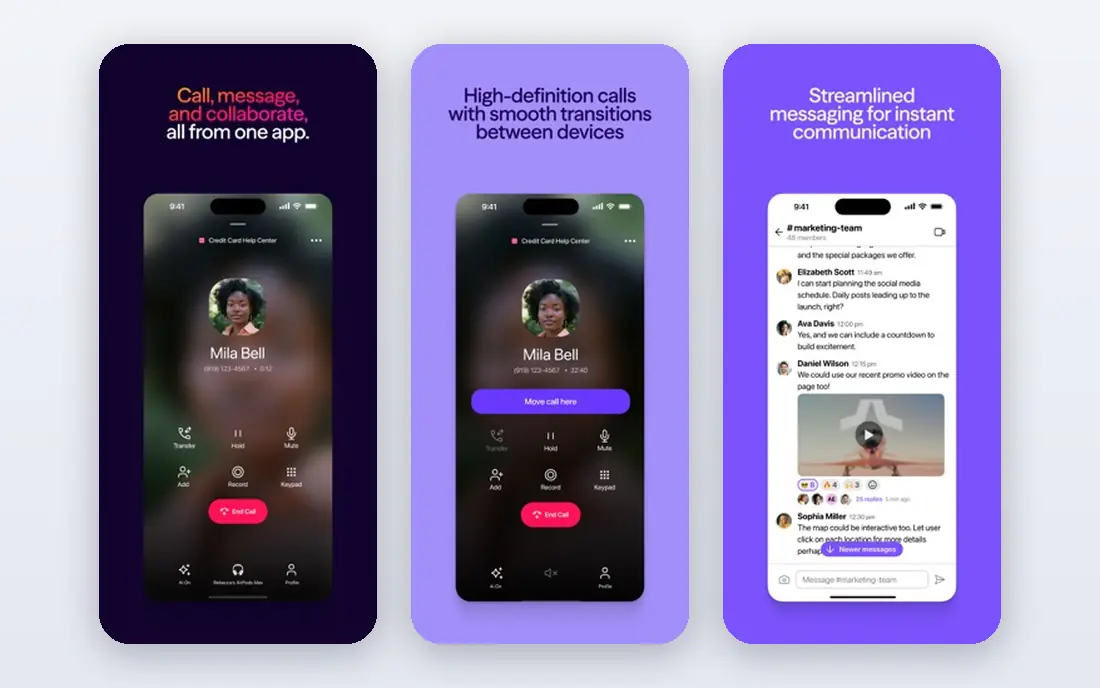
Dialpad stands out because AI features are not reserved for the top plan. Calls are transcribed and summarized, which helps sales and support teams follow up without taking detailed notes during every call. Coaching tools add value for managers who review calls with staff.
CRM integrations and some advanced features need higher tiers, so sales teams should check the plan they actually need. Monthly billing also costs far more than annual billing, so the annual price is the fair comparison. For AI-first calling, Dialpad is a clear leader here.
- AI transcription and summaries on every plan
- Good mobile and desktop apps
- Coaching tools
- Some CRM integrations need higher plans
- Monthly billing is much higher than annual
Vonage suits a team that wants a business phone system today and the option to build custom voice or messaging features later. The business phone plans cover calling, messaging and video, while the wider Vonage platform offers APIs for developers. That path is useful for companies that expect to add custom workflows.
The catch is add-on pricing. Features that other platforms include on the entry plan may cost extra here, so the headline price is not the whole bill. Model the plan with the features you need, and Vonage can still offer good value.
- Business phone plus voice and messaging APIs
- Good for teams that may build later
- Flexible plans
- Some standard features cost extra
- Total cost can rise with add-ons
Ooma Office is a good choice for a small office moving off landlines. Pricing is flat and simple, there is no annual contract requirement on the entry plan, and desk phones work well for staff who sit at a desk. Setup is less involved than a full enterprise platform.
The integration catalog is smaller than RingCentral or Nextiva, and call recording and CRM features need higher plans. For a small team that wants reliable phones without complexity, Ooma Office covers the essentials cleanly.
- Simple flat pricing
- No annual contract required
- Good for desk phones and small offices
- Fewer integrations than larger platforms
- Advanced features need higher plans
Grasshopper is built for one person or a very small team that needs to sound professional. A business number, extensions and voicemail forwarding give a solo operator a polished front without buying a full phone system. The flat solo price is easy to budget.
It is not a replacement for a team phone platform. Call queues, team messaging and contact-center features are limited, and growing teams will outgrow it. For a freelancer, consultant or tiny business, Grasshopper is a practical and low-cost option.
- Flat monthly price for a solo plan
- Professional number and extensions
- Easy setup
- Not a full unified communications platform
- Limited team features
Google Voice is the simplest business phone option for a team already on Google Workspace. The entry plan adds a business number, call forwarding and basic management to the Google tools the team already uses. For a micro-team, that low friction matters more than advanced phone features.
Higher plans are needed for multi-level auto attendants, advanced reporting and other team features, so the entry price is not the full story for larger teams. Google Voice also requires a Workspace subscription in addition to the Voice price. For a small Workspace team, it remains a strong low-cost pick.
- Low entry price
- Simple setup inside Google Workspace
- Good for small teams
- Needs a Google Workspace account
- Meaningful features need higher plans
Quo, formerly known as OpenPhone, is a modern business phone app for teams that text as much as they call. Shared numbers, shared inboxes and a clean mobile app help small teams handle calls and messages together, without a heavy phone-system setup. That focus suits startups, agencies and service businesses.
Enterprise features such as deep contact-center tools are thinner here than on RingCentral or 8x8. If your team is small and text-heavy, Quo is a fresh and practical choice. If you need a large contact center, look at Nextiva, Dialpad or 8x8 instead.
- Modern app for calls and texts
- Shared numbers and inboxes
- Good for small teams
- Formerly OpenPhone, so older guides use the old name
- Fewer enterprise features
8x8 suits teams with international customers or staff. Mid-tier plans include unlimited calling to a large set of countries, and global numbers help a business present a local presence in several markets. Contact-center options extend it for support teams.
Pricing is not as transparent as the smaller tools here, so expect a sales conversation for a firm quote. Tiny teams that only call within one country will get better value elsewhere. For global calling, 8x8 is one of the strongest options on this list.
- Unlimited calling to many countries on mid plans
- Global numbers
- Contact-center options
- No simple public entry price
- More system than a tiny team needs
How we picked these
We compared official pricing pages, feature pages and documentation for each service, and we left RingCentral itself out of the list because this article covers alternatives to it. We favored services that are live in the United States in October 2026, that cover small-team, solo and global needs, and that offer a clear difference in price, AI features or calling coverage. Where a vendor did not publish a simple self-serve price, we wrote See website.
What to check before you switch
Start with number porting. Confirm that your current business numbers can move, how long the port takes, and what happens to calls during the move. Losing a published number is far worse than a small feature gap, so settle porting before you sign.
Next, test call quality and texting on your real network and devices. Check voicemail, call forwarding, auto attendant and texting limits, and confirm whether texting is included or capped on your plan. Finally, add taxes and regulatory fees to the quote, and confirm the cost of any add-ons you need, such as recording or CRM integration.
Count texts and minutes, not just seats
A per-user price can hide texting limits, metered minutes and international rates. Estimate your monthly calls, texts and international minutes, and ask each vendor for a total at that volume. That total, not the headline seat price, is the fair comparison.
Frequently asked questions
What is the best RingCentral alternative for small businesses?
Nextiva is a strong all-round pick for small businesses, while Zoom Phone is cheaper for teams already using Zoom. Dialpad suits teams that want AI transcription on every call. Compare recording, texting and CRM needs before you choose.
Is there a free RingCentral alternative?
No full business phone platform on this list is free, though several offer free trials. Grasshopper and Google Voice offer low-cost entry points for solo operators and tiny teams, and Zoom Phone offers a low entry price for Zoom users.
Which alternative is best for international calling?
8x8 is the strongest choice for international calling, with unlimited calling to many countries on mid-tier plans. Vonage and Nextiva also support international calling, but rates and included countries vary, so check your specific destinations.
Can I keep my business phone number when I switch?
In most cases yes, through number porting, but the process and timing vary by provider and number type. Confirm porting eligibility and timing with the new provider before you cancel your current service.
What is the cheapest RingCentral alternative?
Zoom Phone and Google Voice both start at $10 per user per month, while Grasshopper starts at $14 per month for a solo plan. The cheapest option still depends on taxes, fees, texting limits and whether you need a Workspace or Zoom subscription as well.
Sources
See where you really rank - block by block
ProMapRanker scans Google Maps across a grid of your service area. Simple monthly plans from $19, white-label on every plan.
Start freeKeep reading
 who has best internet service
Who Has the Best Internet Service in 2026
Who has best internet service for US homes? We compare fiber, cable, fixed wireless and satellite providers on speed, price, availability and terms today.
Read → which survey tool has the best analytics
Which Survey Tool Has the Best Analytics in 2026
Find which survey tool has the best analytics in 2026, comparing Qualtrics, SurveyMonkey, Typeform, Alchemer, and more on reports, text, and stats today.
Read → which streaming service has the best movies
Which Streaming Service Has the Best Movies in 2026
Answering which streaming service has the best movies, with Netflix, Max, Criterion and more compared on libraries, prices and free options in this guide.
Read →