 ProMapRanker
LinkedIn Alternatives in 2026

Key takeaways
- No single platform replaces every part of a large professional network, so pick the alternative that matches your goal.
- Indeed and Glassdoor are the best starting points for a broad job search, while Wellfound suits startup roles.
- Behance and Dribbble beat general networks for creative work, since hiring managers judge portfolios, not profiles.
- Meetup and professional communities help most when you need real conversations, not just another connection list.
- Keep a public profile in one place, and use events and niche communities to meet people who can actually help.
Quick comparison
| Pick | Great for | Pricing starts at | Free tier | |
|---|---|---|---|---|
 Indeed | Broad job search | Free | Yes | Visit |
 Glassdoor | Jobs plus salary and reviews | Free | Yes | Visit |
 Wellfound | Startup jobs and hiring | Free | Yes | Visit |
 Xing | German-speaking business network | Free | Yes | Visit |
 Meetup | In-person professional events | Free | Yes | Visit |
 Behance | Creative portfolios | Free | Yes | Visit |
 Dribbble | Design portfolios and hiring | Free | Yes | Visit |
 GitHub | Developer profiles and work | Free | Yes | Visit |
 The Dots | Creative jobs and collaboration | Free | Yes | Visit |
The best linkedin alternatives
The platforms below are alternatives to LinkedIn, each covering a different part of professional life: jobs, portfolios, events, startup hiring and niche communities. We do not list LinkedIn itself here, since the point is what to use instead or alongside it.
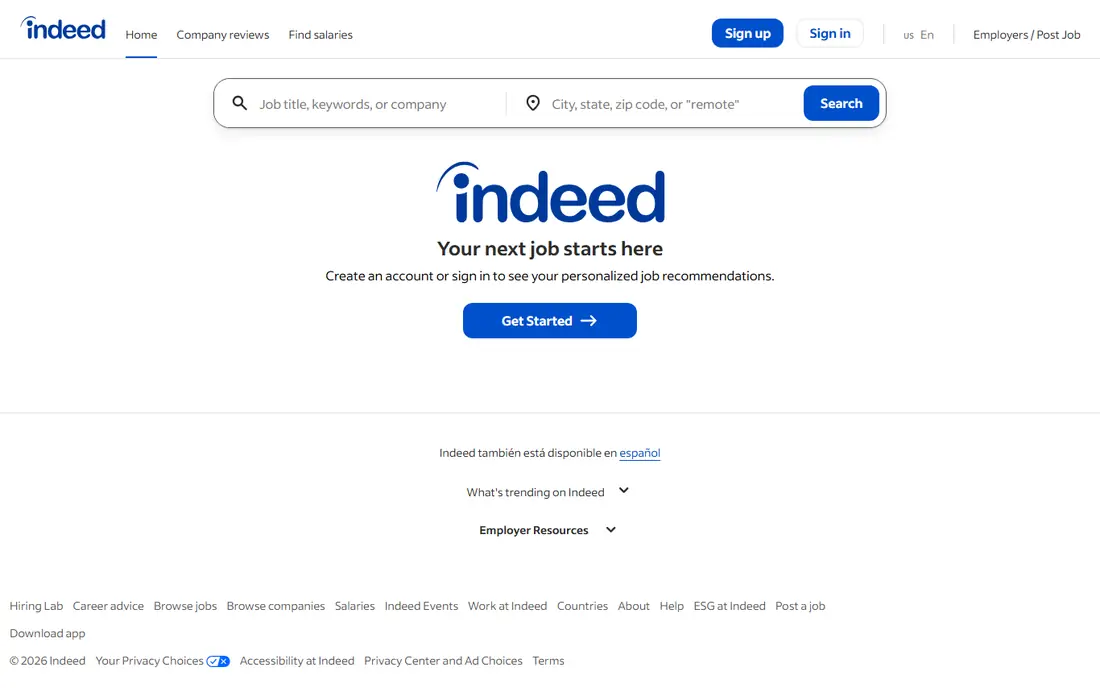
Indeed is the most direct alternative for job hunting. Its listing base covers many industries and experience levels, and job seekers can search, save jobs and apply without paying. Salary estimates and company reviews on many listings help you judge a role before applying, which saves time on roles that were never a good fit.
Indeed is weaker as a networking tool. It does not build a professional feed or a long-term contact list in the same way a social network does. Use Indeed to find and apply for roles, then use a community or event platform from this list to build the relationships that lead to referrals.
- Very large job listing base
- Free for job seekers
- Salary and company information
- Less useful for long-term networking
- High application volume on popular roles

Glassdoor pairs job listings with information that helps you judge an employer: salary ranges, employee reviews and interview reports. That context matters when two roles look similar on paper but differ sharply in pay, workload or culture. Job seekers can use it free, with full access improving after contributing a review or salary report in some cases.
Like Indeed, Glassdoor is a research and job tool first, not a networking community. Use it to shortlist employers and prepare for interviews, and use a portfolio or community platform to meet people inside those companies. The combination gives you both the data and the introductions.
- Salary data and employee reviews
- Job listings
- Interview insights on many roles
- Review quality varies by company size
- Networking features are limited
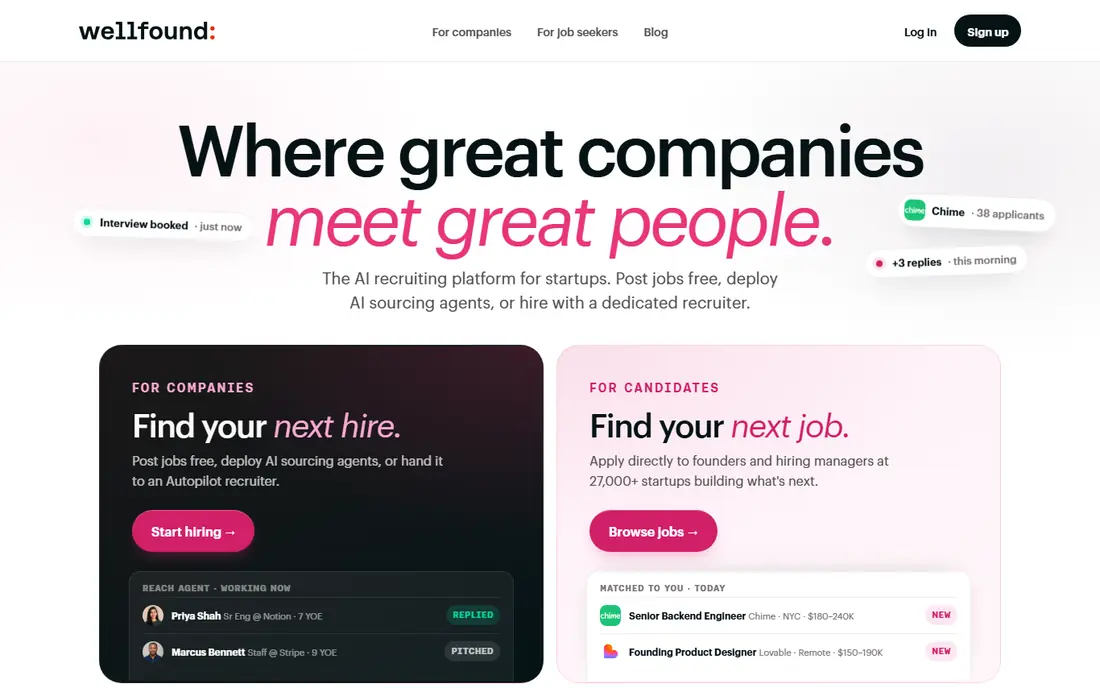
Wellfound, formerly AngelList Talent, is the best alternative for startup work. It lists startup jobs across engineering, product, design, marketing and operations, and many listings show salary ranges and equity detail that larger job boards omit. Candidates can signal interest to startups, and startups can reach out to candidates directly.
The focus is also the limit. If you want a role in a large corporation, healthcare, education or government, Wellfound will have far fewer relevant listings. For startup and tech roles, though, it often surfaces opportunities and hiring managers that a general network misses, and it is free for job seekers.
- Strong startup job base
- Salary and equity detail on many roles
- Free for job seekers
- Focused on startups and tech, so less useful for other sectors
Xing is the closest thing to a regional professional network for German-speaking business. It offers profiles, contacts, job listings, groups and events focused on Germany, Austria and Switzerland, where it has a strong base of professionals and recruiters. If your work or job search centres on that region, Xing can reach people a global platform reaches less well.
Outside that region, its value drops sharply. English-speaking job seekers with no German market link will find a smaller network and fewer relevant roles. Use Xing as a regional complement to a global job search, not as a sole platform, unless your career is based in the German-speaking market.
- Strong in Germany, Austria and Switzerland
- Business profiles and job listings
- Event features
- Much smaller reach outside German-speaking markets
- Paid features for full use
Meetup turns online contacts into real conversations. Professional groups, tech meetups, founder circles and industry talks give you a chance to meet people, ask questions and be remembered in a way a connection request rarely achieves. For many professionals, one good event conversation leads to more than dozens of cold messages.
The catch is follow-up. An event alone does not build a network unless you exchange details and stay in touch afterwards. Meetup also depends on your city, since smaller towns have fewer groups. Use it to meet people, then keep those contacts in a simple system, such as email or a contact manager, so the relationship survives past the event.
- Real in-person networking
- Many professional and tech groups
- Easy event discovery
- Networking ends unless you follow up
- Quality varies by city and group
Behance is the portfolio network for designers, illustrators, photographers and other visual creatives. Hiring managers judge the work itself, presented as full projects with images and case detail, rather than a short profile summary. That portfolio-first approach makes Behance a stronger hiring signal for creative roles than a general professional profile.
It is not a general career platform. Engineers, salespeople and managers will find little relevant hiring there. For creatives, though, a strong Behance portfolio, kept up to date with recent projects, often matters more than activity on any general network, and it is free for individual use.
- Portfolio-first presentation
- Large creative audience
- Job listings for creatives
- Focused on creative work
- Less useful for non-creative careers
Dribbble serves a similar purpose to Behance, with a tighter focus on product, brand and interface design. Designers share shots of their work, follow other designers, and get discovered by hiring managers looking for a specific style. Its job board and hiring tools are built around design roles, which keeps the audience relevant.
The audience is narrower, and some portfolio and hiring features sit behind paid plans. For a designer, Dribbble is worth maintaining alongside Behance, since different hiring managers browse each platform. For anyone outside design, it is not a useful alternative.
- Design-focused community
- Hiring tools for design roles
- Visual portfolio format
- Design only
- Paid features for full hiring and portfolio tools
GitHub is the professional network for developers, even though it does not call itself one. A public profile with real projects, contributions and code quality tells a hiring manager far more than a list of skills. Recruiters in tech routinely check GitHub, and open source work can lead to conversations that a cold application never would.
It only works for technical careers, and a profile with no public work says little. Developers should keep at least a few polished public projects, with clear readme files explaining what each project does. For non-technical professionals, GitHub is not an alternative worth pursuing.
- Real code as a hiring signal
- Large developer community
- Free public profiles
- Only relevant for technical roles
- Profile quality depends on public work
The Dots is a creative network for designers, writers, photographers, filmmakers and other creative professionals looking for work and collaborators. Members showcase projects, find jobs and connect with other creatives for joint work, which suits freelancers who need both clients and collaborators. Individual access is free.
Its community is smaller than Behance, so it works best as a second creative platform rather than a sole one. For creatives outside the UK and Europe, where The Dots is strongest, the job base may be thinner. Pair it with Behance or Dribbble, and use it where its community and collaboration tools match your work.
- Creative jobs and project showcases
- Collaboration features
- Free individual access
- Smaller than the largest creative networks
- Less relevant outside creative industries
How we picked these
We compared platforms that US and international professionals actually use as alternatives, covering jobs, portfolios, events, startup hiring and regional networks. We favoured platforms with a free tier for individuals, a clear audience, and a hiring or networking function that a general social feed does not replace. We left out general social networks with no professional hiring focus, and we did not include LinkedIn itself, since this article is about alternatives to it.
How to build a career network without one dominant platform
Pick one job platform, one showcase platform and one community. A job platform such as Indeed or Wellfound finds roles, a showcase platform such as Behance or GitHub proves your work, and a community such as Meetup or a niche group gives you people to learn from. That trio covers discovery, proof and relationships without depending on a single feed.
Keep your profile and your follow-up simple
Write one clear summary of what you do and what you are looking for, and reuse it across platforms with small tweaks for each audience. After an event or a conversation, send a short follow-up within a few days, mentioning the topic you discussed. Most professional relationships fail not from a lack of contacts, but from a lack of follow-up, and a simple habit fixes that.
Use niche platforms where your field actually hires
A general platform reaches many people, but a niche platform reaches the right people. Creative hiring managers browse Behance and Dribbble, startup founders browse Wellfound, developers browse GitHub, and German-speaking recruiters browse Xing. Go where your hiring managers already look, rather than posting the same profile everywhere and hoping.
Frequently asked questions
What are the best LinkedIn alternatives for job seekers?
Indeed and Glassdoor are the best starting points for a broad job search, while Wellfound suits startup and tech roles. Use job platforms to find roles, and add a portfolio or community platform to build referrals. No single alternative covers jobs, networking and portfolios at once.
What are alternatives to LinkedIn for professional networking?
Meetup is best for in-person networking, while niche communities, industry groups and event platforms suit specific fields. GitHub works for developers, Behance and Dribbble for creatives, and Xing for German-speaking business. Pick the community where your peers and hiring managers already spend time.
What is the best LinkedIn alternative for creative professionals?
Behance is our pick for most creatives because of its portfolio format and large audience, with Dribbble as a strong second for designers and The Dots for collaboration. A portfolio that shows full projects matters more than a short profile, so keep it current with recent work.
Can I find a job without LinkedIn?
Yes. Many hires come through job boards, company career pages, referrals and portfolio platforms. Apply through Indeed, Glassdoor or Wellfound, keep a strong portfolio where relevant, and use events and communities for referrals. A clear, current profile on the right niche platform often beats a neglected profile on a large network.
Is Xing a good LinkedIn alternative?
Xing is a good alternative if your career centres on Germany, Austria or Switzerland, where it has a strong professional base. Outside German-speaking markets, its reach is much smaller. Use it as a regional platform alongside a global job search, not as a replacement for one.
Should I delete LinkedIn if I use these alternatives?
You do not need to delete it to benefit from alternatives, and many professionals keep a basic profile while doing most job hunting and networking elsewhere. If you prefer to leave, make sure your portfolio, contact details and job search are settled on another platform first, so you do not lose contact with people who only know you there.
Sources
See where you really rank - block by block
ProMapRanker scans Google Maps across a grid of your service area. Simple monthly plans from $19, white-label on every plan.
Start freeKeep reading
 top custom software development company
Top Custom Software Development Company in 2026
Looking for a top custom software development company? We compare 9 firms for web, mobile, and enterprise software, covering strengths and fit for 2026.
Read → tableau alternatives
Tableau Alternatives in 2026
Compare the best Tableau alternatives for 2026, from Power BI to Metabase, with prices, hosting options, and picks for small teams and enterprises today.
Read → microsoft teams alternatives
Best Microsoft Teams Alternatives in 2026
Looking for microsoft teams alternatives? We compare 9 chat and video tools for 2026, covering free plans, pricing, meetings, and integrations for teams.
Read →