 ProMapRanker
9 Creatio Alternatives in 2026


Enterprise CRM depth · Pricing starts at: $25 per user per month
Key takeaways
- Creatio is known for no-code workflow automation, so the best alternative depends on how much custom process work a team really needs.
- HubSpot and Zoho suit smaller teams that want a fast start, while Salesforce and Microsoft Dynamics suit large firms with complex needs.
- Pipedrive and Freshsales suit sales-led teams that want a clear pipeline without a heavy platform project.
- Per-seat pricing multiplies fast, so model the cost at full team size before choosing a CRM.
Quick comparison
| Pick | Great for | Pricing starts at | Free tier | |
|---|---|---|---|---|
| Salesforce Sales Cloud | Enterprise CRM depth | $25 per user per month | No | Visit |
 HubSpot Sales Hub | Fast start with free CRM | Free | Yes | Visit |
 Zoho CRM | Value automation for SMBs | $14 per user per month | Yes | Visit |
 Pipedrive | Clear visual sales pipeline | $14 per user per month | No | Visit |
 monday Sales CRM | Visual teams and boards | $12 per user per month | No | Visit |
 Freshsales | Simple setup for small teams | Free | Yes | Visit |
 Close | Outbound sales and calling | $29 per user per month | No | Visit |
 Attio | Modern startups and flexible data | See website | Yes | Visit |
 SugarCRM | Customisable mid-market CRM | $19 per user per month | No | Visit |
The best Creatio alternatives
We compared official feature pages, pricing pages, app store listings, privacy policies, and public reviews. Creatio itself is not listed below, since this article covers alternatives only. Teams leaving Creatio usually cite cost, implementation effort, or a need for a simpler daily CRM, so each pick below states which of those problems it solves.
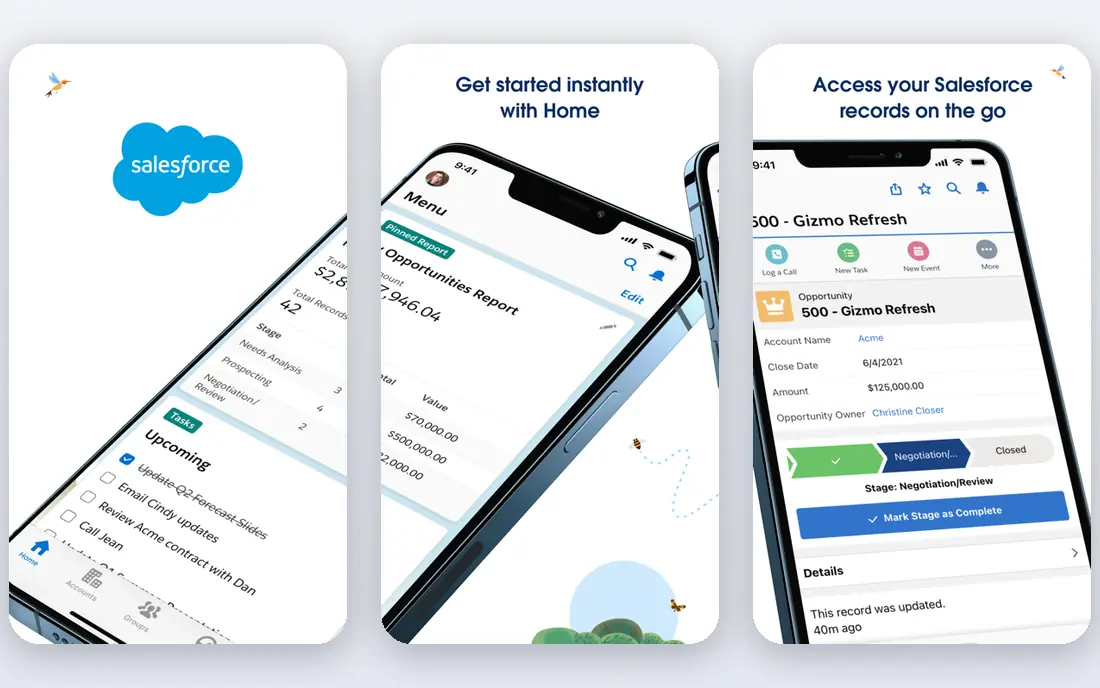
Salesforce is the enterprise alternative for firms that outgrow a mid-market CRM or need deep customisation. Sales Cloud covers leads, opportunities, forecasting, and reporting at a scale few rivals match, and its app ecosystem fills gaps for most industries. That depth is why large sales organisations standardise on it despite the price.
The trade-off is total cost and effort. Implementation often needs an admin or partner, and add-ons raise the bill beyond the entry seat price. Small teams that only need a pipeline will find it heavy. For a large firm with complex sales processes, Salesforce is the most capable alternative here.
- Largest CRM ecosystem and integration range
- Deep customisation and reporting
- Broad industry editions
- Higher total cost with add-ons and implementation
- Learning curve for admins
- Small teams may find it heavy
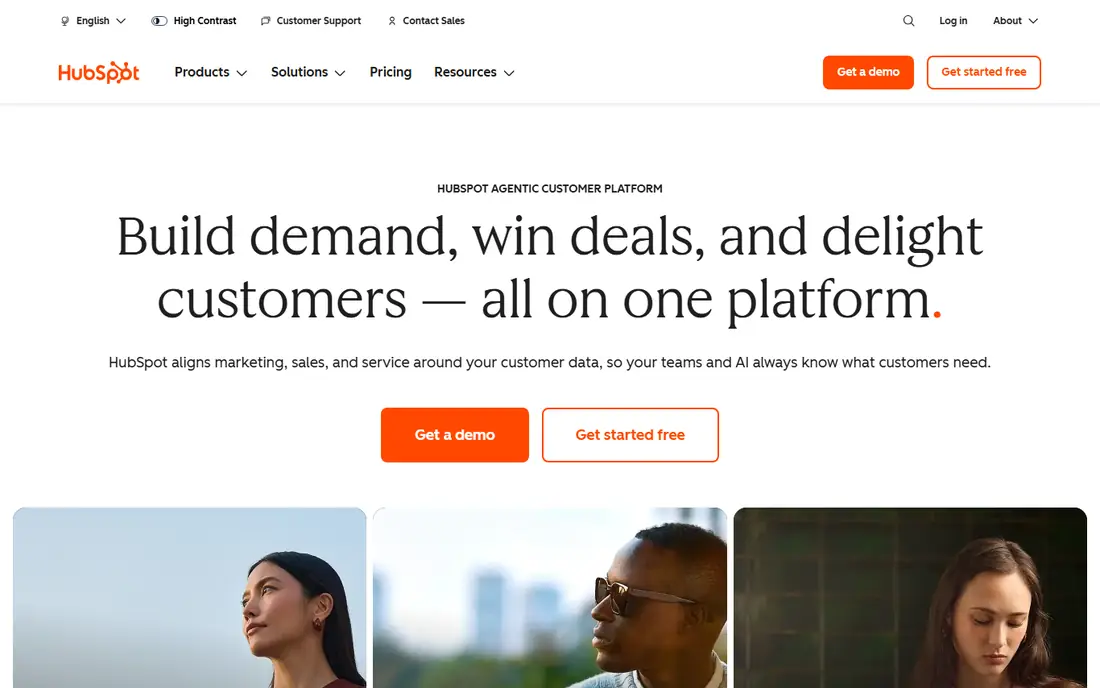
HubSpot suits teams that want to start this week rather than run a months-long CRM project. The free CRM covers contacts, deals, pipelines, and email tracking, and paid Sales Hub tiers add sequences, automation, and forecasting. Marketing and service tools sit in the same system, which helps small firms avoid separate tools.
Costs rise sharply at Professional level, and teams should check how many seats and hubs they need. Advanced automation also sits behind higher tiers. For a team that values speed and a generous free start, HubSpot is the easiest alternative to adopt.
- Free CRM with contacts, deals, and tasks
- Fast setup for small teams
- Marketing and service hubs in the same system
- Professional tier is costly
- Seat and hub pricing grows with team size
- Advanced workflow features need higher tiers
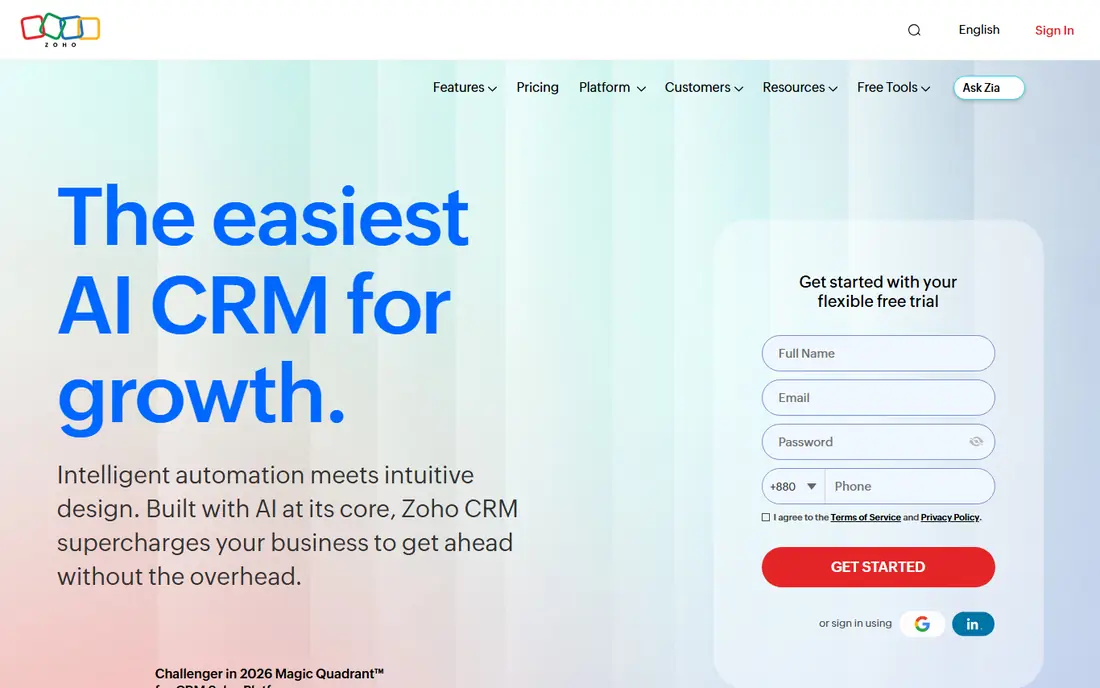
Zoho CRM gives small and mid-sized teams automation at a price well below Salesforce. Workflows, lead scoring, and custom modules cover much of what teams seek in a no-code platform, without a large implementation bill. The free tier for up to 3 users also lets a tiny team start at no cost.
The interface packs many options into each screen, which can slow new users. Higher tiers provide the best automation and AI features. For a budget-conscious team that wants automation depth, Zoho is the strongest value pick in this list.
- Low price for automation depth
- Free tier for up to 3 users
- Wide Zoho app suite for finance and support
- Interface feels busy to new users
- Some advanced features need higher tiers
- Support quality varies by plan
Pipedrive focuses on one job and does it well: moving deals through a visible pipeline. Sales reps can see next actions, overdue deals, and stage value at a glance, which helps managers coach without digging through reports. Setup takes days rather than months, and the interface needs little training.
It is less suited to firms that need deep marketing automation or service management in the same CRM. There is also no free tier, only a trial. For a sales-led team that wants a pipeline tool its reps will actually use, Pipedrive is our pick.
- Clearest visual pipeline in this list
- Fast onboarding for sales teams
- Useful automation at mid tiers
- No free plan
- Marketing and service features are thinner
- Costs rise with automation add-ons
monday Sales CRM suits teams that already think in boards and want sales and project work in one place. Pipelines, lead tracking, and deal stages live on customisable boards, and automation rules can move items between stages without code. That flexibility helps teams with unusual sales steps.
Pure CRM depth, such as advanced forecasting and territory management, is thinner than in Salesforce or Zoho. Seat minimums also affect very small teams. For a visual team that wants one workspace for sales and delivery, monday is a practical alternative.
- Flexible boards for pipelines and projects
- Visual workflows that non-technical teams can build
- Broad template library
- Minimum seat rules on some plans
- CRM depth is thinner than Salesforce
- Costs rise with automations and seats
Freshsales, from Freshworks, is built for small teams that want a CRM running quickly. The free tier covers contacts, deals, and basic pipelines, while paid tiers add phone, email sequences, and AI insights. The interface is clean, which helps teams that found larger CRMs overwhelming.
Larger firms may hit limits on customisation and reporting. The app ecosystem is also smaller than Salesforce or HubSpot. For a small sales team that needs a simple, affordable CRM, Freshsales is a low-risk starting point.
- Free tier for small teams
- Built-in phone and email tools
- Fast setup with a clean interface
- Advanced automation needs higher tiers
- Ecosystem is smaller than Salesforce
- Reporting depth varies by plan
Close is built for inside sales teams that live on the phone and in email. Calling, SMS, and email sit in one inbox, so reps can work a lead list without switching tools. Smart views and lead filters help high-volume teams prioritise the next call.
It is not a full marketing automation platform, so teams that need complex campaigns will need another tool. The entry price is also higher than Pipedrive. For an outbound team where call volume drives revenue, Close is the most focused alternative here.
- Built-in calling, SMS, and email in one inbox
- Fast lead handling for outbound teams
- Clear activity reporting
- No free plan
- Less suited to complex marketing automation
- Price is higher than basic pipeline tools
Attio appeals to startups that want a modern CRM without legacy clutter. Its data model adapts to different objects and relationships, and email and calendar sync keep records updated with less manual entry. The interface feels current, which helps adoption among small teams.
Enterprise complexity, such as deep territory and forecasting needs, is less developed than in Salesforce. Some features are still maturing. For a startup that values design, speed, and flexibility over enterprise depth, Attio is a fresh alternative worth trialling.
- Modern interface and flexible data model
- Fast setup for startups
- Email and calendar sync built in
- Less ready for large enterprise complexity
- Some features are newer and still maturing
- Pricing varies by tier
SugarCRM suits mid-market teams that need custom modules and workflows without Salesforce prices. It covers sales, marketing, and service, and its on-premise option helps firms with strict data residency rules. That combination is rare among modern cloud CRMs.
The interface looks dated next to Attio or HubSpot, and complex setups may need partner help. Top tiers are also far more expensive than entry tiers. For a mid-market team that prizes customisation and deployment choice, SugarCRM remains a credible alternative.
- Deep customisation for mid-market teams
- On-premise option for strict data needs
- Sales, service, and marketing modules
- Interface feels older than newer rivals
- Implementation can need partner help
- Higher tiers cost far more
How we picked these
We compared official feature pages, pricing pages, app store listings, privacy policies, and public reviews, and we kept only CRM platforms that cover sales pipelines, automation, or no-code workflow in October 2026. We excluded the named product itself, since this article covers alternatives only, and we excluded pure email tools that lack a real CRM pipeline. Prices are starting prices and vary by billing term, seat count, and add-ons.
How to switch from Creatio without breaking your pipeline
A CRM switch fails more often on data and process than on features. Plan the move around the deals already in flight, not around a demo.
Audit your workflows before you shop
List every workflow, approval, and custom field in current use, then mark which ones are actually used each week. Many teams discover that half their no-code processes can be replaced by a standard pipeline stage or a simple automation rule. That audit also shows whether you need a no-code platform or just a cleaner CRM.
Test with real deals, not sample data
Run a trial with live deals, real contacts, and your actual sales stages. Check imports, duplicate handling, email sync, and reporting for those deals. A trial with sample data hides import errors that only appear with messy real records.
Budget for migration and training
Include data cleaning, import work, and rep training in the total cost, not just seat prices. A cheaper seat price with a long migration can cost more than a higher seat price with a clean import. Give reps one week of parallel running, so no live deal is lost during the switch.
Frequently asked questions
What is the best Creatio alternative?
HubSpot suits teams that want a fast start with a free CRM, while Salesforce suits large firms that need depth. Pipedrive suits sales-led teams that want a clear pipeline, and Zoho suits budget-conscious teams that want automation depth.
Is there a free alternative to Creatio?
Yes, HubSpot CRM, Zoho CRM for up to 3 users, Freshsales, and Attio all offer free tiers with core CRM features. Free tiers usually limit automation, users, or records, so check those limits before migrating a full team.
Which Creatio alternative is best for no-code workflows?
Zoho CRM and monday Sales CRM offer the closest no-code workflow feel at a lower cost and with faster setup. Salesforce offers deeper customisation, but it usually needs more admin effort than a mid-market no-code tool.
How much does a Creatio alternative cost?
Entry prices in this list range from free to $29 per user per month, before higher tiers and add-ons. Model the full team cost, since a $14 seat for 20 users costs far more per year than the same seat for 3 users.
Can I migrate data from Creatio to another CRM?
Yes, most CRMs offer import tools for contacts, companies, deals, and activities, plus APIs for custom migration. Clean duplicates and standardise fields before importing, and test the import with a small batch first.
Sources
See where you really rank - block by block
ProMapRanker scans Google Maps across a grid of your service area. Simple monthly plans from $19, white-label on every plan.
Start freeKeep reading
 who has best internet service
Who Has the Best Internet Service in 2026
Who has best internet service for US homes? We compare fiber, cable, fixed wireless and satellite providers on speed, price, availability and terms today.
Read → which survey tool has the best analytics
Which Survey Tool Has the Best Analytics in 2026
Find which survey tool has the best analytics in 2026, comparing Qualtrics, SurveyMonkey, Typeform, Alchemer, and more on reports, text, and stats today.
Read → which streaming service has the best movies
Which Streaming Service Has the Best Movies in 2026
Answering which streaming service has the best movies, with Netflix, Max, Criterion and more compared on libraries, prices and free options in this guide.
Read →