 ProMapRanker
Best Wireless Phone Company in 2026

Key takeaways
- Coverage matters more than brand, so check the network map for your home, work and travel routes before you switch.
- Prepaid brands such as Visible and Mint Mobile run on major networks and can cost far less than a major carrier plan for a single line.
- Major carriers suit families and heavy users who want premium data, hotspot allowances and perks such as streaming or travel benefits.
- Read the fine print on autopay discounts, taxes and fees, because the advertised price is not always the price you pay each month.
Quick comparison
| Pick | Great for | Pricing starts at | Free tier | |
|---|---|---|---|---|
 Verizon | Broad coverage and premium plans | $65 per month | No | Visit |
 T-Mobile | Fast 5G and family plans | $50 per month | No | Visit |
 AT&T | Broad coverage and family plans | $50 per month | No | Visit |
 Visible | Simple unlimited on Verizon | $25 per month | No | Visit |
 Mint Mobile | Low cost annual unlimited | $15 per month | No | Visit |
 Cricket Wireless | AT&T coverage with stores | $30 per month | No | Visit |
 Metro by T-Mobile | T-Mobile coverage with stores | $40 per month | No | Visit |
 Google Fi Wireless | International travel | $20 per month | No | Visit |
The best wireless phone company
We compared wireless carriers on coverage, plan price, data allowances, hotspot, taxes and fees and international options. Prices below are starting prices for a single line from carrier comparisons in October 2026, often with autopay, and may vary by line count and location. Confirm the current price for your ZIP code before you switch.
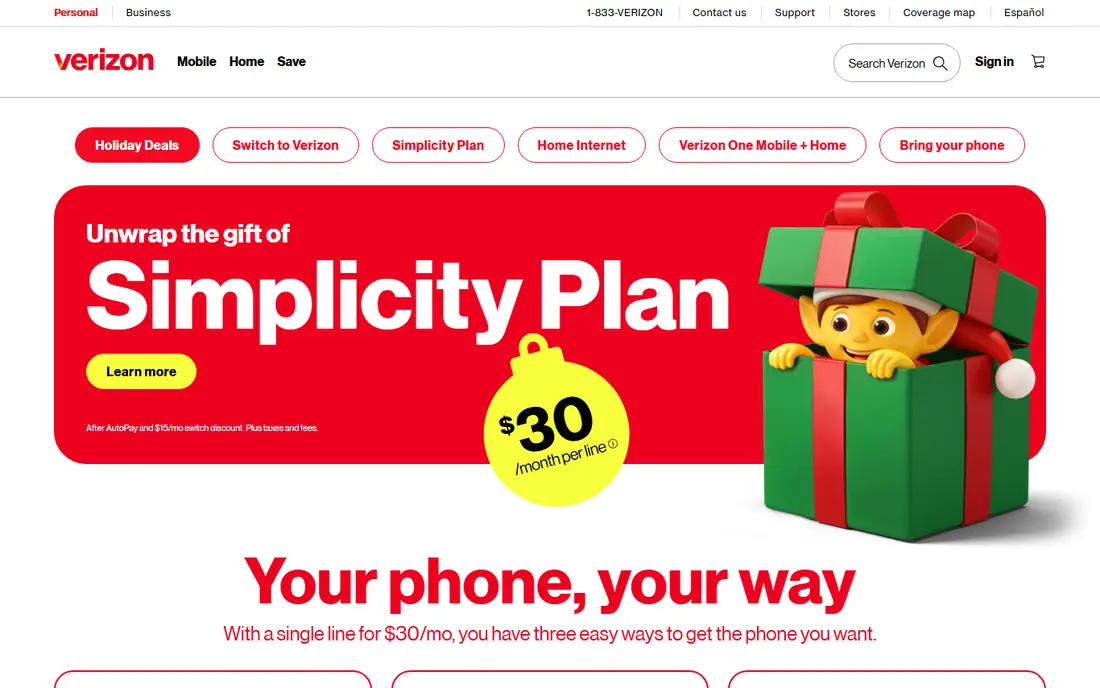
Verizon is our pick for buyers who want broad coverage and are willing to pay for premium plans. Its Unlimited Welcome plan starts at about 65 dollars per month for a single line with autopay, while higher plans add premium data, larger hotspot allowances and travel benefits. That range suits heavy users, families and people who travel to rural areas where coverage varies.
The catch is price. Verizon single line plans cost more than most prepaid brands, and taxes and fees are often extra. If you need only a basic unlimited line, Visible, which runs on Verizon, may give you similar coverage for less. If you want premium data, perks and in store support, Verizon itself is a strong choice.
- Broad nationwide 4G and 5G coverage
- Premium unlimited plans
- Large hotspot allowances on top plans
- Higher single line prices
- Taxes and fees are extra on many plans
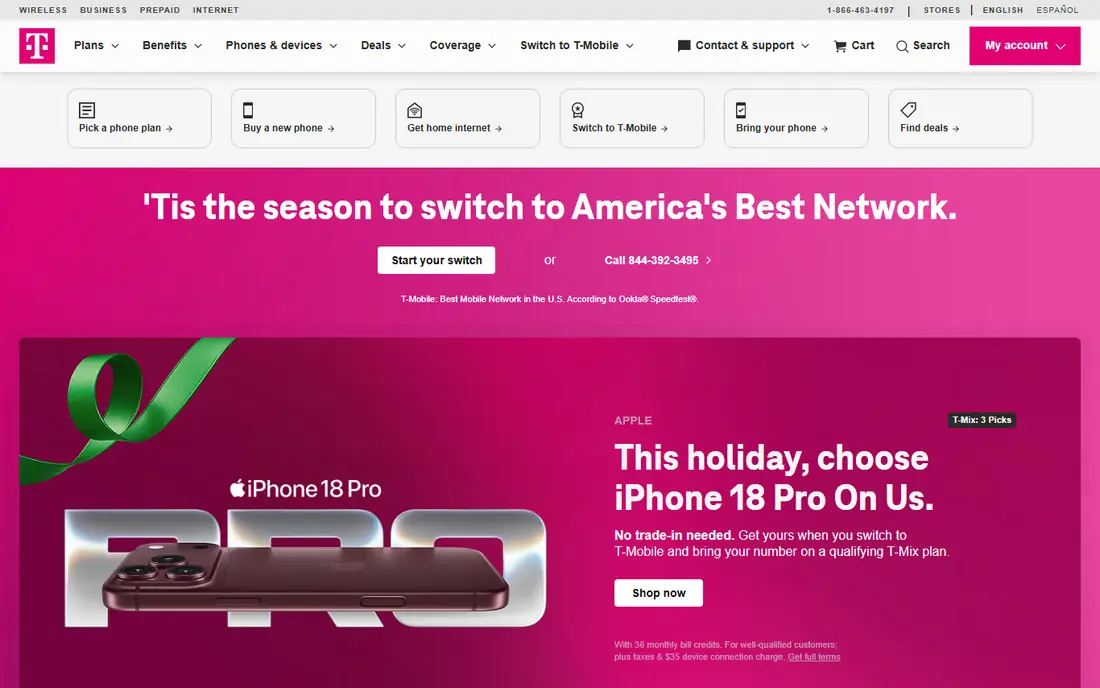
T-Mobile suits families and heavy data users who want fast 5G and strong multiline pricing. Its Essentials Saver plan starts at about 50 dollars per month for a single line with autopay, while higher Experience plans add premium data, hotspot and perks. Family plans bring the per line cost down sharply, which is where T-Mobile often beats its major rivals.
Coverage is the point to check. T-Mobile 5G is fast in many cities and suburbs, but rural coverage can be weaker than Verizon or AT&T in some areas. Check the coverage map for your home and work addresses, and ask about trial periods or return windows. If coverage fits, T-Mobile offers a strong mix of speed and family value.
- Fast 5G in many areas
- Strong family pricing
- Generous hotspot on higher plans
- Coverage can vary in rural areas
- Taxes and fees are extra on many plans
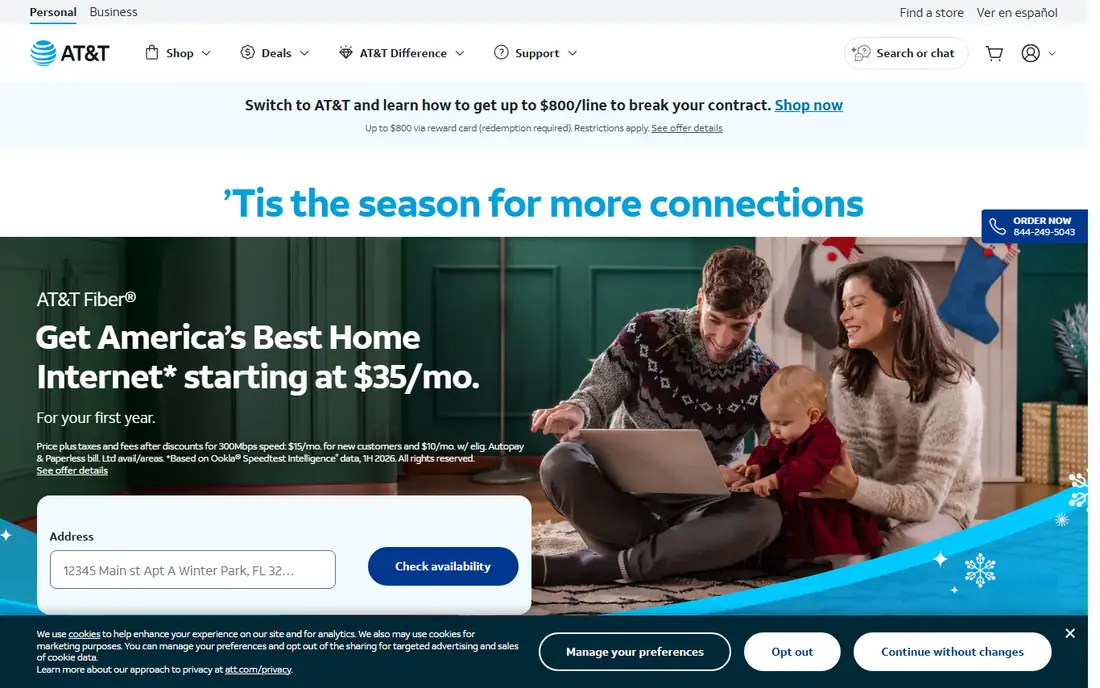
AT&T fits buyers who want broad coverage and a traditional major carrier experience. Its Value plan starts at about 50 dollars per month for a single line with autopay, while higher Premium and Elite plans add premium data and hotspot allowances. That range suits families who want a major carrier, in store help and a network that works well across many regions.
Top plans are costly for a single line, so AT&T is best value when you have several lines or need its specific coverage. Cricket Wireless, which runs on AT&T, offers a lower cost path to the same network for single lines. If you want AT&T itself, compare family pricing and check for discounts for your situation.
- Broad nationwide coverage
- Family plan options
- Strong in store support
- Higher top plan prices
- Taxes and fees are extra on many plans
Visible is our pick for a simple, low cost unlimited line on the Verizon network. Its base plan costs 25 dollars per month with taxes and fees included, which makes the monthly bill easy to predict. Unlimited talk, text and data, plus hotspot, cover most single line needs without a complex plan menu.
The trade off is support and perks. Visible has no physical stores, so help is online or by phone, and the base plan hotspot runs at lower speeds than a premium Verizon plan. Higher Visible plans add faster hotspot and premium data for more money. If you want Verizon coverage at a low, clear price, Visible is hard to beat.
- Unlimited data on Verizon network
- Taxes and fees included
- Simple plan choice
- No physical stores
- Hotspot speeds are limited on the base plan
Mint Mobile suits buyers who can pay for a year up front and want the lowest effective monthly cost. Its unlimited plan costs about 15 dollars per month when paid annually for new customers on a promo, and about 30 dollars per month on a 12 month plan at standard pricing in recent comparisons. It runs on the T-Mobile network, so coverage follows T-Mobile.
The catch is the upfront payment and the promo structure. If you leave early, you may lose part of the value, and the low promo price may rise on renewal. Check the renewal price before you commit, and confirm T-Mobile coverage in your area. If you are comfortable paying annually, Mint offers strong value.
- Very low effective monthly cost on annual plans
- Runs on T-Mobile network
- Simple online setup
- Best price needs payment for 12 months up front
- Taxes and fees are extra
Cricket Wireless fits buyers who want AT&T coverage plus a store they can visit. Its plans start at about 30 dollars per month with autopay for a limited data plan, while unlimited plans cost more, with taxes and fees included on many plans. That store access helps if you want help with setup, a new phone or a plan change in person.
Cricket costs more than Visible or Mint for a single unlimited line, so it is best when store support or AT&T coverage matters more than the lowest price. Check data allowances and hotspot limits for the plan you choose, because lower cost plans have less data. For AT&T coverage with human help, Cricket is a solid choice.
- Runs on AT&T network
- Physical stores
- Taxes and fees included on many plans
- Higher prices than some prepaid rivals
- Data speeds can be managed on some plans
Metro by T-Mobile suits buyers who want T-Mobile coverage with store support and a simple unlimited plan. Its unlimited plans start at about 40 dollars per month, with taxes and fees included on many plans, and higher plans add more hotspot and perks. Stores make setup, phone swaps and account help easier than an online only brand.
The price is higher than Mint Mobile, which also runs on T-Mobile, so Metro is best when store help matters. Check whether your plan includes the hotspot amount you need, and ask about switcher promos, which can lower the first months. If you want T-Mobile with a store nearby, Metro is a good fit.
- Runs on T-Mobile network
- Physical stores
- Taxes and fees included on many plans
- Higher base price than Mint
- Perks vary by plan
Google Fi Wireless fits frequent international travellers who want data abroad without buying a local SIM each trip. Its Flexible plan starts at 20 dollars per month plus 10 dollars per gigabyte, while unlimited plans start higher and include data in many destinations. That international focus sets Fi apart from most prepaid brands.
The limit is phone compatibility and network. Fi runs mainly on T-Mobile in the United States, and the best features, such as network switching, work best on Fi designed phones. Check whether your phone is fully compatible before you switch. If you travel abroad often and use a compatible phone, Fi is a strong choice.
- Strong international data in many destinations
- Runs mainly on T-Mobile
- Flexible data plan
- Best experience needs a Fi compatible phone
- Taxes and fees are extra
How we picked these
We compared official carrier pages and October 2026 carrier plan comparisons for wireless companies operating in the United States. We kept only carriers with a current nationwide or prepaid service, clear plan pricing and a working network in 2026. Prices are starting single line prices, often with autopay, and may vary by location, line count and promo. Confirm the current price, taxes and coverage for your address before you switch.
How to choose a wireless plan
Start with coverage in the places you actually use your phone. Check each network map for your home, work, school and frequent travel routes, and ask friends or colleagues on that network about dead spots. A cheap plan on a weak network in your area is not a bargain. If you can, use a trial or a prepaid month to test coverage before you port your number.
Data, hotspot and family size
Estimate your monthly data use from your current carrier app, not from a guess. Light users who use Wi-Fi most of the day can save with a limited data plan, while heavy video users need unlimited premium data. Check hotspot allowances separately, because a plan can offer unlimited phone data but only a small hotspot amount. For families, compare per line cost for your exact line count, because a carrier that looks costly for one line can be cheap for four.
Taxes, fees and phone deals
Compare the total monthly bill, including taxes and fees, not just the advertised plan price. Some carriers include taxes, while major carriers often add them. Phone deals can also change the math: a free or discounted phone may need a higher plan or a long commitment. Read the deal terms, including trade in rules and early payoff costs, before you sign.
Frequently asked questions
What is the best wireless phone company?
The best wireless phone company depends on your coverage, line count and budget. Verizon suits broad coverage, T-Mobile suits fast 5G and families, and Visible and Mint Mobile suit low cost single lines. Test coverage in your area before you choose.
Is prepaid as good as a major carrier?
Prepaid brands run on major networks, so coverage is often similar, but data priority, hotspot speeds and perks can differ. During congestion, major carrier premium plans may get priority over some prepaid plans. If you use a lot of data in busy areas, check priority rules for your plan.
How much data do I need?
Light users who use Wi-Fi often may need only a few gigabytes per month, while heavy video and hotspot users may need unlimited data. Check your current usage in your carrier app for the last three months, and add a buffer for travel months. A limited plan is cheaper only if you do not pay overage or throttling costs.
Can I keep my number when I switch?
In most cases yes, through number porting, as long as your old account is active and you have the account number and porting PIN. Do not cancel the old line before the port completes, because that can cause you to lose the number. Ask the new carrier to confirm the port before you cancel anything.
Do wireless prices include taxes and fees?
Some prepaid carriers include taxes and fees in the advertised price, while major carriers often add them on top. That difference can be several dollars per line per month. Always compare the total bill for your line count, not just the plan price.
Sources
- https://www.verizon.com
- https://www.t-mobile.com
- https://www.att.com
- https://www.visible.com
- https://www.mint.com
- https://www.cricketwireless.com
- https://www.metrobyt-mobile.com
- https://www.fi.google.com
- https://www.usmobile.com/blog/cell-phone-plans/
- https://clark.com/cell-phones/best-cell-phone-plans-deals/
See where you really rank - block by block
ProMapRanker scans Google Maps across a grid of your service area. Simple monthly plans from $19, white-label on every plan.
Start freeKeep reading
 who has best internet service
Who Has the Best Internet Service in 2026
Who has best internet service for US homes? We compare fiber, cable, fixed wireless and satellite providers on speed, price, availability and terms today.
Read → which survey tool has the best analytics
Which Survey Tool Has the Best Analytics in 2026
Find which survey tool has the best analytics in 2026, comparing Qualtrics, SurveyMonkey, Typeform, Alchemer, and more on reports, text, and stats today.
Read → which streaming service has the best movies
Which Streaming Service Has the Best Movies in 2026
Answering which streaming service has the best movies, with Netflix, Max, Criterion and more compared on libraries, prices and free options in this guide.
Read →