 ProMapRanker
Best Tools for SEO E-Commerce in 2026

Key takeaways
- Ahrefs and Semrush are the full suites most stores start with, with Ahrefs stronger on links and Semrush broader on ads and content.
- SE Ranking is the value suite for smaller stores, while Moz Pro suits beginners who want simpler metrics and guidance.
- Yoast SEO and Rank Math handle on-page work inside WordPress and WooCommerce, which no outside suite can replace.
- Screaming Frog is the best technical audit tool for large catalogs, but it does no keyword research or rank tracking.
- Google Search Console is free and shows your own clicks and queries, so connect it whatever paid tool you choose.
Quick comparison
| Pick | Great for | Pricing starts at | Free tier | |
|---|---|---|---|---|
 Ahrefs | Backlink and competitor research | $129 per month | Yes | Visit |
 Semrush | All-in-one SEO and marketing research | $139 per month | Yes | Visit |
 Moz Pro | Beginner-friendly SEO with local tools | $99 per month | Free trial | Visit |
 SE Ranking | Value all-in-one suite for smaller stores | $103.20 per month | Free trial | Visit |
 Surfer SEO | Product and category page optimization | $49 per month | No | Visit |
 Screaming Frog SEO Spider | Technical audits for large catalogs | $279 per year | Yes | Visit |
 Yoast SEO | WordPress and WooCommerce on-page SEO | $99 per year | Yes | Visit |
 Rank Math SEO | WordPress on-page SEO with schema | $6.99 per month | Yes | Visit |
 Mangools | Affordable keyword research | $29.90 per month | Yes | Visit |
 Google Search Console | Your own search performance data | Free | Yes | Visit |
The best tools for SEO e-commerce
We compared official pricing pages, feature pages, help documentation and public reviews for tools that are live in October 2026. An e-commerce store needs different SEO work from a blog: product pages, category pages, faceted navigation, site speed and internal linking all matter, so this list covers research, audits, on-page tools and first-party data together.

Ahrefs is the research tool many SEO teams open first. Its Site Explorer shows which pages and links drive a competitor's traffic, Keywords Explorer covers search demand and clicks, and Site Audit flags technical issues across a catalog. For a store, that combination helps answer the practical questions: which categories deserve new pages, which products need links, and which competitor pages are winning the terms you want.
The Lite plan starts at $129 per month and shares a credit pool across research tools, so heavy users can hit limits. Ahrefs also offers a Starter plan at a lower price and a free Webmaster Tools tier for your own sites. For link building and competitor research, Ahrefs remains one of the best SEO tools for e-commerce, even if it is not the cheapest suite.
- Very large backlink index
- Strong competitor page analysis
- Useful AI search tracking on higher plans
- Lite plan uses a shared credit pool
- Entry plan limits projects and tracked keywords
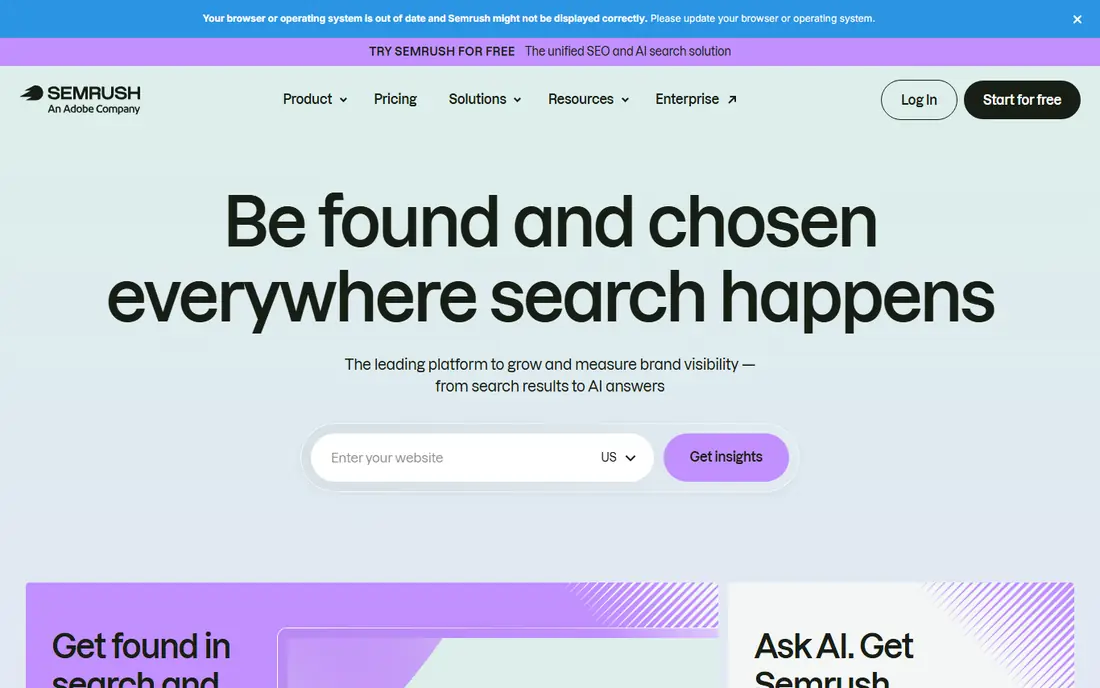
Semrush is the broadest suite on this list, covering keyword research, rank tracking, site audits, backlink analysis, content tools and paid search research in one account. That breadth suits a store team that also runs ads, since the same keyword and competitor data can inform both organic and paid work. Its SEO plan starts at $139 per month, with a free account and a trial for testing.
The interface can feel crowded, and new users may open only a fraction of what they pay for. Semrush is also the best platform for SEO for e-commerce teams that want one vendor for research, content and reporting, rather than stitching several tools together. If your team already uses Ahrefs for links, Semrush may duplicate some of that spend, so check overlap before buying both.
- Broad suite covering SEO, ads and content
- Strong keyword intent data
- AI visibility tracking
- Busy interface that takes time to learn
- Entry plan limits projects and tracked keywords
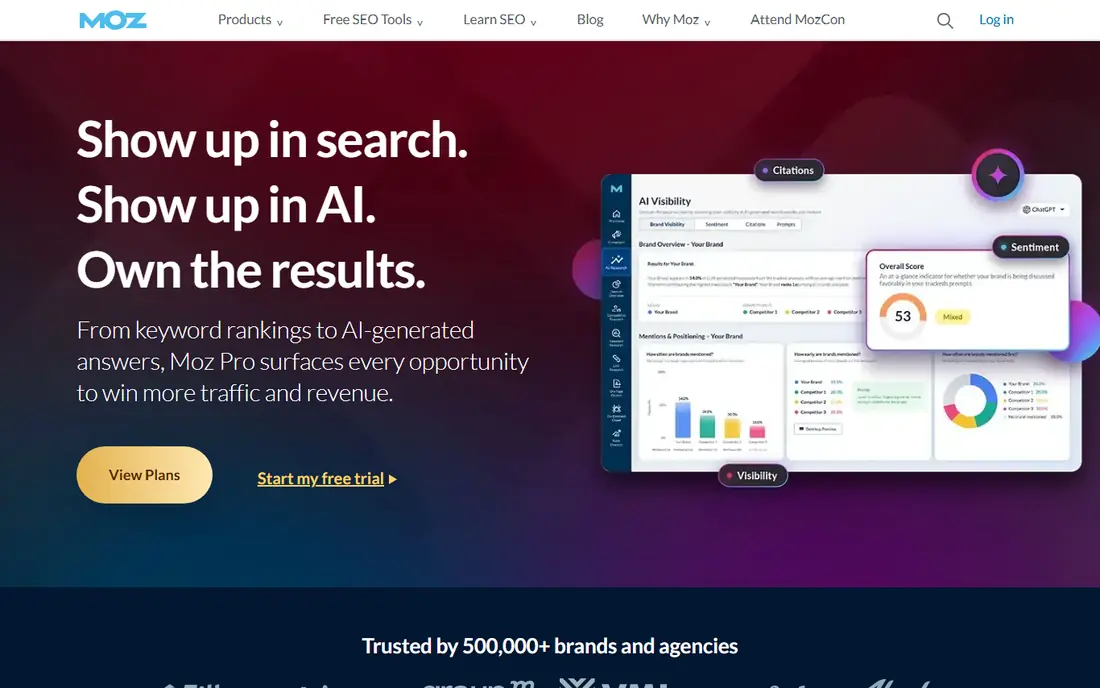
Moz Pro is the gentlest entry point among the big suites. Its Standard plan starts at $99 per month, with a lower Starter tier also available, and its interface explains issues in plain language rather than assuming deep SEO knowledge. Domain Authority remains a familiar shorthand for comparing sites, even though it is a Moz metric, not a Google ranking factor.
The limits show on larger stores. Keyword queries are capped on Standard, and the keyword index is smaller than the two leaders above. Moz suits a small store, a local business or a team learning SEO, where clarity matters more than the deepest data. For a large catalog with heavy research needs, Ahrefs or Semrush will fit better.
- Clear metrics and learning resources
- Friendly interface
- Local SEO ecosystem
- Smaller keyword index than Ahrefs or Semrush
- Standard plan limits keyword queries
SE Ranking has become the value pick for agencies and smaller stores that want a full suite without enterprise pricing. Its Core plan starts at $103.20 per month on annual billing, and it covers rank tracking, keyword research, site audit, backlink monitoring and white-label reports. Rank tracking accuracy is frequently cited as its strongest suit, which matters for a store watching category terms week to week.
The backlink database is serviceable but not in the same league as Ahrefs for deep link work, and the entry price rose with a 2026 restructure. A 14-day trial with no card required lets you test data quality on your own keywords first. For a store that needs the best rated SEO tool for e-commerce on a mid-range budget, SE Ranking is a strong contender.
- Accurate rank tracking
- White-label reporting
- Competitive price for a full suite
- Backlink index is smaller than Ahrefs
- Entry price rose after a 2026 plan change
Surfer SEO does one job well: it tells you how a page compares with top-ranking pages for a target term, then scores your draft live as you improve coverage, structure and length. For product and category pages, where thin copy is a common problem, that guidance is practical. Its Discovery plan starts at $49 per month on annual billing, with a limited free tools option for basic checks.
Surfer is not a replacement for Ahrefs or Semrush. It does not offer the same depth of keyword research, backlink data or rank tracking, and document allowances differ by plan. Used alongside a suite, Surfer is one of the best tools for SEO for e-commerce content teams, because it turns research into a page that a writer can actually improve.
- Live content scoring as you write
- Clear term and structure guidance
- Google Docs and WordPress integrations
- Document limits vary by plan
- Not a full research or rank tracking suite
Screaming Frog is a desktop crawler that downloads a site the way a search engine sees it and reports broken links, redirect chains, duplicate titles, missing metadata, hreflang errors and hundreds of other issues. For a store with thousands of product pages, that audit depth is essential, since a single template error can repeat across a whole catalog. The free version crawls up to 500 URLs, which covers many small stores completely.
It is a specialist, not a suite. There is no keyword research, no rank tracking and no backlink data, and the interface assumes you know what a canonical tag is. For technical SEO on an e-commerce site, Screaming Frog is unmatched on depth per dollar, and it pairs well with any suite on this list.
- Deep crawl of broken links, redirects and metadata
- Free up to 500 URLs
- Integrations with Search Console and analytics
- Desktop tool, not a cloud suite
- No keyword research or rank tracking
Yoast SEO is the on-page plugin most WordPress and WooCommerce stores know. The free version handles titles, meta descriptions, XML sitemaps and readability checks, while Premium, starting at $99 per year, adds redirect management, internal linking suggestions and WooCommerce-specific SEO features such as product schema. That WooCommerce focus is why it belongs on an e-commerce list, not just a WordPress list.
Pricing is per site, so a store with several sites pays several times, and local SEO and other extras are separate plugins. Yoast is not a research suite, and it cannot replace Ahrefs or Search Console. For a WooCommerce store that needs solid on-page foundations, Yoast is a reliable best SEO platform for e-commerce choice inside WordPress.
- Strong WooCommerce support
- Clear on-page guidance
- Schema and breadcrumb controls
- Premium price per site
- Some features need separate add-on plugins
Rank Math has grown fast by packing a large feature set into a free plugin, then offering paid plans from $6.99 per month on annual billing for Pro features. It covers titles, sitemaps, schema markup, redirections, WooCommerce product SEO and analytics integration, all inside WordPress. The setup wizard is clear, and the free version alone covers most small stores.
The breadth can also overwhelm a beginner, since turning on every module adds complexity. Paid tiers vary by number of sites, so check the tier that matches your store count. For a WordPress store that wants a modern, feature-rich alternative to Yoast, Rank Math is one of the best SEO tools for e-commerce available today.
- Generous free version
- Built-in schema and WooCommerce support
- Clean setup wizard
- Many features can overwhelm beginners
- Paid plans are billed per site range
Mangools bundles KWFinder, SERPChecker, SERPWatcher, LinkMiner and SiteProfiler into one account, starting at $29.90 per month on annual billing for the Basic plan. Its keyword difficulty scores are easy to read, which helps a small store team pick product and category terms it can realistically rank for, rather than chasing terms dominated by large retailers.
Data depth is the trade-off. Mangools will not match Ahrefs or Semrush on backlink analysis or large-scale research, and its audit tools are lighter. For a store on a budget that mainly needs keyword research and rank tracking, Mangools is a friendly and affordable best rated SEO tool for e-commerce option.
- Easy keyword difficulty scores
- Clean interface
- Useful rank tracking and SERP tools
- Smaller data depth than big suites
- Limited audit features
Google Search Console is not a suite, but no e-commerce SEO list is complete without it. It is free, and it shows the real clicks, impressions and search queries your own site receives, plus indexing problems, sitemap status and Core Web Vitals issues. No paid tool can see that first-party data, which is why every suite on this list offers a Search Console integration.
Its limits are clear. It covers Google only, it does not show competitor data, and its reports lag by a few days. Use it alongside a paid tool: Search Console for what is actually happening on your site, and a suite for what competitors are doing and which terms to target next. For any store, Search Console is the first tool to connect.
- Free
- Shows real clicks, impressions and queries for your own site
- Indexing and Core Web Vitals reports
- Google data only
- No competitor research
- Data is sampled and time-lagged
How we picked these
We compared official pricing pages, feature pages, help documentation and public reviews, and we kept only tools that are live in October 2026 and that fit a real e-commerce SEO job: research, tracking, audit, on-page work or first-party data. We did not claim hands-on testing that did not happen, and where a price varied by billing term, we noted the term or wrote See website in the original research notes. Prices change often, so check the vendor page before buying.
How to build an e-commerce SEO stack without overspending
Start with free data, then add one suite
Connect Search Console and analytics first, fix the technical errors they show, and only then buy a suite. Many stores find that a month of free data clarifies which paid tool they actually need.
Put on-page work inside the store platform
A suite cannot write your product titles for you inside WordPress or Shopify. Yoast or Rank Math for WooCommerce, or the equivalent app for Shopify, handles titles, schema and sitemaps where the pages live. That on-page layer is worth paying for even on a tight budget.
Audit the catalog, not just the homepage
Use Screaming Frog or a suite audit on the full catalog, because template errors repeat across product pages. Check faceted navigation, duplicate content from filters, thin product descriptions and internal links from category pages to key products.
Track category terms, not only brand terms
Brand searches will rank anyway. The money is in category and product terms where buyers compare options. Track those terms weekly, watch for pages that slip, and refresh the pages that drive revenue first.
Frequently asked questions
What are the best tools for SEO for e-commerce stores?
Ahrefs and Semrush lead as full suites, SE Ranking offers the best value suite, and Yoast or Rank Math handle on-page work in WordPress. Add Screaming Frog for technical audits and Google Search Console for your own performance data.
What is the best platform for SEO e-commerce on WordPress?
WordPress with WooCommerce, paired with Yoast SEO or Rank Math, is the strongest WordPress route, because the on-page tools live inside the store. Add Ahrefs, Semrush or SE Ranking for research and tracking outside WordPress.
What is the best SEO tool for e-commerce on Shopify?
Shopify stores benefit most from a suite such as Ahrefs, Semrush or SE Ranking for research and tracking, plus a Shopify SEO app for titles, schema and sitemaps inside the store. Screaming Frog can audit a Shopify catalog for technical issues, though large catalogs need the paid version.
Do I need both Ahrefs and Semrush?
Most small stores do not. Pick Ahrefs for link and competitor depth, or Semrush for breadth across SEO, ads and content, and add a specialist such as Surfer or Screaming Frog only where you have a clear gap. Paying for both suites usually duplicates research spend.
Is Google Search Console enough for e-commerce SEO?
No, but it is essential. Search Console shows your own clicks and queries for free, but it does not show competitor data, keyword difficulty or backlink opportunities. Pair it with at least one research tool for a complete picture.
How much should a small store spend on SEO tools?
A small store can start free with Search Console and a free plugin, then add a tool in the $30 to $140 per month range as revenue grows. Spend on the job that is blocking growth, whether that is research, technical fixes or product page content, rather than buying every tool at once.
Sources
- https://ahrefs.com/pricing
- https://www.semrush.com/pricing
- https://moz.com/products/pro/pricing
- https://seranking.com/pricing.html
- https://surferseo.com/pricing
- https://www.screamingfrog.co.uk/seo-spider/pricing
- https://yoast.com/wordpress/plugins/seo/pricing
- https://rankmath.com/pricing
- https://mangools.com/pricing
- https://search.google.com/search-console/about
See where you really rank - block by block
ProMapRanker scans Google Maps across a grid of your service area. Simple monthly plans from $19, white-label on every plan.
Start freeKeep reading
 peec ai alternatives
Peec AI Alternatives in 2026
Compare the best peec ai alternatives for tracking brand visibility in AI answers, from Profound and Otterly to Scrunch, AthenaHQ, Goodie and more in 2026.
Read → janitor ai alternatives
Janitor AI Alternatives in 2026
Compare the best Janitor AI alternatives for character chat and roleplay, with pricing, safety notes, moderation practices, and honest trade-offs in 2026.
Read → best tools for api threat detection
Best Tools for API Threat Detection in 2026
Compare the best tools for API threat detection, from runtime behavioral defense to design-time testing, with discovery, blocking, and current pricing notes.
Read →