 ProMapRanker
Best Talent Management Software in 2026


Large global talent and HR platform · Pricing starts at: See website
Key takeaways
- Workday, SAP SuccessFactors, and Oracle HCM suit large global employers that need HR, talent, and finance on one platform.
- Cornerstone suits organisations where learning and development sit at the centre of talent strategy.
- BambooHR and Rippling suit smaller teams that want clear pricing and a simpler setup.
- Lattice and HiBob suit mid size teams focused on performance, engagement, and people analytics.
- Most enterprise tools are quote based, so ask for a module by module quote at your headcount.
Quick comparison
| Pick | Great for | Pricing starts at | Free tier | |
|---|---|---|---|---|
| Workday HCM | Large global talent and HR platform | See website | No | Visit |
 SAP SuccessFactors | SAP based global HR suite | See website | No | Visit |
 Oracle HCM | Oracle based global talent suite | See website | No | Visit |
 Cornerstone | Learning led talent management | See website | No | Visit |
 BambooHR | Small and mid size HR simplicity | $10.25 per employee per month | Free trial | Visit |
 Lattice | Performance and engagement | See website | Free trial | Visit |
 HiBob | Mid size people platform | See website | Free trial | Visit |
 Rippling | HR, payroll, and IT in one place | $8 per employee per month | Free trial | Visit |
The best talent management software
We compared software that covers the talent cycle, from hiring and onboarding to performance, learning, succession, and workforce planning. The best pick depends on company size, existing systems, and whether talent or payroll is the main driver.
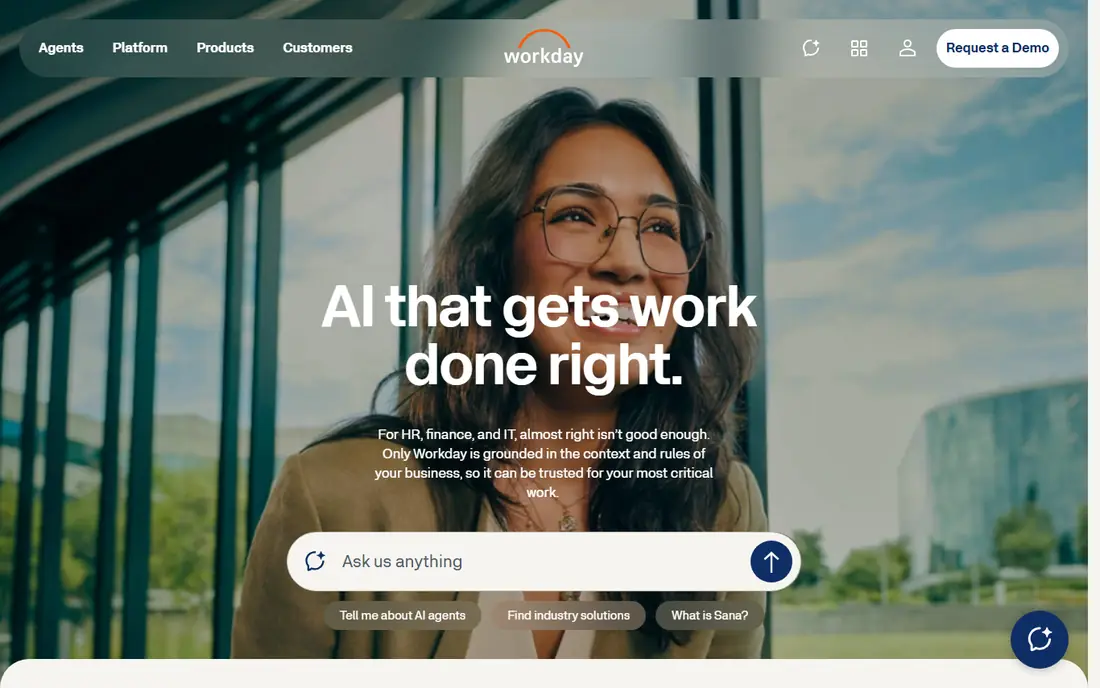
Workday HCM remains the enterprise default for large employers that want HR and finance governed in one system. It covers core HR, talent acquisition, performance, learning, succession, and workforce planning, with analytics that link people data to business outcomes. That breadth helps global companies standardise processes across countries.
The cost is the barrier for smaller employers. Pricing is quote based, implementation can take many months, and contracts tend to be long term. For a large employer with complex global needs, that investment can be justified. For a 100 person company, it is usually more platform than needed.
- HR, talent, payroll, and finance on one governed platform
- Strong global compliance
- Deep analytics
- Quote based pricing
- Long implementation for large employers
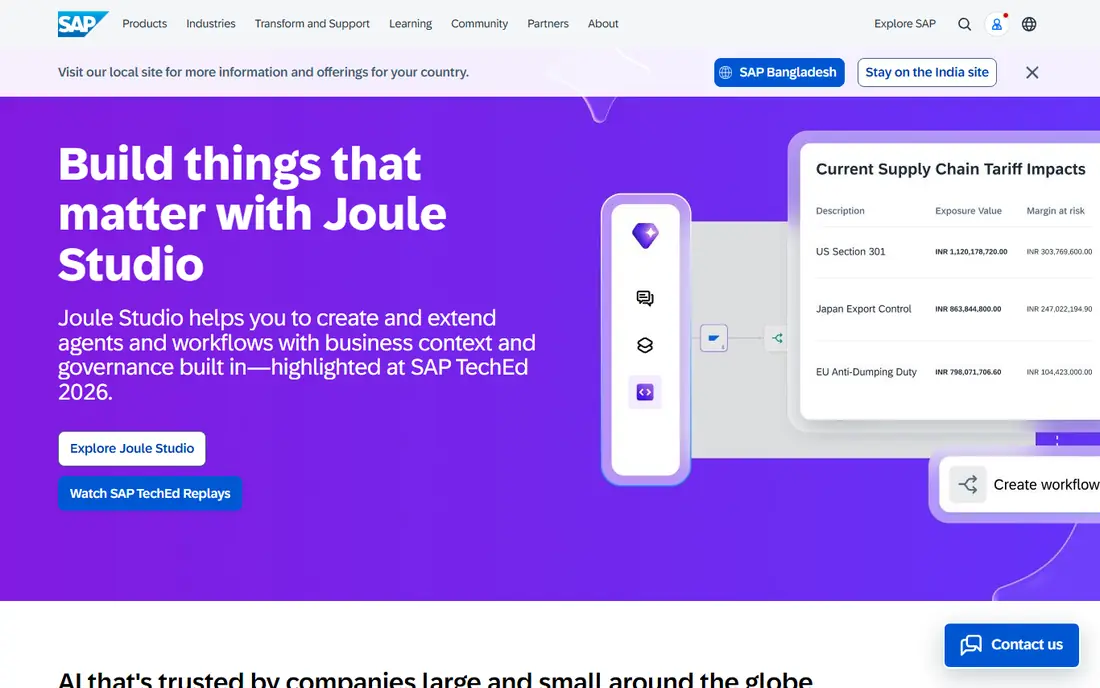
SAP SuccessFactors suits global enterprises already standardised on SAP, since it links HR to finance and operations in the same ecosystem. It covers recruiting, onboarding, performance, goals, learning, succession, and compensation, with multi country payroll and compliance support. That integration is its main selling point.
For companies outside the SAP world, that integration is less valuable, and the suite can feel complex to configure. Pricing is quote based, so buyers need a module by module quote at their headcount. For SAP enterprises, it is a natural shortlist pick.
- Complete HR suite for SAP shops
- Global payroll and compliance
- Talent and learning modules
- Quote based pricing
- Complexity for non SAP companies
Oracle HCM Cloud, part of Oracle Fusion Cloud HCM, suits global enterprises standardised on Oracle. It covers core HR, talent management, recruiting, performance, learning, and workforce planning, with multi country payroll support. Its depth helps large employers with complex structures and compliance needs.
Implementation effort and quote based pricing are the limits. Smaller companies will find the platform heavy, and buyers should confirm which modules are included in any quote. For Oracle based enterprises, it offers a complete talent suite without a separate HR system.
- Global HCM depth
- Talent, payroll, and workforce planning
- Strong for Oracle shops
- Quote based pricing
- Enterprise implementation effort
Cornerstone, now Cornerstone OnDemand, puts learning at the centre of talent management. It combines learning, performance, succession, and skills development, so companies can link training to career paths and internal mobility. That focus suits organisations where upskilling is a strategic priority.
Pricing is quote based, and the platform is built for mid size to large employers, not for a 20 person startup. Teams that mainly need core HR and payroll may find simpler tools a better fit. For learning led talent strategy, it is a strong and focused choice.
- Strong learning and development platform
- Performance and succession tools
- Skills focus
- Quote based pricing
- Learning depth can outweigh simpler HR needs
BambooHR is built for small to mid size companies that want HR simplicity first. It covers employee records, onboarding, time off, performance, and reporting in a clean interface that HR teams can learn quickly. Published pricing helps buyers compare without a sales call, with Core at $10.25 per employee per month for larger teams, or $250 per month flat for 25 or fewer employees.
Payroll and time and attendance are add ons, and learning is limited compared with Cornerstone. That makes BambooHR best for core HR plus talent basics, not for a full learning academy. For a 50 to 500 person company, it is our pick for simplicity and value.
- Published pricing
- Simple interface
- Onboarding, performance, and surveys included in higher plans
- Payroll and time tracking are add ons
- Learning is limited
Lattice focuses on the performance and engagement side of talent management. It covers reviews, goals and OKRs, feedback, one to ones, engagement surveys, and people analytics, helping managers run a consistent performance cycle. That focus suits mid size teams that want to improve how they develop and retain people.
It is not a full payroll or core HR replacement, so many teams pair it with an HRIS. Pricing is largely quote based, though a trial helps teams test the review flow. For a company whose main gap is performance and engagement, Lattice is a focused and modern pick.
- Performance reviews, goals, and feedback in one place
- Engagement surveys
- People analytics
- Quote based pricing for many plans
- Not a full payroll system
HiBob, known as Bob, is a people platform for mid size and growing companies, covering core HR, talent, performance, engagement, and workforce planning. It offers pulse surveys, 360 feedback, OKRs, and people analytics, with a social and employee centred interface. That mix suits companies that want talent tools beside a modern HR system of record.
Pricing is quote based, with modules and employee count shaping the final quote, and payroll delivery varies by country through integrations. Implementation is usually faster than an enterprise HCM suite. For a 100 to 2,000 person company, it is a flexible and modern alternative to the enterprise giants.
- Core HR plus talent and engagement
- People analytics
- Modular plans
- Quote based pricing
- Payroll delivery varies by country
Rippling combines HR, payroll, and IT management, so a new hire can get HR records, payroll, benefits, and device access from one workflow. That automation appeals to growing companies where HR and IT work together on onboarding. Talent features sit beside core HR, payroll, time, and benefits, with modules added as needed.
Plans start as low as $8 per month per employee in published pricing, with a $40 per month base fee cited for some configurations, and the full stack quote varies by modules. Module costs can add up, so buyers should price the exact bundle they need. For a growing company that wants HR, payroll, and IT together, Rippling is a strong unified pick.
- HR, payroll, and IT on one platform
- Modular pricing from $8 per employee per month
- Automation
- Full stack quote varies
- Module costs add up
How we picked these
We compared official product pages, pricing pages, and public reviews, and we kept only software that is still sold for talent management in October 2026. We favoured tools that cover more than one talent stage, meaning hiring, performance, learning, or succession, not just a single HR feature. We mixed enterprise suites with mid market and small team tools so buyers at different sizes find a fit. We did not run hands on tests, and we did not invent prices, ratings, or feature claims.
How to choose talent management software
Start with size and existing systems
Large global employers should shortlist Workday, SAP SuccessFactors, and Oracle HCM, especially if they already run that vendor finance or ERP system. Mid size teams should look at HiBob, Lattice, and Cornerstone, while small teams should start with BambooHR or Rippling. Matching size to platform avoids paying for enterprise complexity you will not use.
Price the modules you will actually use
Enterprise quotes often bundle modules you may not need, such as advanced workforce planning or global payroll. Ask for a module by module quote at your headcount, and confirm what is included in the base price versus an add on. That breakdown is the only fair way to compare quote based tools.
Pilot performance and learning on real work
Run a real review cycle and a real learning course during a trial or pilot. Check how managers give feedback, how employees set goals, and how easy it is to report on completion and progress. A talent tool that managers avoid will not improve retention, no matter how strong its feature list looks in a demo.
Frequently asked questions
What is the best talent management software?
Workday HCM is best for large global employers, SAP SuccessFactors and Oracle HCM suit SAP and Oracle shops, and BambooHR suits small to mid size teams. Cornerstone suits learning led strategies, while Lattice suits performance and engagement.
What is the top talent management software for small businesses?
BambooHR is our pick for small to mid size businesses, thanks to published pricing and a simple interface. Rippling is a strong alternative if you also want payroll and IT management in the same platform.
What are the best talent management platforms for performance reviews?
Lattice is built around performance reviews, goals, feedback, and engagement surveys, while Workday, SAP SuccessFactors, and HiBob also include performance modules. Choose Lattice if performance is the main gap, and choose a suite if you also need core HR and payroll.
How much does talent management software cost?
Small team tools start from about $8 to $10.25 per employee per month, while enterprise suites are quote based and often run to six figures per year at scale. Always ask for a module by module quote at your headcount, since add ons change the total.
What is the difference between an HRIS and talent management software?
An HRIS stores core employee records, payroll, and time data, while talent management software covers hiring, performance, learning, succession, and development. Many suites combine both, but focused tools like Lattice cover talent without replacing a full HRIS.
Sources
- https://www.workday.com
- https://www.sap.com
- https://www.oracle.com
- https://www.cornerstoneondemand.com
- https://www.bamboohr.com
- https://www.lattice.com
- https://www.hibob.com
- https://www.rippling.com
- https://rankite.com/blog/top-human-capital-management-software
- https://www.softwareworld.co/hr-software-pricing/
See where you really rank - block by block
ProMapRanker scans Google Maps across a grid of your service area. Simple monthly plans from $19, white-label on every plan.
Start freeKeep reading
 free chatgpt alternatives hong kong
Free ChatGPT Alternatives Hong Kong in 2026
Find free ChatGPT alternatives Hong Kong users can access in 2026, from Gemini and Perplexity to DeepSeek and Copilot, with free tiers compared today.
Read → best work management software
Best Work Management Software in 2026
We compared the best work management software for teams, agencies, and small businesses, covering boards, timelines, automation, and current pricing today.
Read → best wiki app paid
Best Wiki App Paid in 2026: 10 Apps Compared
Compare the best wiki app paid options in 2026, with Confluence, Notion, Nuclino, Slab, Guru, and more for teams needing a real knowledge base Plus buying tips.
Read →