 ProMapRanker
Best Supply Chain Collaboration Software in 2026


Global chains with many trading partners · Pricing starts at: See website
Key takeaways
- Supply chain collaboration means shared forecasts, orders, inventory and exception alerts, not just chat between teams.
- SAP Business Network, Kinaxis and Oracle suit large global networks, while Coupa suits procurement-led supplier coordination.
- FourKites and project44 focus on shipment visibility, which helps teams that mainly need to track goods in transit.
- Most enterprise tools in this group sell by quote, so expect a discovery process and a written proposal before budgeting.
- Start with one use case, such as forecast sharing or shipment tracking, before rolling a platform out to every supplier.
Quick comparison
| Pick | Great for | Pricing starts at | Free tier | |
|---|---|---|---|---|
| SAP Business Network | Global chains with many trading partners | See website | No | Visit |
 Kinaxis | Collaborative planning with scenario simulation | See website | No | Visit |
 Coupa | Procurement teams coordinating suppliers across countries | See website | No | Visit |
 Oracle SCM | Supplier collaboration inside Oracle environments | See website | No | Visit |
 Blue Yonder | Large retail, consumer goods and logistics planning | See website | No | Visit |
 RELEX Solutions | Retail chains that need forecast collaboration | See website | No | Visit |
 FourKites | Real-time shipment and order visibility | See website | No | Visit |
 project44 | Supply chain visibility across transport modes | See website | No | Visit |
 E2open | Multi-tier planning and execution for global networks | See website | No | Visit |
The best supply chain collaboration software
Supply chain collaboration software helps buyers, suppliers, manufacturers and logistics partners work from the same plan. The tools below differ in whether they focus on planning, procurement, visibility or execution, so match the tool to the problem that causes the most delays in your network.
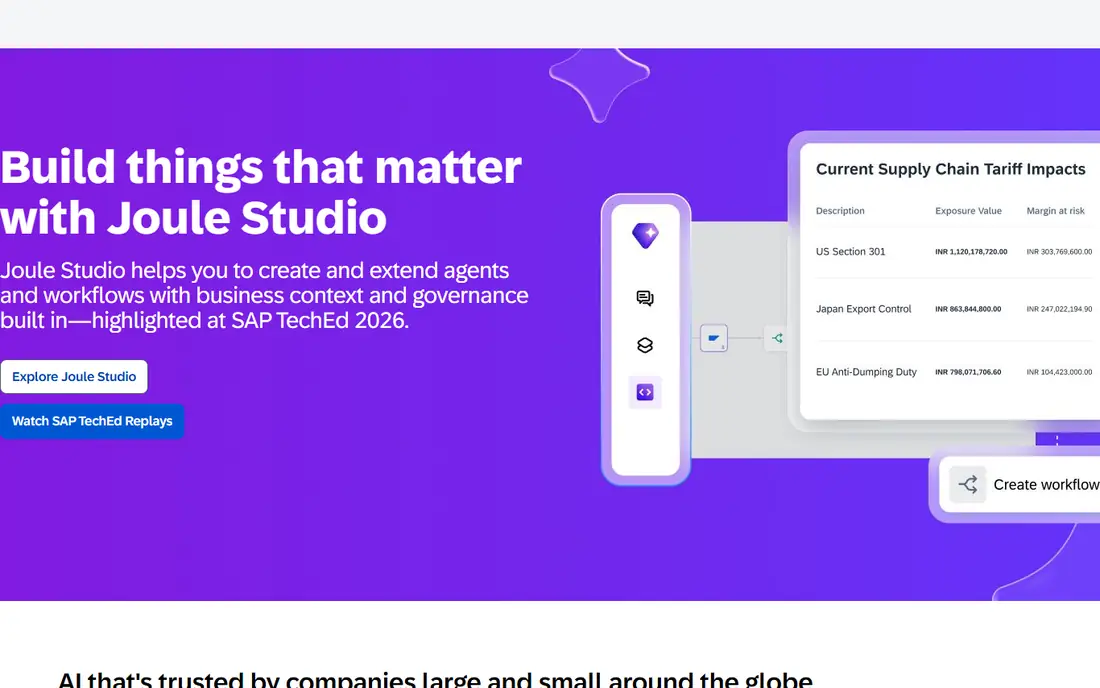
SAP Business Network, including the former Ariba Network, is built for global supply chains with many trading partners and high transaction volume. Buyers and suppliers can share forecasts, orders, inventory levels, quality information and shipment details through one network, rather than exchanging spreadsheets and emails. That shared record helps teams spot supply and demand mismatches earlier.
Integration with SAP ERP and supply chain systems is a key strength for SAP customers. Orders, forecasts and inventory data can flow between the network and the ERP, which reduces manual entry and keeps planning data consistent. Supplier onboarding tools and enablement support also help larger buyers bring many suppliers onto the same process.
The trade-off is complexity and cost opacity. Pricing is an annual subscription that is not published, and implementation can be slow for organisations without SAP expertise. Smaller buyers with few suppliers may find a lighter portal or visibility tool more practical. SAP Business Network fits best when partner count and transaction volume justify an enterprise network.
- Very large trading partner network
- Forecast, procurement and inventory collaboration
- ERP integration for SAP users
- Annual subscription not public
- Implementation is slow and complex for smaller teams
Kinaxis focuses on collaborative planning across the whole supply chain. Its platform gives planners, suppliers and partners a shared view of demand, supply, inventory and capacity, then lets teams test scenarios when conditions change. A supplier delay, a demand spike or a capacity constraint can be modelled before a decision is made, rather than discovered after orders are placed.
Concurrent planning is the central idea. Instead of passing plans sequentially between departments, teams work from the same live plan and see the effect of a change across the network. That approach suits large companies and multinationals with global operations, where a change in one region affects inventory and production elsewhere.
Kinaxis is not a quick rollout tool. Pricing is quote based, implementation needs specialist resources, and the full value appears when planning teams actually collaborate in the platform. Smaller companies with simple supply chains should look at lighter tools first. Large planners should compare Kinaxis with Blue Yonder and Oracle on scenario depth and ERP fit.
- End-to-end visibility
- Concurrent planning
- Scenario simulation for supply and demand changes
- Quote-based pricing
- Needs specialist resources to implement well
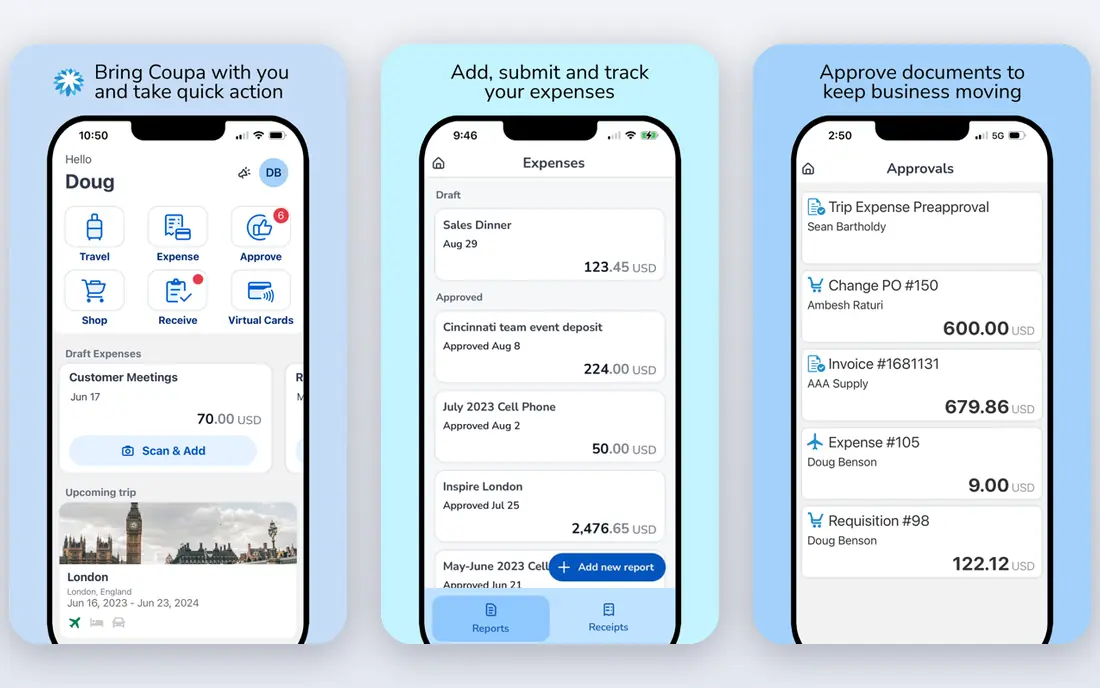
Coupa is best known for procurement, but its supplier portal makes it a strong collaboration tool for buyer and supplier coordination. Procurement teams can manage suppliers, purchase orders, invoices and payments through one system, while suppliers and logistics partners share status updates in the same place. That shared portal reduces email chasing and duplicate data entry.
The size of the Coupa B2B network helps when a buyer works with suppliers in many countries. Suppliers that already use Coupa for other buyers face less onboarding friction, and buyers gain a consistent process for orders and invoices. Spend controls, approvals and reporting also give finance teams visibility into commitments before goods arrive.
Pricing depends on transactions and users, and rollouts in large companies can take time. Coupa is less focused on deep production planning than Kinaxis or Blue Yonder, so manufacturers with complex planning needs may pair Coupa with a planning platform. For procurement-led collaboration, however, Coupa is a practical enterprise choice.
- Large B2B supplier network
- Buyer, supplier and logistics portal
- Procurement and spend controls
- Pricing by transactions and users
- Long rollout in large companies
Oracle Supply Chain Management includes supplier collaboration tools that let buyers share forecasts, orders and inventory information with suppliers, and receive responses in real time. Vendor managed inventory support helps suppliers monitor stock levels and replenish when agreed thresholds are reached. External manufacturing collaboration also suits companies that outsource production to contract manufacturers.
For Oracle ERP customers, the fit is the main advantage. Collaboration data flows into the same system used for planning, procurement and manufacturing, which keeps records consistent and reduces integration work. Dashboards can alert teams to supply assurance problems, so planners can act before a shortage affects production.
Pricing is subscription based per user and not published, and implementation can take weeks to months depending on scope. Non-Oracle companies should compare integration effort carefully, because the best value comes when Oracle SCM sits alongside Oracle ERP. Standalone buyers may prefer SAP Business Network or Coupa for a network-first approach.
- Supplier collaboration, vendor managed inventory and external manufacturing
- Strong Oracle ERP fit
- Subscription pricing not public
- Rollout takes weeks to months
Blue Yonder offers end-to-end supply chain planning with collaboration across demand, supply, inventory and logistics. Retailers, consumer goods companies and advanced manufacturers use it to align forecasts, replenishment and distribution from one planning system. That unified view helps when promotions, seasons and store assortments change demand in different places at the same time.
Collaboration in Blue Yonder means planners, suppliers and logistics partners work from shared forecasts and exception alerts, rather than separate spreadsheets. The platform can highlight where supply will fall short, where inventory is building up, and where a promotion will strain capacity. For large networks, that exception focus saves planner time.
The trade-off is enterprise scale. Pricing is quote based and often starts at a high annual level, and the learning curve is steep for teams new to advanced planning. Blue Yonder fits large organisations with complex networks, not small buyers with a handful of suppliers. Compare it with Kinaxis and RELEX on planning depth and industry fit.
- Unified demand and supply planning
- End-to-end collaboration
- Strong for retail and manufacturing
- Enterprise pricing
- Steep learning curve for new planners
RELEX Solutions appears here for retail forecast collaboration as well as inventory planning. Retailers and consumer brands can share forecasts with suppliers, track demand across stores and channels, and adjust replenishment when conditions change. Multi-tier visibility helps teams see beyond direct suppliers to upstream constraints that could affect availability.
The platform also supports scenario work and a digital twin view of the supply chain, which lets planners test changes before committing to orders. That capability matters for retailers with large assortments, frequent promotions and seasonal swings, where a small forecast error can create waste or stockouts across many stores. Sustainability tracking adds value for grocery and fresh goods teams.
RELEX pricing is custom and implementation needs specialist resources, so it suits large and mid-market retailers rather than small buyers. Smaller retail teams should consider whether a lighter forecasting tool plus a visibility platform gives enough collaboration without an enterprise project. Large chains should compare RELEX with Blue Yonder on store count and promotion complexity.
- Real-time forecast collaboration
- Multi-tier visibility
- Digital twin and scenario tools
- Custom quote pricing
- Needs specialist resources for full rollout
FourKites focuses on the part of collaboration that many teams feel first: knowing where goods are and when they will arrive. Its platform tracks shipments across road, rail, ocean and air, combines carrier data with order information, and gives predictive arrival times. When a shipment is delayed, exception alerts let buyers, suppliers and logistics teams act before a stockout occurs.
That visibility helps customer service, warehouse planning and production scheduling, because teams can plan labour and inventory around realistic arrival times rather than promised dates. FourKites also supports collaboration through shared shipment views, so partners see the same status instead of asking for updates by email or phone.
FourKites does not replace a planning platform. It shows what is happening in transit, but it does not forecast demand or plan production in the way Kinaxis or Blue Yonder do. Teams that need both should pair FourKites with a planning tool. Teams whose main pain is shipment uncertainty can start with FourKites alone.
- Real-time tracking across modes
- Predictive arrival times
- Exception alerts for delays
- Focus is visibility, not full planning
- Pricing by quote
project44 offers a similar visibility focus to FourKites, with a broad carrier network and multimodal tracking. Shippers can follow orders and shipments from origin to destination, see exceptions, and share status with customers and partners. That shared view reduces status requests and helps teams prioritise delayed or at-risk shipments.
The platform also connects shipment data with order data, so a delay is linked to the customer orders it affects. That link helps service teams give accurate updates and helps planners decide whether to expedite, substitute or reallocate stock. For companies with complex transport networks, that order-level view is more useful than a simple map of trucks or vessels.
As with FourKites, project44 is a visibility platform first, not a full demand and supply planning suite. Pricing is quote based and depends on shipment volume and scope. Compare FourKites and project44 on carrier coverage for your lanes, data quality and integration with your ERP or transport management system before choosing.
- Broad carrier network
- Multimodal visibility
- Order and shipment tracking in one view
- Pricing by quote
- Planning features are lighter than Kinaxis or Blue Yonder
E2open provides a network platform for multi-tier planning and execution, with machine learning forecasting, inventory optimisation and collaboration across suppliers, manufacturers and logistics partners. Its strength is seeing beyond direct suppliers to deeper tiers, where a disruption can affect production even when a direct supplier looks healthy.
That multi-tier view helps global manufacturers, consumer goods companies and distributors that rely on long, layered supply chains. When a component shortage appears upstream, planners can see affected products and orders sooner and adjust plans across the network. E2open also supports execution workflows, so a plan change can flow into orders and shipments without a separate handoff.
Implementation is complex and pricing is enterprise quote based, so E2open suits large global networks rather than small buyers. Teams should compare E2open with Kinaxis and SAP Business Network on network depth, planning features and ERP integration. Start with a clear scope, such as one product family or region, before expanding across the whole network.
- Multi-tier network visibility
- Machine learning forecasting
- Planning and execution in one network
- Enterprise pricing by quote
- Implementation is complex for large networks
How we picked these
We compared official product pages, network descriptions and public feature documentation for tools that support collaboration between supply chain partners. We kept only platforms that are live, that share forecasts, orders, inventory or shipment data between organisations, and that serve business supply chains today. We left out generic chat tools, single-company planning tools with no partner sharing, and software supply chain security tools, which solve a different problem.
What to check before you buy
Start with the collaboration problem that costs you the most time or money. If late shipments cause stockouts, a visibility platform such as FourKites or project44 may give the fastest return. If forecast disagreements cause overstock, a planning platform such as Kinaxis or RELEX may matter more. If invoice and order chaos is the issue, Coupa or SAP Business Network may fit better. A platform bought for the wrong problem will sit unused.
Next, check supplier onboarding honestly. A network tool only works if suppliers actually use it, so ask about onboarding support, supplier portals that do not require a paid licence for every supplier, and integration options for suppliers with limited IT resources. Pilot with a small group of willing suppliers, measure response times and forecast accuracy, and fix onboarding friction before a full rollout.
Finally, compare total cost and implementation time in writing. Enterprise tools here sell by quote, and totals can include user licences, transaction fees, implementation services and integration work. Ask for a proposal that separates licence, implementation and ongoing support, and that states the timeline for the pilot and the full rollout. That breakdown makes it easier to compare vendors that describe pricing in very different ways.
Frequently asked questions
What is the best supply chain collaboration software?
The best tool depends on your main problem. SAP Business Network suits large trading partner networks, Kinaxis suits collaborative planning, Coupa suits procurement coordination, and FourKites suits shipment visibility. Start from the bottleneck, then shortlist tools built for that job.
What are the best supply chain collaboration platforms for small companies?
Small companies usually need a lighter approach than the enterprise platforms here. Start with a visibility tool or a supplier portal offered by your ERP or transport provider, and add a planning platform only when supplier count and complexity grow. Pilot with a few suppliers before committing to an enterprise contract.
How much does supply chain collaboration software cost?
Most enterprise tools here sell by quote, with pricing based on users, transactions, shipment volume or network scope. Blue Yonder and other enterprise platforms can run to high annual totals, while visibility tools vary by shipment volume. Always request a written proposal for your scope.
Can one tool handle planning, procurement and visibility?
Some platforms cover several areas, but few do all three equally well. SAP, Oracle and E2open offer broad coverage, while FourKites and project44 focus on visibility and Kinaxis focuses on planning. Many large companies pair a planning platform with a visibility platform and a procurement portal.
How do we get suppliers to actually use the platform?
Keep supplier tasks simple, provide onboarding help, and avoid charging every supplier for full access where a free portal option exists. Show suppliers a clear benefit, such as faster payment, clearer forecasts or fewer status emails, and start with suppliers who already collaborate closely with your team.
Sources
See where you really rank - block by block
ProMapRanker scans Google Maps across a grid of your service area. Simple monthly plans from $19, white-label on every plan.
Start freeKeep reading
 who has best internet service
Who Has the Best Internet Service in 2026
Who has best internet service for US homes? We compare fiber, cable, fixed wireless and satellite providers on speed, price, availability and terms today.
Read → which survey tool has the best analytics
Which Survey Tool Has the Best Analytics in 2026
Find which survey tool has the best analytics in 2026, comparing Qualtrics, SurveyMonkey, Typeform, Alchemer, and more on reports, text, and stats today.
Read → which streaming service has the best movies
Which Streaming Service Has the Best Movies in 2026
Answering which streaming service has the best movies, with Netflix, Max, Criterion and more compared on libraries, prices and free options in this guide.
Read →