 ProMapRanker
Best Subscription App in 2026

Key takeaways
- There is no single best subscription platform, because billing software, membership sites, and online stores solve different problems.
- Stripe Billing suits teams already on Stripe that want control over billing logic and usage-based plans.
- Paddle suits small digital sellers that want tax and compliance handled by a merchant of record.
- Chargebee, Recurly, and Maxio suit growing software companies with complex plans, dunning, and revenue reporting.
- Memberful and Subbly suit creators and product sellers who want memberships or subscription boxes without building billing from scratch.
Quick comparison
| Pick | Great for | Pricing starts at | Free tier | |
|---|---|---|---|---|
 Stripe Billing | Stripe-native billing | See website | No | Visit |
 Chargebee | Flexible subscription operations | See website | Free trial | Visit |
 Recurly | Retention and recovery | See website | No | Visit |
 Paddle | Global digital sales with tax handled | See website | No | Visit |
 Maxio | B2B SaaS finance teams | $599 per month | No | Visit |
 Zoho Billing | Small teams on Zoho | $39 per month | Free trial | Visit |
 Recharge | Shopify subscription products | See website | No | Visit |
 Subbly | Subscription box stores | See website | Free trial | Visit |
 Memberful | Memberships on an existing site | $49 per month | No | Visit |
The best subscription app
We use the term subscription app here to cover the platforms that run recurring payments, memberships, and subscription products. Some are billing engines for software companies. Others are storefronts for creators and product sellers. The list below covers both, so you can match the tool to the business you actually run.

Stripe Billing is the billing layer for companies already processing payments through Stripe. It handles subscriptions, trials, prorations, coupons, and usage-based billing, and it connects to Stripe Payments, Tax, and Revenue Recognition as separate products. That modular design gives engineering teams a lot of control, and it scales from a first paid plan to complex pricing with seats and metered usage.
The trade-off is that control comes with work. A non-technical founder may find setup slower than a hosted storefront, and global tax still needs Stripe Tax or another tool. Stripe Billing also locks billing to Stripe processing, so a team that wants several payment gateways should look at Chargebee or Recurly instead. For Stripe-native teams, though, it is often the simplest and most flexible billing choice.
- Deep control over plans, trials and usage billing
- Strong developer tools and documentation
- Works with the wider Stripe stack
- Stripe-only processing
- Tax and revenue recognition are separate add-ons
- Needs developer time for complex setups
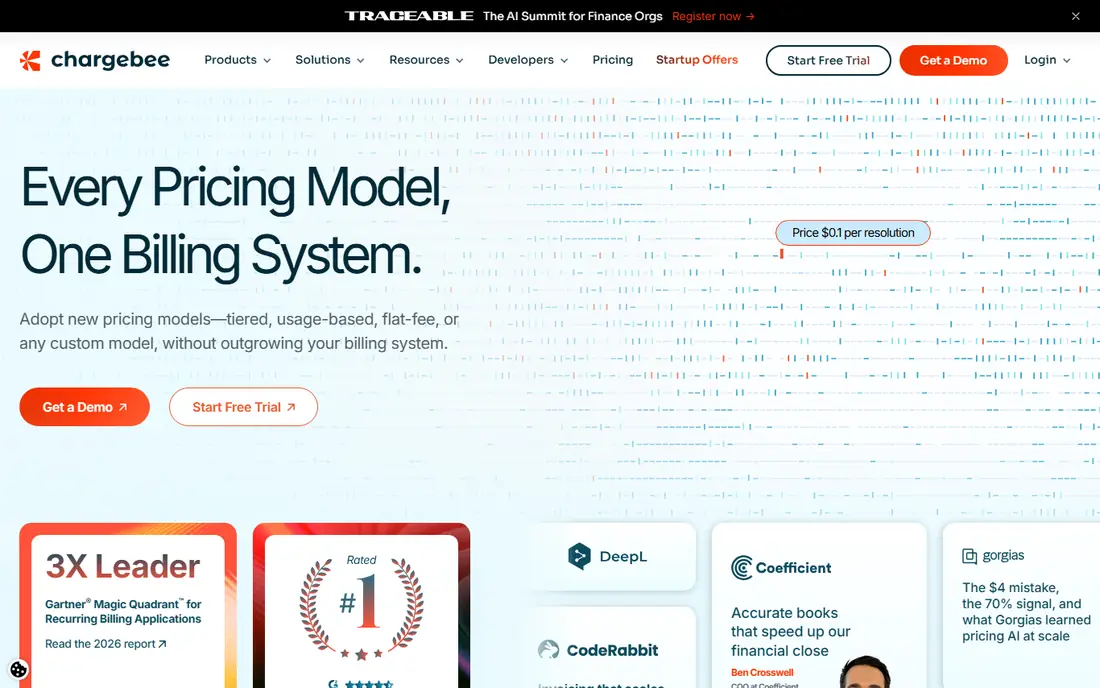
Chargebee sits on top of payment gateways and manages the subscription layer: plans, billing cycles, upgrades, failed-payment retries, and customer portals. It suits software companies that sell in several countries, use more than one gateway, or mix flat plans with usage charges. Its dunning tools, which retry failed cards and prompt customers to update payment details, help reduce involuntary churn, which is a common revenue leak for subscription businesses.
Pricing is the main thing to check carefully. Chargebee has offered both percentage-based and flat plans, and the right plan depends on billing volume. Ask for a written quote based on your monthly volume and gateway setup, and confirm what is included for revenue recognition. For mid-size software teams, Chargebee remains one of the most complete subscription platforms, provided the team has time to configure it properly.
- Multi-gateway billing
- Strong dunning and retention tools
- Handles hybrid seat and usage plans
- Pricing has changed often and needs a quote for larger plans
- Setup takes time for complex catalogues

Recurly is a long-standing subscription management platform for growing software and media companies. It handles recurring billing across gateways, manages trials and plan changes, and puts a clear focus on keeping subscribers: dunning, retry logic, and win-back offers. The subscriber portal lets customers update cards, change plans, and manage their own accounts, which reduces support work for the billing team.
The main drawback is pricing transparency. Most plans are quoted, so a small team cannot compare Recurly to a published price without a sales conversation. That said, teams that lose revenue to failed payments often find the recovery tools pay for themselves. If retention is your main problem, Recurly deserves a place on the shortlist alongside Chargebee.
- Gateway-agnostic billing
- Strong dunning and churn recovery
- Clear subscriber lifecycle tools
- Pricing by quote for most plans
- Enterprise focus may suit larger teams better
Paddle acts as a merchant of record for digital products and software. That means Paddle sells the product to the customer, handles sales tax and VAT, manages compliance, and pays the seller. For a small team selling software worldwide, that removes a large amount of tax and legal work. Pricing is a percentage of each transaction, so there is no monthly platform fee to start, which suits early-stage sellers.
The fee becomes the trade-off as volume grows. A percentage on every sale costs more than a flat billing fee once revenue is high, and Paddle gives less control over payment routing than Stripe Billing or Chargebee. Usage-based billing is also more limited. For lean teams that want global sales without tax work, Paddle is still a strong and simple subscription platform.
- Merchant of record handles global tax and compliance
- Single fee covers payments and tax
- Simple for small digital sellers
- Percentage fee adds up at high volume
- Less control than a billing engine
- Limited usage billing
Maxio, formed from Chargify and SaaSOptics, targets business-to-business software companies with contract-led billing. It combines subscription billing, revenue recognition, and SaaS metrics such as monthly recurring revenue and churn, in one platform. Finance teams get cleaner reporting for audits and board reviews, and sales teams can handle quotes, contracts, and complex pricing without stitching several tools together.
The starting price of $599 per month puts Maxio out of reach for many early startups, and the platform is best for companies that already have meaningful recurring revenue. A very small team should start with Zoho Billing or Stripe Billing instead. For a finance-led SaaS company past the early stage, Maxio offers a level of reporting depth that simpler billing tools do not match.
- Billing plus revenue recognition and SaaS metrics
- Built for contract-led B2B sales
- Strong reporting for finance teams
- Higher starting price
- Aimed at established companies, not early startups
Zoho Billing, formerly Zoho Subscriptions, is the budget-friendly billing option for small software and service companies. It handles recurring invoices, trials, coupons, hosted payment pages, and customer portals, and it fits naturally into a company already using Zoho CRM or Zoho Books. The starting price is low compared with Maxio or Recurly, which makes it a sensible first billing system for a team under one million dollars in annual billings.
Advanced features, including full revenue recognition, sit on higher plans, so a growing company should check which plan covers its reporting needs. The interface is functional rather than polished, and support quality can vary by plan. For a small team that wants solid recurring billing without an enterprise price, Zoho Billing is hard to beat on value.
- Low starting price for a full billing tool
- Integrates with Zoho CRM, Books and other Zoho apps
- Multi-currency support
- Advanced revenue recognition only on higher plans
- Interface feels dated in places
Recharge is the leading subscription app for Shopify stores selling consumables, supplements, food, and other repeat products. It lets customers subscribe, skip, swap, and manage deliveries from a portal, and it gives merchants tools for bundles, upsells, and retention offers. That focus on physical subscription products sets it apart from software billing tools, which are built for licences and seats rather than shipments.
The Shopify focus is also the limit. A store on another platform, or a software company, will get little from Recharge. Pricing is also quoted for larger stores, so a small Shopify merchant should confirm the plan and transaction fees before committing. For a Shopify brand built on repeat orders, Recharge is the natural first choice among subscription apps for online stores.
- Built for Shopify stores
- Strong subscribe-and-save tools
- Customer portal and retention features
- Shopify-focused, so less relevant outside that platform
- Pricing by quote for larger stores
Subbly is built for subscription box and product businesses that want a storefront and billing in one place. Merchants can build a site, sell boxes and bundles, run surveys for customer preferences, offer gifting, and manage subscribers without hiring a developer. That all-in-one approach suits small product brands, farms selling seasonal shares, and creators selling physical kits.
Subbly is not a software billing engine, so a SaaS company with usage pricing or complex contracts should look elsewhere. Pricing has also varied across plan listings, so check the current plans on the official site before budgeting. For a product subscription business that wants to launch quickly, Subbly offers a clear path from storefront to recurring orders.
- Storefront plus subscription management in one tool
- Good for boxes, bundles and surveys
- No developer needed to start
- Less suited to complex software billing
- Pricing varies by plan and needs checking on the site
Memberful is for creators and publishers who already have a website and want to add paid memberships to it. It handles sign-ups, tiers, group plans, and member access, and it integrates with WordPress, Discord, and email tools. A newsletter writer, podcaster, or course creator can gate content, offer a members-only area, and manage renewals without moving the whole site to a new platform.
The cost structure needs a close look. Memberful charges a monthly fee plus a transaction percentage on some plans, so total cost depends on member volume. It also does not build the website itself, so a creator starting from scratch may prefer Podia or Ghost. For a creator with an existing audience and site, Memberful is a clean way to add the best platform for membership sites without rebuilding everything.
- Adds memberships to an existing website
- Supports tiers, group plans and Discord integration
- Works with WordPress and other sites
- Monthly fee plus a transaction fee on lower plans
- No full website builder included
How we picked these
We compared official pricing pages, feature pages, and third-party comparisons that checked vendor pricing in September and October 2026. We included billing engines, a merchant of record, a Shopify tool, a box store platform, and a membership tool, because the search term covers all of those uses. We did not claim hands-on testing, and we wrote See website where pricing was quoted or where published figures conflicted.
What to decide before you choose
The first decision is not which tool is best in general, but which problem you are solving. A software company needs plan logic, dunning, and revenue reporting. A store needs delivery management and a customer portal for swaps and skips. A creator needs tiers and gated content. Picking a tool from the wrong group creates work that no feature list can fix.
Billing engine or merchant of record
A billing engine, such as Stripe Billing or Chargebee, gives you control and lets you keep your payment relationships. A merchant of record, such as Paddle, takes on tax and compliance but charges a percentage on every sale. Small global sellers often start with a merchant of record and move to a billing engine as volume grows and tax work becomes worth handling in-house.
Count the total cost, not just the monthly fee
Add the platform fee, payment processing fees, transaction percentages, and any add-ons for tax or revenue recognition. A tool with no monthly fee can cost more than a flat-fee tool once sales rise. Model the cost at your current volume and at twice that volume, so a growing business does not get surprised by a fee structure that scales badly.
Test dunning and the customer portal early
Failed payments and plan changes are where subscription businesses lose money and support time. Trial the retry logic, the card-update flow, and the portal for pausing, skipping, and cancelling. A portal that frustrates customers will raise support tickets and churn, even if the billing logic behind it is strong.
Frequently asked questions
What is the best subscription app for a small business?
For software, Zoho Billing is the lowest-cost solid start, while Stripe Billing suits teams already on Stripe. For a Shopify store, Recharge is the natural pick. For memberships on an existing site, Memberful fits best. Match the tool to your business type first, then compare price.
What is the best subscription service platform for global sales?
Paddle suits small digital sellers that want tax and compliance handled by a merchant of record. Larger teams may prefer Chargebee or Stripe Billing with a separate tax tool, which gives more control at higher volume. Check the total fee at your expected sales volume before choosing.
What is the best platform for a membership site?
Memberful works well on an existing website, while Ghost and Podia suit creators who want a combined site, membership, and content platform. Memberful is best when you want to keep your current site and add memberships to it, rather than move everything.
How much does subscription software cost?
Costs range from a percentage of each sale, with no monthly fee, to several hundred dollars a month for finance-grade billing. Add payment processing and any tax or revenue recognition add-ons to get the true cost. Quote-only tools need a written quote based on your volume.
Do I need a subscription app if I only have one plan?
Not always. A single flat plan can run through a simple checkout and payment link. A dedicated platform becomes worth it when you add trials, upgrades, usage charges, failed-payment recovery, or several plans, because manual billing quickly becomes error-prone at that point.
Sources
See where you really rank - block by block
ProMapRanker scans Google Maps across a grid of your service area. Simple monthly plans from $19, white-label on every plan.
Start freeKeep reading
 twitch alternatives
Twitch Alternatives in 2026
Explore the best Twitch alternatives in 2026 for live streaming, with free platforms, monetisation options, audiences, chat tools, and tips for new streamers.
Read → firebase alternatives
Best Firebase Alternatives in 2026
Looking for Firebase alternatives? We compare 9 backend platforms for auth, databases, realtime, storage, functions, self-hosting, and pricing for your app.
Read → companies with best work life balance
Companies With Best Work Life Balance in 2026
See companies with best work life balance in 2026, ranked by employee ratings, with flexible work options, benefits, and what to check before applying.
Read →