 ProMapRanker
Best Star App in 2026: 8 Apps Compared

Key takeaways
- Stellarium is the best free planetarium app for accurate sky simulation, planning, and learning constellations.
- SkySafari is the best pick for serious observers, with a deep catalog and telescope control on paid tiers.
- Star Walk 2 and Sky Tonight suit beginners and families, with clear AR views and tonight-focused guides.
- Night Sky and Star Chart are strong iPhone-friendly options for quick point-and-identify sessions.
- NASA App and Heavens-Above add context beyond stars, covering missions, ISS passes, and satellite tracking.
Quick comparison
| Pick | Great for | Pricing starts at | Free tier | |
|---|---|---|---|---|
 Stellarium | Accurate planetarium | Free | Yes | Visit |
 SkySafari | Serious observers | Free | Yes | Visit |
 Star Walk 2 | Beautiful AR views | Free | Yes | Visit |
 Sky Tonight | What is visible tonight | Free | Yes | Visit |
 Night Sky | iPhone AR stargazing | Free | Yes | Visit |
 Star Chart | Simple sky identification | Free | Yes | Visit |
 NASA App | Missions and images | Free | Yes | Visit |
 Heavens-Above | Satellite passes | Free | Yes | Visit |
The best star apps
We compared official app store listings, feature pages, and current 2026 guides for the best app for stargazing and astronomy. The list below favors apps that are still maintained, work offline or with a built-in catalog, and include a night mode that protects your night vision. Point your phone at the sky, and the best star apps label stars, planets, and constellations in real time.
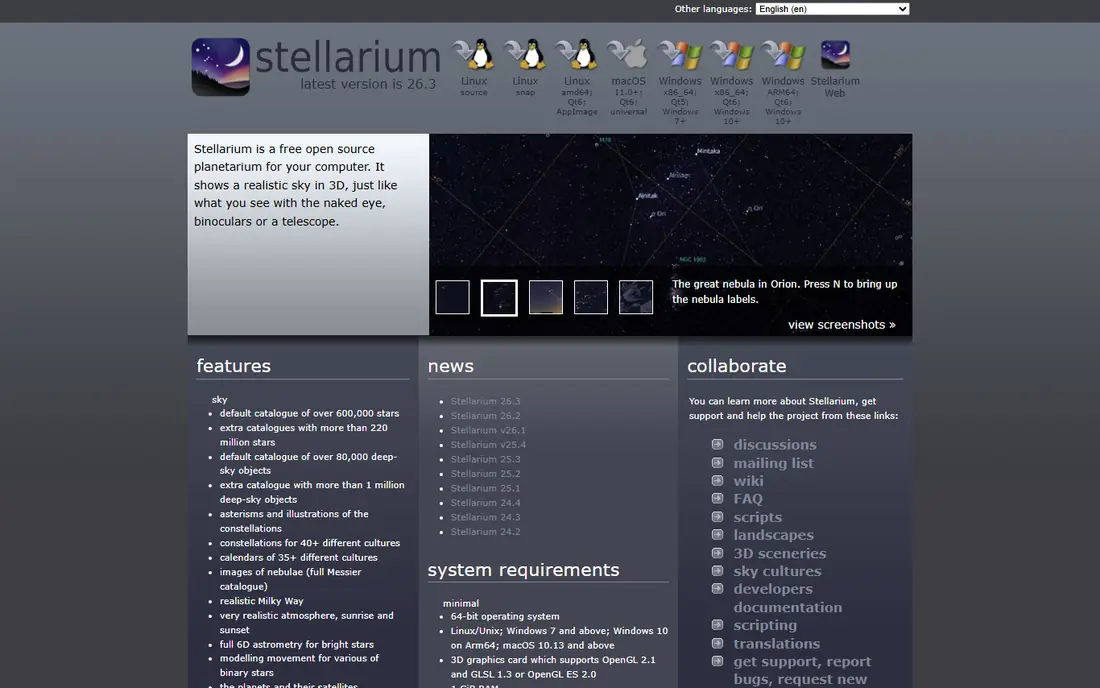
Stellarium is the planetarium standard, and the mobile app brings that accuracy to your pocket. You can view the sky from any location and date, watch time-lapse motion across a night, and study constellations, planets, and deep-sky objects with realistic horizons and Milky Way rendering. The free desktop and web versions are excellent for planning a session at home, while the mobile app works in the field with its built-in catalog.
The optional Plus upgrade expands the catalog and adds telescope control, with current guides listing a one-time price near $19.99 on some stores. Most beginners will not need it at first. If you want the most accurate free sky map and a tool that grows with your interest, Stellarium is the first app to install.
- Accurate sky simulation with time travel
- Desktop and web versions for planning
- Large built-in star catalog
- Full Plus catalog and telescope control cost extra
- Interface has more options than casual apps
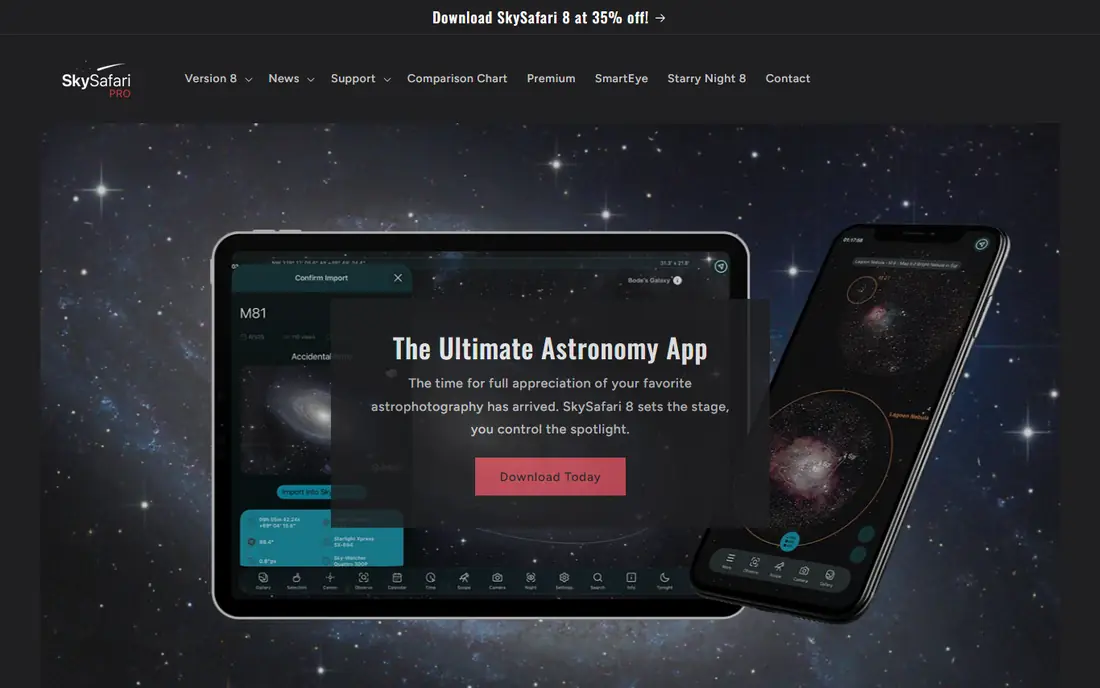
SkySafari has been recommended to amateur astronomers for years, and the current version keeps that reputation. The free Basic version covers more than 120,000 stars, all 88 constellations, planets, and major satellites, with a time-travel mode for planning. Paid Plus and Pro tiers add millions more objects, deeper deep-sky catalogs, and telescope control by wireless or wired connection.
That depth is also the learning curve. New users may feel overwhelmed by catalog options, observation lists, and settings. Stick with the Basic version until you own a telescope or start chasing faint objects. For serious observers who want one app from first night to telescope nights, SkySafari is the strongest all-round pick.
- Deep object database
- Session planning tools
- Telescope control on paid tiers
- Paid tiers cost more than casual apps
- Feature depth takes time to learn
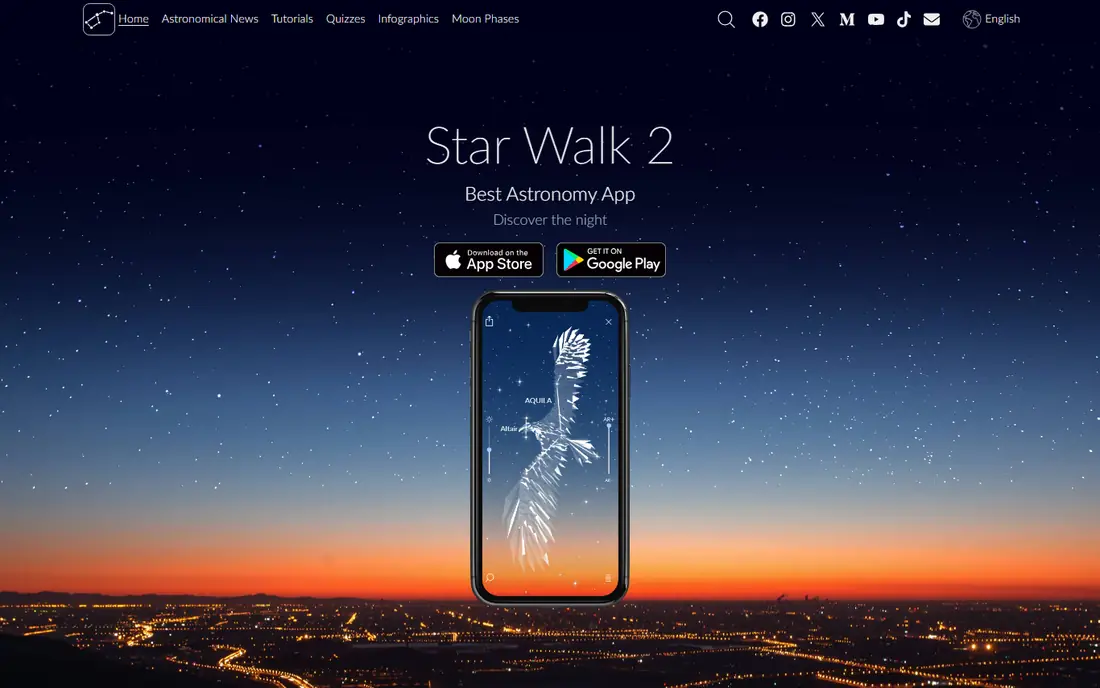
Star Walk 2 is the showpiece app in this list. Point your phone at the sky and it overlays constellation art, star names, and planet labels in a clean, attractive view. It also includes a time machine for past and future skies, and a sky live section for rise and set times. Current guides list a free version with ads and an ad-free edition near $2.99.
It is less of a planning tool than Stellarium or SkySafari, and deep-sky hunters will want a larger catalog. For beginners, kids, and anyone who wants to impress friends on a clear night, Star Walk 2 is the most inviting astronomy app here. The visual design alone makes constellations easier to remember.
- Polished AR sky view
- Clear constellation art
- Good for showing friends and family
- Ads on the free version
- Full ad-free edition costs extra
Sky Tonight answers the question most beginners actually ask: what can I see tonight. It pairs an AR sky view with a tonight panel, event calendar, and visibility info for planets, the Moon, and bright deep-sky objects. That focus makes it easier to plan a short session than opening a full planetarium catalog and wondering where to start.
Serious observers may miss the deeper catalogs and telescope tools in SkySafari and Stellarium Plus. Sky Tonight is also best as a companion to a planetarium app, not a replacement for one, once you start chasing faint targets. For quick, rewarding nights under the stars, it is one of the best star apps for beginners.
- Tonight-focused guides and events
- AR identification
- Clear calendar of sky events
- Catalog depth is lighter than SkySafari
- Some features vary by platform
Night Sky is a polished iPhone and iPad app for AR stargazing, with point-at-sky identification, constellation tours, and alerts for events such as ISS passes and meteor showers. Its design feels native to Apple devices, and night mode keeps the screen dim while you observe. The free version covers core identification well.
Android users should choose another pick, since Night Sky is strongest on Apple platforms. Some guided tours and extra features sit behind a paid plan. If you use an iPhone and want a beautiful, simple sky app for casual nights, Night Sky is an excellent choice.
- Strong AR identification on iPhone
- Night mode and notifications for events
- Clean design
- Best experience is on Apple devices
- Some tours and features need a paid plan
Star Chart does one job with little fuss: point your phone at the sky and see what you are looking at. Stars, planets, and constellations appear with labels, and you can explore the sky by moving the phone or browsing the map. That simplicity makes it a good backup app, or a first app for children and casual observers.
It lacks the planning lists, deep catalogs, and telescope control of the serious tools here. Treat Star Chart as a quick identification aid, and pair it with Stellarium or Sky Tonight when you want to plan a longer session. For fast answers on a clear night, simplicity is a feature, not a flaw.
- Simple point-and-identify view
- Works well for quick checks
- Low learning curve
- Fewer planning tools than Stellarium or SkySafari
- Catalog is more basic
NASA App is not a sky map, and that is why it belongs here as a companion. It offers mission updates, images, videos, live NASA coverage, and ISS sighting information, all free. Pair it with Stellarium or Sky Tonight, and you get both the map and the story behind what you are seeing, from a planet mission to a space station pass.
Do not install NASA App expecting AR identification, since pointing your phone at the sky will not label stars. It also needs internet access for most media. As a free source of context and inspiration between observing nights, it is unmatched in this list.
- Free mission news, images, and live coverage
- ISS sighting info
- Daily astronomy content
- Not a sky map, so it cannot identify stars by pointing
- Needs internet for most content
Heavens-Above is the specialist for satellites. It predicts ISS passes, Starlink trains, and other satellite sightings for your exact location, with maps, brightness, and timing details. That precision matters, since a satellite pass lasts minutes and a rough guess will leave you looking at the wrong part of the sky.
The interface is dense with tables and charts, which can put off casual users. It also does not replace a star map for constellation learning. If you love watching the space station cross the sky, or you want to catch a bright satellite train, Heavens-Above is the most accurate free tool here.
- Detailed satellite pass predictions
- ISS and Starlink tracking
- Free web and app access
- Interface is data-heavy
- Not a general star identification app
How we picked these
We compared official app listings and current 2026 guides for astronomy apps that are still maintained and available on iPhone, Android, or the web. We favored apps with accurate sky positions, a night mode, and a clear role, from planetarium simulation to satellite tracking. Apps that had not been updated, required a subscription for basic identification, or duplicated another pick without a clear difference were left out.
What to check before you choose
Start with your goal for the night. Beginners who want to identify stars should start with Star Walk 2, Sky Tonight, or Night Sky. Planners and learners should start with Stellarium. Telescope owners should look at SkySafari paid tiers. Satellite fans should add Heavens-Above, and mission fans should add NASA App.
Check platform support next. Night Sky is strongest on Apple devices, while Stellarium, SkySafari, and Star Walk 2 cover both iPhone and Android. Also check offline support, since a built-in catalog matters at dark sites without signal. Download maps and catalogs at home before you drive to a dark location.
Getting the best view
Use night mode and keep screen brightness low to protect your night vision. Give the app a minute to calibrate its compass, and move away from metal objects and car roofs that can confuse sensors. A simple red flashlight helps you read notes without ruining your dark adaptation, and a chair or blanket makes longer sessions far more comfortable.
From phone to telescope
A phone app will not replace a telescope, but it will help you aim one. Use Stellarium or SkySafari to build a short target list for the night, starting with bright planets and Messier objects. Learn a few constellations first, since star-hopping from a known pattern is faster than chasing faint objects by coordinates alone.
Frequently asked questions
What is the best star app for beginners?
Star Walk 2 and Sky Tonight are the best beginner picks, thanks to clear AR views and tonight-focused guides. Stellarium is also free and accurate, though its extra options take a little longer to learn.
What is the best app for astronomy on iPhone?
Night Sky is a strong iPhone pick for AR identification, while Stellarium and SkySafari work well on both iPhone and Android. Star Walk 2 is another polished iPhone-friendly option for casual stargazing.
What is the best sky app for Android?
Stellarium and SkySafari are the best Android sky apps for accurate maps and planning, with Star Walk 2 and Sky Tonight as easier AR options. Heavens-Above is the best Android companion for satellite passes.
Do stargazing apps work offline?
Many do, if they include a built-in catalog. Stellarium mobile works offline with its built-in catalog, while NASA App needs internet for most media. Download catalogs and check offline support before a trip to a dark site.
Can a star app control a telescope?
Yes, on paid tiers. SkySafari Plus and Pro and Stellarium Plus offer telescope control for compatible mounts. Check your mount type and connection method before you pay for an upgrade.
What is the best app for ISS passes?
Heavens-Above offers detailed ISS pass predictions for your location, and NASA App also provides ISS sighting information. Set an alert a few minutes early, since passes are brief and move fast across the sky.
Sources
See where you really rank - block by block
ProMapRanker scans Google Maps across a grid of your service area. Simple monthly plans from $19, white-label on every plan.
Start freeKeep reading
 bitly alternatives
Bitly Alternatives in 2026: 8 Tools Compared
Compare the best Bitly alternatives for branded short links, with free tiers, custom domains, analytics, and pricing that suits creators and small teams.
Read → bill.com alternatives
Best Bill.com Alternatives in 2026
Looking for bill.com alternatives? We compared 9 bill pay and AP automation tools on price, approvals, and accounting sync to help you switch with confidence.
Read → betterhelp alternatives
BetterHelp Alternatives in 2026
We compared BetterHelp alternatives for online therapy, covering Talkspace, Grow Therapy, Rula, Brightside and more on price, insurance and format in 2026.
Read →