 ProMapRanker
Best Software Wallet in 2026

Key takeaways
- Exodus is our pick for most beginners because it combines desktop and mobile use with a clear portfolio view.
- Trust Wallet suits mobile multi-chain users, while MetaMask remains the standard for Ethereum and decentralised apps.
- Phantom leads for Solana users, and Electrum remains the focused choice for Bitcoin-only users.
- This is not financial advice, crypto carries risk and prices move fast, keep recovery phrases private and offline.
Quick comparison
| Pick | Great for | Pricing starts at | Free tier | |
|---|---|---|---|---|
 Exodus | Beginners on desktop and mobile | Free | Yes | Visit |
 Trust Wallet | Mobile multi-chain use | Free | Yes | Visit |
 MetaMask | Ethereum and decentralised apps | Free | Yes | Visit |
 Phantom | Solana and multi-chain use | Free | Yes | Visit |
 Coinbase Wallet | Beginners from the Coinbase ecosystem | Free | Yes | Visit |
 ZenGo | Seedless recovery with biometrics | Free | Yes | Visit |
 Electrum | Bitcoin-only power users | Free | Yes | Visit |
 Guarda | Desktop-first multi-chain use | Free | Yes | Visit |
The best software wallets
A software wallet holds your private keys on a phone or computer, giving you self-custody without buying hardware. We compared official feature pages, pricing pages, app store listings and public reviews for wallets live in October 2026. This is not financial advice, crypto carries risk and prices move fast, keep recovery phrases private and offline.
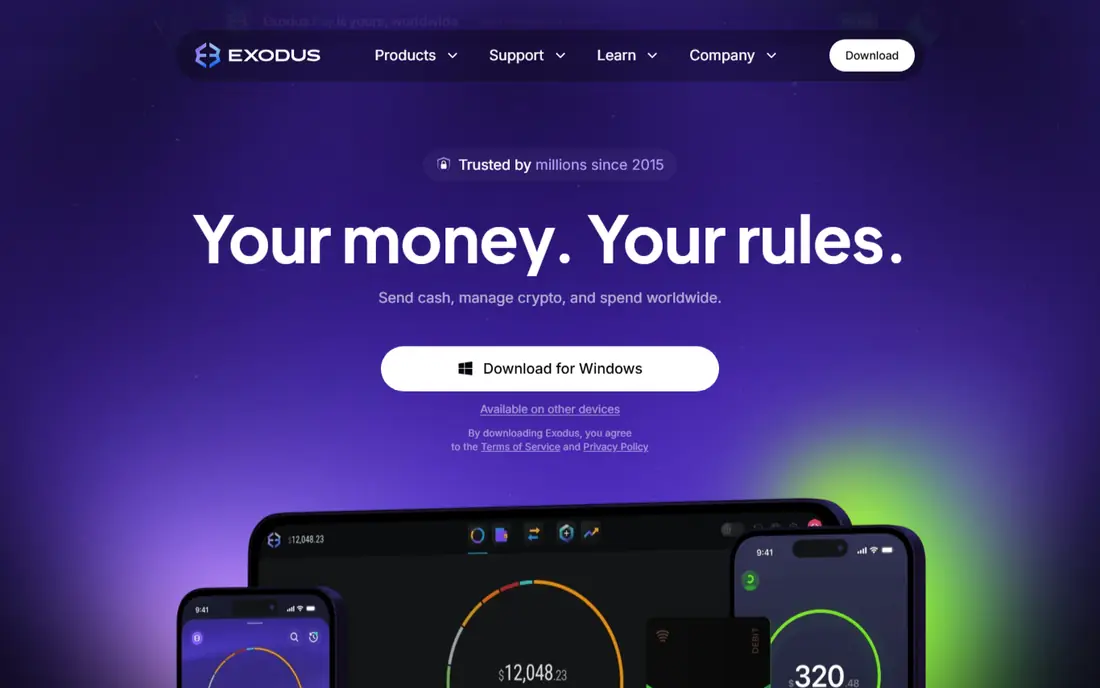
Exodus is the easiest software wallet for most newcomers to understand. The portfolio view shows holdings across many assets in one place, sending and receiving are straightforward, and the same wallet works on desktop and mobile. Built-in swaps let users exchange assets without leaving the app, which suits small, occasional trades.
The honest limits are cost and transparency. Swap fees through spreads can exceed a central exchange, and parts of the software are not fully open source. For larger holdings, pairing Exodus with a hardware wallet keeps daily convenience while moving long-term funds to colder storage. Beginners who value clarity over advanced features will find Exodus a strong start.
- Clear desktop and mobile apps
- Built-in swap and portfolio tracking
- Hardware wallet integration for larger holdings
- Closed source core in parts
- Swap spreads can cost more than exchange trading
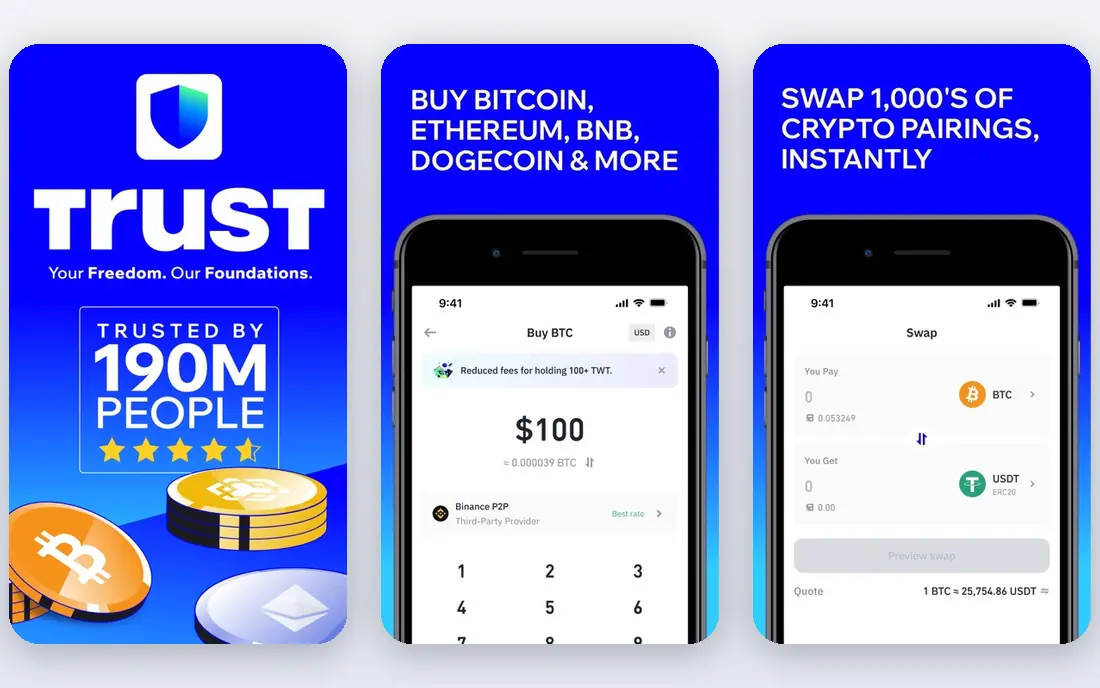
Trust Wallet is the mobile multi-chain workhorse in this list. It supports a wide range of chains and tokens, includes a browser for decentralised apps, and lets users stake supported assets from the phone. For readers who mainly use crypto on mobile and hold assets across several chains, that breadth in one app is hard to beat.
Self-custody is the responsibility that comes with it. Trust Wallet does not hold your keys, so a lost recovery phrase usually means lost funds, with no support team able to restore access. Desktop users may also prefer Exodus or MetaMask, since Trust Wallet is built around the phone first. Keep the recovery phrase offline and test a small restore before moving large amounts.
- Broad multi-chain support on mobile
- Built-in decentralised app browser
- Staking options for supported assets
- Mobile-first design suits phones better than desktop
- Self-custody means lost recovery phrases cannot be restored by support
MetaMask remains the default wallet for Ethereum and compatible chains because most decentralised apps support it first. The browser extension connects to exchanges, lending apps, NFT platforms and games with a few clicks, and the mobile app covers the same accounts on the go. That wide support is why many guides assume MetaMask even when other wallets would also work.
The learning curve is real for newcomers. Network settings, token imports and gas fees can confuse first-time users, and busy Ethereum periods bring high transaction costs. Readers who mainly use Solana or Bitcoin should look at Phantom or Electrum instead, while Ethereum users will find MetaMask the most compatible choice.
- Standard wallet for Ethereum and compatible chains
- Wide decentralised app support
- Browser extension and mobile app
- Ethereum gas fees can be high at busy times
- New users can be confused by network and token settings
Phantom started as the Solana wallet most users recommended, and it has since grown into a multi-chain wallet with Ethereum, Bitcoin and other chain support. The Solana experience remains its strength: fast transactions, NFT views and decentralised app connections that feel built for that ecosystem. The interface is clean enough for beginners, even when holding several asset types.
The multi-chain growth is still newer than MetaMask on Ethereum, so power users on that chain may find some features less deep. As a hot wallet, Phantom also carries the usual online risks, so large holdings still belong in colder storage. For Solana-first users, and for readers who want one wallet across Solana and other chains, Phantom is a strong pick.
- Fast Solana experience with NFT support
- Now supports Ethereum, Bitcoin and other chains
- Clean browser and mobile apps
- Solana history means some Ethereum features feel newer
- Self-custody risks apply as with all hot wallets
Coinbase Wallet is a separate self-custody wallet, not the same as a Coinbase exchange account, and that distinction matters. Keys stay with the user, while the familiar Coinbase design helps beginners who already know the exchange. It supports major chains and tokens, connects to decentralised apps, and works as a browser extension and mobile app.
The confusion risk is the main drawback. New users sometimes assume exchange support can recover a self-custody wallet, which it cannot if the recovery phrase is lost. The wallet also feels most natural for readers already in the Coinbase ecosystem. Used with that distinction clear, it is one of the friendliest self-custody wallets for beginners.
- Separate self-custody wallet from the Coinbase exchange
- Beginner-friendly design
- Broad chain and token support
- Confusion possible between exchange account and self-custody wallet
- Some features tie closely to the Coinbase ecosystem
ZenGo removes the seed phrase, which is the part of self-custody most beginners fear losing. It uses multi-party computation to split key material between your device and ZenGo servers, with biometric checks and a recovery file for account recovery. Transaction warnings before signing add a useful check against phishing and malicious contracts.
The trade is dependence. Recovery still depends on ZenGo systems, your email, your cloud backup and your biometric device working together, which is a different trust model from a pure seed phrase wallet. Paid Pro features also add cost for advanced recovery options. Readers who fear losing a phrase more than they fear that dependence may prefer ZenGo, while purists may prefer Electrum or MetaMask.
- No traditional seed phrase to lose
- Biometric and cloud-based recovery options
- Transaction warnings before signing
- Recovery depends on ZenGo systems and your devices
- Paid Pro features add cost for advanced recovery
Electrum has served Bitcoin users for many years, and its focus is its strength. It supports custom transaction fees, coin control, hardware wallet connections and offline signing workflows, all in a lightweight desktop app. Bitcoin-only users get depth without the clutter of multi-chain token lists and decentralised app browsers.
That focus limits its audience. Electrum holds Bitcoin only, so readers with Ethereum, Solana or other assets need a second wallet. The interface also assumes some Bitcoin knowledge, which can put beginners off. For a Bitcoin holder who wants control and a proven open source tool, Electrum remains a benchmark choice.
- Long-running Bitcoin-only wallet
- Advanced features such as custom fees and hardware support
- Lightweight desktop app
- Bitcoin only, so other assets need another wallet
- Interface suits technical users more than beginners
Guarda suits readers who want a desktop-first wallet with broad asset support. Desktop, mobile and web versions share the same wallet, with built-in exchange, staking and portfolio views. That flexibility helps users who move between a work computer, a home computer and a phone during the week.
Guarda is less widely discussed than the leaders here, so community guides and troubleshooting help are thinner. The web version also needs care: always check the domain and bookmark the official site, since phishing copies target web wallets. For desktop multi-chain users who want an alternative to Exodus, Guarda is a credible option.
- Desktop, mobile and web versions
- Broad multi-chain and token support
- Built-in exchange and staking options
- Less widely discussed than Exodus or Trust Wallet
- Web version needs extra care with phishing checks
How we picked these
We compared official feature pages, pricing pages, app store listings and public reviews for software wallets live in October 2026. We required true self-custody software wallets, not exchange accounts, and we mixed beginner, multi-chain, Bitcoin-only and seedless options. We did not claim hands-on testing, and where a price could not be confirmed from the vendor, we wrote See website rather than guessing.
How to choose the best software wallet for you
Start with the chains you actually hold. Bitcoin-only users do well with Electrum, Solana users do well with Phantom, Ethereum users do well with MetaMask, and multi-chain users do well with Exodus, Trust Wallet or Guarda. A wallet that supports every chain sounds better, but a focused wallet often gives a cleaner and safer experience for the assets you hold.
Next, decide how much you will keep in a hot wallet. Software wallets connect to the internet, so they suit spending and trading amounts, not life savings. Move larger holdings to a hardware wallet or other cold storage, and keep only what you use regularly in software. Test recovery with a small amount before trusting any wallet with a larger balance.
Finally, protect the recovery details from day one. Write a seed phrase on paper, store it offline in a safe place, and never share it with support staff, websites or anyone who messages you first. Enable device locks, app locks and biometric checks where available, and double-check every address before sending. This is not financial advice, crypto carries risk and prices move fast, keep recovery phrases private and offline.
Frequently asked questions
What is the best wallet app for beginners?
Exodus is our pick for beginners because its desktop and mobile apps show a clear portfolio and make sending simple. Coinbase Wallet is also friendly, especially for readers already familiar with Coinbase. Both are free to download, but network fees still apply to transactions.
What is the best software crypto wallet for multi-chain use?
Trust Wallet leads for mobile multi-chain use, while Exodus leads for desktop and mobile combined use. Phantom now covers several chains as well, with Solana as its strongest area. Choose by device: phone-first users suit Trust Wallet, desktop users suit Exodus or Guarda.
What is the best crypto software wallet for Solana?
Phantom is the best software wallet for Solana users because it was built for that chain and offers fast transactions, NFT views and decentralised app support. Trust Wallet and Exodus also support Solana, but Phantom gives the most complete Solana experience in this list.
What do best wallet app review lists often miss?
Many lists mix exchange accounts with self-custody wallets, which hides who holds the keys. They also miss network fees, swap spreads and recovery risks. Always check whether the wallet is self-custody, what chains it supports, and how recovery works before you move funds.
Are free software wallets safe?
Free software wallets can be safe when used well, since the main risks are phishing, malware and lost recovery phrases rather than the download price. Use official sites and app stores, keep devices updated, store recovery phrases offline, and keep large holdings in cold storage. No software wallet removes market risk.
What are the best software wallets for Bitcoin only?
Electrum is the strongest Bitcoin-only software wallet here, with custom fees, hardware support and a long track record. Exodus and Trust Wallet also hold Bitcoin, but they add many other assets that Bitcoin-only users may not need. For maximum control over Bitcoin, Electrum remains the focused choice.
Sources
See where you really rank - block by block
ProMapRanker scans Google Maps across a grid of your service area. Simple monthly plans from $19, white-label on every plan.
Start freeKeep reading
 best subscription manager app
Best Subscription Manager App in 2026
Find the best subscription manager app for your budget with our 2026 comparison of 8 apps, covering automatic detection, renewal alerts and free plans.
Read → best stock picking service
Best Stock Picking Service in 2026
Compare the best stock picking service options for 2026, with 8 stock recommendation services for long-term, dividend, quant, growth and income investors.
Read → best software for esports poster design
Best Software for Esports Poster Design
Compare the best software for esports poster design, from Photoshop and Canva to free tools like Photopea, GIMP, and Krita, with pricing and strengths.
Read →