 ProMapRanker
Best Software for Employee Advocacy in 2026


Mid-sized teams starting advocacy · Pricing starts at: See website
Key takeaways
- Employee advocacy works when sharing is easy and voluntary, not when staff feel pushed to post company content.
- Content hubs suit teams that want staff to choose posts, while activity tools suit campaigns with specific actions.
- Most pricing is custom and quoted by team size, so budget talks should start early and include admin time.
- Analytics should show reach and engagement by team, not just total shares, or leaders cannot tell what is working.
- Our pick for most mid-sized teams is EveryoneSocial, with Sociabble leading for large global programs and GaggleAMP for campaign-driven teams.
Quick comparison
| Pick | Great for | Pricing starts at | Free tier | |
|---|---|---|---|---|
| EveryoneSocial | Mid-sized teams starting advocacy | See website | Yes | Visit |
 Sociabble | Large global enterprises | See website | No | Visit |
 Oktopost | B2B teams needing pipeline attribution | See website | No | Visit |
 GaggleAMP | Campaign-driven advocacy programs | See website | Free trial | Visit |
 Hootsuite Amplify | Existing Hootsuite customers | See website | No | Visit |
 DSMN8 | Pure advocacy programs at scale | See website | No | Visit |
 Bambu by Sprout Social | Sprout Social customers | See website | No | Visit |
 PostBeyond | Internal communication plus advocacy | See website | No | Visit |
 Clearview Social | Professional services and smaller teams | See website | Free trial | Visit |
The best software for employee advocacy
These platforms help staff share approved company content on their own social accounts, with guardrails that keep posts on brand. Some focus on content libraries, others on assigned activities or internal communication, and the right shape depends on how your team already works.
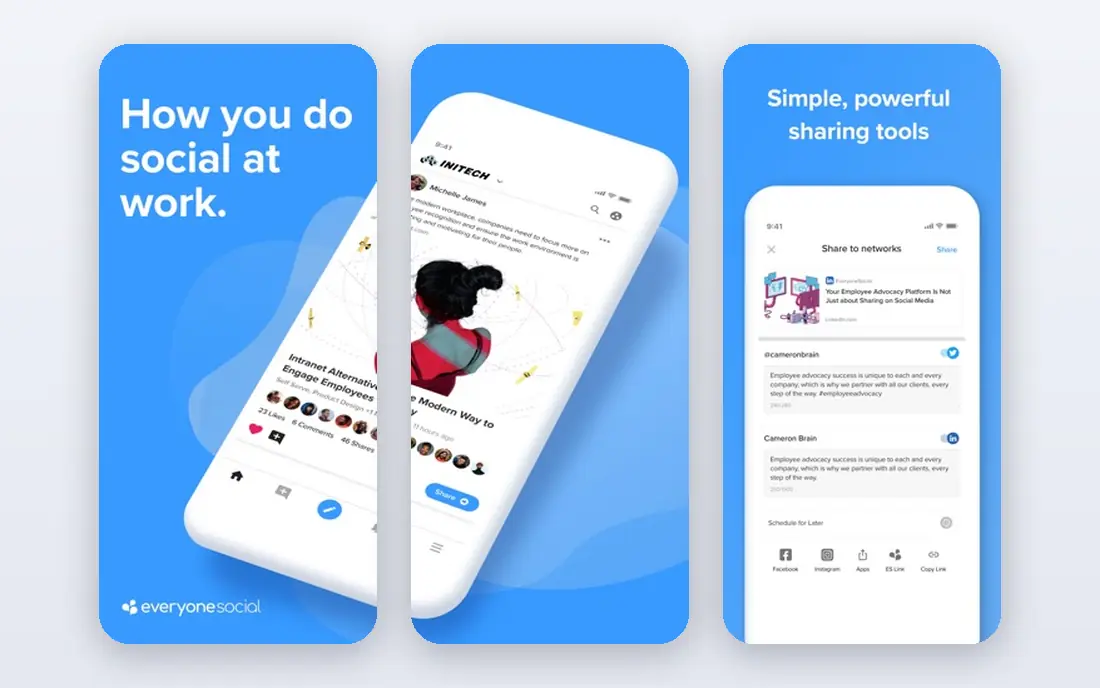
EveryoneSocial is built around a simple idea: marketing posts approved content to a hub, staff browse it on mobile, and share what fits their own voice. Channels keep content organized by topic or team, and analytics show which posts and people drive reach. That low-friction shape helps adoption, because staff are not forced through a complex workflow to share one post.
The free tier is useful for a pilot, but it limits users and reporting depth, so growing programs move to custom paid plans. Teams that need deep campaign assignments may want GaggleAMP instead. For a first serious advocacy program, EveryoneSocial balances ease, content control and reporting well.
- Content hub with channels
- Mobile app
- Analytics by employee and team
- Paid pricing is custom
- Free tier limits users and analytics depth
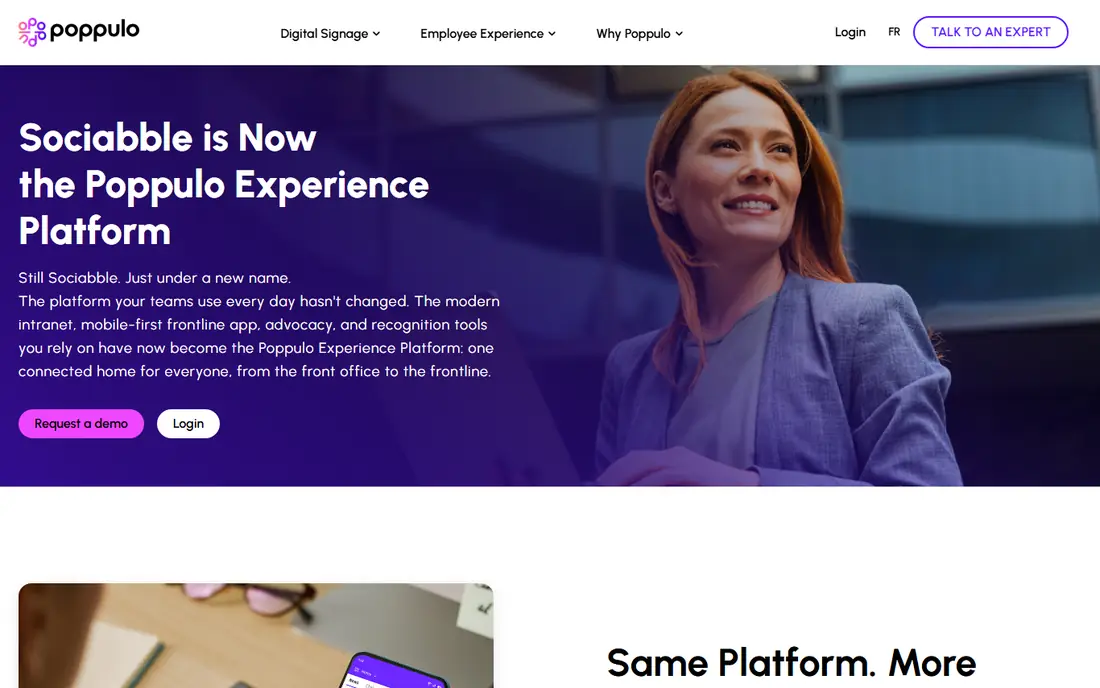
Sociabble is the enterprise option for companies running advocacy across countries and languages. Content can be targeted by audience, translated for local teams, and shared across LinkedIn, X, Facebook and Instagram, with points, badges and leaderboards to sustain participation. Governance controls and analytics help large teams stay compliant while measuring results.
The scale is also the drawback. Pricing is custom, setup takes planning, and a small team will pay for depth it never uses. For a global company with hundreds or thousands of staff, that depth is the point. Sociabble is best judged on a demo with your actual regions and languages in scope.
- Multichannel distribution
- Gamification
- Translation and audience controls
- Enterprise pricing and setup
- More than a small team needs
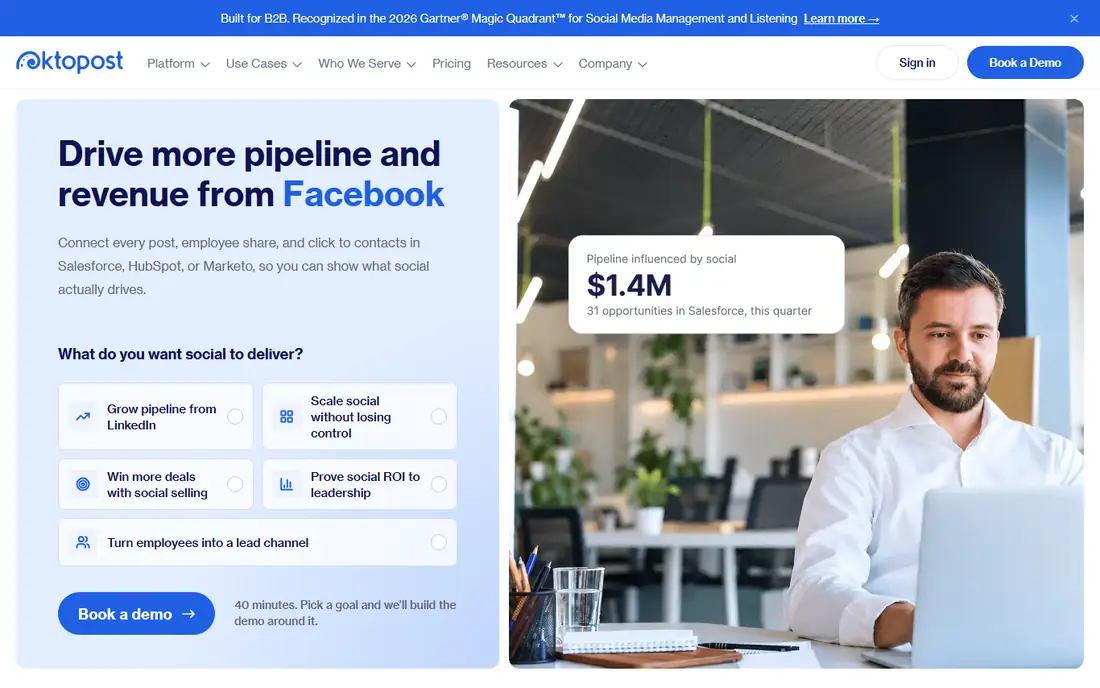
Oktopost appeals to B2B marketing teams that must connect social activity to pipeline. Employee shares can be tracked through to CRM opportunities, which helps answer whether advocacy creates leads or only reach. The wider social suite also covers publishing, listening and reporting, so advocacy sits inside a full social workflow.
The catch is focus. Advocacy is a module, not the whole product, so pure advocacy features may feel less deep than EveryoneSocial or DSMN8. Pricing is custom and the platform suits teams already invested in CRM. If pipeline proof is your main requirement, Oktopost is a strong contender.
- Social management plus advocacy
- CRM attribution
- Employee analytics
- Advocacy is one module in a wider platform
- Pricing is custom
GaggleAMP takes a different approach: managers assign specific activities, such as sharing a post, commenting on an article or liking an update, and staff complete them for points. That control suits product launches and campaigns where timing and message matter. The platform supports many activity types and tracks results back to assigned work.
The activity model needs ongoing management. Without fresh activities, participation drops, so a team must commit admin time. Pricing is also custom. For teams that want directed action rather than free browsing, GaggleAMP gives the clearest campaign control on this list.
- Assigned activities
- Gamification
- ROI attribution
- Pricing is custom
- Activity model needs active management
Hootsuite Amplify makes sense for one group above all: teams already using Hootsuite for social publishing. Staff can share approved content from a familiar system, and managers can track advocacy alongside wider social performance. That shared login and reporting reduces training and tool sprawl.
As a standalone purchase, it is less compelling, since pricing is an enterprise add-on and the feature set is tied to Hootsuite. Teams not on Hootsuite should compare dedicated tools first. For current Hootsuite customers, Amplify is the natural next step.
- Advocacy inside Hootsuite
- Content sharing
- Analytics
- Sold as an enterprise add-on
- Weaker as a standalone purchase
DSMN8 is a dedicated advocacy platform, not a general social suite, and that focus shows in its workflows. Content can be scheduled for staff, shared in a few taps, and measured by reach and engagement. The design keeps the employee experience simple, which helps programs that need steady participation across a large workforce.
The trade-off is breadth. It will not replace a social publishing or listening tool, so teams needing those features will run two systems. Pricing is custom. For a company that wants advocacy done well, without paying for unrelated social features, DSMN8 is a focused choice.
- Dedicated advocacy workflows
- Content scheduling
- Analytics
- Custom pricing
- Less useful as a general social tool
Bambu, from Sprout Social, gives staff a curated feed of company stories to share. The employee app keeps sharing quick, and managers can see which stories travel furthest. Internal story features also help staff understand company news before they share it, which improves post quality.
The main limit is ecosystem. Bambu works best inside Sprout Social, so teams using another social suite should weigh switching costs. Pricing is also custom at scale. For Sprout customers, Bambu adds advocacy without a second vendor relationship.
- Curated content feed
- Easy sharing
- Team analytics
- Tied to Sprout Social
- Custom pricing for larger teams
PostBeyond blends internal communication with advocacy, so staff can read company updates and share external posts from one place. That mix suits companies where advocacy should grow out of internal news, not sit apart from it. Analytics track both internal reading and external sharing, giving managers a fuller picture.
The broader scope can dilute pure advocacy depth, and pricing is custom. Teams that only want external sharing may find a dedicated tool simpler. For companies building employee communication and advocacy together, PostBeyond is a coherent option.
- Content hub
- Internal communication tools
- Analytics
- Custom pricing
- Broader scope than pure advocacy
Clearview Social keeps advocacy simple, which suits professional services firms and smaller teams. Staff receive a queue of approved posts by email, share with a click, and managers track results without a heavy platform. That email-led flow lowers the barrier for staff who do not open a separate app every day.
The feature set is smaller than Sociabble or EveryoneSocial, with less gamification and campaign depth. Larger programs may outgrow it. For a team that wants advocacy running with minimal admin and training, Clearview Social is a practical, low-friction pick.
- Simple sharing queues
- Email digests
- Analytics
- Smaller feature set than enterprise platforms
- Custom pricing at scale
How we picked these
We compared official product pages, pricing and demo information for each platform in October 2026. We weighted content workflow, employee experience, analytics depth, governance controls and pricing transparency. Most vendors quote custom pricing, so we marked those as See website rather than repeating third-party price claims as facts. We did not claim hands-on testing.
How to choose employee advocacy software
Decide between browsing and assigning. Content hubs such as EveryoneSocial let staff choose posts, which suits ongoing brand building. Activity tools such as GaggleAMP suit campaigns with deadlines. Pick the model your team will actually sustain, not the one that sounds most controlled.
Protect voluntary sharing. Staff should be able to edit posts in their own voice and skip content that does not fit them. Tools with approval workflows and clear guidelines help, but culture matters more than software. Forced sharing damages trust and post quality.
Trial with one team first. Run a pilot with a single department, measure reach and engagement by team, and ask staff what slowed them down. That pilot tells you more about adoption than a vendor demo, and it gives leaders real numbers before a company-wide rollout.
Frequently asked questions
What is the best employee advocacy tool for a mid-sized company?
EveryoneSocial is our pick for most mid-sized teams, thanks to its content hub, mobile app and clear analytics. Clearview Social suits smaller teams that want a simpler, email-led flow. Start with a pilot before buying for the whole company.
What is the top employee advocacy software for enterprises?
Sociabble leads for large global programs, with audience controls, translation and gamification. Oktopost is stronger when B2B pipeline attribution matters most. Both need a demo scoped to your regions and team size.
What is the best employee advocacy platform for B2B marketing?
Oktopost is the strongest B2B pick, because it links employee shares to CRM pipeline and revenue. EveryoneSocial and DSMN8 offer deeper pure advocacy workflows, but Oktopost answers the pipeline question more directly.
How much does employee advocacy software cost?
Most platforms use custom pricing based on employee count and features, so published prices are rare. Expect an enterprise-style quote and ask what admin, training and analytics are included. Free tiers, where offered, suit pilots rather than full programs.
What is the best tool for employee advocacy campaigns?
GaggleAMP is best for campaign-driven work, because managers assign specific activities with deadlines and points. Content hubs work better for steady, always-on sharing. Choose by whether your program runs in campaigns or all year.
Sources
See where you really rank - block by block
ProMapRanker scans Google Maps across a grid of your service area. Simple monthly plans from $19, white-label on every plan.
Start freeKeep reading
 best tour operator software
Best Tour Operator Software in 2026
Compare the best tour operator software for bookings, channel management, waivers and payments, with pricing models for day tours and multi-day trips.
Read → best time clock app for small business
Best Time Clock App for Small Business in 2026
We compare the best time clock app for small business options, with free plans, GPS clock ins, scheduling and payroll links for hourly teams and payroll help.
Read → best test automation tools
Best Test Automation Tools in 2026
Compare the best test automation tools, from Playwright and Selenium to Cypress, Katalon and BrowserStack, with prices, languages and best uses explained.
Read →