 ProMapRanker
Best SOC 2 Compliance Automation Tools in 2026

Key takeaways
- Only an independent auditor issues a SOC 2 report, and software alone does not make an organisation compliant.
- Vanta, Drata, and Secureframe lead for mainstream SaaS teams, while Sprinto, Scytale, and Thoropass suit smaller or budget-conscious teams.
- Audit fees, framework fees, and headcount tiers sit outside many headline prices, so ask for a full-year quote before signing.
- Open-source options such as Comp AI suit early teams that want to learn the controls before buying a commercial platform.
Quick comparison
| Pick | Great for | Pricing starts at | Free tier | |
|---|---|---|---|---|
 Vanta | Mainstream SaaS teams | $14,000 per year | No | Visit |
 Drata | Engineering-heavy teams | See website | No | Visit |
 Secureframe | Multi-framework growth teams | $7,500 per year | No | Visit |
 Sprinto | Smaller teams on a budget | $9,500 per year | No | Visit |
 Thoropass | Teams that want audit bundled | $8,700 per year | No | Visit |
 Scytale | Small teams needing guided help | $7,500 per year | No | Visit |
 Scrut Automation | Teams needing risk and vendor tracking | See website | No | Visit |
 Comp AI | Early teams exploring compliance | Free | Yes | Visit |
The best SOC 2 compliance automation tools
We compared official feature pages, pricing pages, app store listings, privacy policies, and public reviews. Read the auditor point first: only an independent auditor issues a SOC 2 report, and software alone does not make an organisation compliant. These tools automate evidence, monitor controls, and prepare you for audit, but your team must still fix gaps, follow policies, and pass auditor testing.
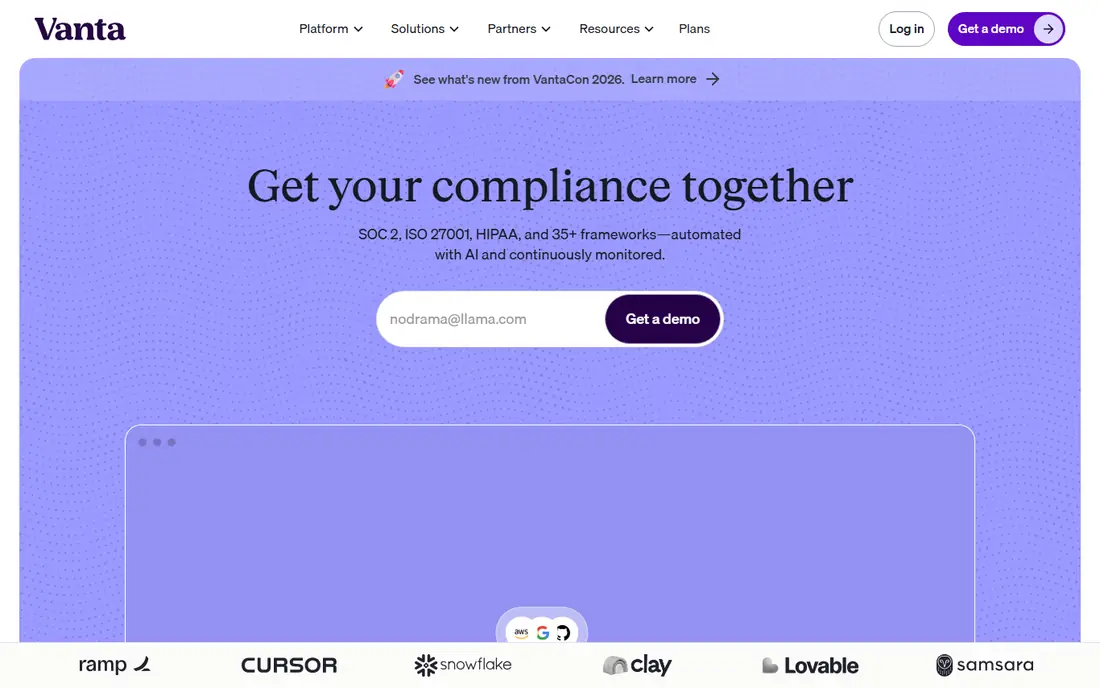
Vanta is the default shortlist pick for SaaS companies that need SOC 2 to close enterprise deals. It connects to cloud providers, identity tools, and code repositories, pulls evidence automatically, and flags failing controls in one dashboard. The auditor network also makes it easier to find a firm that already knows the platform.
The price reflects that position. The platform fee does not include the audit itself, and extra frameworks add cost. Small teams should get a written quote for platform plus audit before comparing Vanta with cheaper rivals.
- Broad integration range for cloud and SaaS tools
- Clear control monitoring
- Large auditor partner network
- High starting price for very small teams
- Audit fee is separate
- Costs rise with frameworks and headcount
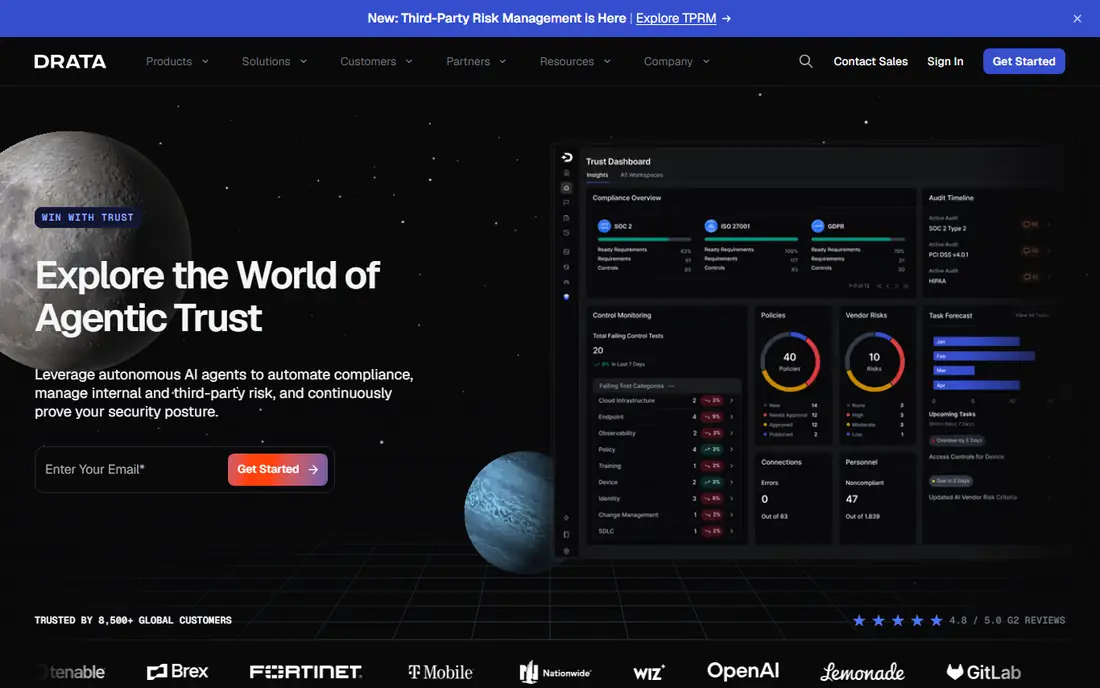
Drata suits teams with custom internal tooling and engineers who want to automate control tests rather than tick boxes by hand. Its monitoring updates as systems change, which helps teams catch drift between audits. Multi-framework mapping also helps teams that plan to add ISO 27001 or other standards later.
Pricing is the main friction, since published figures vary by headcount and framework. Treat any headline number as a starting point and ask for a full quote. Teams without a technical compliance owner may find the setup heavier than a more guided rival.
- Strong automation for custom and technical controls
- Real-time control tracking
- Multi-framework support
- Pricing is quote-led and varies widely
- Audit fee is separate
- Setup needs a technical owner
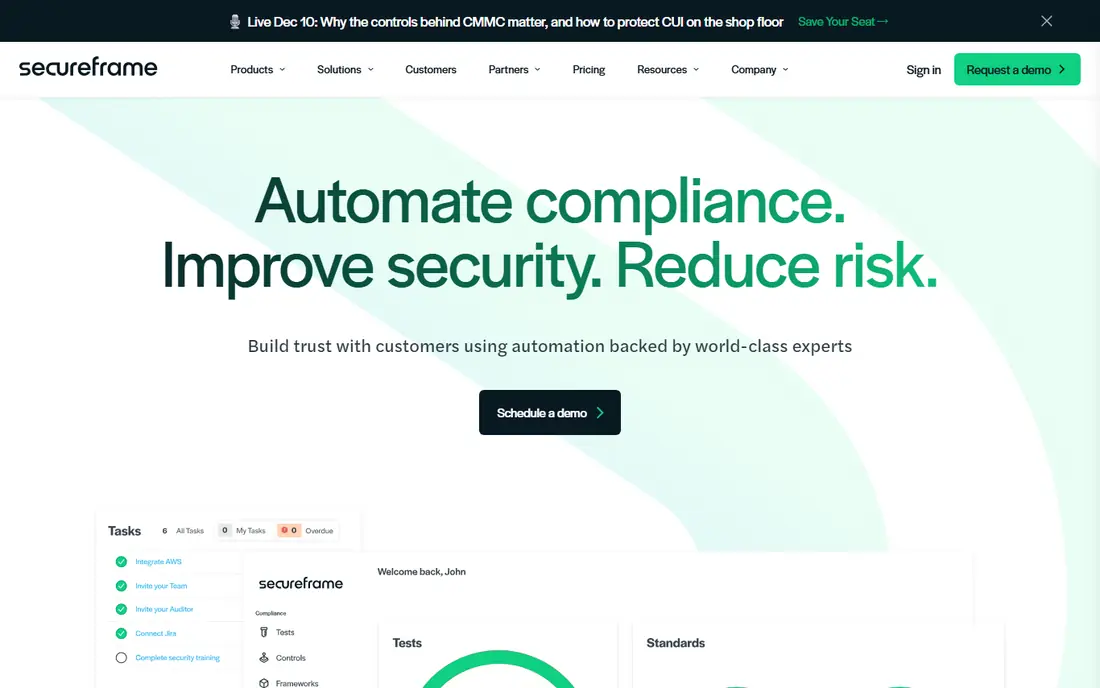
Secureframe combines automated evidence collection with templates and human guidance, which helps teams without a dedicated compliance lead. Its framework mapping lets one control satisfy several standards, reducing duplicate work as a company grows. That design suits growth-stage firms that expect to add frameworks over time.
The entry platform figure does not cover the full first-framework cost in every listing, so read the quote carefully. Audit fees sit outside the platform price. For teams that want guidance alongside automation, Secureframe is a balanced pick.
- Policy templates and guided onboarding
- Multi-framework mapping
- Compliance manager support on higher tiers
- Full SOC 2 cost is higher than the platform entry figure
- Audit fee is separate
- Some features need higher tiers
Sprinto targets startups and smaller firms that need SOC 2 without an enterprise budget. It automates evidence, assigns control tasks, and tracks progress toward audit readiness. Implementation support helps small teams that lack a full-time compliance hire.
The integration catalogue is narrower than the largest platforms, so check your stack before buying. Audit costs remain separate. For a budget-conscious team with a standard SaaS stack, Sprinto offers strong value.
- Lower total cost than larger rivals in many quotes
- Workflow automation for controls
- Guided implementation
- Smaller integration range than Vanta
- Audit fee is separate
- Brand recognition is lower with some buyers
Thoropass stands out because its listings price the platform and a SOC 2 audit together, which removes one common surprise. That bundled model helps small teams budget the full journey rather than discovering the audit fee late. Its compliance team also guides firms through control setup.
Buyers should still confirm how auditor independence is handled, since the auditor must remain independent of the platform work. The combined price is higher than the platform figure alone. For teams that want one contract for platform and audit, Thoropass is worth a quote.
- Platform plus in-house audit option in one contract
- Clear audit pricing in marketplace listings
- Guided compliance support
- Audit independence rules still apply and must be confirmed
- Platform fee plus audit fee together are higher than platform alone
- Smaller ecosystem than Vanta
Scytale suits small teams that want a guided path rather than a self-serve dashboard. Its playbooks break SOC 2 into steps, and its audit collaboration tools help firms share evidence with their auditor. The entry price is accessible for a seed-stage company.
Add-ons for audit and penetration testing raise the total, so ask for the full package price. The platform is less suited to large firms with complex custom controls. For a small team that wants hands-on guidance, Scytale is a practical choice.
- Guided playbooks for SOC 2
- Audit collaboration tools
- Lower entry price than many rivals
- Audit and penetration testing are add-ons
- Integration range is narrower
- Scaling costs vary
Scrut Automation covers SOC 2 alongside risk management and vendor tracking, which helps teams that must answer customer security questionnaires. Its dashboards give leadership a single view of control health, risks, and vendor status. That breadth suits firms that want compliance and risk in one place.
Quote-led pricing makes comparison harder, and the audit itself remains a separate cost. US buyers should also check auditor familiarity with the platform. For teams that value risk and vendor features alongside SOC 2, Scrut is a useful alternative to a pure compliance tool.
- Unified risk, vendor, and compliance tracking
- Multi-framework support
- Dashboards for leadership reporting
- Pricing is quote-led
- Audit fee is separate
- Smaller brand presence in the US market
Comp AI is an open-source compliance platform that early teams can self-host free of charge. It maps controls across frameworks, tracks evidence, and helps a team learn what SOC 2 actually requires before committing to a commercial contract. For a pre-revenue team, that learning value is real.
Self-hosting means your team owns updates, security, and backups, which is a real workload. Audit fees still apply, and enterprise buyers may prefer a better-known platform. Use Comp AI to build the program, then move to a commercial platform when deal pressure or headcount justifies it.
- Free self-hosted open-source platform
- Multi-framework control mapping
- No vendor lock-in for the core tool
- Self-hosting needs technical effort
- Audit fee is separate
- Support depends on community and paid hosting options
How we picked these
We compared official feature pages, pricing pages, app store listings, privacy policies, and public reviews, and we kept only platforms that automate SOC 2 evidence, monitoring, or audit preparation in October 2026. We excluded pure audit firms and pure penetration testing firms, since they do not replace a compliance platform. Prices come from vendor pricing pages and marketplace listings, and they vary by headcount and framework, so get a written quote.
What to budget beyond the platform price
The platform fee is only part of the first-year cost. Audit fees, penetration testing, extra frameworks, and staff time all add up, and vendors present them in different ways.
Ask for a full-year quote in writing
Request platform, first framework, extra frameworks, audit, and penetration testing as separate lines. Ask what happens to the price at renewal and when headcount grows. A quote that only shows the platform fee will understate the real cost.
Check integrations before you sign
List every cloud provider, identity tool, code repository, and HR system you use, and confirm each one has a live integration. Manual evidence collection for a missing integration can erase the time savings a platform promises. Ask how often integrations sync and what breaks when an API changes.
Assign an owner and a timeline
A platform without an owner becomes a dashboard that nobody checks. Name one person to own controls, evidence, and remediation, and set a realistic timeline for policy rollout and auditor testing. Remember, only an independent auditor issues a SOC 2 report, and software alone does not make an organisation compliant.
Frequently asked questions
What is the best SOC 2 compliance automation tool?
Vanta is the safest default for mainstream SaaS teams because of its integrations and auditor network. Drata suits engineering-heavy teams, while Sprinto and Scytale suit smaller teams that need a lower total cost and more guidance.
Does SOC 2 software make my company SOC 2 compliant?
No. Software automates evidence collection and control monitoring, but your team must implement controls, follow policies, and fix gaps. Only an independent auditor can test those controls and issue a SOC 2 report.
How much does SOC 2 automation cost in the first year?
Platform prices in this list start from free for self-hosted Comp AI to $14,000 per year for Vanta, before audit and extra framework fees. A realistic first-year budget adds the audit fee, penetration testing, and staff time to the platform price.
How long does SOC 2 preparation take with automation?
Timelines vary by starting point, but many small SaaS teams take several months from first control setup to audit readiness. Automation shortens evidence work, while policy rollout, access reviews, and remediation still take calendar time.
Can a small startup use an open-source SOC 2 tool?
Yes, Comp AI lets an early team self-host a compliance platform free of charge and learn the control set. It still requires technical effort and a separate audit, so move to a commercial platform when customer deals or headcount demand it.
Do I need SOC 2 Type 1 or Type 2?
Type 1 checks control design at a point in time, while Type 2 checks control operation over a period, usually several months. Most enterprise buyers ask for Type 2, so ask your customers which report they actually require before choosing a timeline.
Sources
See where you really rank - block by block
ProMapRanker scans Google Maps across a grid of your service area. Simple monthly plans from $19, white-label on every plan.
Start freeKeep reading
 who has best internet service
Who Has the Best Internet Service in 2026
Who has best internet service for US homes? We compare fiber, cable, fixed wireless and satellite providers on speed, price, availability and terms today.
Read → which survey tool has the best analytics
Which Survey Tool Has the Best Analytics in 2026
Find which survey tool has the best analytics in 2026, comparing Qualtrics, SurveyMonkey, Typeform, Alchemer, and more on reports, text, and stats today.
Read → which streaming service has the best movies
Which Streaming Service Has the Best Movies in 2026
Answering which streaming service has the best movies, with Netflix, Max, Criterion and more compared on libraries, prices and free options in this guide.
Read →