 ProMapRanker
Best Shipping Software in 2026


Multichannel sellers that need automation · Pricing starts at: $14.99 per month
Key takeaways
- ShipStation is our pick for multichannel sellers that need automation rules, batch labels, and branded tracking in one place.
- Pirate Ship is the cheapest way to start, with no monthly fee and discounted USPS and UPS rates, though it covers fewer carriers.
- Shippo suits lean stores that want simple labels and an API, while Easyship leads for international orders with duties and taxes handled at checkout.
- Monthly fees are only part of the cost: label rates, per-label fees, and your shipment volume decide the real total, so compare at your actual volume.
- Most of these tools connect to Shopify, WooCommerce, Etsy, and Amazon, but check your exact store and carrier mix before you commit.
Quick comparison
| Pick | Great for | Pricing starts at | Free tier | |
|---|---|---|---|---|
| ShipStation | Multichannel sellers that need automation | $14.99 per month | Free trial | Visit |
 Shippo | Lean stores that want simple labels | Free | Yes | Visit |
 Pirate Ship | Small sellers shipping USPS and UPS | Free | Yes | Visit |
 Easyship | International and cross-border sellers | Free | Yes | Visit |
 Veeqo | Amazon and multichannel sellers | Free | Yes | Visit |
 ShippingEasy | Small stores that want automation without complexity | $19.99 per month | Free trial | Visit |
 ShipWorks | Warehouses and high-volume shippers | See website | Free trial | Visit |
 Sendle | Small businesses shipping light domestic parcels | See website | Yes | Visit |
 EasyPost | Developers building shipping into apps | Free | Yes | Visit |
The best shipping software
Good shipping software does three jobs at once: it pulls orders in from your stores, finds a sensible carrier rate, and prints labels fast. The nine platforms below cover small stores, multichannel sellers, international shippers, and developers, so you can match the tool to your volume and carrier mix.
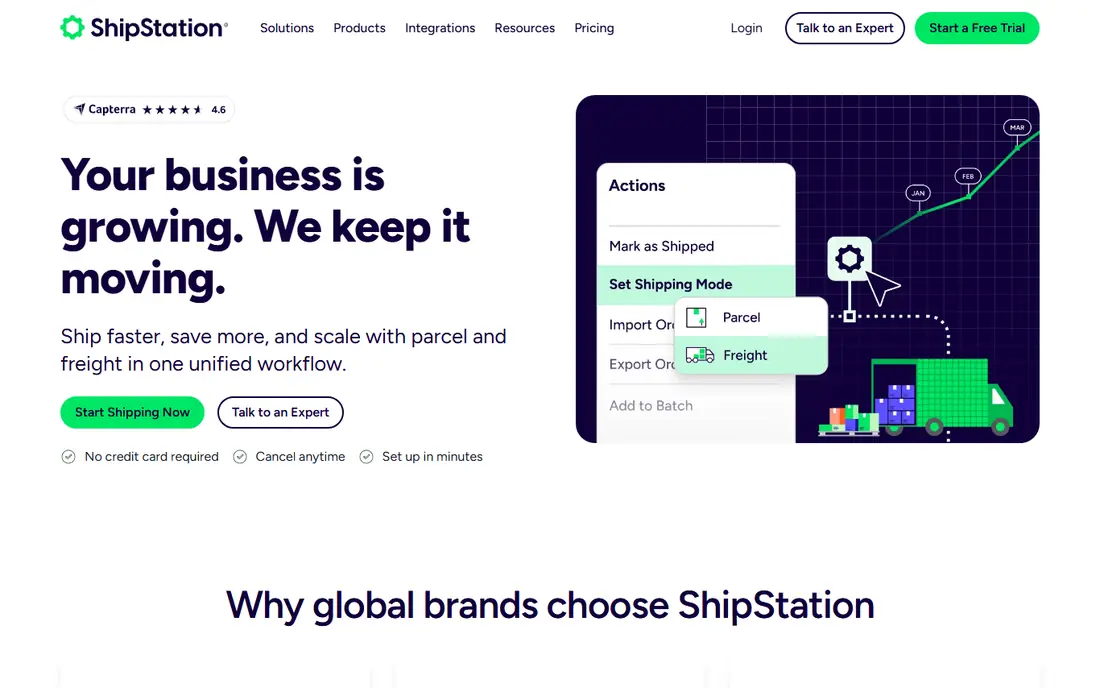
ShipStation pulls orders from Shopify, WooCommerce, Etsy, Amazon, eBay, and other channels into one dashboard, so a team stops jumping between seller accounts to print labels. Automation rules can assign carriers, package types, and confirmation emails based on weight, destination, or product, which cuts the manual work on repeat orders. Batch label printing and branded tracking pages round out a system built for stores that ship every day.
The entry plan starts at $14.99 per month for 50 shipments, with higher tiers for larger volumes, so a store that grows will move up the pricing ladder. It also makes the most sense when you actually use the automation: a store shipping a handful of parcels a week may not need this much tool. For a busy multichannel seller, though, the time saved on rules and batch work usually pays for the subscription quickly.
- Strong automation rules and batch processing
- Connects to many stores and marketplaces
- Branded tracking pages
- Paid plans required for full features
- Cost rises with shipment volume
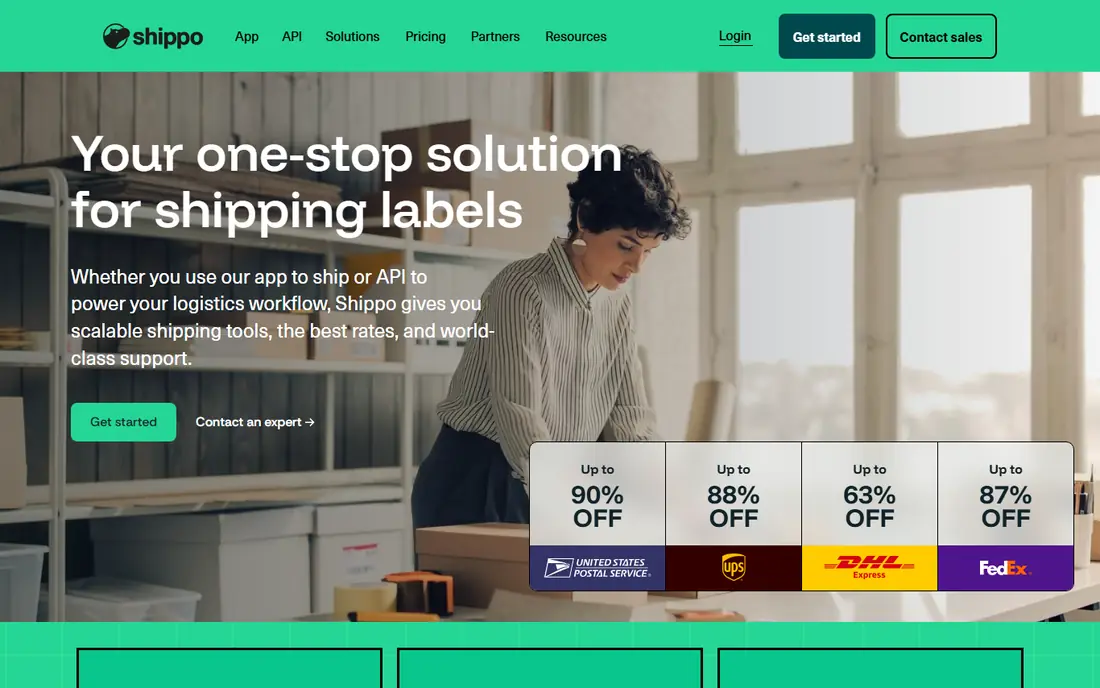
Shippo keeps the label workflow short: connect a store, compare rates across carriers, buy a label, and send tracking to the buyer. The free Starter plan covers up to 30 labels a month, which suits a new store testing the waters, and paid Pro plans scale by label volume. Its API also lets developers build shipping into a custom storefront or app without buying a full platform.
The trade-off is depth. Automation rules, warehouse features, and reporting are lighter here than in ShipStation or ShipWorks, so a large operation may outgrow it. Shippo is the pick for a small store, a side business, or a developer-led shop that wants good rates and a simple flow. When order volume passes a few hundred a month and rules start to matter, compare ShipStation next.
- Free starter plan with discounted rates
- Clean, simple interface
- API for custom checkouts and apps
- Automation is lighter than ShipStation
- Higher volumes need a paid Pro plan
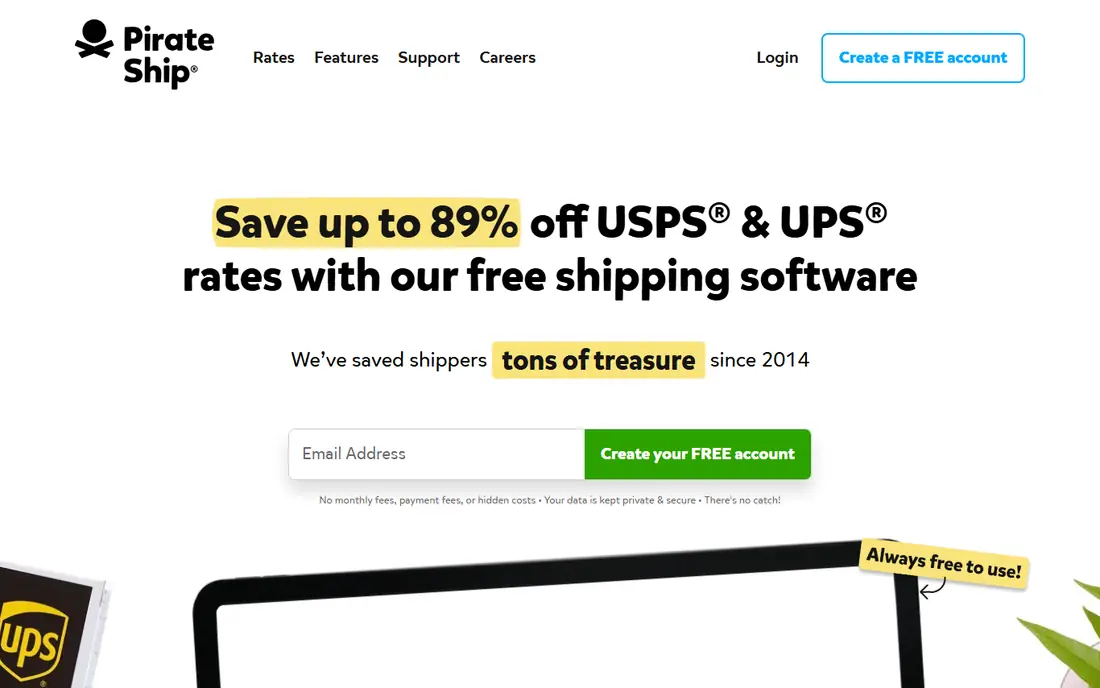
Pirate Ship charges no monthly fee and makes its money from the carriers, so you pay only for postage. That model is hard to beat for a small seller, an Etsy shop, or a business shipping a few dozen parcels a month. It offers discounted USPS and UPS rates, simple batch label creation, and a clean interface that does not ask you to learn a large platform first.
The limits are clear. Pirate Ship covers USPS and UPS only, so it cannot compare FedEx or DHL rates, and it does not offer rates at checkout or the automation rules of larger platforms. If your parcels go domestic by USPS or UPS and you want the lowest fixed cost, start here. If you need many carriers, international duties, or checkout rates, Easyship or ShipStation fits better.
- No monthly fee at any volume
- Discounted USPS and UPS rates
- Simple, no-frills label flow
- Only USPS and UPS
- No checkout rates or deep automation
Easyship is built for stores that sell across borders. It compares rates across a large global courier network, calculates duties and taxes so buyers see the full landed cost at checkout, and generates the customs paperwork that slows down many first-time international shippers. The free plan covers up to 50 shipments a month, with paid plans at $29, $69, and $99 per month for higher volumes and more features.
That international strength comes with a cost structure to read carefully. Paid plans add rates at checkout and higher shipment allowances, and a small per-label fee applies on some own-courier labels. For a store where most orders stay domestic, a simpler US tool may cost less. For a store where a growing share of orders goes abroad, Easyship removes the customs guesswork that causes delays, returns, and unhappy buyers.
- Wide global courier network
- Duties and taxes calculated at checkout
- Branded tracking
- Paid plans needed for checkout rates and higher volumes
- Small per-label fee on own-courier labels
Veeqo, part of Amazon, combines shipping with inventory and order management for sellers on Amazon, Shopify, eBay, WooCommerce, and other channels. The free tier covers core shipping and inventory work, which makes it an attractive starting point for a multichannel seller that does not want a monthly fee on day one. Bulk label printing and discounted carrier rates help when a sale spike hits.
Paid plans add deeper features, reporting, and support, so a larger operation will likely pay for a tier eventually. Veeqo also fits Amazon sellers especially well, given its ownership and marketplace ties, while a seller with no Amazon presence may find ShipStation a closer match. Still, for a multichannel store that wants shipping plus inventory in one free starting point, Veeqo deserves a close look.
- Free core shipping and inventory tools
- Strong Amazon and marketplace connections
- Bulk label printing
- Advanced features sit on paid plans
- Support depth varies by plan
ShippingEasy targets the small store that has outgrown printing labels one by one but does not want a warehouse system. It connects to common stores and marketplaces, offers rate comparison across major US carriers, and adds automation rules, batch shipping, and inventory tracking. Built-in customer marketing tools, like review requests, give it a second job beyond labels.
The entry plan starts at $19.99 per month, with shipment allowances that rise on higher tiers, so check the tier that matches your monthly volume. The interface also feels less modern than ShipStation or Shippo, though it remains clear and usable. Pick ShippingEasy when you want a middle path: more automation than Pirate Ship or Shippo, less complexity than ShipWorks, at a predictable monthly price.
- Simple automation and batch tools
- Inventory and customer marketing features
- USPS, UPS, FedEx, and DHL options
- Entry plan shipment limits
- Interface feels dated next to newer rivals
ShipWorks is the warehouse-grade option on this list. It handles high-volume batch printing, barcode scanning, packing workflows, and reporting for teams shipping hundreds or thousands of parcels a month. It connects to major stores, marketplaces, and carriers, and its rules engine can route orders by warehouse, carrier, or service level with little manual touch.
That power comes with setup time and cost. Small stores will find it heavy, and pricing is not a simple flat monthly figure, so request a quote for your volume. ShipWorks earns its place when shipping is a daily operation with staff, scanners, and multiple stations. For a solo seller or a small team, ShipStation or Shippo will feel faster to learn and cheaper to run.
- Deep warehouse and batch workflows
- Broad carrier and store connections
- Strong reporting
- Higher cost and longer setup
- More tool than a small store needs
Sendle offers a simple parcel service for small businesses, with door-to-door pickup and delivery and pricing aimed at light parcels rather than heavy freight. There is no warehouse system to learn: you enter parcel details, get a rate, print a label, and schedule pickup. For a home-based business shipping books, apparel, or small goods, that simplicity keeps shipping from eating the workday.
The limits matter for larger operations. Sendle is a single courier network rather than a multi-carrier rate comparison tool, and its service suits light parcels best, so heavy or oversized goods need another carrier. Check current rates and size limits on the vendor site for your country and parcel type, since coverage varies by region. Sendle fits a small, light-parcel shipper; multichannel sellers should look at ShipStation or Veeqo.
- Low-cost parcel rates with no subscriptions on some plans
- Door-to-door pickup
- Carbon-neutral delivery claims
- Limited carrier choice
- Weight and size limits suit light parcels best
EasyPost is an API platform rather than a point-and-click shipping dashboard. Developers use it to compare rates, buy labels, verify addresses, and track parcels across a large carrier network, all from inside their own app or storefront. A free tier covers low label volumes, with per-label pricing beyond that, which suits a startup building shipping into its product from the start.
Non-technical sellers should look elsewhere, since EasyPost expects code. There is a dashboard for managing shipments, but the real value sits in the API, and a team without a developer will not get the most from it. If your business builds its own storefront, marketplace, or logistics app and wants carrier choice without building carrier connections one by one, EasyPost is a strong foundation.
- API-first design with many carriers
- Free tier for low label counts
- Address verification and tracking APIs
- Needs developer time
- No simple no-code dashboard for non-technical sellers
How we picked these
We compared official pricing pages, carrier coverage, store integrations, and public reviews for tools that print real labels and work for US small businesses today. We favored platforms with current published pricing or a clear free tier, and we mixed simple label tools with automation platforms, an international specialist, and an API option. Where pricing varies by volume or quote, we wrote See website rather than inventing a figure.
What to check before you choose
Start with your real numbers: monthly shipments, average parcel weight, top destinations, and which carriers your buyers expect. Run those numbers through two or three tools, because a free tool can cost more per label than a paid tool with better rates, and vice versa. Next, check store connections and automation: if you sell on three channels, a multichannel dashboard saves more time than a cheap label printer. Finally, test with real orders, not a demo. Print a batch, watch tracking updates reach buyers, and time how long a normal shipping day takes. The tool that makes that day shortest, at a total cost you can predict, is the right one.
Frequently asked questions
What is the best shipping app for small business?
For most small businesses, Shippo or Pirate Ship is the best starting point, since both let you start free and compare real carrier rates. ShipStation is the better pick once volume grows and automation rules start saving hours each week. Your carrier mix and shipment count should decide between them.
What is the best shipping platform for stores that sell internationally?
Easyship leads for international sellers, because it calculates duties and taxes at checkout and handles customs paperwork across a wide courier network. ShipStation and Shippo also support international labels, but neither matches Easyship's landed-cost checkout focus. Check your top destination countries before you choose.
Is there a best free shipping app?
Pirate Ship is the closest to a free shipping app, with no monthly fee and discounted USPS and UPS rates, though you still pay postage. Shippo and Easyship offer free starter tiers with monthly label limits, and Veeqo offers free core tools. Free tiers suit low volume; higher volume usually needs a paid plan.
What is the best shipping software for Amazon sellers?
Veeqo and ShipStation both serve Amazon sellers well, with multichannel order sync and bulk label printing. Veeqo fits sellers that want free core tools and inventory in one place, while ShipStation fits sellers that need deeper automation rules. Try both with your real Amazon order flow before paying.
How much does shipping software cost per month?
Entry costs range from free on Pirate Ship, Shippo Starter, Easyship, and Veeqo, to $14.99 per month on ShipStation and $19.99 per month on ShippingEasy, based on current published pricing. Total cost also depends on label rates and shipment volume, so compare the full monthly bill, not just the subscription fee.
Sources
See where you really rank - block by block
ProMapRanker scans Google Maps across a grid of your service area. Simple monthly plans from $19, white-label on every plan.
Start freeKeep reading
 top custom software development company
Top Custom Software Development Company in 2026
Looking for a top custom software development company? We compare 9 firms for web, mobile, and enterprise software, covering strengths and fit for 2026.
Read → tableau alternatives
Tableau Alternatives in 2026
Compare the best Tableau alternatives for 2026, from Power BI to Metabase, with prices, hosting options, and picks for small teams and enterprises today.
Read → microsoft teams alternatives
Best Microsoft Teams Alternatives in 2026
Looking for microsoft teams alternatives? We compare 9 chat and video tools for 2026, covering free plans, pricing, meetings, and integrations for teams.
Read →