 ProMapRanker
Best Service Dogs for Anxiety in 2026


Free placement for eligible adults · Pricing starts at: See website
Key takeaways
- A breed alone does not qualify a dog, and a pet with a vest is not a service dog.
- Psychiatric service dogs are trained to perform specific tasks linked to a disability, such as grounding or creating space in a crowd.
- Legitimate organisations assess applicants, train dogs over many months and provide ongoing support.
- This article is general information only and is not medical advice, so talk to a clinician about your own needs.
Quick comparison
| Pick | Great for | Pricing starts at | Free tier | |
|---|---|---|---|---|
| Canine Companions | Free placement for eligible adults | See website | No | Visit |
 NEADS | Service dogs in the northeastern US | See website | No | Visit |
 Paws With A Cause | Custom-trained service dogs | See website | No | Visit |
 4 Paws for Ability | Children and veterans | See website | No | Visit |
 Service Dog Project | Great Danes as service dogs | See website | No | Visit |
 K9s For Warriors | Veterans with post-traumatic stress | See website | No | Visit |
 Little Angels Service Dogs | Psychiatric and mobility dogs | See website | No | Visit |
 Assistance Dogs International | Finding accredited programmes | See website | No | Visit |
 International Association of Assistance Dog Partners | Guidance and community | See website | No | Visit |
The best service dogs for anxiety
This is general information only. A service dog is not a treatment on its own, and only a clinician can advise on care for anxiety. The organisations below place or support trained service dogs, rather than selling a breed as a ready-made solution.
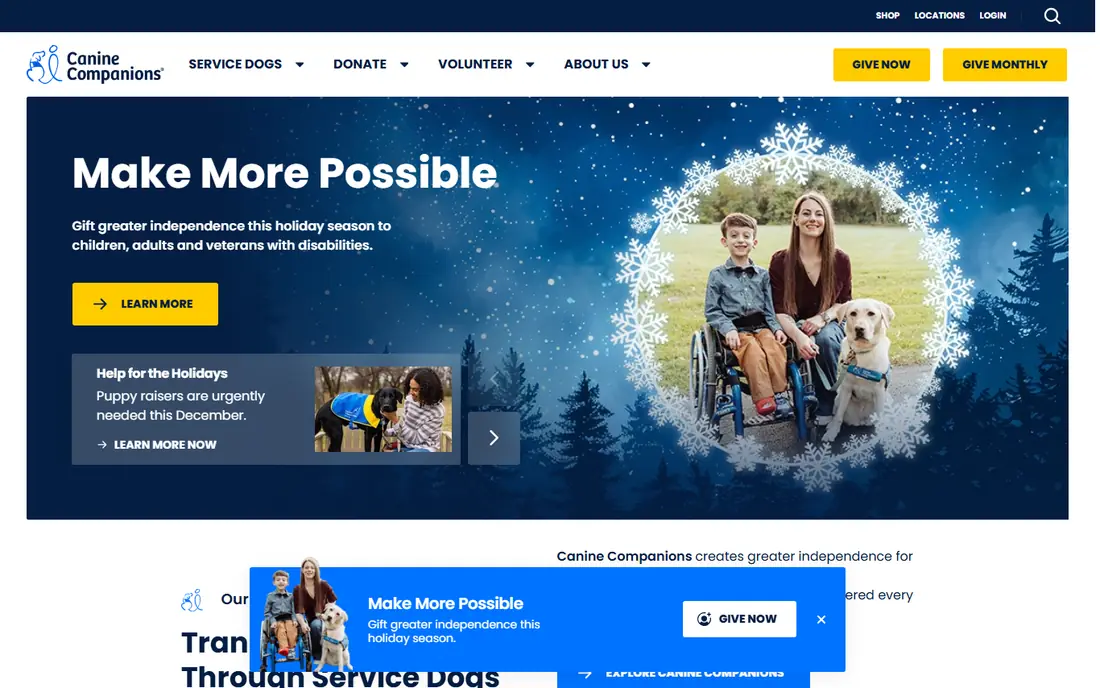
Canine Companions is one of the largest and longest-running service dog organisations in the United States. It breeds, raises and trains dogs, then matches them with adults, children and veterans with disabilities, including psychiatric disabilities. Recipients attend team training with their dog, which covers handling, public access skills and task work.
The main limit is access. Applications are assessed carefully, and waiting times can be long because training a dog takes many months. Dogs are provided at no cost to recipients according to the organisation, though applicants should confirm current terms directly before applying.
- Long-established programme
- Dogs provided at no cost to recipients in public listings
- Team training included
- Application and wait can be long
- Eligibility criteria are strict
NEADS, also known as Dogs for Deaf and Disabled Americans, places service dogs with people who are deaf or have physical or psychiatric disabilities. Its programmes include dogs raised in prison puppy programmes, where handlers help with early socialisation and training. That model gives dogs structured early experience before advanced training.
NEADS serves mainly the northeastern United States, so applicants elsewhere may need a different organisation. As with other legitimate programmes, applicants go through assessment, matching and team training rather than simply choosing a dog.
- Service dogs for a range of disabilities
- Prison puppy programme
- Regional focus
- Geographic focus limits some applicants
- Wait times vary
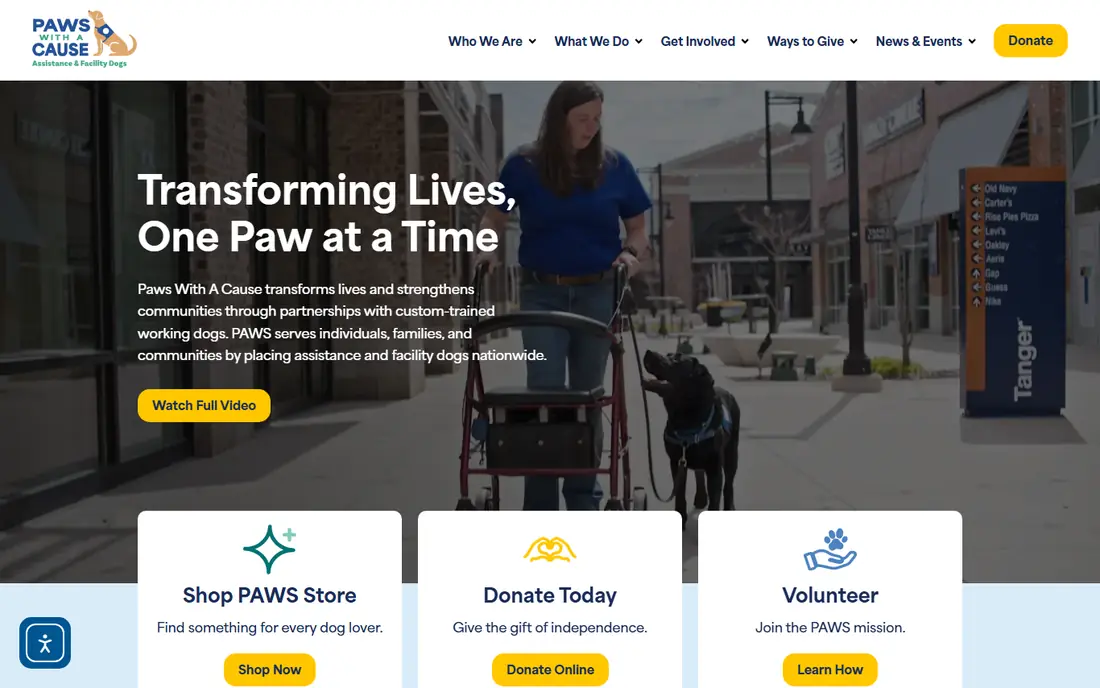
Paws With A Cause trains service dogs for people with physical, psychiatric and other disabilities, tailoring tasks to the individual. For anxiety-related needs, that can mean tasks such as deep pressure therapy, grounding during distress, interrupting repetitive behaviours or creating space in crowds, where a clinician and trainer agree those tasks fit the person's disability.
Custom training takes time, and some clients take part in fundraising toward the cost of training. Applicants should ask what tasks are offered, how long training takes and what follow-up support is included after placement.
- Custom training for individual needs
- National reach
- Long history
- Fundraising may be needed for some placements
- Wait times vary
4 Paws for Ability places service dogs with children, veterans and adults with a range of disabilities, including psychiatric conditions. Its training can cover tasks linked to anxiety and related conditions, alongside mobility and other task work where needed. Families and veterans receive training with the dog after matching.
Demand is high, so applicants should expect a wait and, in some cases, fundraising toward placement costs. Check the current application process and eligibility rules on the official site, since terms can change.
- Serves children, veterans and adults
- Task training for psychiatric needs
- Family support
- Demand is high
- Fundraising and wait times apply
Service Dog Project breeds and trains Great Danes as service dogs and donates them to people with disabilities, including veterans and people with mobility and psychiatric needs. Great Danes are large, calm dogs when well trained, and their size can suit balance work and deep pressure tasks. Size alone, however, does not make a dog a service dog, and training and temperament matter more than breed.
The breed focus means it will not suit everyone, and availability depends on litters and training progress. Applicants should confirm whether psychiatric task training is offered for their needs and what ongoing support follows placement.
- Focus on Great Danes
- Dogs donated to recipients
- Balance and mobility strengths
- Breed focus limits choice
- Location and availability vary
K9s For Warriors serves post-9/11 veterans with post-traumatic stress, traumatic brain injury and military sexual trauma. It rescues dogs, trains them as service dogs and pairs them with veterans, with the programme provided at no cost to the veteran according to the organisation. Training covers tasks that can help with hypervigilance, anxiety in public and night-time distress, as agreed with the veteran's care team.
This programme is only for eligible veterans, so civilians need a different organisation. Veterans should also keep working with their clinical team, since a service dog supports treatment rather than replacing it.
- Veteran-focused programme
- Rescue dogs trained as service dogs
- No cost to veterans in public listings
- Limited to eligible veterans
- Application process is selective
Little Angels Service Dogs
Great for: Psychiatric and mobility dogs
Little Angels Service Dogs trains service dogs for psychiatric, mobility and other needs, including dogs that help with anxiety-related tasks. As a smaller programme, it can offer a more personal matching process, with training shaped around the tasks a person needs in daily life. That can suit applicants who want a close working relationship with trainers.
Smaller scale also means fewer placements per year, so waiting times can vary. Applicants should ask about task training, public access training and what happens if a match does not work out.
- Psychiatric service dog training
- Smaller programme feel
- Task-focused matching
- Smaller scale than national programmes
- Wait times vary
Assistance Dogs International
Great for: Finding accredited programmes
Assistance Dogs International is not a placement programme itself. It is an umbrella body that sets standards and accredits member organisations that train assistance dogs, including psychiatric service dogs. Its member directory is a useful starting point for finding a legitimate programme and for checking whether an organisation meets shared standards.
Accreditation is helpful, but it is not the only marker of legitimacy, and laws on service dogs vary by country and, in the United States, by state. Use the directory alongside direct checks on training, costs, waiting times and follow-up support.
- Accreditation standards
- Member programme directory
- Trusted starting point
- Does not place dogs itself
- Accreditation is not a legal requirement everywhere
International Association of Assistance Dog Partners
Great for: Guidance and community
The International Association of Assistance Dog Partners provides guidance, community and resources for assistance dog handlers, including people who owner-train with professional help. Its materials cover training standards, public access issues and the difference between service dogs, emotional support animals and therapy dogs. That distinction matters, because only trained service dogs have public access rights in many places.
It does not place dogs, so it suits people who want to understand the process, find trainers or connect with other handlers. Its guidance is general information, not legal advice for a specific situation, so check local law where you live.
- Guidance on rights and training
- Community for handlers
- Owner-training resources
- Does not place dogs
- Guidance is general, not legal advice
How we picked these
We compared official organisation pages and public programme descriptions, and favoured established non-profit programmes and recognised guidance bodies. We excluded sellers that market a breed or a vest as a service dog without training, since a breed alone does not qualify a dog. We also excluded any organisation that could not be described as a legitimate service-dog programme or training resource.
What to check before you apply
A service dog is a major commitment, not a quick purchase. The dog needs daily care, exercise, veterinary care and ongoing training, and public access work adds responsibility in shops, transport and workplaces. Talk to your clinician first about whether task-based help fits your treatment plan.
Understand tasks, not just breeds
Ask what specific tasks a dog will be trained to do for your disability, and how those tasks help in daily life. Common psychiatric tasks include grounding, deep pressure, interrupting distress behaviours and creating space, but the right tasks depend on the individual. A breeder who promises a ready-made anxiety dog without training or assessment is a warning sign.
Check legitimacy and costs
Check whether the organisation is a registered non-profit, how it trains and assesses dogs, what team training you receive and what follow-up support is offered. Ask for total costs, fundraising expectations and waiting times in writing. Be cautious of online sellers offering instant certification, registration or vests as proof of service dog status.
Plan for daily life with a working dog
Consider housing, work, travel, allergies in your household and the cost of food and veterinary care. A service dog still needs rest, play and time off duty, and not every day or setting suits working. A good programme will discuss these realities during assessment, not only at placement.
Frequently asked questions
What is the best service dog for anxiety?
There is no single best breed. The best psychiatric service dog is an individually trained dog whose tasks match a person's disability, temperament and daily life. Organisations in this list match dogs by temperament and training, not by breed alone.
What tasks can a psychiatric service dog do?
Tasks can include grounding during distress, deep pressure therapy, interrupting repetitive behaviours, creating space in crowds and waking a handler from nightmares, where a trainer and clinician agree they fit. The task must be linked to a disability to count as service dog work.
Is an emotional support dog the same as a service dog?
No. An emotional support animal provides comfort by its presence but is not trained to perform specific tasks, and it does not have the same public access rights as a service dog in many places. A service dog is trained for task work and public behaviour.
How long does it take to get a service dog?
It often takes many months, and sometimes more than a year, from application to placement. Training, matching and team training all take time, and waiting lists at legitimate programmes are common.
Can I train my own service dog for anxiety?
In the United States, owner-training is allowed in principle, but the dog must still be trained to perform tasks and to behave safely in public. Most people need professional trainer help, and guidance bodies such as the International Association of Assistance Dog Partners explain the standards involved.
How much does a service dog cost?
Costs vary widely. Some non-profits provide dogs at no cost to recipients, while others ask clients to fundraise toward training costs that can run into tens of thousands of dollars. Ask each organisation for its current terms, since they change.
Sources
See where you really rank - block by block
ProMapRanker scans Google Maps across a grid of your service area. Simple monthly plans from $19, white-label on every plan.
Start freeKeep reading
 who has best internet service
Who Has the Best Internet Service in 2026
Who has best internet service for US homes? We compare fiber, cable, fixed wireless and satellite providers on speed, price, availability and terms today.
Read → which survey tool has the best analytics
Which Survey Tool Has the Best Analytics in 2026
Find which survey tool has the best analytics in 2026, comparing Qualtrics, SurveyMonkey, Typeform, Alchemer, and more on reports, text, and stats today.
Read → which streaming service has the best movies
Which Streaming Service Has the Best Movies in 2026
Answering which streaming service has the best movies, with Netflix, Max, Criterion and more compared on libraries, prices and free options in this guide.
Read →