 ProMapRanker
Best Selling Apps in 2026: 9 Apps Compared

Key takeaways
- Match the app to the item first, since fees and buyers differ far more by category than by app design.
- eBay is our pick for almost anything, while Facebook Marketplace wins for bulky local items with no shipping.
- Poshmark and Depop suit fashion, Etsy suits handmade and vintage, and Vinted suits low-cost closet clear-outs.
- Check the total fee on a sale, not just the headline rate, since payment processing and shipping can change the payout.
- Photograph flaws honestly and price from sold listings, not from asking prices, to sell faster and avoid returns.
Quick comparison
| Pick | Great for | Pricing starts at | Free tier | |
|---|---|---|---|---|
 eBay | Almost anything, shipped | Free | Yes | Visit |
 Mercari | Simple general selling | Free | Yes | Visit |
 Poshmark | Brand-name fashion | Free | Yes | Visit |
 Facebook Marketplace | Local bulky items | Free | Yes | Visit |
 Etsy | Handmade and vintage | Free | Yes | Visit |
 Depop | Vintage and streetwear fashion | Free | Yes | Visit |
 Vinted | Everyday clothes, low fees | Free | Yes | Visit |
 OfferUp | Fast local sales | Free | Yes | Visit |
 Whatnot | Live selling and collectibles | Free | Yes | Visit |
The best selling apps
The best apps for selling cover local sales, shipped sales, fashion, handmade goods and live auctions. We compare them on fees, shipping, payout speed and the buyers each one attracts, so you can pick by item type.
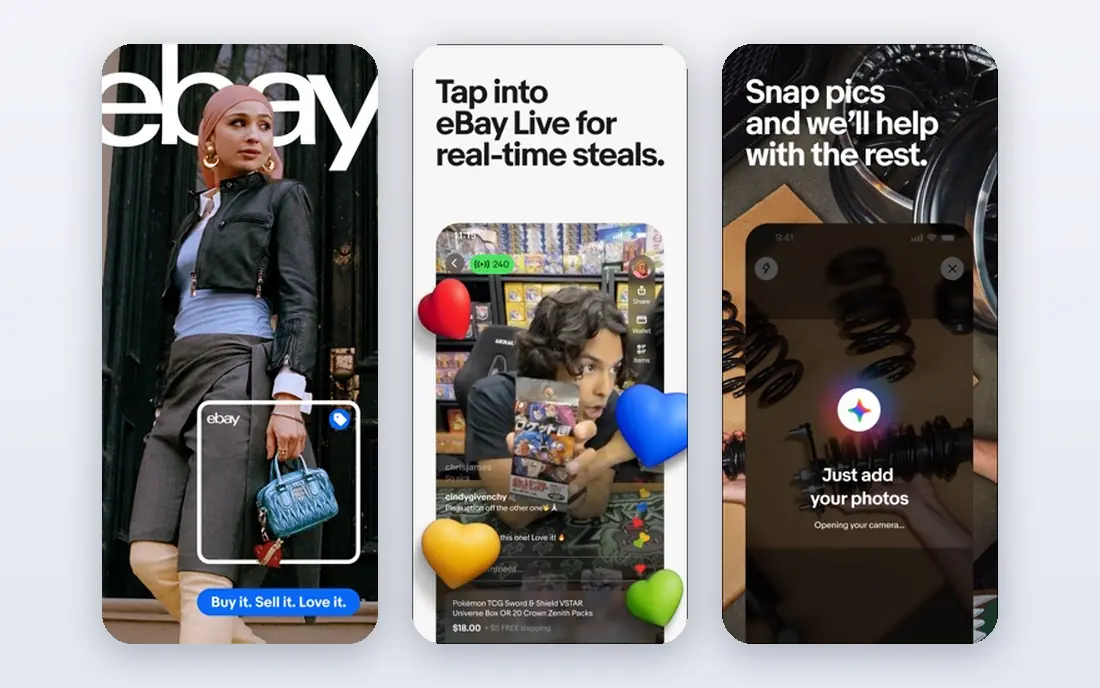
eBay remains the best selling app for most people because it sells almost anything to buyers worldwide. Collectibles, rare tech, parts, vintage goods and everyday items all find buyers there, and sold listings give a realistic price check before you list. Seller tools for bulk listing and promoted listings help once you sell regularly.
Fees are the main cost. Many categories charge about 13.6 percent plus $0.40 per sale, and promoted listing fees add more if you use them. Return policies also favour buyers, so describe condition carefully and photograph flaws. For a single high-value or unusual item, eBay is still the first place to try.
- Huge buyer base worldwide
- Strong for collectibles and niche items
- Seller tools for bulk listings
- Final value fees around 13.6 percent plus $0.40 in many categories
- Buyer-friendly return policies
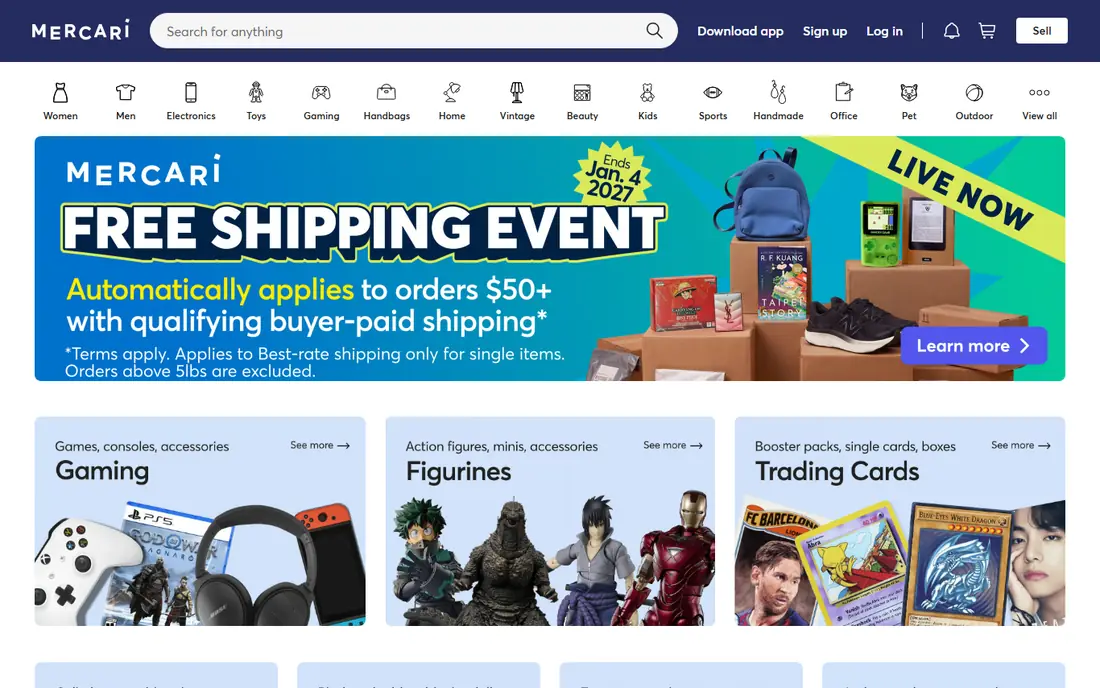
Mercari is the best app to sell stuff on if you want a fast, simple listing from your phone. Take photos, add a title and price, and the listing is live in minutes, with shipping labels handled through the app. It suits household items, electronics, toys and small goods that a casual seller wants to clear without learning a complex seller dashboard.
The seller fee is 10 percent on the total sale in published fee summaries, so factor that into your price. Buyers on Mercari also negotiate often, so set a price with a little room to accept an offer without losing money. For casual sellers, that simplicity is worth the fee.
- Fast mobile listings
- Simple interface for beginners
- Wide general categories
- Seller fee of 10 percent on sales
- Buyers often negotiate hard on price
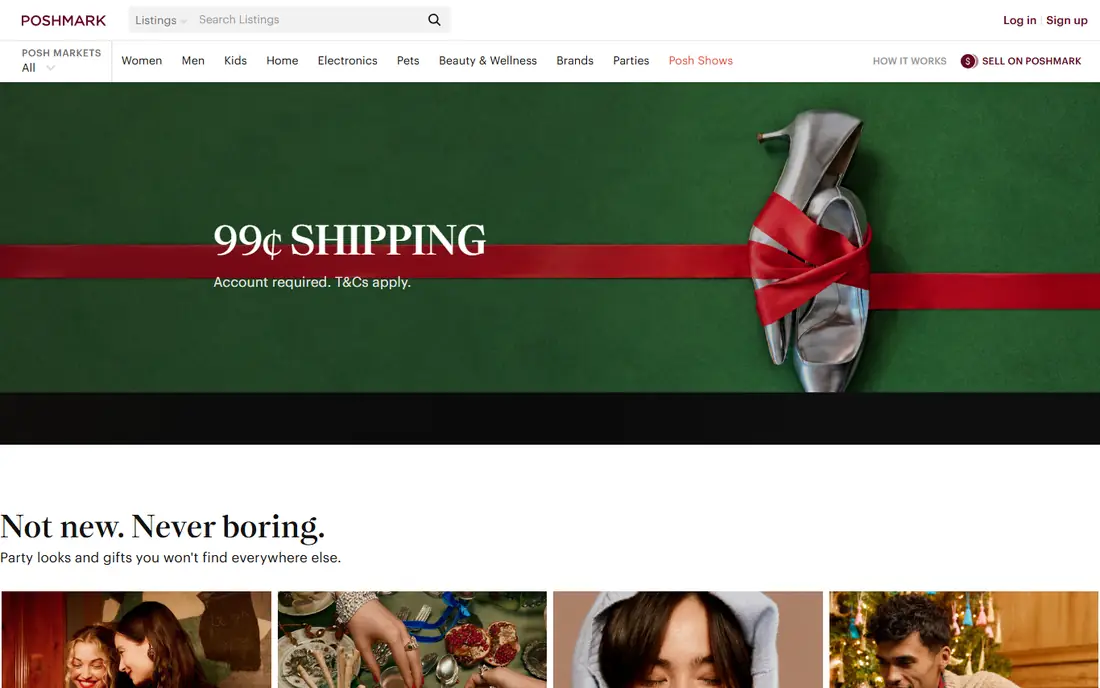
Poshmark is built for fashion, and its social features reflect that. Sellers share listings, follow other sellers and join themed sales events, which helps brand-name clothes, shoes and accessories find buyers who already shop for fashion. Prepaid shipping labels simplify the process, since you print the label and drop the parcel off.
The fee is high: 20 percent on sales over $15, or a flat $2.95 on smaller sales. Visibility also needs regular activity, since sharing keeps listings near the top. Poshmark pays best for mid-range and brand-name fashion where the buyer base justifies the fee, not for low-value items where the fee eats the profit.
- Large fashion buyer base
- Prepaid shipping labels
- Social selling features
- Fee of 20 percent on sales over $15, or $2.95 under $15
- Needs regular sharing to stay visible
Facebook Marketplace is the best app to sell stuff locally, especially furniture, appliances and other bulky items that are costly to ship. Local sales usually carry no platform fee, and the buyer base is large, since many buyers already use Facebook daily. Meeting in a public place and taking cash or a secure payment keeps a local sale simple.
Shipped sales are a different story, with a 10 percent fee in published summaries and less polished shipping tools than eBay or Mercari. Use Marketplace for local pickup first, and use a shipped marketplace for items that need to travel. For a sofa, a fridge or a bike, Marketplace is hard to beat.
- No fee for most local sales
- Huge local buyer base
- Good for furniture and bulky items
- Shipped sales carry a 10 percent fee in published summaries
- Weaker shipping and protection tools
Etsy is the best selling platform for makers and vintage sellers. Buyers arrive looking for handmade, personalised and vintage items, which means a well-made product meets a buyer who already values craft. Shop pages, branding tools and search filters help a small maker look like a real shop, not just a single listing.
Fees stack up: a $0.20 listing fee, a 6.5 percent transaction fee, plus payment processing, with optional advertising fees on top. Competition is also strong in popular categories, so good photos, clear titles and reviews matter. For handmade and vintage goods, though, no general marketplace matches Etsy buyer intent.
- Buyer base that seeks handmade and vintage
- Strong search for crafted goods
- Shop branding tools
- Listing fee of $0.20 plus 6.5 percent transaction fee plus payment processing
- Heavy competition
Depop is the fashion app for vintage, streetwear and one-of-a-kind pieces aimed at younger buyers. Its feed feels more like social media than a catalogue, which suits sellers with a clear style and good photos. International buyers also broaden the market for vintage items that are scarce in one country.
US sellers pay a payment processing fee of 3.3 percent plus $0.45 in published summaries, on top of any marketplace fee that applies, so check the current fee page before pricing. Payouts after delivery confirmation can feel slower than a local cash sale. For vintage and streetwear, Depop is often the best balance of audience and cost.
- Young fashion buyer base
- Lower fees than Poshmark
- International fashion audience
- Payment processing fee of 3.3 percent plus $0.45 for US sellers
- Payouts can feel slow
Vinted is the best app for selling everyday clothes without losing a large share to fees. Sellers keep the sale price in published summaries, since the buyer pays a protection fee, which makes it ideal for clearing a closet of low-cost items that would barely profit on a high-fee platform. Listing is simple, and shipping is handled through the app.
The trade-off is protection that leans toward buyers, so describe condition and size carefully and keep photos honest. High-end fashion may still sell better on Poshmark or a luxury consignment site, where buyers expect higher prices. For everyday clothes, Vinted is the lowest-cost route to a sale.
- No seller fee in published summaries
- Buyer pays a protection fee
- Simple closet clear-outs
- Buyer-focused protection can favour buyers in disputes
- Less suited to high-end fashion
OfferUp is a strong local alternative to Facebook Marketplace, especially for appliances, gym gear, electronics and household items. Local listings are fast to create, and local sales within listing limits carry no platform fee in published summaries. That makes it a good first try for an item you want gone this week without shipping hassle.
Shipped sales add fees and a smaller buyer base than eBay, so OfferUp is best kept local. Meet in a public place, check the item with the buyer, and use a secure payment method. For a quick local sale, OfferUp and Facebook Marketplace together cover most local buyers.
- Fast local listings
- No fee within listing limits for local sales
- Good for appliances and gear
- Shipped sales carry fees
- Smaller shipped buyer base than eBay
Whatnot suits sellers who enjoy live selling. Instead of a static listing, you run a live show, auction items in real time and build a repeat audience that returns for the next show. Collectibles, trading cards, sneakers and fashion do well in this format, since live bidding creates urgency that a fixed-price listing lacks.
Live selling takes time and preparation, from sourcing stock to running a show and shipping afterwards. Fees vary by category, often in the 4 to 8 percent range plus payment processing in published summaries. If you like presenting and can commit to regular shows, Whatnot can outsell a static listing for the right categories.
- Live auction format builds repeat buyers
- Strong for collectibles and trading cards
- Active community
- Live selling takes significant time
- Fees vary by category, often 4 to 8 percent plus processing
How we picked these
We compared official fee pages, shipping options, payout terms and public fee summaries for apps that US sellers can use today. We favoured apps with a clear category strength, a published fee structure and a buyer base large enough to sell within a reasonable time. We left out buyback sites that only offer a fixed trade-in price, since this list is about selling to buyers, not trading in.
How to choose the best selling app for your item
Start with the item, not the app. A sofa needs local pickup, a vintage jacket needs a fashion audience, a handmade mug needs Etsy buyers, and a rare collectible needs eBay reach or a live auction. Listing the same item everywhere wastes time, since photos, titles and prices need tweaking for each audience anyway.
Price from sold listings, then subtract fees
Search sold listings for the same item in the same condition, and use that range as your price guide, not the highest asking price you see. Then subtract the platform fee, payment processing and shipping cost to see your real payout. If the payout is too low, try a lower-fee app, sell locally, or bundle items to raise the average sale value.
Write listings that prevent returns
Use natural light, a plain background and photos of every flaw, plus brand, model, size, colour and condition in the title and description. State whether the item comes from a smoke-free home if relevant, and note any missing parts. Honest listings sell slightly slower at first, but they avoid returns, disputes and negative feedback that cost far more time later.
Frequently asked questions
Which selling app is the best overall?
eBay is the best overall selling app for shipped items because it covers almost any category and reaches buyers worldwide. For local sales, Facebook Marketplace is best for bulky items. The best app for you depends on what you sell, so match the app to the item first.
What is the best app to sell stuff on for clothes?
Poshmark suits brand-name fashion, Depop suits vintage and streetwear, and Vinted suits everyday clothes with low seller fees. For luxury pieces, a consignment platform may pay more after authentication. Check fees for your price range, since a high fee hurts low-value items most.
What is the best app to sell stuff on for electronics?
eBay and Mercari both work well for electronics, since buyers search for specific models and conditions. Swappa is another option for phones and laptops, though it is outside this list. Include model numbers, battery or condition notes, and photos of any wear to avoid disputes.
Which selling app has the lowest fees?
Vinted has no seller fee in published summaries, with the buyer paying a protection fee, which makes it cheapest for everyday clothes. Local sales on Facebook Marketplace and OfferUp also carry no fee within limits. For shipped general items, compare the total fee, including payment processing, before choosing.
How fast will I get paid after a sale?
Payout speed varies by app and by whether the sale is local or shipped. Local cash sales pay at once, while shipped sales usually pay after delivery confirmation, often within a few days. Check each app payout terms before listing, and avoid spending the money until the payout has cleared.
Can I list the same item on several selling apps at once?
Yes, and many sellers cross-list to reach more buyers. The risk is selling the same item twice, so remove other listings as soon as one sells. Keep titles, prices and photos consistent, and adjust prices slightly for each app fee so your payout stays similar across platforms.
Sources
See where you really rank - block by block
ProMapRanker scans Google Maps across a grid of your service area. Simple monthly plans from $19, white-label on every plan.
Start freeKeep reading
 top custom software development company
Top Custom Software Development Company in 2026
Looking for a top custom software development company? We compare 9 firms for web, mobile, and enterprise software, covering strengths and fit for 2026.
Read → tableau alternatives
Tableau Alternatives in 2026
Compare the best Tableau alternatives for 2026, from Power BI to Metabase, with prices, hosting options, and picks for small teams and enterprises today.
Read → microsoft teams alternatives
Best Microsoft Teams Alternatives in 2026
Looking for microsoft teams alternatives? We compare 9 chat and video tools for 2026, covering free plans, pricing, meetings, and integrations for teams.
Read →