 ProMapRanker
Schema Management Tools for GraphQL: Best Picks of 2026

Open-source schema registry and analytics · Pricing starts at: $20 per month
Direct answer
For open-source schema registry and analytics, GraphQL Hive is where this list starts. Listed starting prices: GraphQL Hive from $20 per month, Postman from $9 a month and GraphQL Mesh from $20 per month. For a different need, Postman covers testing and documenting GraphQL APIs and GraphQL Mesh covers unifying numerous APIs into one graph. Prices, free plans and limits for all 6 tools follow.
ProMapRanker put together this guide to schema management tools for GraphQL for readers who want a clear shortlist without reading every vendor page. It compares 6 tools on starting price, free plans, who each one suits and where each one falls short.
Key takeaways
- GraphQL Hive is the opening pick, best for open-source schema registry and analytics.
- Free plans are common here: 6 of 6 tools have one, including GraphQL Hive, Postman, GraphQL Mesh and Stellate.
- Hasura fits instant GraphQL over existing data.
- The lowest published monthly entry price here is $5 per active model per month, from Hasura.
- Check the limits for Postman before you commit: not a dedicated schema registry.
Quick comparison
| Pick | Great for | Pricing starts at | Free tier | |
|---|---|---|---|---|
| GraphQL Hive | Open-source schema registry and analytics | $20 per month | Yes | Visit |
 Postman | Testing and documenting GraphQL APIs | $9 a month | Yes | Visit |
 GraphQL Mesh | Unifying plenty of APIs into one graph | $20 per month | Yes | Visit |
 Stellate | Edge delivery and schema protection | $249 a month | Yes | Visit |
 Apollo GraphOS | Federated graphs with schema governance | $5 per million requests | Yes | Visit |
 Hasura | Instant GraphQL over existing data | $5 per active model per month | Yes | Visit |
Schema Management Tools for GraphQL profiles
Choose GraphQL Hive for open-source schema registry and analytics. Choose Hive when openness and control over the registry matter.
On top of that, running an open-source registry can mean more operational responsibility than a managed service. GraphQL Hive starts at: $20 per month. GraphQL Hive includes a free tier.
Watch-outs: Self-hosting brings operational work.
- Supports federation and other GraphQL APIs
- Handy schema change visibility
- Feature depth varies by deployment

Where Postman fits: testing and documenting GraphQL APIs. For schema management it is most handy around the edges: exploring a schema through introspection, saving queries and sharing documentation with a team that already works in Postman.
Where it falls short: Schema governance is secondary.
It is not built as a schema registry or federation control plane, so change tracking and governance are restricted compared to dedicated tools. Starting cost for Postman: $9 per month. Postman includes a free tier.
- Familiar API workspace
- Supports GraphQL requests
- Not a dedicated schema registry
For unifying numerous APIs into one graph, GraphQL Mesh is a natural candidate. GraphQL Mesh, from The Guild, is built to unify an API landscape by integrating any API service into a cohesive graph through a federated architecture. It is handy when a team has REST, gRPC or other sources and wants a single GraphQL schema in front of them.
Pick Mesh when consolidating plenty of services into one graph is the core problem. Beyond that, Mesh centres on composition instead of acting as a schema registry with change history and analytics. What you pay to start with GraphQL Mesh: $20 per month. GraphQL Mesh has a free plan.
Where it falls short: Composition setup takes planning.
- Integrates diverse API services
- Federated architecture approach
- Not a registry on its own
Stellate makes the most sense for edge delivery and schema protection. Stellate brings edge computing to GraphQL APIs, emphasizing global scalability, low latency and advanced protections around a schema. On top of that, in a schema management context it is most relevant after the schema exists: it helps serve and safeguard the API that the schema defines, which fits teams whose main concern is performance and resilience in production.
Worth adding: teams that require design, composition or change governance should look at Apollo GraphOS, GraphQL Hive or GraphQL Mesh. Choose Stellate when edge performance and protection are the priority. The starting price for Stellate: $249 per month. Stellate offers a free plan.
Points against: Registry features are not the core.
- Edge computing for GraphQL APIs
- Security protections for APIs
- Delivery focus rather than schema design
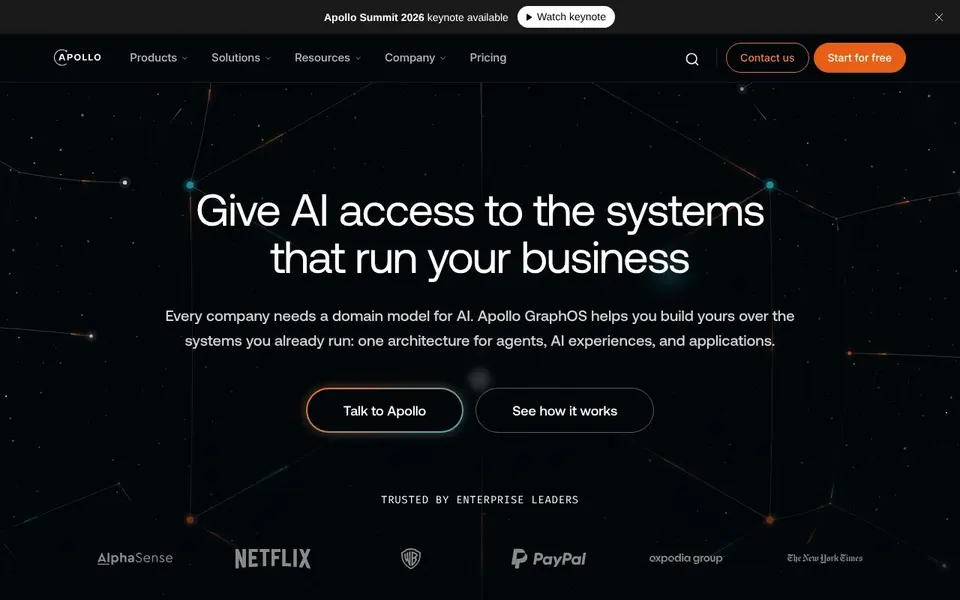
Apollo GraphOS serves Federated graphs with schema governance. Its homepage frames a domain model as a foundation for AI on top of existing services.
Where it falls short: Most value appears in federated setups.
What you pay to start with Apollo GraphOS: $5 per million requests. Apollo GraphOS offers a free plan.
- Domain modeling over existing systems
- Strong ecosystem and documentation
- Wide system can feel heavy for small schemas
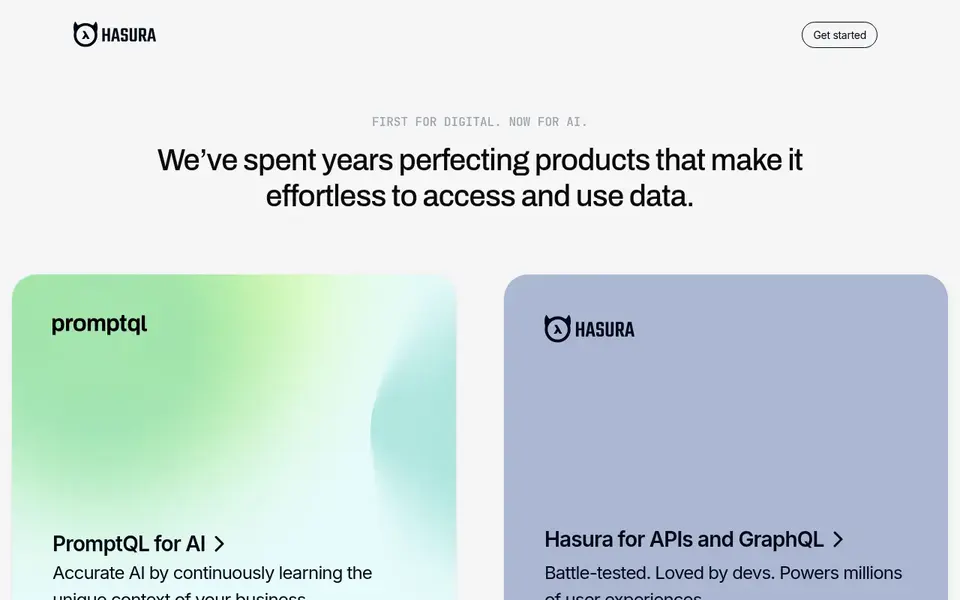
Think of Hasura for instant GraphQL over existing data. For schema management, this means the schema follows your data model, and teams run it by shaping sources, permissions and relationships instead of hand-writing every type. As for the details, Hasura is recognised for its GraphQL Engine, which exposes existing databases and services through a generated GraphQL API.
Drawbacks to consider: Schema is mostly derived from data sources.
Its homepage emphasizes accurate, quick and secure data access for AI and digital experiences. Beyond that, choose Hasura when quick API delivery over existing data is the priority. Entry price for Hasura: $5 per active model per month. Hasura has a free plan.
- Secure delivery
- Data access pitched at AI and apps
- Less a standalone schema registry
How we built this list
For each of the 6 tools we noted price, free plan or trial, fit for schema management tools for GraphQL and the main limit, using vendor pages and documentation. Plan names, prices and limits change often. Treat the figures here as a starting point and verify them with the vendor. The ranking is editorial: typical fit first, then clear pricing, then free access. If your needs are unusual, read the profiles rather than relying on position.
What to check before you buy
- Check the vendor page for the current price: Hasura starts at $5 per active model per month here, and seats or billing terms can move it.
- Check what the free option really includes: GraphQL Hive, Postman, GraphQL Mesh and others offer a free plan, and usage caps differ.
- Before choosing GraphQL Hive, weigh its main limit: self-hosting brings operational work.
- Ask the daily users to test Hasura on a live task before you roll it out to everyone.
- Ask Stellate whether prices are locked for the first term and what happens at renewal.
Frequently asked questions
How are the tools for schema management tools for GraphQL ordered?
The order follows typical fit for schema management tools for GraphQL, with GraphQL Hive first and Hasura last, then price clarity and free access. It is editorial judgement, not a score, so another team could rank the tools differently.
Is GraphQL Hive the right pick for everyone comparing schema management tools for GraphQL?
No single tool suits every team. GraphQL Hive comes first because it fits open-source schema registry and analytics, while Postman suits testing and documenting GraphQL APIs and GraphQL Mesh suits unifying many APIs into one graph. Match the tool to your own size, budget and workflow before deciding.
Do I need federation to run a GraphQL schema?
No, a single schema can be managed without federation. Tools like Apollo GraphOS and GraphQL Mesh are built around that composition model.
What is the cheapest option for schema management tools for GraphQL in this list?
On published monthly entry prices, Hasura is the lowest here at $5 per active model per month. Entry price is only part of the cost, because seats, add-ons and billing terms can change the total.
How do I choose between Hasura and a registry-first tool?
Hasura creates a GraphQL API from existing data sources, so the schema follows your data model. A registry-first tool hands more direct control over schema authoring and change governance.
What is a GraphQL schema registry?
A schema registry keeps versions of your GraphQL schema and tracks changes over time. Apollo GraphOS and GraphQL Hive both address this need.
Sources
See where you really rank - block by block
ProMapRanker scans Google Maps across a grid of your service area. Simple monthly plans from $19, white-label on every plan.
Start freeBrowse all guides
← Best LLM SEO Software for Enterprise Deployment (2026)SEO Tools for Remote Teams in 2026: Top 5 Compared →
 best company to do seo
Top 6 Company to Do SEO, Compared on Price (2026)
Weighing the best company to do SEO? We lined up 6 products by cost, free access and fit. Plain-spoken summaries throughout. Pricing and limits included.
Read → best alternatives to grammarly for seo content
5 Grammarly Alternatives Compared (2026)
Searching for the best alternatives to grammarly for seo content? Here are 5 options with prices and free plans. Honest caveats for every entry. Easy to scan.
Read → best url submission software
Top 5 URL Submission Software, Compared on Price (2026)
5 tools for the best URL submission software, compared on pricing, free plans and best-fit use. Fit and flaws are laid out for each entry. See the full list.
Read → best platform for seo b2c
Best Platform for SEO B2C in 2026
Compare the best platform for SEO B2C, from Semrush and Ahrefs to Moz, SE Ranking, BrightEdge, Conductor, Surfer, and Clearscope for consumer brands today.
Read → best llm rank tracking tool
Best LLM Rank Tracking Tool in 2026
Compare the best LLM rank tracking tool in 2026, from Otterly and Peec AI to Profound, Scrunch and AthenaHQ, for ChatGPT, Gemini, Perplexity and more.
Read → best tools for seo topical map
Best Tools for SEO Topical Map in 2026
Discover the best tools for SEO topical map planning, from keyword clustering to content briefs, with current pricing and honest strengths and limits.
Read →More in SEO Tools · All guides A to Z by date · Latest guides