 ProMapRanker
Best Sales Training Companies in 2026

Key takeaways
- Most established providers price by quote, so a shortlist and a clear brief matter more than a headline price.
- Sandler and RAIN Group suit teams that want a repeatable method with coaching after the workshop, not a single event.
- Dale Carnegie fits reps who need confidence, communication and relationship skills as much as closing technique.
- HubSpot Academy is the sensible free starting point for new reps before a company pays for a full program.
- The best sales training programs for a company usually pair a method with manager coaching and practice on real deals.
Quick comparison
| Pick | Great for | Pricing starts at | Free tier | |
|---|---|---|---|---|
 Sandler | Qualification discipline | See website | No | Visit |
 Dale Carnegie | Confidence and relationships | See website | No | Visit |
 RAIN Group | Consultative selling | See website | No | Visit |
 Richardson | Large consultative teams | See website | No | Visit |
 Korn Ferry | Enterprise deal strategy | See website | No | Visit |
 Winning by Design | SaaS revenue teams | See website | No | Visit |
 Force Management | Value and deal execution | See website | No | Visit |
 The Brooks Group | Mid-size B2B teams | See website | No | Visit |
 HubSpot Academy | New reps and beginners | Free | Yes | Visit |
The best sales training companies
We compared providers on method, format, coaching after training, and how clearly they fit a particular team size. The list below covers large firms, specialist SaaS providers, and one free option for individuals.
Sandler is built around a structured selling system that puts qualification before pitching. Reps learn to agree on next steps, surface budget and decision issues early, and avoid long cycles with prospects who will not buy. That discipline is useful for complex business-to-business sales, where a polite prospect can consume weeks of follow-up without ever becoming a customer. The program is often delivered through local training offices, which gives teams regular sessions rather than one large workshop.
The trade-off is commitment. A team that attends once and then returns to old habits will get little value from the system. Sandler works best when managers attend too, coach to the same language, and review live deals against the method. Companies that want a quick skills day may find the ongoing format slower than they expected. For teams willing to practice over months, it is one of the most consistent options in this list.
- Clear, repeatable selling system
- Local offices offer ongoing coaching
- Strong focus on qualifying deals early
- Pricing is by quote and varies by office
- The method needs time to take hold across a team
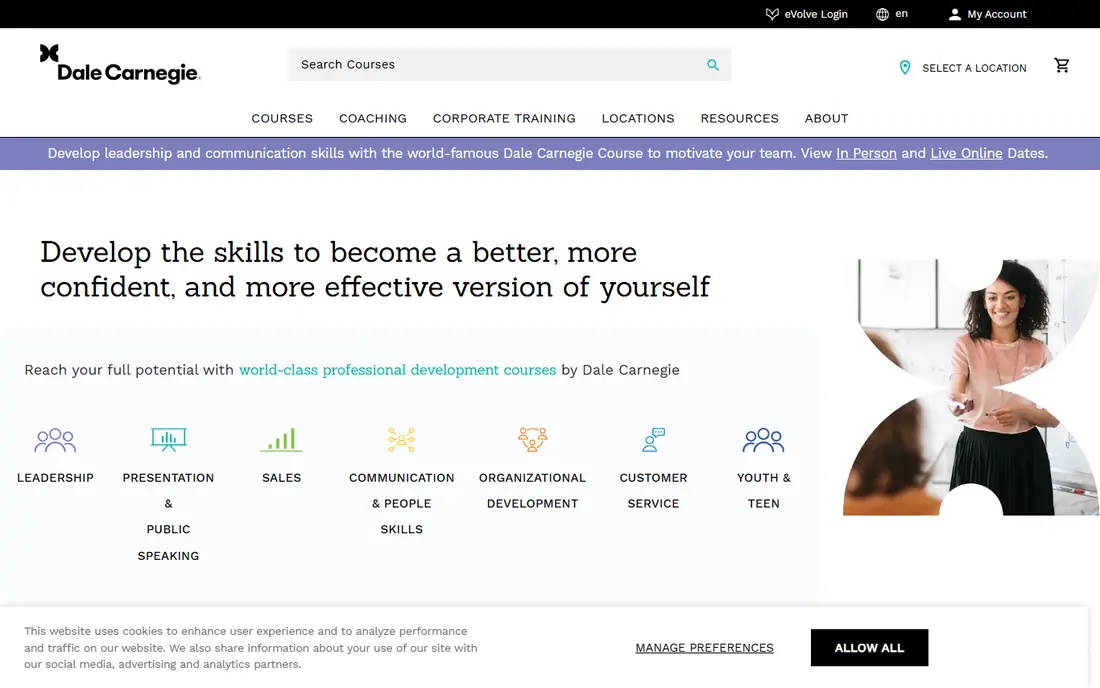
Dale Carnegie is best known for communication and relationship skills, and that is exactly where many sales teams need help. Reps who can hold a clear conversation, listen well, and build trust tend to get more honest answers from buyers. Courses cover presenting, handling objections, and building rapport, and they are available live online and in person. That mix suits companies with staff in several locations.
This is not the first choice for a team that wants a strict deal methodology with stages and qualification rules. Dale Carnegie strengthens the person doing the selling more than it redesigns the sales process. It pairs well with a method provider, and it also stands alone for teams whose main gap is confidence and customer conversation. Check the course length and format before booking, because public courses and company programs differ.
- Long history in communication training
- Live online and in-person courses
- Useful for new and nervous sellers
- Less focused on a single sales method than specialist firms
- Course prices vary by location and format
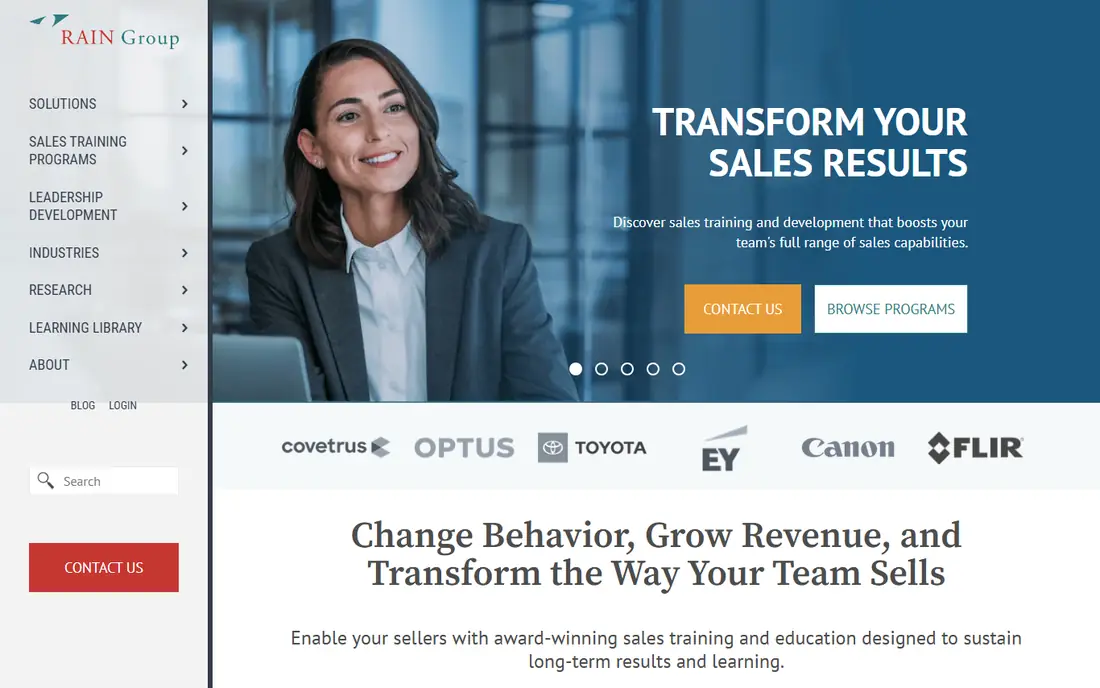
RAIN Group teaches consultative selling, with a focus on understanding buyer needs, leading with insight, and building value before talking price. Its programs mix live virtual sessions, self-study, and coaching, which helps teams that cannot all attend in person on the same day. The firm publishes research on buyer behaviour, and that research shapes its courses rather than sitting apart from them. For teams selling services or complex products, the consultative angle feels closer to real buyer conversations than a script-heavy method.
The main caution is the same as with most providers here. The method only changes results if managers reinforce it in deal reviews and coaching sessions. RAIN Group offers reinforcement, but a buyer should ask exactly what that includes, how long it lasts, and how progress is measured. Companies with the best sales training programs tend to be the ones that treat training as a change in weekly habits, not a single course date.
- Research-based consultative method
- Blended virtual and self-study options
- Coaching and reinforcement options
- Pricing is by quote
- Programs need manager involvement to stick
Richardson, now part of a larger sales performance group, focuses on consultative selling for large teams. Its strength is delivery at scale. A company with hundreds of reps across regions can run the same program in virtual, in-person, or blended form, and managers get tools to coach to the same standard. Content covers discovery, insight-led selling, and handling complex buying groups, which matches the way large deals are actually decided.
Smaller companies may find the process heavier than they need. Scoping, scheduling, and internal coordination take time, and pricing is by quote. That said, a growing mid-size firm with a clear sales process problem can still benefit, provided it is ready to invest in rollout and follow-up. Ask for a pilot group first, and judge the provider on how that group changes its discovery and qualification, not on course satisfaction scores alone.
- Built for large, distributed teams
- Virtual, in-person and blended delivery
- Strong consultative and Challenger content
- Enterprise scale and pricing may suit large firms better than small teams
- Implementation takes planning
Korn Ferry owns the Miller Heiman sales methodology, including Strategic Selling, which many large companies already use to plan complex deals. The approach helps teams map buying influences, assess deal position, and plan actions for each stakeholder. For enterprise sellers who manage long cycles and several decision makers, that structure is more useful than generic closing tips. Korn Ferry can also connect training to wider talent and organisation work, which matters when a sales problem is really a hiring, territory, or management problem.
The catch is scale and cost. This is an enterprise provider, and engagements are quoted rather than listed as a simple per-seat price. Small teams will usually get better value from a specialist or a free starting course. Large firms, by contrast, gain from the depth, the global reach, and the ability to run the same method across regions. Before signing, agree on how deal quality will be reviewed after training, so the investment is judged on pipeline behaviour rather than attendance.
- Miller Heiman Strategic Selling heritage
- Strong for complex accounts
- Global delivery and consulting depth
- Enterprise pricing and scope
- Not a light option for small teams
Winning by Design focuses on software-as-a-service and recurring revenue teams. Its courses cover prospecting, discovery, demos, closing, and customer expansion as one connected revenue process, rather than treating sales as a single job. Cohort learning means reps learn alongside peers from other SaaS companies, which can surface useful comparisons about pricing conversations and renewal handling. For a SaaS company, that context often matters more than generic sales theory.
Teams outside SaaS should check fit carefully. Much of the language assumes subscriptions, expansion revenue, and customer success handoffs. A company selling one-off projects may find parts of the playbook less direct. Also, cohort courses run on a schedule, so a team that needs training this week may have to wait for the next cohort. When the timing works, it is a strong, focused choice for SaaS revenue roles.
- Built for recurring revenue models
- Cohort courses for revenue roles
- Practical playbooks for SaaS teams
- Less relevant for one-off product sales
- Cohort timing may not fit every team
Force Management helps teams sell on value rather than features or price. Its programs cover command of the message, deal qualification, and negotiation, and they are designed to sit inside a company's existing sales stages. That makes it a good fit for teams that already track pipeline stages and want reps to run better discovery, build a stronger business case, and manage stakeholders. Managers get a shared language for deal reviews, which helps coaching stay consistent after the course ends.
The method assumes a certain level of sales maturity. A very early-stage team without a clear ideal customer or sales stages may struggle to apply the framework. It also requires time from managers, since deal coaching is part of the model. Companies that can commit to that coaching rhythm tend to get more from Force Management than companies looking for a one-day motivational session.
- Strong focus on value selling and deal qualification
- Works well with a defined sales process
- Manager coaching included in many programs
- Pricing by quote
- Best for teams that already have a sales process to build on
The Brooks Group is a useful middle option between a global firm and a single trainer. Its IMPACT Selling method covers prospecting, discovery, presentation, and follow-through, with an emphasis on practical habits that mid-size business-to-business teams can use quickly. Delivery includes in-person training, live online sessions, and digital learning, so a company can mix formats for office and remote reps. That flexibility helps smaller firms that cannot send everyone to one location.
The provider is less well known than Sandler or Korn Ferry, so buyers should ask for references from similar companies and a clear outline of post-training support. That check matters with any provider, but it matters more when the brand is less familiar. On content and format, though, The Brooks Group fits the classic mid-size need well: a clear method, usable tools, and training that does not require an enterprise budget or timeline.
- IMPACT Selling method for mid-size teams
- In-person, live online and digital options
- Practical prospecting and account work
- Smaller public profile than the largest firms
- Pricing by quote
HubSpot Academy is the free place to start, and we include it because it answers a real question: what company has the best sales training program for someone with no budget yet. Its sales courses cover fundamentals, inbound selling, prospecting, and pipeline basics in short, self-paced lessons. A new rep can work through the material in evenings, and a manager can use it as onboarding before paid training begins. The price, free, removes the usual barrier to starting.
The limits are clear. There is no live coach watching a rep run a discovery call, and no method tailored to a specific product or market. A certificate shows completion, not selling skill. Treat HubSpot Academy as preparation, not as a replacement for coaching. Once a rep knows the basics, a paid provider from this list can build a method, practice, and deal coaching on top of that foundation.
- Free self-paced courses
- Good sales fundamentals and inbound selling content
- Useful before paid training
- No live coaching or company-specific method
- Certificates do not replace practice on real deals
How we picked these
We compared official program pages, delivery formats, and the methods each provider teaches, plus public pricing information and free options. We favoured providers with a clear method, a stated format, and a track record in business-to-business selling, and we included a free option so individuals are not forced toward a quote-only program. We did not claim hands-on testing, and we did not rank providers on invented scores. Where a provider does not publish a price, we wrote See website rather than repeating a third-party estimate as fact.
What to ask before you pay
A good provider should answer practical questions before you sign. Ask who will deliver the training, how much time managers must give, and what happens after the last session. Ask how the method fits your sales stages, your average deal size, and your buying process. A provider that cannot explain those points in plain terms is a risk, even with a strong brand name.
Match the method to the sale
Short, transactional sales need prospecting, speed, and clear next steps. Long, complex sales need discovery, stakeholder mapping, and value cases. Choose a method that matches the length and complexity of your deals, not the method with the best-known name. A SaaS team and an industrial equipment team can both benefit from training, but they rarely need the same program.
Plan the follow-up first
Training fades fast without reinforcement. Before booking, decide who will coach, how often deal reviews will use the new method, and what a good discovery call sounds like in your company. Put those habits in the calendar before the first session. If managers cannot attend, delay the program until they can, because reps follow what managers inspect.
Start small when the price is by quote
For quote-only providers, run a pilot with one team or region. Set a simple measure, such as qualification quality, meeting-to-opportunity conversion, or deal stage accuracy, and review it after a set period. A pilot gives you evidence for a wider rollout and shows whether the provider's coaching style fits your team.
Frequently asked questions
Which company has the best sales training program?
There is no single winner for every team. Sandler suits qualification discipline, RAIN Group suits consultative selling, and Winning by Design suits SaaS revenue teams. The best choice depends on deal complexity, team size, and how much manager coaching you can sustain after training.
How much do sales training companies cost?
Most established providers price by quote, and the total depends on team size, format, and follow-up coaching. Public courses can cost far less than a company-wide program. Ask for a written scope that lists delivery days, coaching sessions, materials, and any travel or licence costs, so you can compare providers on the same basis.
What are the companies with the best sales training for new reps?
HubSpot Academy is the best free start for fundamentals. For paid training, Dale Carnegie helps with confidence and communication, while Sandler and The Brooks Group give new reps a clear method to follow. Pair any course with a manager who reviews real calls and deals.
Do sales training programs work without manager coaching?
Rarely, in our view. Reps return to old habits when managers do not use the same language in deal reviews. Programs that include manager training and post-course coaching tend to hold up better than single workshops, even when the workshop itself is strong.
Should a small company use a large sales training firm?
It can, but only with a clear scope and a pilot. Large firms bring depth and scale, yet small teams often get better value from a mid-size provider or a focused SaaS specialist. Judge the fit on method, format, and follow-up, not on brand size alone.
Sources
See where you really rank - block by block
ProMapRanker scans Google Maps across a grid of your service area. Simple monthly plans from $19, white-label on every plan.
Start freeKeep reading
 twitch alternatives
Twitch Alternatives in 2026
Explore the best Twitch alternatives in 2026 for live streaming, with free platforms, monetisation options, audiences, chat tools, and tips for new streamers.
Read → firebase alternatives
Best Firebase Alternatives in 2026
Looking for Firebase alternatives? We compare 9 backend platforms for auth, databases, realtime, storage, functions, self-hosting, and pricing for your app.
Read → companies with best work life balance
Companies With Best Work Life Balance in 2026
See companies with best work life balance in 2026, ranked by employee ratings, with flexible work options, benefits, and what to check before applying.
Read →