 ProMapRanker
Best Sales Enablement Tools in 2026

Key takeaways
- Seismic and Highspot, now combined under Seismic, dominate enterprise content management, but both price by quote and need a real implementation budget.
- Showpad suits field sales teams that present in person, while Mindtickle and Allego lean toward training, certification and video coaching.
- Gong Enable suits teams that already record calls in Gong, since coaching grows directly from real conversations.
- Dock and Spekit suit smaller teams that want deal rooms or in-flow guidance without an enterprise contract.
- HubSpot Sales Hub suits startups already on HubSpot, since enablement features sit inside the CRM they already pay for.
Quick comparison
| Pick | Great for | Pricing starts at | Free tier | |
|---|---|---|---|---|
 Seismic | Enterprise content governance | See website | No | Visit |
 Highspot by Seismic | Content and sales plays in live deals | See website | No | Visit |
 Showpad | Field sales presenting in person | See website | No | Visit |
 Mindtickle | Onboarding and sales readiness | See website | No | Visit |
 Allego | Video coaching for distributed teams | See website | No | Visit |
 Gong Enable | Coaching from recorded calls | See website | No | Visit |
 Dock | Deal rooms for mid-market teams | See website | Yes | Visit |
 HubSpot Sales Hub | Startups already on HubSpot | $20 per user per month | Yes | Visit |
 Spekit | Guidance inside daily tools | See website | No | Visit |
The best sales enablement tools
Sales enablement covers content management, rep training, coaching and analytics, and few tools do all four equally well. The right choice depends on which job is failing today: reps cannot find content, new hires take too long to ramp, coaching is inconsistent, or managers cannot see what works. The tools below are ordered from enterprise platforms to lighter options.
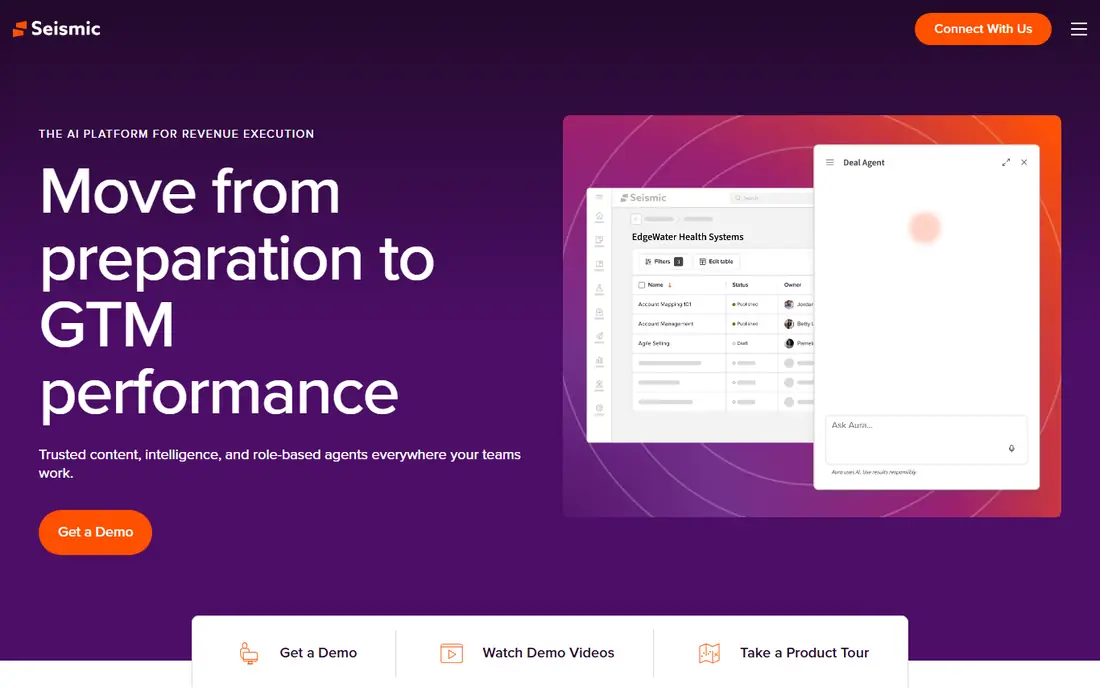
Seismic is the enterprise content platform in this category, built for organizations with large libraries, regulated content and many sellers. Its governance controls, approval workflows and LiveDocs document assembly help large teams share the right version of a deck or proposal without manual checking. Integrations with CRMs and other sales tools place content inside the workflow sellers already use.
The cost and timeline are the honest barriers. Pricing is quote-based, contracts run into five or six figures for larger teams, and implementation commonly takes months. It is the right pick for a large or regulated enterprise, and the wrong pick for a startup that needs a tool live next week.
- Strong content management and compliance controls
- LiveDocs assemble personalized documents
- Broad enterprise integrations
- Pricing is quote-based and enterprise-level
- Implementation takes months
- Smaller teams will find it heavy
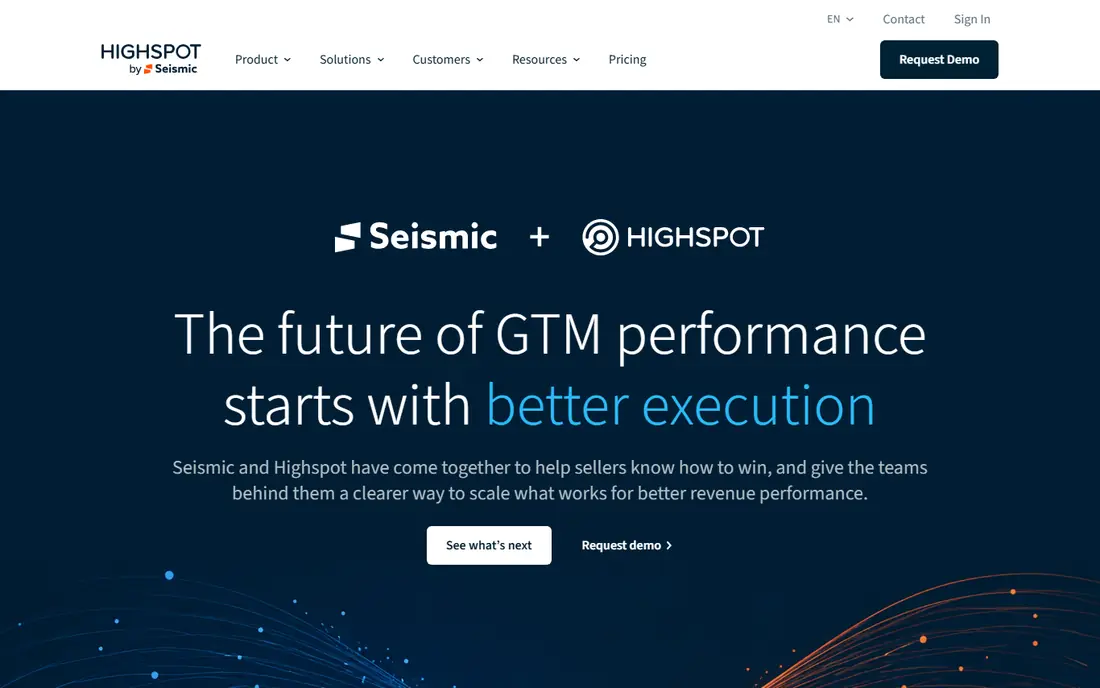
Highspot built its name on getting the right content and guidance to a seller during a live deal, not just storing files in a library. Its recommendations, sales plays and analytics show which content actually gets used and which deals it touches. Following the Seismic merger in August 2026, Highspot now sells as Highspot by Seismic, so buyers should confirm the current product roadmap and contract terms.
Like Seismic, it prices by quote and targets enterprise teams, with implementation and setup costs on top of licenses. Teams that already use Seismic should ask how the combined offering changes their renewal. Teams choosing between the two should compare content governance against in-deal guidance, since that is where they differ most.
- AI content recommendations during deals
- Sales plays and guidance tied to methodology
- Strong analytics on content use
- Pricing is quote-based
- Seismic completed its merger with Highspot in August 2026, so product plans need checking
- Enterprise focus
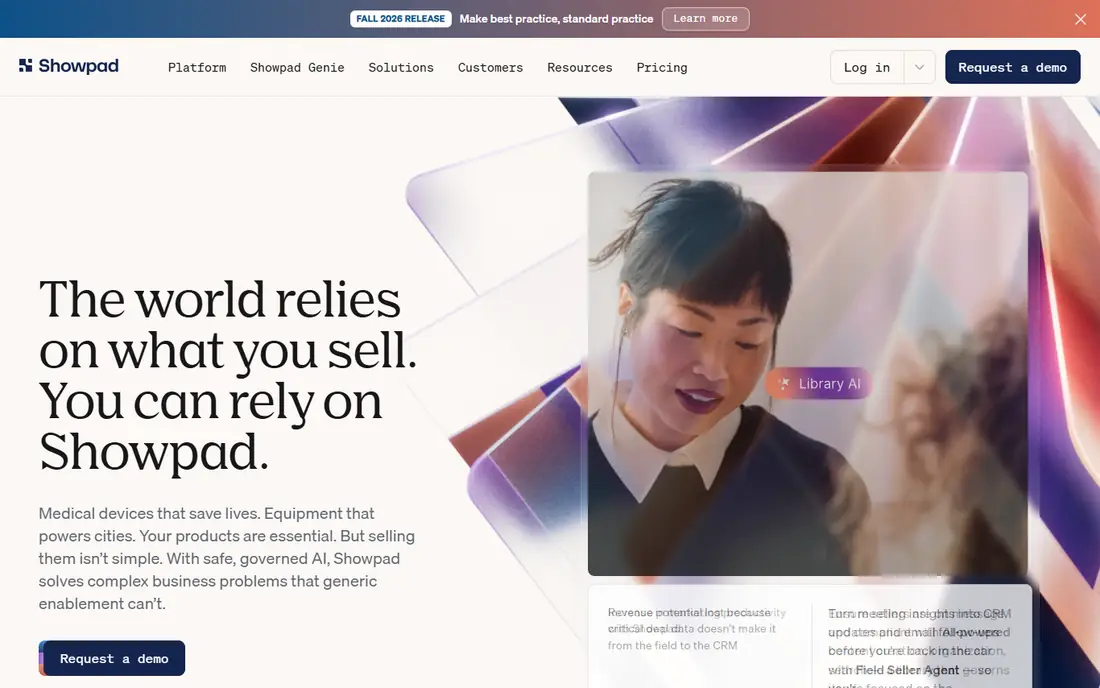
Showpad suits sellers who present face to face, in factories, hospitals and offices where connectivity is unreliable. Its mobile apps support offline content access, and shared rooms let buyers revisit the exact materials from a meeting. Coaching videos and microlearning add a training layer on top of content delivery, though some of that sits in add-on packages.
Pricing is quote-based, and the company changed hands in 2025 when Vector Capital acquired it and merged it with Bigtincan under the Showpad name. Buyers should confirm which package covers their needs rather than assuming the older packaging still applies. For field-first teams, it remains a strong pick.
- Strong mobile and offline presenting
- Buyer engagement and shared content rooms
- Coaching and microlearning add-ons
- Pricing is quote-based
- Some training features need add-on packages
- Enterprise packaging changed after its 2025 acquisition
Mindtickle is a readiness platform first and a content library second. It structures onboarding, certification and ongoing practice, with AI role plays that let reps rehearse objections before a real call. Readiness analytics link training completion and practice scores to performance, which helps managers see who is actually ready rather than who merely finished a course.
Content management is not its strongest area compared with Seismic or Highspot, so teams whose main pain is finding and governing documents may need a second tool. Pricing is quote-based and contracts are enterprise-level. It fits teams whose bottleneck is ramp time and rep quality.
- Structured onboarding and certification paths
- AI role plays for practice
- Readiness analytics tied to rep performance
- Pricing is quote-based
- Content management is thinner than Seismic
- Implementation takes weeks to months
Allego centers on video. Reps record practice pitches, managers and peers give timestamped feedback, and the best recordings become examples for the whole team. That format works well for large, distributed teams in financial services and life sciences, where consistent messaging matters and in-person coaching does not scale.
Contracts are quote-based and often multiyear, so the commitment is real. Analytics focus on coaching and readiness rather than broad content governance. If your team learns by doing and by watching strong peers, Allego is a better fit than a pure content platform.
- Video-based practice and peer feedback
- Mobile access for distributed teams
- Content delivery with coaching in one place
- Pricing is quote-based and usually multiyear
- Analytics are coaching-focused
- Smaller teams may not need the full suite
Gong Enable, launched in February 2026, turns recorded calls into coaching material. Managers can see which behaviors appear in won deals, build coaching from real examples and track whether reps apply the feedback. For teams already recording and analyzing calls in Gong, that connection is its main advantage over standalone coaching tools.
It is less compelling as a first purchase on its own, since the value depends on the Gong conversation data underneath it, and pricing is an add-on. It also does not replace a content management platform. Buy it to coach from reality, not to store and govern your sales library.
- Coaching built from real recorded calls
- Deal insights from conversation data
- Natural add-on for existing Gong customers
- Most valuable inside Gong already
- Pricing is an add-on on top of Gong
- Not a standalone content library
Dock takes a different angle on enablement: the buyer-facing deal room. Instead of only helping sellers find content, it gives each deal a shared workspace with materials, mutual action plans, onboarding steps and tasks. That structure helps mid-market teams run cleaner deals without buying an enterprise platform, and the free tier lets a team test it in days.
Governance and coaching depth are lighter than Seismic or Mindtickle, so large regulated teams may outgrow it. For a mid-market team that wants visible deal progress and a better buyer experience quickly, Dock is the most accessible option here.
- Buyer-facing deal rooms with content, onboarding and tasks
- Self-serve signup with a free tier
- Live in days rather than months
- Lighter governance than enterprise platforms
- Coaching features are thinner
- Pricing scales with seats and features
HubSpot Sales Hub is the pragmatic pick for startups already running HubSpot CRM. Playbooks, sequences, document tracking and meeting tools sit where sellers already work, so adoption is higher than with a separate platform nobody opens. The free tier covers basic CRM use, and Starter at $20 per user per month adds paid sales features at a price small teams can afford.
It is not a replacement for Seismic on content governance or Mindtickle on readiness. Teams that outgrow it usually add a dedicated platform later. For a startup asking which sales enablement software is best on a small budget, the honest answer is often the one inside the CRM it already uses.
- Enablement features inside the CRM
- Free tier to start
- Starter at $20 per user per month is reachable for small teams
- Not a dedicated enterprise enablement platform
- Content and coaching depth is thinner
- Costs rise with higher tiers
Spekit puts short, contextual guidance where sellers already work, inside Salesforce and other daily tools, instead of asking them to open another library. A rep facing a new objection or a process question gets the approved answer in flow, which suits mid-market sales operations teams that struggle with adoption of larger platforms. Deployment is measured in days or weeks rather than months.
It does not replace content management or coaching, and its value falls if nobody maintains the guidance library. Pricing varies, so request a quote for your seat count. Pick Spekit when the problem is adoption and in-the-moment answers, not storage or certification.
- Contextual guidance inside Salesforce and other tools
- Fast to deploy
- Helps reps find answers without leaving their workflow
- Pricing is quote-based for many teams
- Not a content library or coaching platform
- Value depends on keeping content current
How we picked these
We compared vendor product pages, pricing disclosures and 2026 buyer comparisons for tools actively sold in October 2026. We required each tool to serve at least one core enablement job: content management, readiness, coaching or deal-room collaboration. Where vendors price by quote, we wrote See website rather than presenting third-party estimates as vendor prices, and we noted the Seismic and Highspot merger because it affects current buying.
What to check before you buy
Name the failing job before you shortlist anything. A content problem needs Seismic, Highspot or Showpad, a readiness problem needs Mindtickle or Allego, and a deal-visibility problem may only need Dock. Buying an enterprise platform for a startup problem wastes money and months.
Ask for the full first-year cost, including implementation, setup, integrations and training, not just the license figure. Run a pilot with one sales team and a real deal cycle, and measure content usage, ramp time or deal progress against a baseline. If reps do not open the tool during the pilot, a larger contract will not fix adoption.
Frequently asked questions
Which sales enablement software is best?
There is no single winner. Seismic and Highspot lead for enterprise content, Mindtickle and Allego lead for readiness and coaching, and Dock leads for mid-market deal rooms. Match the tool to the job that is failing, then compare total first-year cost.
What is the best sales enablement platform for startups?
HubSpot Sales Hub is the most practical startup pick if the team already uses HubSpot, since it starts free and Starter costs $20 per user per month. Dock is a strong alternative for deal rooms, with a free tier and self-serve signup.
What is the best sales enablement software for small teams?
Dock and Spekit suit smaller teams because they deploy quickly and do not require enterprise implementation. HubSpot Sales Hub also fits small teams already on HubSpot, while the enterprise platforms are usually too heavy and costly at that size.
Is Highspot still a separate company?
Seismic completed its merger with Highspot on August 18, 2026, and Highspot now sells as Highspot by Seismic. Buyers should confirm current packaging and roadmap with the vendor before renewing or signing.
Do sales enablement tools replace a CRM?
No. Enablement tools sit alongside a CRM, providing content, coaching and deal workspaces that a CRM does not cover well. HubSpot Sales Hub is the exception in part, because it bundles enablement features inside the CRM itself.
How much do sales enablement tools cost?
Enterprise platforms price by quote and commonly run into five or six figures per year for larger teams, plus implementation costs. Lighter tools start free or at low monthly rates, but seat counts and add-ons change the total, so always request a full first-year quote.
Sources
See where you really rank - block by block
ProMapRanker scans Google Maps across a grid of your service area. Simple monthly plans from $19, white-label on every plan.
Start freeKeep reading
 onenote alternatives
Best OneNote Alternatives in 2026
We compared the best onenote alternatives on notes, search, sync and price, so you can find a replacement that fits how you take notes each day for daily use.
Read → best text messaging service for business
Best Text Messaging Service for Business in 2026
Compare the best text messaging service for business, from SimpleTexting and EZ Texting to Podium and Salesmsg, with pricing, credits and compliance notes.
Read → best software for architectural design
Best Software for Architectural Design in 2026
Compare the best software for architectural design, from BIM tools like Revit and Archicad to SketchUp and AutoCAD, with current pricing and honest trade-offs.
Read →