 ProMapRanker
Best SaaS Ecommerce Platforms in 2026

Key takeaways
- Shopify is the safest default for most direct-to-consumer brands, thanks to its checkout, app ecosystem, and reliability.
- BigCommerce earns its place for catalog-heavy and business-to-business sellers who want more built-in features.
- Wix and Squarespace suit smaller brands that value design and content, while Ecwid suits sellers adding a store to an existing site.
- Transaction fees, app costs, and plan sales caps can change the real bill, so price the full stack before you commit.
Quick comparison
| Pick | Great for | Pricing starts at | Free tier | |
|---|---|---|---|---|
 Shopify | Growing direct-to-consumer brands | $29 per month | Free trial | Visit |
 BigCommerce | Catalog-heavy and B2B sellers | $29 per month | Free trial | Visit |
 Wix | Small brands that value design | See website | No | Visit |
 Squarespace | Content-led design brands | See website | Free trial | Visit |
 Adobe Commerce | Large complex catalogs | See website | No | Visit |
 Shift4Shop | US sellers avoiding monthly fees | See website | No | Visit |
 Volusion | Quick setup for small stores | $35 per month | Free trial | Visit |
 Ecwid | Adding a store to an existing site | Free | Yes | Visit |
The best SaaS ecommerce platforms
We compared hosted platforms that handle hosting, security, and updates for you, which is the core promise of software as a service. Self-hosted tools that need your own server are left out, since they belong in a different comparison. Prices below are starting prices for ecommerce plans, billed as listed by each vendor.

Shopify is the default pick for a reason, and that reason is the checkout. A fast, familiar checkout plus Shop Pay helps turn visits into orders, which matters more than a pretty theme. The app ecosystem covers subscriptions, bundles, reviews, and international selling, so most growth needs have a ready add-on.
The cost picture needs care. Third-party payment providers add transaction fees on top of plan pricing, while Shopify Payments avoids that extra fee. Apps also stack up quickly, so a $29 plan can become a much larger monthly bill. If you want a reliable store that can scale without a development team, Shopify is still the first platform to test.
- High-converting checkout
- Large app ecosystem
- Strong multi-channel selling
- Transaction fees with third-party payment providers
- App costs add up
- Advanced customization needs Plus
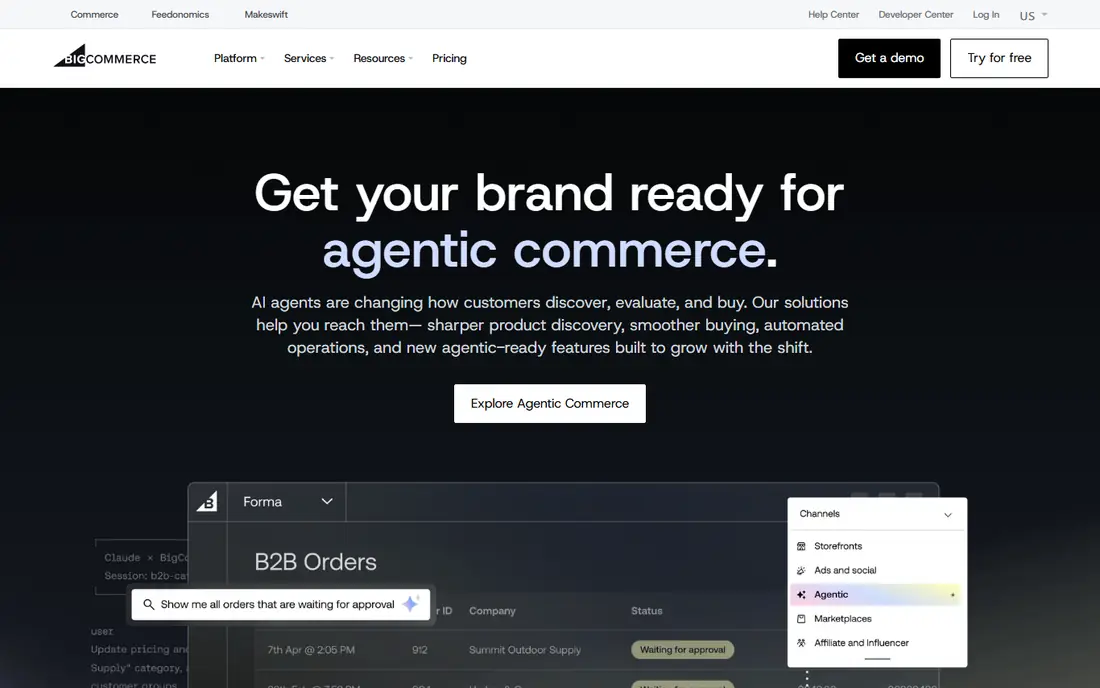
BigCommerce suits a seller with a large catalog or business-to-business needs who does not want to buy an app for every basic feature. Built-in product options, customer groups, and multi-channel tools reduce the add-on count. Embedded payment providers avoid the extra transaction fee that Shopify charges for outside providers.
Self-serve plans carry annual sales caps, with automatic upgrades when sales pass a threshold, so fast growth can force a plan change. The app ecosystem is also smaller than Shopify, though the built-in feature set closes much of that gap. If B2B or catalog depth matters, BigCommerce is a strong alternative to the default.
- More built-in features than rivals
- No fees with embedded payment providers
- B2B tools
- Sales caps on self-serve plans
- Smaller app ecosystem than Shopify
- Enterprise pricing is quoted
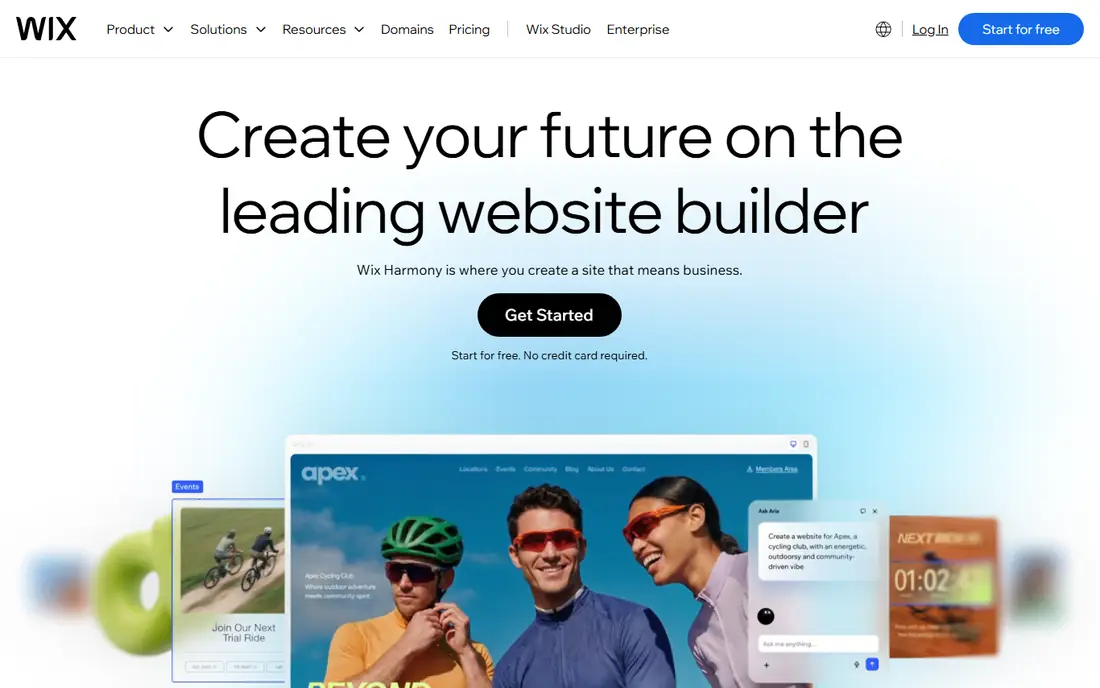
Wix is the friendly option for a small brand that wants a good-looking store without learning a complex platform. Drag-and-drop editing and a large template library make launch fast, and AI-assisted building helps a founder with no design background. For a shop with a modest catalog, that ease is a real advantage.
Scale is the limit. Large catalogs, complex B2B rules, and heavy app needs fit better on Shopify or BigCommerce. Ecommerce plan pricing also varies, so check the current plan for your region before budgeting. If design speed matters more than enterprise depth, Wix is a sensible pick.
- Easy drag-and-drop builder
- Large template library
- AI-assisted site building
- Less scalable for large catalogs
- Ecommerce features are lighter than Shopify
- Plan pricing varies by region
Squarespace works best for a brand where content and design lead the sale, such as a maker, photographer, or small studio selling products beside a portfolio. Templates look polished with little effort, and blogging tools support a content-led store. Built-in email and marketing features keep a small team in one place.
The app ecosystem is smaller than Shopify, and advanced ecommerce features such as complex discounts or B2B pricing are thinner. A catalog-heavy seller will hit limits sooner here. If your store is an extension of a beautiful site rather than a warehouse-scale operation, Squarespace fits well.
- Polished templates
- Strong blogging and content tools
- Built-in marketing features
- Smaller app ecosystem
- Fewer advanced ecommerce features
- B2B tools are limited
Adobe Commerce, formerly Magento Commerce, targets large firms with complex catalogs, multi-store needs, and B2B workflows. Customization depth is far beyond a self-serve builder, and integrations with enterprise systems are a core strength. For a firm with dedicated developers, that control is the point.
That control comes with cost and complexity. Pricing is quoted, implementation needs technical help, and ongoing maintenance is a real budget line. A small brand should not start here. For a large seller outgrowing a simpler platform, Adobe Commerce is the enterprise step up.
- Deep catalog and customization options
- Strong B2B workflows
- Enterprise integrations
- Quoted pricing only
- Needs development help
- Total cost is high
Shift4Shop stands out with a free store option for US sellers who process payments through Shift4, which removes the monthly platform fee for qualifying stores. Built-in features cover much of what a small store needs, without a large app bill. That model suits a US seller who wants to keep fixed costs low.
The free tier depends on using Shift4 for payments, so switching processors changes the deal. The ecosystem is also smaller than Shopify, and international sellers get less value. If you sell in the US and want low fixed costs, check the current Shift4Shop terms closely.
- Free plan option for US sellers using Shift4 payments
- Built-in features
- US-based support
- Free tier depends on payment processing
- Smaller ecosystem
- Less suited outside the US
Volusion is a long-running hosted platform for a small store that wants a quick setup and built-in inventory tools. The admin is straightforward, and Volusion itself does not add transaction fees on top of your payment processor charges. For a simple catalog, that simplicity can be enough.
The trade-off is momentum. The app ecosystem and template range are smaller than Shopify or BigCommerce, and the platform feels less current than its larger rivals. If you want a plain store with little fuss and no app hunting, Volusion works. If you plan rapid growth, a larger platform is safer.
- Simple setup
- Built-in inventory tools
- No transaction fees from Volusion itself
- Smaller app ecosystem
- Fewer modern templates
- Less momentum than larger rivals
Ecwid suits a seller who already has a website and wants to add a store without rebuilding. The widget embeds in WordPress, Wix, Squarespace, or a plain site, and products can also sell through social channels. A free plan covers a small starter catalog, which makes testing low risk.
Product limits on the free plan push a growing store to a paid tier, and design control is thinner than a full store builder. A brand that wants a fully custom storefront will prefer Shopify or BigCommerce. For adding commerce to an existing site, Ecwid is the most practical choice here.
- Free plan for a small store
- Embeds in any website
- Multi-channel selling
- Free plan limits product count
- Advanced features need paid plans
- Design control is limited
How we picked these
We compared hosted ecommerce platforms that are still operating in October 2026, with published plans or a clear quoted enterprise model. We excluded self-hosted open-source tools that need separate hosting, since the topic is SaaS platforms. Pricing notes reflect vendor pages and 2026 comparisons, and we used See website where plan pricing varies by region or is quoted.
What to price beyond the plan
Add transaction fees, payment processing rates, app subscriptions, theme costs, and email tools to the plan price before you compare. A $29 plan with five paid apps can cost more than a $79 plan with built-in features. Check sales caps, too, since BigCommerce self-serve plans upgrade automatically at set sales thresholds.
Test checkout before you commit
Build a test product, run a test order, and check tax, shipping, and discount behavior on a trial. That short test reveals more than a feature list, especially for shipping rules and checkout steps. Keep the trial honest by testing on mobile, since most shoppers will buy there.
Frequently asked questions
What are the best ecommerce SaaS platforms?
The best ecommerce SaaS platforms for most sellers are Shopify for direct-to-consumer growth and BigCommerce for catalog and B2B depth. Wix and Squarespace suit smaller design-led brands, while Ecwid suits adding a store to an existing site. Match the platform to catalog size and growth plans.
What is the best SaaS ecommerce platform for small business?
A small business should start with Shopify, Wix, or Squarespace, depending on whether growth, design ease, or content matters most. Ecwid is also worth a look if you already have a site. Start on a trial and price apps before you commit to a yearly plan.
Is Shopify a SaaS platform?
Yes, Shopify is a hosted software-as-a-service platform, since Shopify runs hosting, security, and updates for you. You pay a subscription and manage products, orders, and design in the Shopify admin. That hosting model is what separates SaaS platforms from self-hosted tools.
Which SaaS ecommerce platform has no transaction fees?
BigCommerce charges no extra transaction fee when you use an embedded payment provider, and Volusion adds no transaction fee of its own. Shopify avoids its extra fee when you use Shopify Payments. Always check the current fee rules, since providers changed terms in 2026.
Can I migrate between SaaS ecommerce platforms later?
Yes, migration is possible, but it takes planning for products, customers, orders, redirects, and app replacements. Export data early, map redirects for old product URLs, and test checkout on the new platform before switching domains. A clean migration protects search rankings and repeat customers.
Sources
See where you really rank - block by block
ProMapRanker scans Google Maps across a grid of your service area. Simple monthly plans from $19, white-label on every plan.
Start freeKeep reading
 best rated seo platform for b2b
Best Rated SEO Platform for B2B in 2026
Compare the best rated SEO platforms for B2B teams, including Semrush, Ahrefs, Moz Pro, SE Ranking, Surfer, and Screaming Frog tools for B2B teams in 2026.
Read → best penetration testing tools
Best Penetration Testing Tools in 2026
Compare the best penetration testing tools for authorised testing in 2026, from network mapping and web testing to scanning, with free and paid options.
Read → best medical billing software
Best Medical Billing Software in 2026
We compared the best medical billing software for small and midsize practices on claims, denials, pricing, and support, so you can choose with confidence.
Read →