 ProMapRanker
Best Review Request Software for Solar Installers in 2026

Automating review requests after installation · Pricing starts at: See website
Direct answer
NiceJob is my top pick for solar installers because it is built around turning a completed job into a review request with little manual work, and it fits the long solar timeline from site survey to permission to operate. It has no free plan stated, so check its pricing page. Podium suits installers who also want texting and lead capture in one inbox, and GatherUp fits teams that want straightforward, low-cost review requests and monitoring.
I compared these tools using vendor documentation and public sources, and I did not run hands-on tests. My focus was on how each one handles the solar sales cycle: a long gap between contract and installation, multiple people involved in the decision, and a customer who often only feels the result after the system is switched on.
Key takeaways
- Solar reviews arrive late, so the software you pick must support delayed and staged requests tied to installation milestones, not just a single "job done" trigger.
- Ask whether the tool can send requests by SMS and email, because many solar customers prefer a text after the crew leaves.
- Check how the tool handles multiple contacts per job, since the homeowner, the finance partner, and the sales rep may all be in the same record.
- Confirm the tool sends review invitations that follow Google's guidelines and does not filter out unhappy customers before they can leave feedback.
- Look at how review responses and review monitoring work, because solar shoppers read installer replies closely before booking a site survey.
Quick comparison
| Pick | Great for | Pricing starts at | Free tier | |
|---|---|---|---|---|
| NiceJob | Automating review requests after installation | See website | Not stated | Visit |
 Podium | Text-first communication and review invites | See website | Not stated | Visit |
 GatherUp | Simple requests with clear reporting | See website | Not stated | Visit |
 Birdeye | Larger solar companies with several locations | See website | Not stated | Visit |
 Grade.us | Agencies running review programs for installers | See website | Not stated | Visit |
 Whitespark | Local SEO teams managing installer listings | See website | Not stated | Visit |
 Local Falcon | Measuring map visibility as reviews grow | See website | Not stated | Visit |
The best review request software for solar installers compared
NiceJob is a reputation and review request platform aimed at local service businesses, and solar installers fit its model well because the core action is a finished job. You add a customer, mark the job complete, and the platform runs the request sequence. For an installer, that means the office admin does not have to remember to send a review link after every commissioning.
The workflow matters for solar because the moment a customer is happiest is usually after the system is turned on and the first bill drops, not on the day the contract is signed. NiceJob lets you control when the request goes out, so you can line it up with permission to operate or the first monitoring report. It also keeps review responses in one place, which helps when a homeowner asks a technical question in a public review.
The limits are mostly about scale and fit. If you run a large multi-branch solar company with complex routing and CRM rules, you may want a platform with deeper integration options. Small crews that only install a handful of systems a month may find the feature set broader than they need.
- Built around job-completion review requests
- supports SMS and email invites
- includes review monitoring and response tools
- Pricing is not public in detail
- advanced features sit on higher tiers
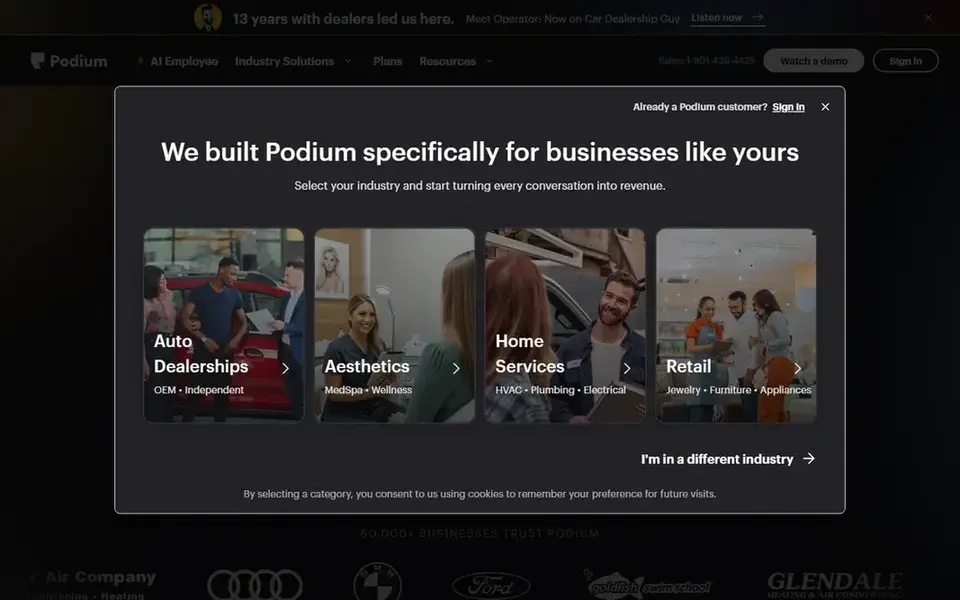
Podium is a customer communication platform built around texting, and solar installers often live in text messages. Homeowners ask about timelines, net metering paperwork, and monitoring apps by text. Podium puts those conversations in a shared inbox and lets you send a review invitation inside the same thread once the install is done.
For review requests, the advantage is timing and context. A text sent right after the crew leaves, or after the first clean monitoring month, tends to get read. Podium also handles the follow-up conversation if the customer replies with a question instead of a review, which keeps the request from dying in an unread inbox.
The trade-off is scope. Podium is not a narrow review tool, and the price reflects the messaging and lead capture features. A solar installer who only wants review requests may be paying for a lot of platform they will not use.
- Strong SMS messaging for homeowners
- review invites fit into the same conversation
- inbox keeps sales and service messages together
- Priced as a broader platform
- review features are part of a larger package
GatherUp is a review management tool that focuses on collecting feedback and reviews and putting them in one dashboard. It suits solar installers who want a clean process: import customers, send requests by email or SMS, and watch reviews arrive across Google and other platforms.
The platform is useful for the post-install window because you can schedule campaigns and set follow-ups. If a homeowner does not respond to the first email, a second nudge can go out later. That matters in solar, where the customer may be busy with inspections, utility paperwork, or simply waiting for the system to be switched on.
Its limits show up when you want deep automation tied to a CRM or job management system. GatherUp can do the job, but you may need to set up imports or manual lists. Installers who want a tool that plugs directly into their field service software should check integration support before committing.
- Straightforward review request campaigns
- review monitoring across major sites
- reporting that suits small teams
- Less built-in solar workflow logic
- design feels utilitarian

Birdeye is a reputation and customer experience platform used by multi-location businesses. For a solar company with branches across several states or metro areas, it gives each location its own review flow while keeping reporting in one place. That is useful when the brand wants consistent requests but local crews want to respond to their own customers.
Review requests can be triggered from customer records and sent by text or email. The platform also includes surveys and messaging, so a solar installer can ask about the installation experience and route unhappy feedback to the service team before it becomes a public review. That is a legitimate use as long as it does not gate or suppress reviews.
The main caution is complexity. Birdeye rewards teams that will configure it properly and train staff. A two-crew installer may find the admin overhead heavier than the review volume justifies.
- Handles multiple locations and teams
- review requests plus messaging and surveys
- reporting for managers
- Setup and administration take effort
- may be more platform than a small installer needs
Grade.us is a review management platform that agencies often use to run reputation programs for local clients. If you are a marketing agency serving solar installers, it lets you manage several installer accounts, send review requests, and report on results without building a custom system.
For an installer working directly with the tool, the value is in the campaign builder. You can create a request sequence that goes out after installation and follows up later, which suits the slow solar timeline. Review monitoring covers the main platforms, so you can see what homeowners say on Google and elsewhere.
The limits are mostly about polish and fit. The interface is functional rather than slick, and there are no solar-specific templates. Installers who want a tool their office manager can learn in an afternoon may prefer a simpler option.
- White-label options for agencies
- campaign builder for review requests
- monitoring and reporting
- Interface is practical but not modern
- solar-specific templates are limited
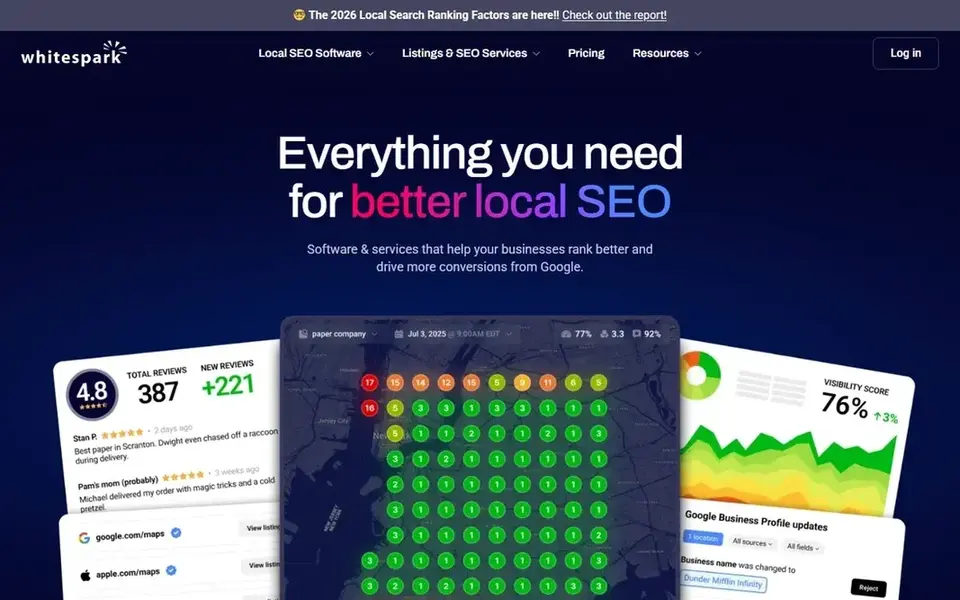
Whitespark is a local SEO toolkit known for citation building and local search research, and it also offers review management features. For solar installers who work with an SEO agency, it can sit alongside listing cleanup and local rank tracking so reviews and citations are handled in one place.
The review side supports sending requests and monitoring feedback, which helps an installer build a steady stream of Google reviews after each installation. Because the tool is built by local search specialists, the reporting tends to speak the same language as an SEO campaign, which makes it easier to connect review growth to map visibility.
The caution is focus. Whitespark is not a dedicated review request platform, and an installer who wants automated job-triggered requests may find it less direct than a reputation tool. It fits best when an agency already uses it for local SEO work.
- Strong local search focus
- citation and listing tools alongside review features
- useful for agencies
- Review requests are not the core product
- not aimed at installers who only want reviews
Local Falcon is a local rank tracking tool that maps where a business appears in Google Maps across a grid of points. I include it because solar installers often ask whether reviews are actually helping them show up in nearby towns, and Local Falcon answers that question with visual data.
It does not collect reviews. Its role is measurement: you run scans before and after a review push and see whether map visibility changes across the service area. For an installer covering several counties, that is more useful than a single rank number, because it shows where the company is strong and where it is invisible.
Skip it if you only want review requests. It is a companion tool for teams that already have a request process and want to prove the effect on local search.
- Grid-based local rank tracking
- shows how reviews affect map visibility
- useful reporting for installers
- Does not send review requests
- needs another tool for collection
How I chose
I started from vendor documentation and public sources, then filtered for how solar installers actually work. The key question was whether a tool can handle a long job cycle, multiple contacts per household, and a request that lands after commissioning rather than at the point of sale. Tools that only support a single "send now" button ranked lower.
I also looked at limits honestly. Some platforms are broad communication suites, some are review-only, and one is a measurement tool. None of them is a perfect fit for every installer, so I noted where each one stops being the right choice. I did not run hands-on tests, and I did not rely on vendor claims about results.
What to check before you buy
- Confirm the tool can delay a review request until after permission to operate or the first monitoring period, not just the day the contract is signed.
- Check whether requests can go by both SMS and email, since solar homeowners often prefer a text but some want an email record.
- Ask how the tool handles multiple contacts on one job, including the homeowner, the finance partner, and the sales rep.
- Make sure the review flow follows Google's guidelines: no review gating, no incentives for positive reviews, and no filtering out unhappy customers.
- Look at review monitoring and response tools, because public replies to technical questions build trust with future solar shoppers.
- Check integration with your CRM or job management software so the office team is not re-entering customer records by hand.
Frequently asked questions
What is the best review request software for solar installers?
NiceJob is my top pick because it is built around completed jobs and lets you control when the request goes out. Podium is a strong alternative if you want texting and review requests in one inbox. GatherUp suits installers who want a simpler, review-focused tool.
When should a solar installer ask for a review?
Ask after the system is installed and switched on, and often again after the first utility bill or monitoring report shows savings. The day of contract signing is too early because the customer has not experienced the result yet. A delayed request tied to commissioning usually gets a better response.
Can I offer a discount for a Google review?
No. Google's guidelines prohibit offering incentives in exchange for reviews, and that includes discounts, gift cards, and entries into a prize draw. You can ask every customer for honest feedback, but you cannot pay for it or reward only positive reviews.
Should I filter out unhappy customers before they review?
No. Review gating, where you ask about satisfaction first and only send happy customers to Google, goes against Google's guidelines. A better approach is to ask everyone for feedback and route service issues to your team so you can fix them, while still letting customers review you publicly.
Do I need a separate tool to track map rankings?
Not always, but it helps. Review request software collects feedback, while a tool like Local Falcon shows how your Google Maps visibility changes across your service area. If you serve several counties, tracking grid rankings gives you a clearer picture than a single rank number.
Sources
See where you really rank - block by block
ProMapRanker scans Google Maps across a grid of your service area. Simple monthly plans from $19, white-label on every plan.
Start freeBrowse all guides
← Best Review Request Software for Junk Removal Companies in 2026Best Review Request Software for Tree Services in 2026 →
 best review request software for jewelry stores
Best Review Request Software for Jewelry Stores in 2026
A guide to the best review request software for jewelry stores in 2026, compared from vendor documentation and public sources, with buying checks.
Read → best review request software for carpet cleaning companies
Best Review Request Software for Carpet Cleaning (2026)
A guide to the best review request software for carpet cleaning companies in 2026, compared from vendor documentation and public sources by Shihab Mia.
Read → best review management software for urgent care clinics
Best Review Management Software for Urgent Care Clinics in 2026
A first-person guide to review management software for urgent care clinics in 2026, compared from vendor docs and public sources, with fit and limits.
Read → local seo for car wash businesses
Local SEO for Car Wash Businesses
A local SEO guide for car wash businesses: Google Business Profile setup, reviews, and membership and location-based car wash SEO.
Read → local seo for self storage
Local SEO for Self Storage Facilities
How self storage facilities rank higher in local search and compete against national storage brands.
Read → how to add keywords to google my business
How to Add Keywords to Google My Business the Right Way
Where keywords actually help on your Google Business Profile and how to add them without risking a suspension.
Read →More in Local SEO & Google Maps · All guides A to Z by date · Latest guides