 ProMapRanker
Best Review Request Software for Jewelry Stores in 2026

Text-first requests and customer conversations · Pricing starts at: See website
Direct answer
Podium is my top pick for jewelry stores because it combines text-based review requests with a shared inbox that suits engagement, repair and custom-order conversations. Pricing is quote-based, so check its pricing page. NiceJob fits stores that want automated campaign nudges, and GatherUp fits owners who want simple feedback-first requests with a review funnel.
I compared these tools from vendor documentation and public sources, not from hands-on tests. Jewelry stores have a specific rhythm: a sale may close weeks before a wedding, a repair may take a week, and a custom piece may take months. The tools below are judged on how well they fit that rhythm, plus how they handle Google's review rules.
Key takeaways
- Jewelry reviews usually follow a milestone (ring sizing, a repair pickup, an anniversary gift), so request timing matters more than volume.
- Text messaging converts well for jewelry stores because staff already use it for order updates and pickup reminders.
- A feedback step before the public review link helps catch unhappy customers privately, but it must never block or filter reviews.
- Google's review policies ban incentives, review gating and asking only happy customers, so pick software that keeps requests neutral.
- Store-level reporting matters if you run more than one location or a repair workshop alongside the showroom.
Quick comparison
| Pick | Great for | Pricing starts at | Free tier | |
|---|---|---|---|---|
| Podium | Text-first requests and customer conversations | See website | Not stated | Visit |
 NiceJob | Automated campaigns after sales and repairs | See website | Not stated | Visit |
 GatherUp | Feedback-first requests with a review funnel | See website | Free trial | Visit |
 Grade.us | Agencies managing several jewelry clients | See website | Free trial | Visit |
 Birdeye | Multi-location stores wanting one dashboard | See website | Not stated | Visit |
 Whitespark | Local citation and review link support | See website | No free plan | Visit |
 Synup | Listings plus review monitoring in one place | See website | Not stated | Visit |
The best review request software for jewelry stores compared
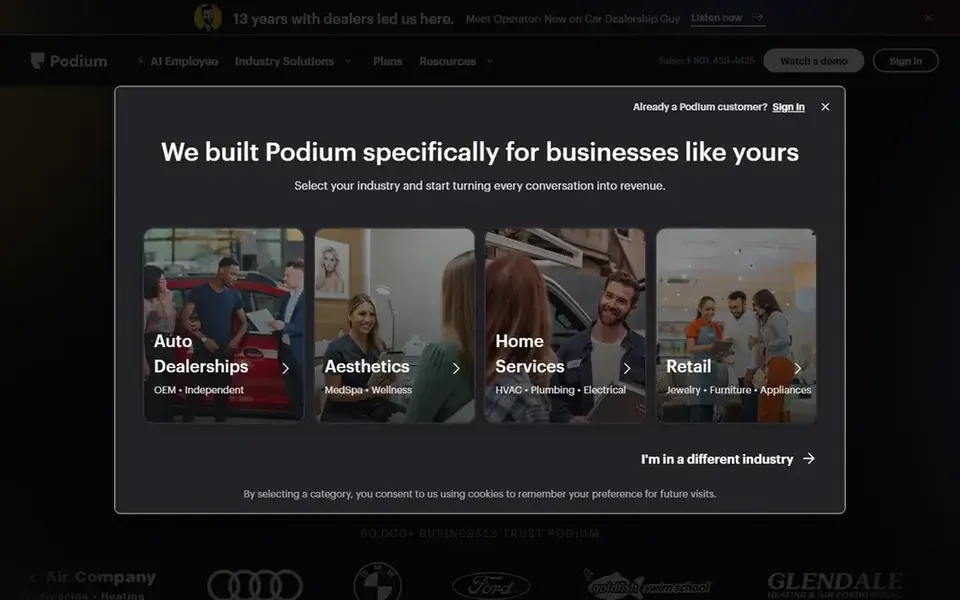
Podium is a messaging and review platform built around text conversations. For a jewelry store it fits the way staff already work: confirming a ring size, arranging a repair pickup, or answering a question about a custom setting. The review request sits inside that same thread, so it feels like a follow-up rather than a marketing blast.
In practice, you would add a customer after a sale or repair, send a request by text a few days later, and route replies to a shared inbox so the manager sees them. That matters for jewelry because a single unhappy customer over a resized ring can be resolved before it becomes a public review. The inbox also keeps engagement notes in one place.
The limit is cost and complexity. Pricing is quote-based, and a single-location store may not need the full platform. Skip it if you want a simple, low-cost request tool and nothing else.
- Text messaging built around the customer conversation
- shared inbox for staff
- review requests tied to a contact record
- Quote-based pricing
- broad platform may be more than a small showroom needs
NiceJob is a review and reputation tool aimed at small local businesses. For jewelry stores, its value is campaign automation: you can set a request to go out after a repair is collected or a few days after a ring purchase, without staff remembering to trigger it each time.
The workflow is straightforward. You add a customer or import a list, choose a campaign, and the tool sends the request by text or email. Because jewelry has different timelines for repairs, resizing and custom orders, you can run separate campaigns for each. That keeps the ask relevant to what the customer actually bought.
The main limit is setup. Each service type needs its own campaign, and someone has to keep the customer list clean. Skip it if you want zero configuration or if your volume is very low.
- Campaign automation by job type
- review requests by text and email
- simple dashboard for small teams
- Needs setup per service type
- pricing details require a check on the site
GatherUp is a review management tool with a feedback-first approach. A customer gets a short survey, and the tool then directs them toward leaving a review. For a jewelry store, that step is useful after a high-value purchase or a complex repair, because it surfaces a problem while you can still fix it.
The important detail is that the feedback step must not block anyone from reviewing. Google's policies prohibit review gating, so the request should stay open to every customer regardless of their answer. GatherUp's funnel is designed for feedback collection, and how you configure it decides whether you stay within the rules.
It suits owners who want a simple, affordable-feeling workflow. The interface is plain compared with larger platforms, and reporting is basic. Skip it if you need deep multi-location analytics.
- Feedback step before the public review link
- request by text and email
- simple reporting
- Interface is functional rather than polished
- smaller brand than some rivals
Grade.us is a review management platform often used by agencies. If you run a small SEO agency serving jewelry stores, as I do, it lets you manage requests and monitoring for several clients under one roof, with white-label reporting.
For a jewelry store client, the useful part is campaign templates: one for a bridal purchase, one for a repair, one for a watch service. Each can carry its own message and timing. Monitoring then shows which store or service is generating reviews and which is quiet, so you can adjust the ask.
The downside is that it is built for managers, not for a store owner who wants to click once and be done. Setup takes some thought, and the brand means little to shoppers. Skip it if you are a single store with no agency support.
- White-label options for agencies
- campaign templates
- review monitoring across locations
- Less known to consumers
- requires agency-style setup
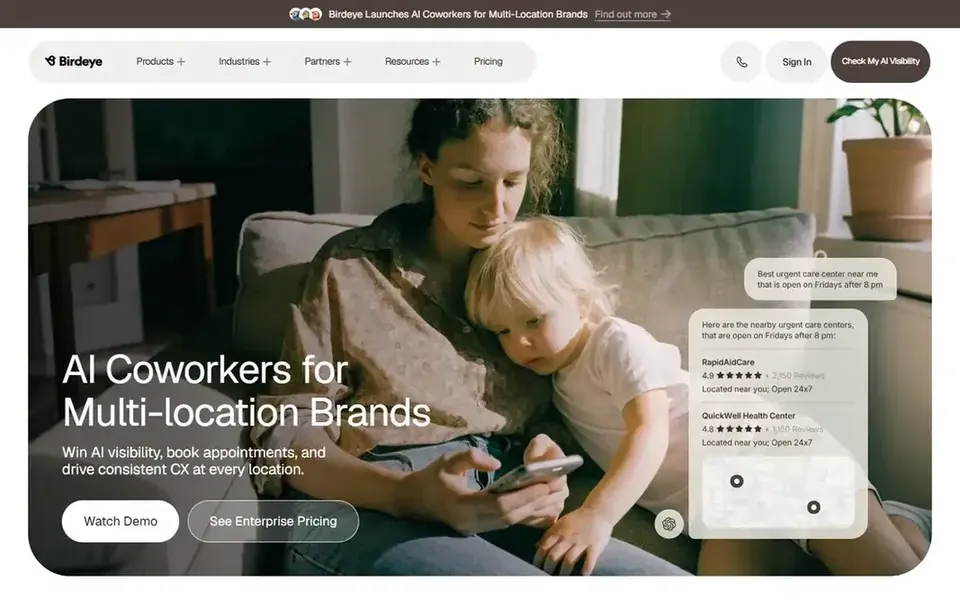
Birdeye is a reputation and customer experience platform used by multi-location businesses. A jewelry group with several showrooms and a repair center can use it to see review activity by location and keep request templates consistent across stores.
The workflow covers requests by text and email, monitoring of review sites, and reporting that rolls up to a group view. For jewelry, that helps when one branch sells bridal and another handles repairs: you can compare response rates and spot a branch that is not asking at all.
The limits are price and breadth. Pricing is quote-based, and the platform does much more than review requests. A single showroom will likely find it heavy. Skip it unless you have multiple locations or a marketing team.
- Reviews, messaging and listings in one place
- location-level reporting
- broad integrations
- Quote-based pricing
- large feature set for a single showroom
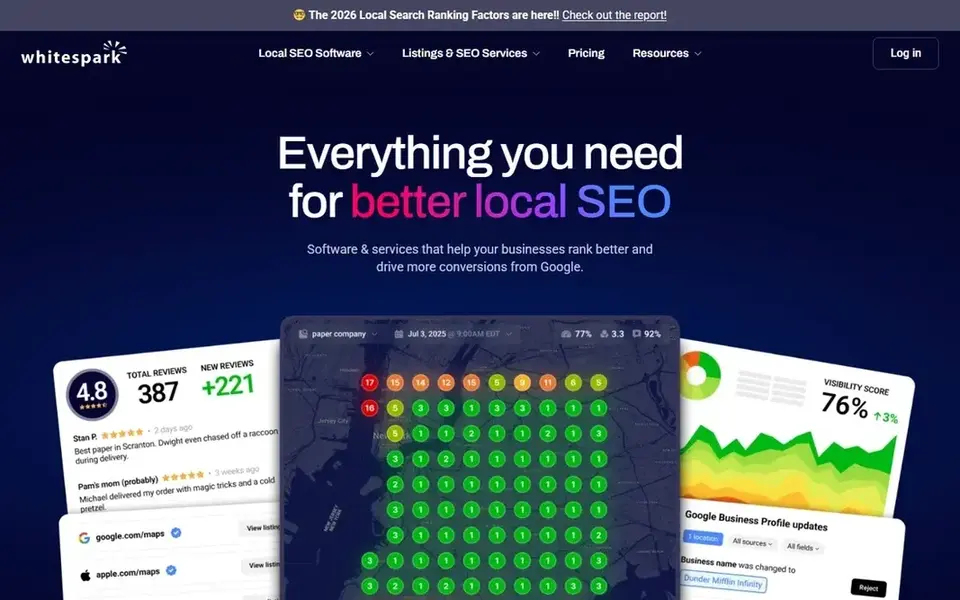
Whitespark is a local SEO toolkit known for citation building and local search tools. It is on this list because jewelry stores often need their local listings cleaned up before review requests work well: a wrong address or duplicate listing sends customers to the wrong place.
Its review-related features help you generate the right review link and hand it to customers, while the citation tools keep your store details consistent across directories. For a store with a new location or a recent move, that order makes sense: fix listings, then ask for reviews.
The limit is scope. Whitespark is not a messaging or campaign platform, so you still need a way to send requests. Skip it if you only want automated review requests.
- Strong local citation tools
- review link and review handoff support
- useful for local SEO work
- Review requests are a secondary feature
- not a full messaging platform
Synup is a listings and local marketing platform with review monitoring. For a jewelry store with more than one branch, it keeps store hours, address and category data consistent while showing review activity per location.
The review side is more monitoring than campaigning. You can see new reviews, respond, and track sentiment, but the request automation is lighter than dedicated tools. That fits a store that already asks at the counter and wants a single place to watch what comes in.
The limit is exactly that: if your main need is automated requests after a repair or sale, Synup is not the strongest fit. Skip it if requests are your priority and listings are already clean.
- Listings management alongside review monitoring
- location-level views
- useful for stores with several branches
- Review request automation is basic
- pricing needs a check on the site
How I chose
I compared these tools from vendor documentation and public sources, and I did not run hands-on tests. I started with the workflow a jewelry store actually has: a sale, a repair, a resize, a custom order, and a customer who may return for an anniversary. Tools that support separate campaigns or request timing for those moments ranked higher than generic reputation suites.
I also weighed Google's review policies. Any tool that encourages incentives, review gating or asking only happy customers is a poor choice, regardless of features, because those practices put the store's profile at risk. Beyond that I looked at limits: quote-based pricing, setup effort, and whether the platform is too broad for a single showroom. Where a tool is stronger for agencies or multi-location groups, I said so.
What to check before you buy
- Confirm the tool sends requests by text as well as email, since jewelry customers often prefer a quick message after a repair pickup.
- Check whether you can run separate campaigns for repairs, resizing and bridal purchases, because the timing differs for each.
- Make sure the request stays open to every customer and does not filter or block negative feedback, which Google's policies prohibit.
- Ask how the tool handles replies: a shared inbox or notification to the store manager matters when a customer raises a sizing or repair issue.
- Check location-level reporting if you have more than one showroom, so you can see which branch is asking and which is not.
- Confirm how the tool generates your Google review link and whether it supports other platforms your customers use.
Frequently asked questions
Do jewelry stores need review request software at all?
Not strictly, but the ask is easy to forget at the counter, especially after a repair or a custom order that took weeks. Software keeps the request consistent and timed to the milestone. A small store can start with a simple tool and add features as volume grows.
Can I offer a discount for leaving a review?
No. Google's review policies prohibit incentives for reviews, and that includes discounts, gift cards or entries into a draw. Software cannot make an incentivized request compliant. Keep the ask neutral and let the review reflect the customer's own experience.
Should I ask only happy customers for reviews?
No. Asking only customers you expect to be positive is review gating, which Google prohibits. A feedback step is fine if every customer can still leave a review regardless of their answer. Configure any funnel so the public review link is available to all.
How soon after a jewelry purchase should I send the request?
It depends on the purchase. A repair or resizing is usually ready within days of pickup, while a bridal purchase may be better after the wedding or the first wear. Many stores set one campaign for repairs and another for sales, then adjust the delay based on response.
Does review software help with local rankings?
Reviews are one signal among many, and software does not guarantee rankings. What it does is make asking consistent and keep responses organized, which supports your Google Business Profile over time. Pair it with accurate listings and a complete profile rather than expecting reviews alone to move rankings.
Sources
See where you really rank - block by block
ProMapRanker scans Google Maps across a grid of your service area. Simple monthly plans from $19, white-label on every plan.
Start freeBrowse all guides
← Best Review Request Software for Carpet Cleaning (2026)Best Review Request Software for Junk Removal Companies in 2026 →
 best review management software for urgent care clinics
Best Review Management Software for Urgent Care Clinics in 2026
A first-person guide to review management software for urgent care clinics in 2026, compared from vendor docs and public sources, with fit and limits.
Read → best review management software for plumbers
Best Review Management Software for Plumbers in 2026
A plumber's guide to review management software in 2026: compare request tools, review monitoring, and reply workflows from real vendors.
Read → best review management software for pest control companies
Best Review Management Software for Pest Control Companies in 2026
A practical guide to the best review management software for pest control companies in 2026, compared from vendor documentation and public sources.
Read → reputation management local seo
Reputation Management for Local SEO: Reviews as a Ranking Lever
How reputation management doubles as a local SEO lever by turning reviews into rankings.
Read → local service ads examples
Local Service Ads Examples: A Complete Guide
Everything you need to know about local service ads examples: what it is, why it matters for local SEO, and exactly how to act on it.
Read → local seo ranking report tool
Local SEO Ranking Report Tool: Building Reports Clients Actually Read
Choose a local SEO ranking report tool that produces clear, branded reports your clients understand and value.
Read →More in Local SEO & Google Maps · All guides A to Z by date · Latest guides