 ProMapRanker
Best Review Management Software for Pottery Studios in 2026
Direct answer
Grade.us is my first pick for pottery studios because it is built around getting reviews from customers after a class, workshop or commission and keeping those requests organized. Pricing is quote-based, so check its pricing page for a current quote. Trustmary suits studios that want to collect reviews and show them on their website, and Localo fits studios that also need to keep their Google Business Profile complete and current.
I compared these tools from vendor documentation and public sources. I did not run hands-on tests, so treat this as a starting point for your own trial. A pottery studio has a short window after each class to ask for a review, and the tool you pick should make that window easy to hit.
Key takeaways
- Pottery studios usually get reviews after a class or a pickup, so a tool that sends a timely request by email or text matters more than a large feature list.
- A review request sent while the glaze is still drying on the customer's mind works better than one sent weeks later, so look for simple, repeatable request flows.
- Replying to reviews in your own voice is part of the product at a studio, because customers often mention the kiln, the instructor or a specific workshop.
- Review software should sit next to your Google Business Profile work, not replace it, since your map listing is where most first-time students find you.
- Only ask for reviews from real customers and never offer rewards or filter out unhappy ones, because that breaks Google's review policies.
Quick comparison
| Pick | Great for | Pricing starts at | Free tier | |
|---|---|---|---|---|
 Grade.us | Review requests and replies | See website | Not stated | Visit |
 Trustmary | Collecting and displaying reviews | See website | Free plan | Visit |
 Localo | Google Business Profile and reviews | See website | Free trial | Visit |
 Synup | Listings plus reviews at scale | See website | Not stated | Visit |
 CallTrackingMetrics | Tracking calls from local traffic | See website | Free trial | Visit |
 SE Ranking | Local rank tracking with review monitoring | See website | Free trial | Visit |
 Broadly | Review requests for small local businesses | See website | Not stated | Visit |
The best review management software for pottery studios compared
Grade.us is a review management tool aimed at local businesses that want a steady flow of reviews and a simple way to answer them. For a pottery studio, that means you can set up a request that goes out after a wheel-throwing class or a kids' party and keep the wording the same each time.
The workflow is the part that matters here. You add a customer after a session, the tool sends a request by email or text, and the review lands on your Google profile or another site you choose. Replies can be written from one inbox, which helps when a customer mentions a specific instructor or a glaze that came out differently than expected.
The limit is that Grade.us is a review tool, not a full listing manager. If you also want to fix your hours, categories and photos across many directories, you will need something else for that part.
- Built around review request campaigns
- simple reply workflow
- fits small local businesses
- Quote-based pricing
- fewer extras beyond reviews
Trustmary focuses on collecting reviews and then showing them on your website. A studio can use it to gather feedback after workshops and then place a small review section on the class booking page, which helps a first-time visitor decide whether to sign up.
For pottery studios, the display side is useful because people want to see what others said about the space, the instructor and the finished pieces. You can pull reviews from Google and other sources into one widget and keep the wording fresh as new reviews arrive.
The limit is that Trustmary is not a listing management tool, and the widget setup takes a little care to look right on a small studio site. If you only need to reply to Google reviews, a simpler tool may be enough.
- Free plan to start
- review widgets for your website
- supports several review sources
- Widget setup takes some care
- less about local listings
Localo is a local marketing tool built around the Google Business Profile. A pottery studio can use it to keep hours, categories and photos current and to watch and answer reviews without jumping between screens.
That combination fits studios well because most new students find a pottery class through Google Maps or a local search. When a review mentions a specific class, you can reply from the same place you manage the profile, and you can see how the listing is performing over time.
The limit is that Localo is focused on Google rather than every review platform, and it is not built for large multi-location operations. A single studio with one location is the right fit.
- Profile and review work in one place
- simple for single locations
- helps with local visibility
- Centered on Google
- not a full review marketing suite
Synup is a listings and reputation platform used by businesses that need to keep information consistent across many directories. A pottery studio with one location can use it, but it is really built for operators with several sites or a franchise model.
For reviews, Synup lets you monitor and reply from one place and see how ratings move over time. If you run classes in more than one studio or a pop-up space, that central view helps you keep replies consistent and spot a location that is getting less attention.
The limit is cost and complexity. A single studio with one kiln and one class schedule will likely find Synup heavier than it needs, and pricing is quote-based.
- Combines listings and review management
- handles multiple locations
- structured reporting
- More than a single studio needs
- quote-based pricing
CallTrackingMetrics is a call tracking platform. It is not a review tool, but it belongs in this list because pottery studios often get phone calls from people who found them through a review or a map listing and want to ask about class times, wheel availability or private events.
By using a tracked number on your listing and your site, you can see which reviews and pages bring calls. That tells you whether your review work is paying off in booked classes rather than just stars on a screen.
The limit is that it does not send review requests or manage replies. If reviews are your main gap, start with a review tool and add call tracking later.
- Tracks calls from ads and listings
- call recordings and routing
- works with review-driven traffic
- Not a review request tool first
- setup takes some learning
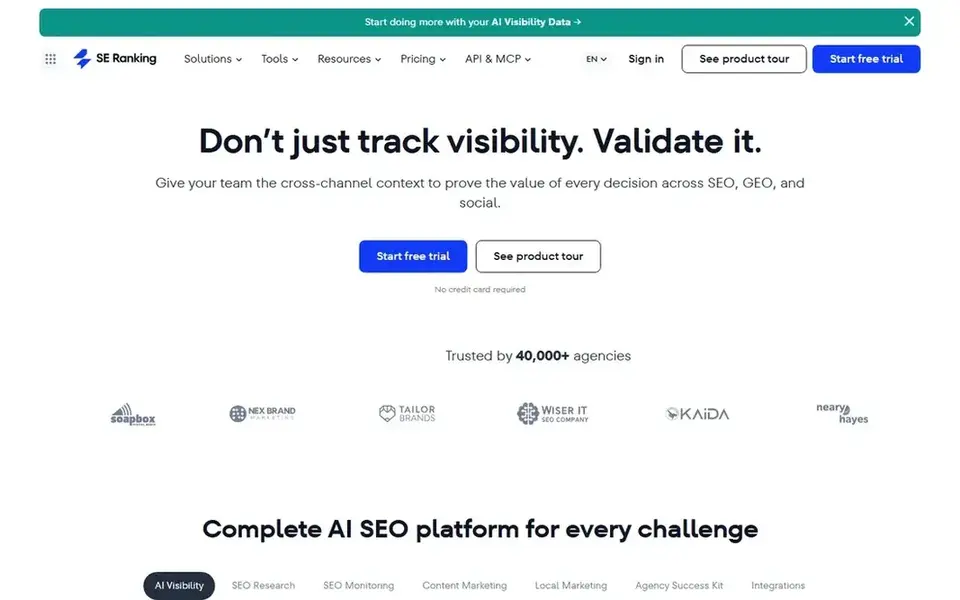
SE Ranking is an SEO platform with local rank tracking and review monitoring. A pottery studio that also runs a website for class bookings can use it to see where the studio appears in local search and to keep an eye on new reviews in the same place.
The review side is not the main event, but it is useful for a studio that wants one dashboard for search visibility and reputation. You can watch how a new batch of reviews lines up with a change in local rankings.
The limit is that you are paying for a broad SEO suite when you may only need review requests and replies. A studio with no website work should look at a dedicated review tool first.
- Local rank tracking
- review monitoring alongside SEO tools
- useful for studios that also run a website
- Review features are part of a bigger suite
- more than reviews alone
Broadly is a review and messaging platform for small local businesses. A pottery studio can use it to ask for reviews after a class and to keep customer messages in one place, which helps when someone asks about a private group session.
The request flow is the useful part. You add a customer after a session and the tool sends a request, then you can reply to the review from the same place. For a studio with a small front-desk team, that keeps the follow-up from getting lost.
The limit is that pricing is quote-based and the product is aimed at service businesses generally rather than studios in particular. Try it against a dedicated review tool before you commit.
- Built for local service businesses
- review requests and messaging
- simple for small teams
- Quote-based pricing
- less known for studios specifically
How I chose
I started from vendor documentation and public sources, then narrowed the list to tools that fit how a pottery studio actually gets reviews: after a class, a workshop, a party or a commission pickup. I looked at whether a tool can send a request by email or text, whether replies are easy to write from one place, and whether it connects to the Google Business Profile where most students find a studio.
I also weighed limits. A single studio does not need a multi-location listings platform, and a studio that only wants to answer Google reviews does not need a full SEO suite. I did not run hands-on tests, so the notes here are a guide to what each vendor documents, not a lab result. Check current features and pricing on each site before you decide.
What to check before you buy
- Confirm the tool can send review requests by both email and text, since some customers prefer one or the other after a class.
- Check that it connects to Google Business Profile and any other review site your customers already use.
- Make sure replies can be written and posted from one inbox, so a small front-desk team is not passing logins around.
- Ask whether the tool supports multiple staff logins, because the instructor who ran the class often knows the context for a reply.
- Confirm the request flow lets you exclude anyone who did not actually attend, and never offer rewards or filter out unhappy customers.
- Check how the tool handles a customer who leaves a review on a site other than Google, since some students will pick their own platform.
Frequently asked questions
Do pottery studios really need review management software?
Not strictly, but it helps. A studio gets reviews in bursts after classes and events, and a tool keeps the request consistent and the replies in one place. If you only get a handful of reviews a month, you can manage them by hand, but a tool saves time once class volume picks up.
Can I just ask for reviews by email myself?
Yes, and many studios do. Software helps when you want the same request to go out after every class without someone remembering to send it. It also keeps replies together, which matters when several staff members answer customers.
Is it allowed to offer a discount for a review?
No. Google's review policies do not allow incentives for reviews, and you should not filter out unhappy customers either. Ask every real customer in the same way and let the reviews be honest, even when a glaze or a class did not go as planned.
Should I pick a review tool or a Google Business Profile tool first?
If your profile is incomplete, fix that first, because it is where most students find you. Once hours, photos and categories are right, a review tool helps you build and answer reviews. Some tools, like Localo, do both in one place.
How many reviews should a pottery studio aim for?
There is no fixed number. A steady flow of recent reviews from real students matters more than a large total, because recent reviews show the studio is active. Aim for a consistent request after every class rather than a one-time push.
Sources
See where you really rank - block by block
ProMapRanker scans Google Maps across a grid of your service area. Simple monthly plans from $19, white-label on every plan.
Start freeBrowse all guides
← Best Review Management Software for Plumbing Supply Stores in 2026Best Review Management Software for Tennis Clubs in 2026 →
 best review management software for mobile pet groomers
Best Review Management Software for Mobile Pet Groomers in 2026
A guide to review management software for mobile pet groomers, covering review requests, replies, and Google Business Profile tools compared for 2026.
Read → best review management software for golf instructors
Best Review Management Software for Golf Instructors in 2026
A golf instructor's guide to review management software in 2026: how each tool handles lesson reviews, Google Business Profile replies and follow-ups.
Read → best review management software for drone services
Best Review Management Software for Drone Services in 2026
A first-person guide to the best review management software for drone services in 2026, compared from vendor documentation and public sources.
Read → why geo grid is mostly red
Why Your Geo-Grid Is Mostly Red (and the Fix Workflow)
Why your geo-grid is mostly red and a prescriptive workflow to turn red zones green.
Read → local pack rankings
Local Pack Rankings: A Complete Guide
Everything you need to know about local pack rankings: what it is, why it matters for local SEO, and exactly how to act on it.
Read → google business profile not showing
Google Business Profile Not Showing? How to Get It Back on Maps
Profile not appearing on Maps or Search? Diagnose the cause and follow the fix steps to restore visibility.
Read →More in Local SEO & Google Maps · All guides A to Z by date · Latest guides