 ProMapRanker
Best Review Management Software for Auto Repair Shops in 2026
Direct answer
My top pick for most auto repair shops is Birdeye, because it combines review requests sent after a repair order with inbox management and reporting in one place, which suits a busy front desk. Pricing is quote-based, so check its pricing page. If you want a lower-cost, review-focused tool, look at Grade.us, and if you mainly need to fix your Google Business Profile listings and listings consistency, BrightLocal is the better fit.
I put this comparison together from vendor documentation and public sources, not from hands-on testing. I looked at how each tool handles review requests after a repair, replies from the front desk, and the listings work that keeps a shop visible on Google Maps. The tools below are all real products with public pricing pages, and I have noted where a tool is a weaker fit for a repair shop.
Key takeaways
- Auto repair shops get reviews at the point of pickup, so software that sends a request from your shop management system or by text right after the job closes works better than a tool that only emails later.
- A shared inbox that lets a service advisor reply to Google and Facebook reviews from one screen saves time at a busy front counter.
- Review software should follow Google's guidelines: ask every customer, never offer incentives, and never filter out unhappy customers before they can leave feedback.
- Listing and citation tools matter too, because a wrong address or phone number on directory sites sends drivers to the wrong bay.
- Check whether the tool connects to your shop management system (for example Tekmetric, Shop-Ware or Mitchell 1) before you commit, since that connection decides how automatic your requests really are.
Quick comparison
| Pick | Great for | Pricing starts at | Free tier | |
|---|---|---|---|---|
 Birdeye | All-in-one reviews and messaging | See website | Not stated | Visit |
 Podium | Text-first review requests | See website | Not stated | Visit |
 Grade.us | Simple review campaigns | See website | Free trial | Visit |
 BrightLocal | Listings, citations and review monitoring | See website | Not stated | Visit |
 Whitespark | Citation building and local rankings | See website | Not stated | Visit |
 NiceJob | Small shops that want reviews plus simple marketing | See website | No free plan | Visit |
 ReviewTrackers | Multi-location review reporting | See website | Not stated | Visit |
The best review management software for auto repair shops compared
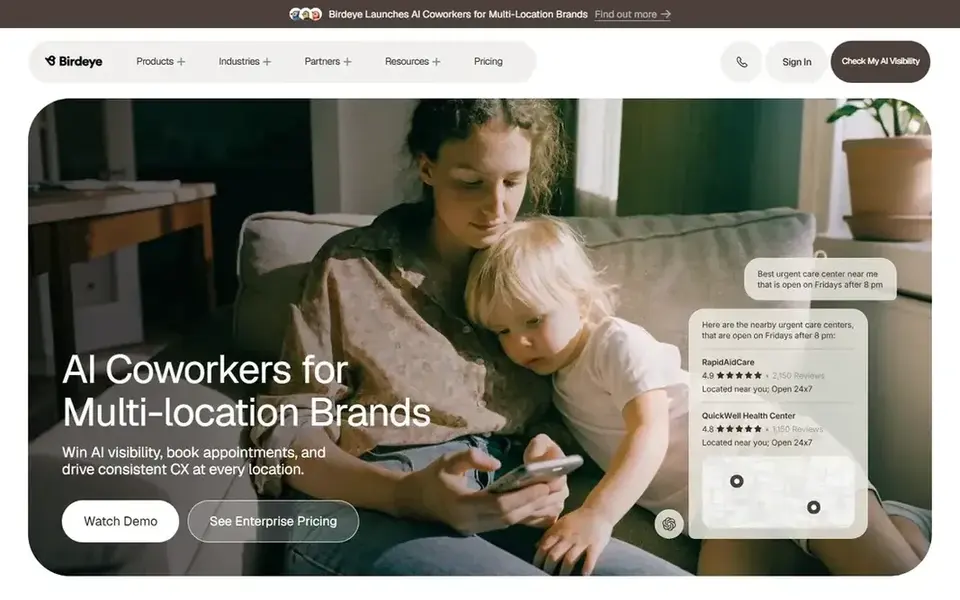
Birdeye is a reputation and customer messaging platform used by local businesses, including auto service businesses. For a repair shop, the useful part is that a service advisor can send a review request by text when the customer picks up the car, then see the reply come back into the same inbox. It fits shops with several bays and a front desk that already handles a lot of texting.
The workflow that matters for auto repair is timing. A customer who just paid for brakes is more likely to leave a review while standing at the counter than a week later. Birdeye lets you trigger a request from a contact record or a connected system, and it keeps Google, Facebook and other review sources in one list so replies do not get missed during a busy morning.
The limits are cost and setup. Pricing is quote-based, and the platform covers surveys, messaging and listings, so a one-location shop may pay for features it never opens. If you only want review requests and a simple inbox, a smaller tool may be enough.
- Sends review requests by text and email
- shared inbox for replies
- listings and reporting in one account
- Quote-based pricing
- broad feature set takes time to set up
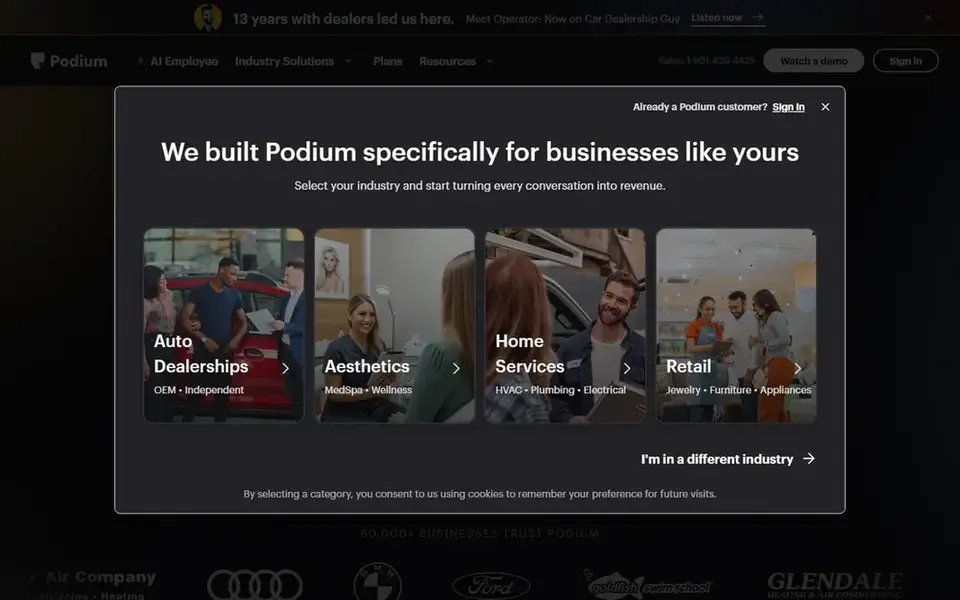
Podium is built around texting customers, which lines up well with how auto repair shops already communicate about a car that is ready. A service advisor can text a review link after the repair, and the customer can reply without installing an app. It also handles webchat and messages in the same inbox.
For review management, Podium's value is the short path from finished job to review request. You can send a request from a template, and the customer lands on your Google review page in a couple of taps. Replies and new reviews show up in the inbox, so the same person who answers texts can answer reviews.
The main limit is price for a single shop. Podium is priced by quote and by location, and the messaging and payments features are part of the package. A small independent shop that only wants review requests may find a lighter tool easier to justify.
- Strong texting workflow
- inbox for reviews and messages
- payments and messaging add-ons
- Pricing scales with locations and volume
- can be more than a small shop needs
Grade.us is a review management tool focused on campaigns: you add customers, send requests by email or text, and track which sites they review. It is a good match for a repair shop that wants a clear process without a full customer messaging platform. Marketing agencies also use it to run review campaigns for local clients.
For auto repair, Grade.us works well as a simple follow-up step. After a repair order closes, you add the customer to a campaign and the tool sends the request. You can point customers to Google first and keep other sites as secondary options, and the dashboard shows which requests turned into reviews.
The limits are depth. Grade.us does not try to be a full inbox for every customer message, and its interface is plainer than the bigger suites. If your front desk lives in text messages all day, a messaging-first tool may fit better.
- Straightforward review request campaigns
- supports multiple review sites
- agency-friendly reporting
- Fewer messaging features
- interface is less polished than larger suites
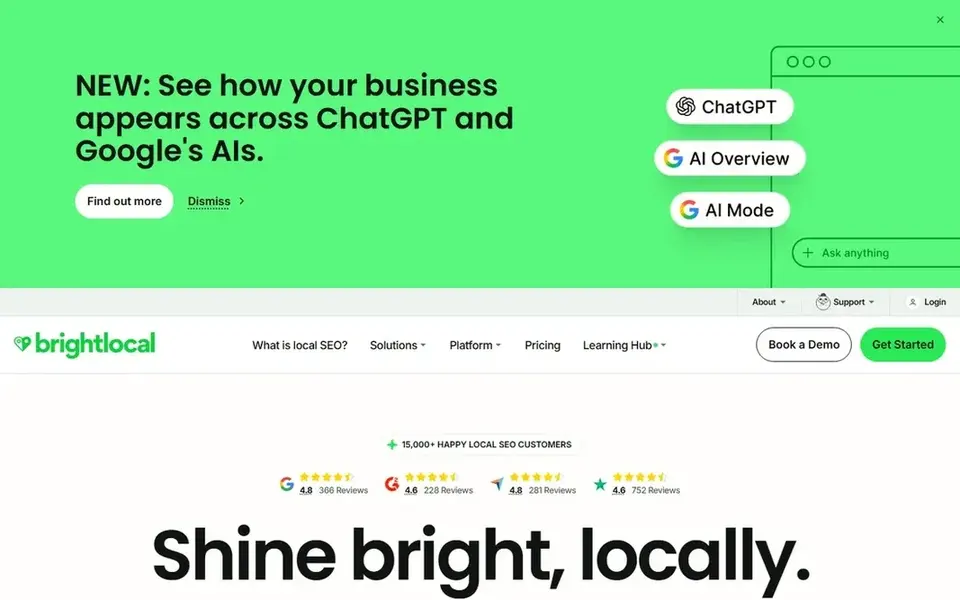
BrightLocal is a local SEO platform with a strong reputation for listings and citation work. For an auto repair shop, its main job is keeping your name, address and phone number consistent across directories, and monitoring reviews on Google and other sites so you see new ones in one place.
The review side is useful but not the core. You can monitor reviews, get alerts and run review requests, but the tool is built for local marketers rather than a front desk that texts customers all day. It fits a shop owner who wants to fix listings and watch reviews without buying a messaging platform.
Skip it if your main problem is getting more reviews from customers at pickup. BrightLocal is better as a listings and monitoring layer alongside a review request tool.
- Strong local listings and citation tools
- review monitoring across sites
- local SEO reporting
- Review requests are lighter than dedicated tools
- not a customer messaging inbox
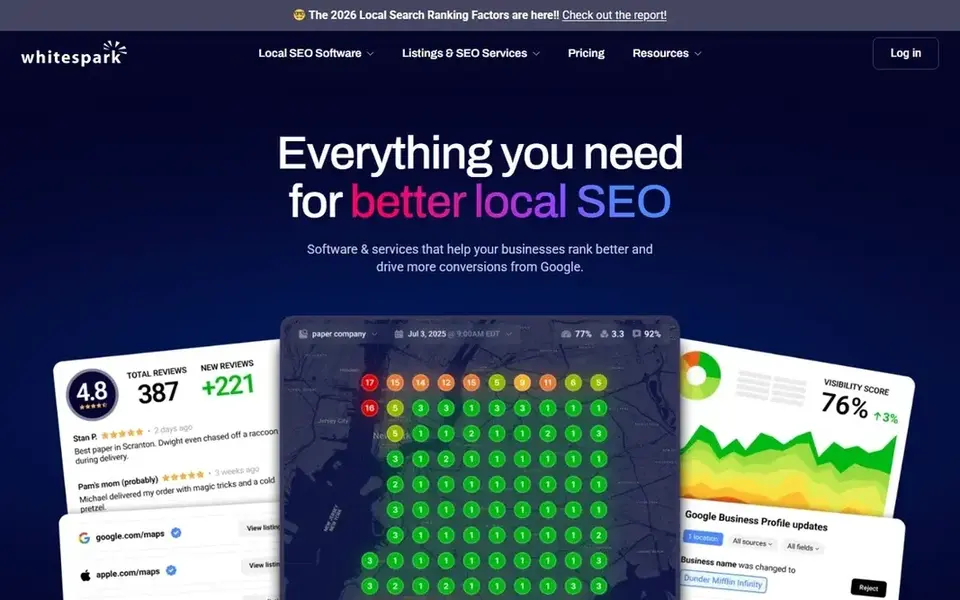
Whitespark is a local search company known for citation building and local ranking tools. For an auto repair shop, it is relevant when your Google Maps listing is losing to competitors because your business details are inconsistent or your citations are thin. The team also offers citation services if you do not want to do the work yourself.
On reviews, Whitespark is not the main event. It can support review monitoring and local SEO reporting, but it is not the tool I would pick for sending requests after a repair or replying to reviews from the counter. It belongs in the same plan as a review tool, not instead of one.
The limit is scope. If you want one login for review requests, replies and listings, Whitespark is not that product. It is a specialist tool for local visibility, and it works best for shops that already have a review process.
- Citation building services and tools
- local search focus
- useful for map ranking work
- Not a review inbox
- review features are secondary
NiceJob is a reputation and marketing tool aimed at small local businesses. For an independent auto repair shop, it offers review requests, review monitoring and a simple way to show reviews on a website. It is built for owners who do not want a complex platform.
The review workflow is straightforward: add a customer after the repair, send a request, and track the result. NiceJob also nudges customers who have not responded, which helps when a shop only has a few service advisors and no time to chase reviews manually.
The limits are the paid-only model and depth. There is no free plan, so you need to be ready to pay from the start. It also has fewer messaging and inbox features than Podium or Birdeye, which matters if your front desk handles most customer contact by text.
- Review requests and monitoring
- simple marketing pages
- easy for a small team
- No free plan
- fewer advanced messaging features
ReviewTrackers is a review management platform with a focus on monitoring and reporting across locations. A small auto repair chain with two or three shops can use it to see reviews for each location in one dashboard and to route replies to the right manager.
For a single shop, the value is thinner. The tool is strongest when you need to compare locations, track review trends and give owners a report. It does not replace a text-based request workflow at the counter, so most shops would pair it with a messaging or review request tool.
The limits are fit and price. Pricing is quote-based, and the product is designed for teams that manage reviews as an ongoing program. A one-bay shop that just wants more Google reviews will likely find it too heavy.
- Review monitoring across many sites
- reporting for multiple locations
- response tools
- Built for analysis more than texting
- pricing is quote-based
How I chose
I chose these tools by reading vendor documentation and public sources, then matching each product to how an auto repair shop actually works. The key questions were simple: can it send a review request when the car is picked up, can the front desk reply to reviews without switching apps, and does it help with the listings that affect Google Maps visibility. I did not run hands-on tests, so I relied on what each vendor publishes about features and pricing.
I also looked at limits. Some tools are full customer messaging platforms, which is more than a small shop needs. Others are listings and citation specialists that support reviews but do not replace a review request tool. I left out any tool where I could not confirm the product exists and has an official site. Where pricing is quote-based, I say so rather than guessing a figure.
What to check before you buy
- Ask whether the tool can send a review request by text at pickup, and whether it can connect to your shop management system so you are not retyping customer details.
- Check that it pulls in Google reviews and the other sites your customers use, and that replies can be sent from one inbox.
- Confirm the tool follows Google's review guidelines: no incentives, no review gating, and no asking only happy customers.
- Look at how it handles multiple locations if you have more than one shop, including separate review pages and reporting.
- Ask about listings and citation support, because a wrong address or phone number on a directory sends customers to the wrong place.
- Request a demo with your own workflow, and ask what happens when a customer leaves a negative review and who on your team gets the alert.
Frequently asked questions
What is the best review management software for an auto repair shop?
For most shops, Birdeye is the strongest all-round pick because it handles review requests, replies and listings in one place. Podium is a good alternative if texting is central to how your front desk works. Grade.us and NiceJob fit smaller shops that want a simpler, review-focused tool.
How do I get more Google reviews at an auto repair shop?
Ask every customer at pickup and make it easy: send a text with a direct link to your Google review page while the customer is still at the counter. Do not offer discounts or gifts for reviews, and do not filter out unhappy customers. A steady flow of honest reviews from all customers is what Google's guidelines allow.
Can review software connect to my shop management system?
Some tools offer integrations with shop management systems, but coverage varies. Before you buy, ask the vendor whether it connects to the system you use, such as Tekmetric, Shop-Ware or Mitchell 1, and whether the connection can trigger a review request automatically when a repair order closes.
Should I reply to every review?
Yes, reply to positive and negative reviews. A short, polite reply to a good review shows you read it, and a calm reply to a bad one shows future customers how you handle problems. Keep replies specific to the repair and never include private customer details.
Do I need a separate tool for listings and citations?
Not always, but many shops do. Review tools often include basic listings management, while BrightLocal and Whitespark go deeper on citations and local rankings. If your Google Maps listing has wrong hours or an old phone number, fix that alongside your review process.
Sources
See where you really rank - block by block
ProMapRanker scans Google Maps across a grid of your service area. Simple monthly plans from $19, white-label on every plan.
Start freeBrowse all guides
← Best Reputation Management Software for Veterinarians in 2026Best Review Management Software for Car Dealerships in 2026 →
 best reputation management software for small business
Best Reputation Management Software for Small Business in 2026
A practical guide to the best reputation management software for small business in 2026, compared from vendor docs and public sources.
Read → best reputation management software for real estate agents
Best Reputation Management Software for Real Estate Agents in 2026
A practical guide to the best reputation management software for real estate agents in 2026, covering review collection, monitoring and response tools.
Read → best reputation management software for pool service companies
Best Reputation Management Software for Pool Companies in 2026
A practical guide to the best reputation management software for pool service companies in 2026, comparing review tools, messaging and local listing features.
Read → yext alternatives
Yext Alternatives in 2026
Looking for yext alternatives? We compare 9 listings and local search tools for multi-location brands, agencies and small businesses in 2026, updated today.
Read → local seo for handyman services
Local SEO for Handyman Services
A local SEO guide for handyman services: Google Business Profile setup, reviews, and broad-service-list local SEO for handymen.
Read → local seo for tutoring centers
Local SEO for Tutoring Centers
A local SEO guide for tutoring and learning centers to rank for parent searches in their area.
Read →More in Local SEO & Google Maps · All guides A to Z by date · Latest guides