 ProMapRanker
Best Recruiting Tools in 2026

Key takeaways
- Greenhouse is our pick for structured hiring at scale, with scorecards, interview plans, and reporting that keep hiring decisions consistent.
- Workable and Ashby suit growing teams that want clear pricing and a full hiring workflow without enterprise complexity.
- Lever suits teams that build talent pipelines over time, rather than only reacting to open roles.
- Zoho Recruit and JazzHR are strong budget options for small teams and agencies that need core tracking without a large contract.
- Breezy and SmartRecruiters add useful options for visual pipelines and global hiring, but check pricing and scale fit before committing.
Quick comparison
| Pick | Great for | Pricing starts at | Free tier | |
|---|---|---|---|---|
 Greenhouse | Structured hiring at scale | See website | No | Visit |
 Lever | ATS plus talent pipeline | See website | No | Visit |
 Workable | Growing teams, clear pricing | $299 per month | Free trial | Visit |
 Ashby | Analytics first hiring | $400 per month | No | Visit |
 Zoho Recruit | Budget ATS and agency hiring | $25 per user per month | Yes | Visit |
 JazzHR | Small team hiring on a budget | See website | No | Visit |
 Breezy | Visual pipeline hiring | See website | Free trial | Visit |
The best recruiting tools
Recruiting tools, often called applicant tracking systems, help teams post jobs, collect applications, schedule interviews, and compare candidates fairly. The best tool for a ten person company is rarely the best tool for a thousand person company, so we compared pricing transparency, pipeline design, sourcing, reporting, and ease of use. We included enterprise, mid market, and budget options, and we used See website where pricing is quote based.
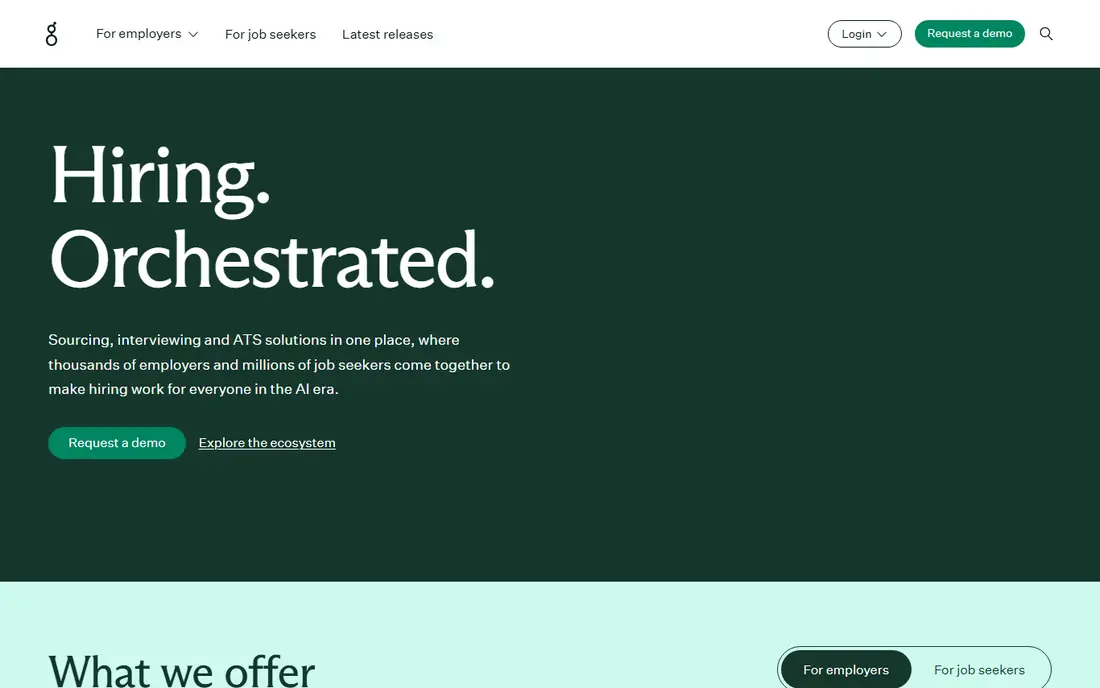
Greenhouse is built for teams that want hiring to be consistent rather than based on gut feeling. You define scorecards, interview stages, and evaluation criteria before candidates arrive, so interviewers compare the same skills and give comparable feedback. That structure helps larger teams defend decisions, reduce bias from unstructured interviews, and learn which stages actually predict good hires.
The cost and effort are real. Greenhouse pricing is quote based and usually aimed at mid market and enterprise teams, and getting full value requires time to design scorecards and train hiring managers. For a small team hiring a few roles a year, that effort may outweigh the benefit. For a growing team hiring every month, Greenhouse is the most disciplined option here.
- Structured interview scorecards and hiring plans
- Strong reporting
- Large integration library
- Quote based pricing
- Setup and training take time for small teams
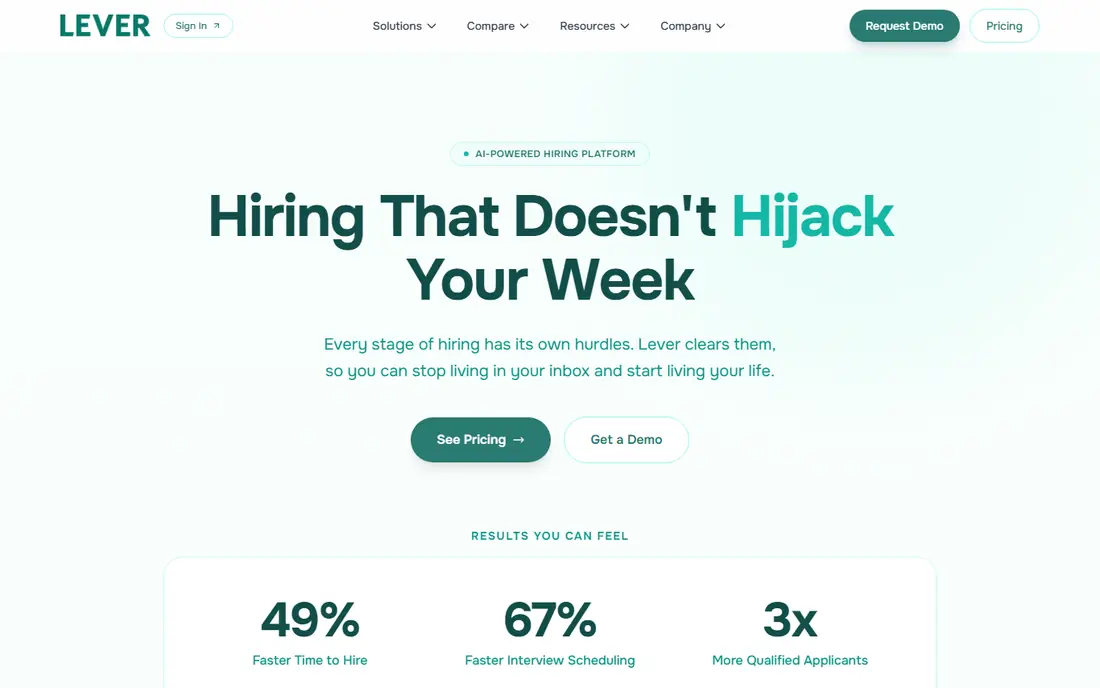
Lever suits teams that treat recruiting as relationship building, not just job posting. Its CRM side lets you nurture past applicants, referrals, and sourced candidates, so when a role opens you already have a warm list. The ATS side handles applications, interviews, and offers, and hiring managers can leave feedback in one place instead of scattered email threads.
That strength comes with a price conversation. Lever uses quote based pricing, and teams that only need simple tracking may find it more platform than they need. Choose Lever if pipeline building, referrals, and long term talent relationships drive your hiring. If reporting depth is your top need, compare Ashby first.
- Combined ATS and CRM for long term pipelines
- Collaborative hiring features
- Interview scheduling and feedback tools
- Quote based pricing
- Reporting can feel less deep than Ashby for data driven teams
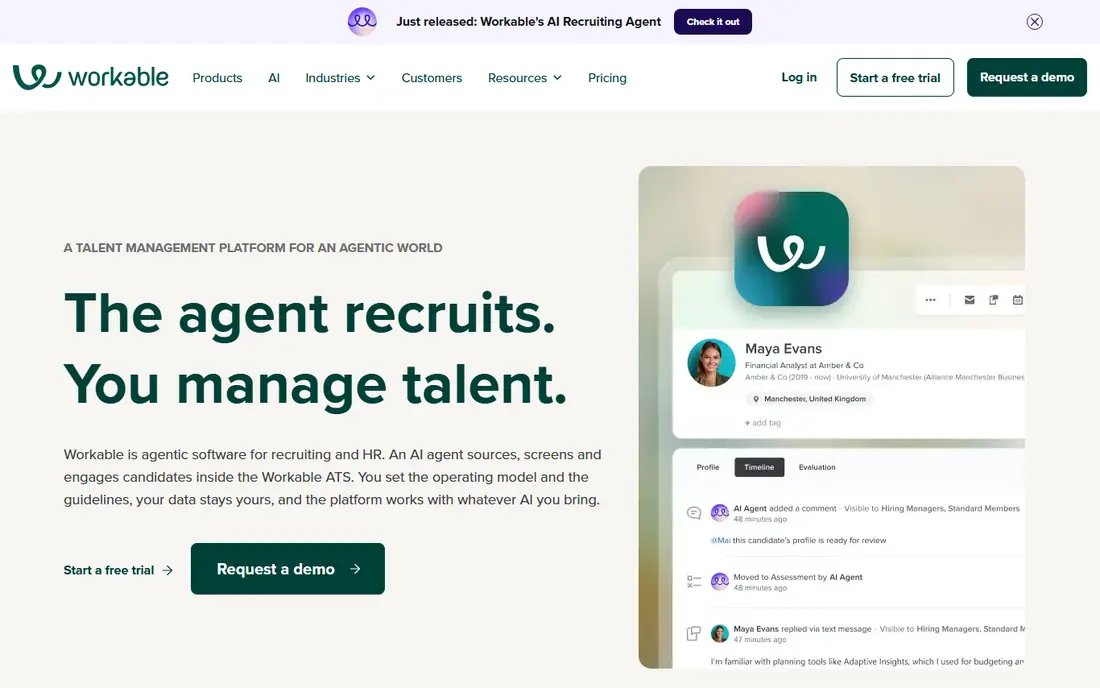
Workable is a practical all rounder for small and mid sized teams. It posts jobs to many boards, collects applications in one pipeline, offers interview scheduling and team feedback, and adds optional HR tools for onboarding. Published pricing makes it easier to budget than quote based rivals, and the interface is approachable for hiring managers who do not recruit every day.
Watch headcount based pricing as you grow, because the monthly cost can rise with company size even if open roles stay flat. Workable still suits most growing teams well, especially those that want one platform from posting to offer without a long implementation project. Try the trial with a real role before committing, and check which AI features sit on your chosen tier.
- Published pricing tiers
- Job board distribution
- AI sourcing and screening tools on higher plans
- Price rises with headcount
- Advanced HR features sit on higher tiers
Ashby is the pick for teams that want to understand hiring, not just run it. Its analytics show time to fill, stage conversion, source quality, and interviewer behavior, so you can see where candidates drop out and which sources produce hires. The ATS and CRM are combined, and scheduling tools reduce back and forth with candidates.
Pricing starts with a published Foundations plan, which helps smaller funded teams budget, while larger plans are quote based. Ashby may be more than a team hiring two roles a year needs, but for startups and scaleups that hire steadily, its reporting pays for itself by showing which parts of the process need fixing. It is our pick for data driven hiring teams.
- Strong hiring analytics and reporting
- ATS, CRM, and scheduling in one platform
- Published starter pricing
- No free plan
- Analytics depth can feel like overkill for very small teams
Zoho Recruit is the budget pick for small businesses, staffing agencies, and teams already using Zoho products. It covers job posting, candidate tracking, resume parsing, interview scheduling, and client management for agencies, at a per user price well below enterprise platforms. The free plan lets a very small team start without a contract.
The interface is functional rather than polished, and you may need time to set up workflows that feel ready made in Workable. That trade is fair at this price, especially for agencies that need candidate and client records in one system. If you already use Zoho for CRM or email, Zoho Recruit integrates naturally and becomes even better value.
- Free plan for basic use
- ATS plus CRM features
- Strong value inside the Zoho ecosystem
- Interface feels busier than Workable or Ashby
- Advanced automation needs higher tiers
JazzHR suits small teams that want a straightforward ATS without enterprise features they will never use. You can post jobs, manage candidates in a clear pipeline, collect team feedback, and send offers, all from a system that hiring managers can learn quickly. That simplicity helps when the person running hiring also runs other parts of the business.
It is not the best choice for complex reporting or global hiring at scale, and pricing should be confirmed for your team size and billing period. For a small company hiring steadily but not constantly, JazzHR offers a sensible middle ground between spreadsheets and an enterprise platform. Check the current plans, because JazzHR has changed its tier structure over time.
- Simple hiring workflows for small teams
- Job board distribution
- Interview and offer tools
- Less advanced analytics than Ashby or Greenhouse
- Pricing varies by plan and billing period
Breezy appeals to teams that think visually. Candidates move through a drag and drop pipeline, hiring managers can see stage at a glance, and messaging, scheduling, and scorecards sit inside the candidate record. That clarity helps small and mid sized teams keep hiring moving without constant status meetings.
Reporting and enterprise controls are lighter than Greenhouse or Ashby, so large teams with compliance heavy needs should look elsewhere. For growing companies that want a friendly, visual ATS with solid core features, Breezy is a strong shortlist option. Use the trial to test how hiring managers respond, because their adoption decides whether any ATS works in practice.
- Visual drag and drop pipelines
- Good candidate messaging and scheduling
- Easy for hiring managers
- Reporting is lighter than Ashby
- Pricing and feature limits vary by tier
How we picked these
We compared official pricing pages, free plans and trials, core ATS features, sourcing tools, reporting depth, and integrations, and we favored tools that are still active in 2026 and clear about what each tier includes. We included enterprise, mid market, and budget tools because recruiting needs differ by team size, and we treated quote based pricing as a drawback for smaller buyers. Where pricing varies by headcount or billing period, we used See website or the published starting figure with that caveat.
How to choose the right recruiting tool
Start with hiring volume and team size, not feature lists. A team hiring five people a year needs simple tracking, good job distribution, and easy manager feedback. A team hiring fifty people a year needs structured interviews, sourcing, reporting, and integrations with HR systems. Buying an enterprise platform for occasional hiring wastes money and creates work, while buying a budget tool for high volume hiring creates bottlenecks.
Test with a real role
Run a real open role through your shortlist, from posting to offer, before you sign a long contract. Check how candidates experience the application, how fast managers give feedback, and how easily you can report on source and stage. Also confirm data handling, candidate privacy, and AI screening settings, because automated screening can introduce bias if criteria are not defined carefully. A tool that hiring managers actually use will beat a more powerful tool they avoid.
Frequently asked questions
What is the best recruiting software?
Greenhouse is our pick for structured hiring at scale, Workable suits growing teams that want clear pricing, and Ashby suits data driven teams. The top recruiting software for you depends on team size, hiring volume, and whether structure, analytics, or pipeline building matters most. Budget teams should start with Zoho Recruit or JazzHR.
What is the best software for recruitment agencies?
Zoho Recruit is a strong agency option, because it combines candidate tracking with client management at a modest per user price. Bullhorn is another agency focused platform, but it is usually quote based and aimed at larger agencies. Agencies should check client portals, candidate ownership rules, and billing features before choosing.
Do recruiting tools include sourcing?
Many do, but sourcing depth varies. Workable and Ashby include sourcing and AI screening tools on higher plans, Lever adds CRM style pipeline sourcing, and Greenhouse focuses more on structured evaluation than on finding candidates. If sourcing is your main gap, check database size, search filters, and outreach tools separately from ATS features.
How much do recruiting tools cost?
Costs range from free or low per user plans for small teams to thousands of dollars a year for enterprise platforms. Workable starts around $299 per month for small teams, Ashby around $400 per month, and Zoho Recruit around $25 per user per month, while Greenhouse, Lever, and SmartRecruiters use quote based pricing. Confirm whether pricing scales by user, employee count, or active jobs before you budget.
Can a small business use an ATS for free?
Yes, Zoho Recruit offers a free plan for basic use, and several tools offer trials. Free plans usually limit users, jobs, or advanced features, so they suit very small teams or a first test. As hiring grows, a paid plan usually pays for itself in time saved on scheduling, feedback, and reporting.
What are the best recruiting sourcing tools?
Sourcing tools help you find and contact candidates who have not applied, and they work best alongside an ATS. Options include LinkedIn Recruiter for network search, Apollo style contact data tools for outreach lists, and built in sourcing in Workable, Ashby, and Lever. Choose sourcing tools based on your target roles and channels, and always respect opt out and privacy rules for outreach.
Sources
See where you really rank - block by block
ProMapRanker scans Google Maps across a grid of your service area. Simple monthly plans from $19, white-label on every plan.
Start freeKeep reading
 zoominfo alternatives
ZoomInfo Alternatives in 2026
Compare the best ZoomInfo alternatives in 2026 for B2B contact data, enrichment, and prospecting, including Apollo, Lusha, and Clay tools, with pricing.
Read → best trip planning app
Best Trip Planning App in 2026
Compare the best trip planning apps in 2026 for itineraries, road trips, group travel, and bookings, from Wanderlog to TripIt and Roadtrippers, with pricing.
Read → best photo editing software for beginners
Best Photo Editing Software for Beginners in 2026
Compare the best photo editing software for beginners in 2026, from Lightroom and Photoshop Elements to free options like Snapseed and GIMP today, with pricing.
Read →