 ProMapRanker
Best Property Management Software Reviews in 2026


Large professional portfolios · Pricing starts at: $1.49 per unit per month
Key takeaways
- Per-unit pricing suits larger portfolios, while flat monthly pricing is often cheaper for landlords with a handful of doors.
- Free landlord tools cover listings, rent collection, and basic accounting, but owner reporting and trust accounting usually sit in paid plans.
- AppFolio and Buildium lead for professional managers, while TurboTenant and Innago are the practical starting points for self-managing landlords.
- Always confirm screening fees, payment fees, and minimums before signing, since those costs sit outside the headline monthly price.
Quick comparison
| Pick | Great for | Pricing starts at | Free tier | |
|---|---|---|---|---|
| AppFolio | Large professional portfolios | $1.49 per unit per month | No | Visit |
 Buildium | Growing management companies | $62 per month | No | Visit |
 DoorLoop | Managers who want a modern setup | $69 per month | No | Visit |
 Yardi Breeze | Small portfolios that may add commercial units | $1 per unit per month | No | Visit |
 Rent Manager | Professional firms with mixed portfolios | See website | No | Visit |
 TenantCloud | DIY landlords on a budget | $15 per month | No | Visit |
 RentRedi | Landlords who want flat pricing | $12 per month | No | Visit |
 TurboTenant | Independent landlords starting out | Free | Yes | Visit |
 Innago | Landlords who want free core tools | Free | Yes | Visit |
The best property management software
We compared official feature pages, pricing pages, app store listings, privacy policies, and public reviews to sort tools by portfolio size, accounting depth, and total cost. The list below moves from full management platforms to simpler landlord tools.
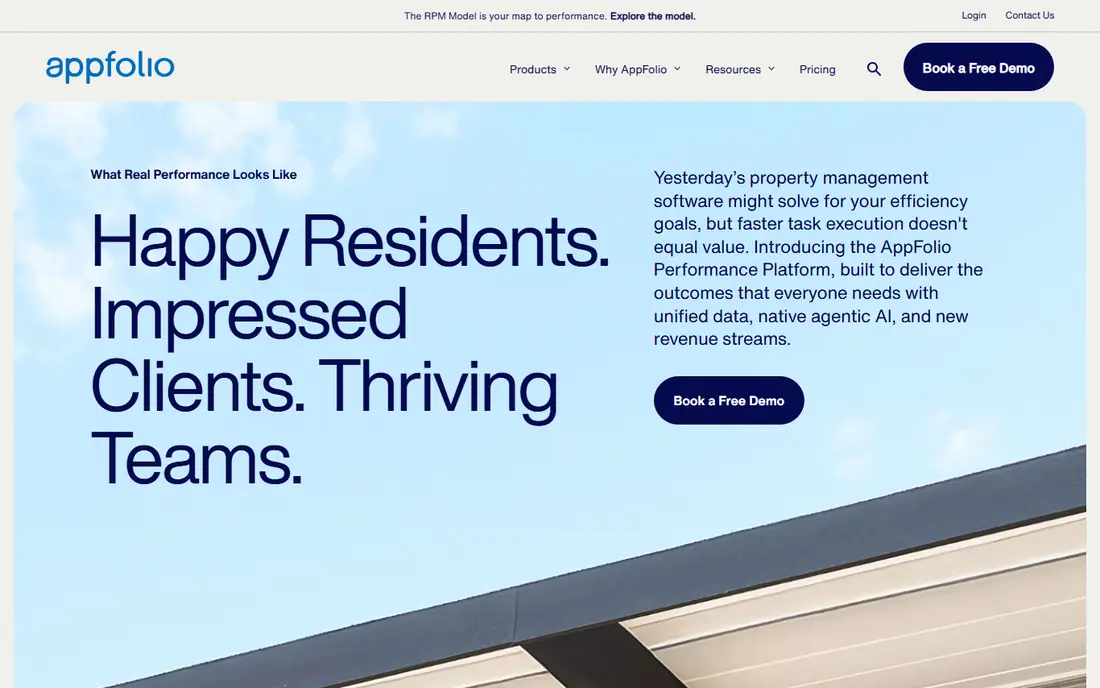
AppFolio is built for companies that manage property for other owners, not for a landlord with two rentals. Its accounting, owner portals, and reporting handle the paperwork that grows painful once dozens of units, owners, and vendors are involved. Automation for renewals, maintenance requests, and communications also saves staff time at that scale.
The trade-off is clear at the entry point. A 50-unit minimum means the monthly floor is far above a simple landlord tool, and smaller operators will pay for depth they do not use. Teams that already manage at scale, or plan to reach that size soon, get the most value here.
- Deep accounting and owner reporting
- Strong automation for leasing and maintenance
- Wide integration range
- 50-unit minimum locks out small landlords
- Pricing and setup can feel heavy for a first portfolio
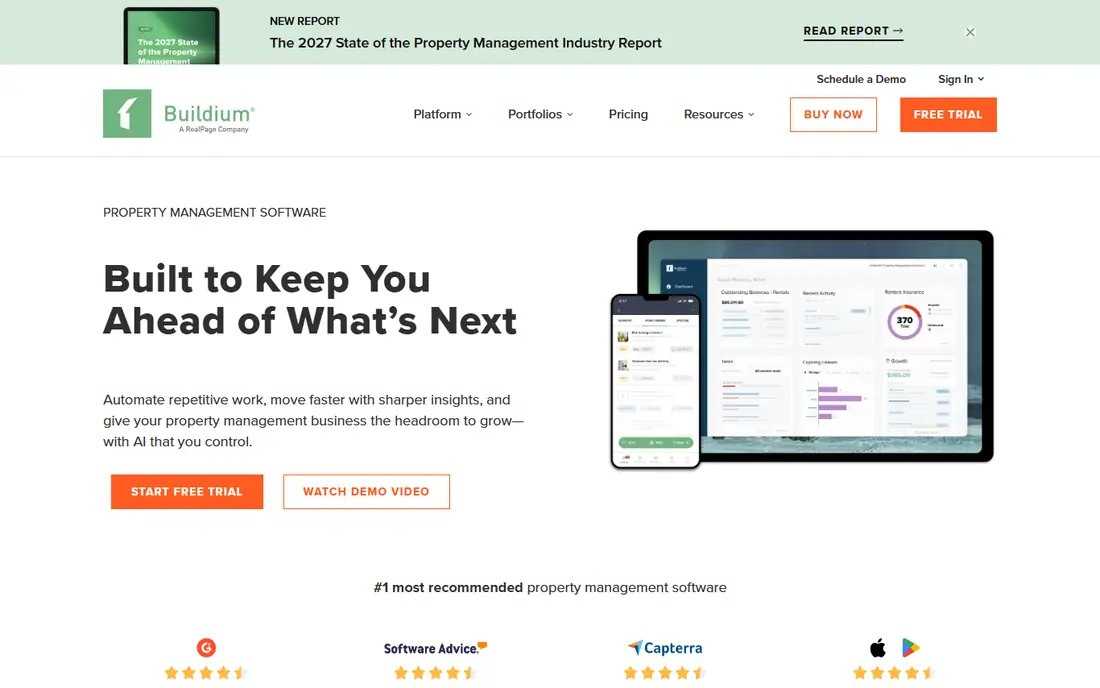
Buildium covers the full cycle from listing and application to ledger, owner statement, and maintenance. That completeness matters for firms moving from spreadsheets to a real system, since it reduces the need for separate tools. Owner reporting is a particular strength for managers who must show clients clean monthly numbers.
Newer tools look fresher, and Buildium can feel less polished during daily use. Pricing also needs a careful read, because higher tiers and per-unit charges change the bill as a portfolio grows. For a growing firm that values accounting depth over a slick interface, it remains a safe pick.
- Full accounting with owner and tenant portals
- Leasing and maintenance in one place
- Long track record in the market
- Costs rise with units and add-ons
- Interface feels dated next to newer rivals
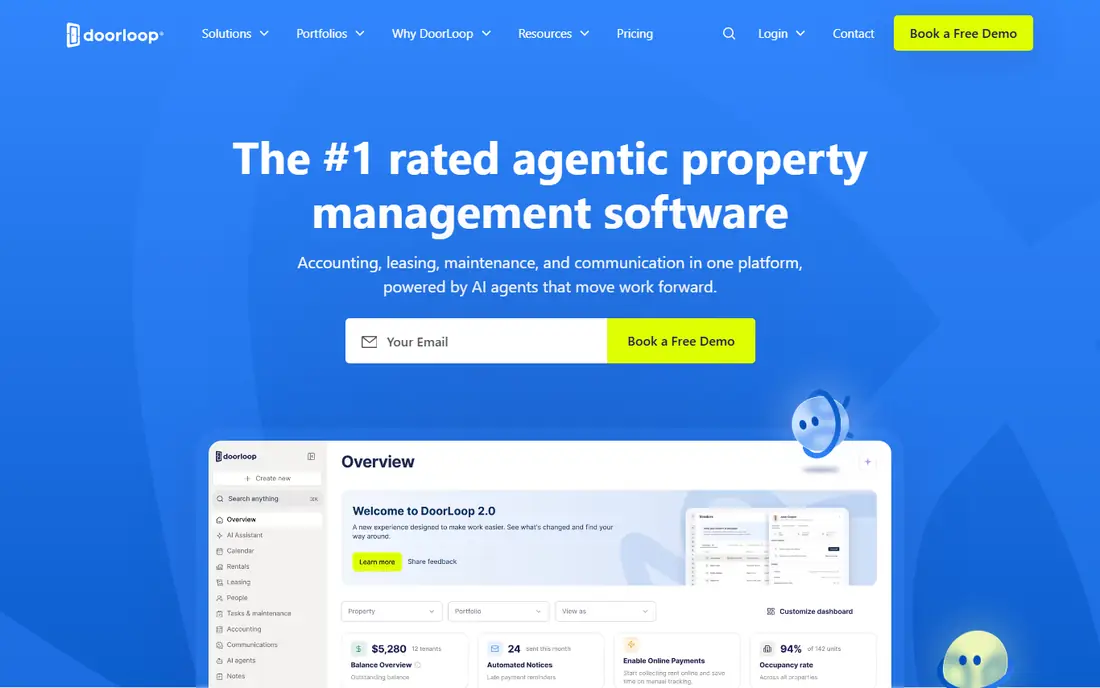
DoorLoop appeals to managers who want Buildium-style coverage without a steep learning curve. Listings, applications, screening, rent collection, and accounting sit in one dashboard, and the layout makes it easier to train new staff. That ease matters when a team is growing and cannot spare weeks for setup.
The catch is that the lowest advertised price does not always match the plan a firm needs. Check unit limits, billing terms, and which accounting features are included before comparing it with a flat-price rival. For teams that prize usability and fast onboarding, DoorLoop is a strong middle option.
- Clean interface that is quick to learn
- Accounting, leasing, and maintenance together
- Helpful onboarding support
- Entry pricing varies by plan and billing term
- Some advanced features sit in higher tiers
Yardi Breeze gives smaller operators a path into the Yardi family without the complexity of the full enterprise platform. It covers leasing, rent collection, maintenance, and accounting, and it can handle commercial units that many landlord tools cannot. That flexibility helps owners whose portfolios mix homes and small commercial spaces.
The $100 monthly minimum sets a floor that rules out very small landlords. Onboarding also takes more time than a free landlord app, so buyers should budget for training. If the portfolio is growing toward professional management, Breeze is a sensible bridge.
- Backed by a major property software brand
- Handles residential and commercial units
- Solid accounting and reporting
- $100 monthly minimum
- Setup and training take more effort than landlord tools
Rent Manager suits firms with mixed or unusual portfolios that need custom fields, workflows, and reports. It handles residential, commercial, and community association work in one system, which is rare at this depth. Firms that have outgrown simpler tools often move here for control rather than for looks.
That control comes with a heavier setup and a sales-led price quote. Small landlords will find it overpowered and slow to configure. For a professional firm with varied property types and a team to run the system, the flexibility is worth the effort.
- Highly configurable for residential, commercial, and association portfolios
- Deep accounting and reporting
- Long industry history
- Quote-based pricing hides the real cost
- Setup can be complex for small teams
TenantCloud is a practical step up from a free tool for landlords who want accounting depth without paying a management-platform price. It covers listings, applications, leases, online payments, and maintenance requests, plus reports that help at tax time. The monthly entry point is low enough for a small portfolio.
Buyers should note that the free tier reported in older reviews no longer matches current pricing in many comparisons. Check which tier includes the accounting reports and payment features you need. For a hands-on landlord with a few doors, TenantCloud balances price and coverage well.
- Low starting price for a full landlord toolset
- Accounting, leases, and maintenance included
- Tenant and owner portals
- No free plan in current pricing
- Support and advanced features vary by tier
RentRedi stands out because its price does not climb with every door added. A landlord with 5 units and a landlord with 50 units can pay the same base rate on the annual plan, which makes budgeting simple. The mobile app is also well suited to landlords who manage from a phone.
The headline annual price is much lower than month-to-month billing, so compare like with like. Some tools, such as advanced reporting, sit in higher tiers. For landlords who expect to add units, flat pricing is a genuine long-term saving.
- Flat rate covers unlimited units on paid plans
- Mobile-first design
- Screening, leases, and maintenance included
- Cheapest monthly billing is higher than the annual rate
- Some features require higher tiers
TurboTenant is the easiest free starting point for a new landlord. Listings reach major rental sites, applications and screening are built in, and rent collection works without a monthly fee. That combination covers the hardest parts of a first tenancy at no subscription cost.
Paid plans add unlimited leases, e-signatures, and accounting tools, so the free tier is best seen as a starter rather than a complete system. Read the screening and payment fee details before listing, since those charges affect tenants. For a first portfolio, TurboTenant is our pick for most people.
- Free listings, applications, and rent collection
- Wide listing syndication
- Paid upgrades add leases and accounting
- Screening and payment fees can fall on tenants or landlords
- Full accounting needs a paid plan
Innago offers free property management software with the core jobs covered: listings, applications, leases, rent collection, and maintenance. Setup is quick, and the price makes it easy to try without a commitment. Small landlords who only need solid basics will find little missing at the start.
Free software still has costs somewhere, often in payment processing, so check who pays those fees. Advanced owner reporting and deep accounting are thinner than in paid management platforms. For a landlord who wants capable software at no monthly cost, Innago is a fair choice.
- Free core management tools
- Rent collection and maintenance included
- Simple setup for small portfolios
- Tenants may cover some payment fees
- Fewer advanced accounting features than paid platforms
How we picked these
We compared official feature pages, pricing pages, app store listings, privacy policies, and public reviews, and we kept only tools that still operate in October 2026 and fit long-term rental management. Short-term rental tools and pure accounting apps were left out, since they solve a different job. Prices shown are starting prices and can change with unit count, billing term, and add-ons, so confirm the current price on the vendor site before buying.
What to check before you choose
Start with unit count, not features. A tool priced per unit looks cheap at 5 doors and costly at 100 doors, while a flat tool does the reverse. Count every door you manage now, plus doors you expect to add in the next year, and model the bill at both counts.
Accounting and owner reporting
Ask if the plan includes trust accounting, owner statements, and tax reports, or if those sit in a higher tier. Managers who handle other people's money need clean ledgers and audit trails. Self-managing landlords can often accept simpler reports.
Leasing, screening, and payments
Check who pays screening fees and payment fees, and whether leases and e-signatures are included. A free plan with high tenant fees can cost more in goodwill than a paid plan with clear pricing. Local screening rules also vary, so confirm what is allowed in each state where you operate.
Migration and support
Ask how listings, leases, and ledgers move in, and what support is included. A tool that is hard to leave can cost more than a tool that is hard to learn. A short trial with one real property, from listing to first rent payment, reveals more than a demo.
Frequently asked questions
What is the best property management software for a small landlord?
For a small landlord, TurboTenant or Innago are the usual starting points because core tools are free and setup is quick. TenantCloud or RentRedi make sense once accounting depth or flat pricing matters more than a zero monthly fee.
How much does property management software cost?
Costs range from free for basic landlord tools to $62 per month or more for management platforms, plus per-unit charges at larger firms. AppFolio starts at $1.49 per unit per month with a 50-unit minimum, while Yardi Breeze starts at $1 per unit per month with a $100 monthly minimum. Always add screening and payment fees to the headline price.
Is AppFolio worth it for under 50 units?
AppFolio is usually not worth it under 50 units because its minimum excludes smaller portfolios and its depth goes unused. Buildium, DoorLoop, or a landlord tool will cover the same daily jobs at a lower cost until the portfolio grows.
Does property management software replace an accountant?
No, it organises rent, expenses, and reports, but it does not replace tax or legal advice for a specific situation. Use its reports to make an accountant's job faster and cheaper, and ask a professional about trust accounting rules in your state.
Can I switch property management software later?
Yes, but migration takes planning, especially for ledgers, leases, and tenant payment details. Export records before cancelling, run both systems for one rent cycle if possible, and confirm how tenant payment methods transfer.
Sources
See where you really rank - block by block
ProMapRanker scans Google Maps across a grid of your service area. Simple monthly plans from $19, white-label on every plan.
Start freeKeep reading
 who has best internet service
Who Has the Best Internet Service in 2026
Who has best internet service for US homes? We compare fiber, cable, fixed wireless and satellite providers on speed, price, availability and terms today.
Read → which survey tool has the best analytics
Which Survey Tool Has the Best Analytics in 2026
Find which survey tool has the best analytics in 2026, comparing Qualtrics, SurveyMonkey, Typeform, Alchemer, and more on reports, text, and stats today.
Read → which streaming service has the best movies
Which Streaming Service Has the Best Movies in 2026
Answering which streaming service has the best movies, with Netflix, Max, Criterion and more compared on libraries, prices and free options in this guide.
Read →