 ProMapRanker
Best Prompt Engineering Tools in 2026

Key takeaways
- LangSmith, Langfuse and PromptLayer cover the core job: version prompts, trace runs and test changes before release.
- Promptfoo and Braintrust suit teams that treat prompt quality as a test suite, with datasets and regression checks.
- Portkey and Helicone add gateway, cost and routing control for teams running many models in production.
- The best platform for prompt engineering is the one your team will use on every change, not the one with the longest feature list.
Quick comparison
| Pick | Great for | Pricing starts at | Free tier | |
|---|---|---|---|---|
 LangSmith | LangChain and LangGraph teams | See website | Yes | Visit |
 Langfuse | Open source tracing and prompts | See website | Yes | Visit |
 PromptLayer | Prompt versioning and evals | Free | Yes | Visit |
 Promptfoo | Prompt testing in CI | Free | Yes | Visit |
 Braintrust | Eval-driven prompt development | Free | Yes | Visit |
 Vellum | Visual prompt workflows | Free | Yes | Visit |
 Portkey | Prompt gateway and routing | Free | Yes | Visit |
 Helicone | Cost and trace observability | Free | Yes | Visit |
The best prompt engineering tools
Prompt engineering tools help teams stop copying prompts between chats and documents. They version prompts, test changes against datasets, trace production runs and promote a known good version to production. The eight tools below cover that work from different angles, so pick based on your stack, team size and how much of the work is code versus collaboration.
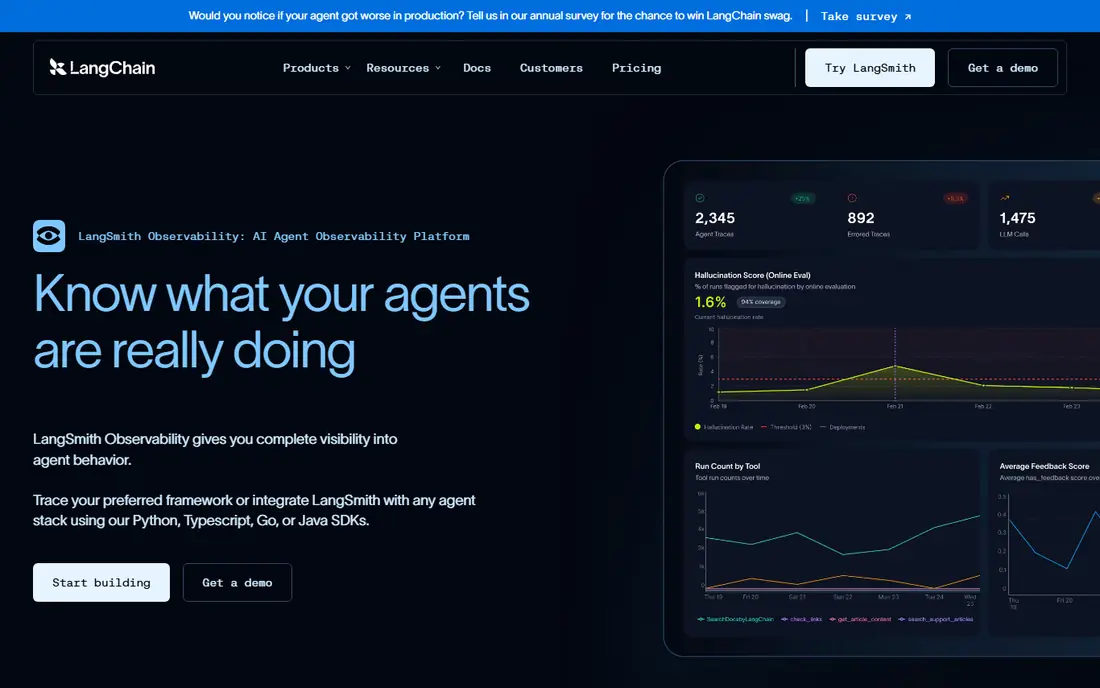
LangSmith is the natural home for prompts when an app is built with LangChain or LangGraph. Traces show each step, tool call and token cost, and the Prompt Hub gives prompts a versioned home that code can pull at runtime. Evaluations can run offline against datasets or online against production traces, which helps teams see whether a prompt change actually improves results.
The trade-off is fit. Teams that do not use LangChain get less from the deepest integrations, and trace volume can drive usage costs if sampling is not set. For LangChain teams, though, LangSmith ties prompt editing, debugging and evals together in a way that standalone editors cannot match.
- Deep LangChain tracing
- Prompt hub
- Online and offline evals
- Most value inside LangChain
- Usage costs need watching
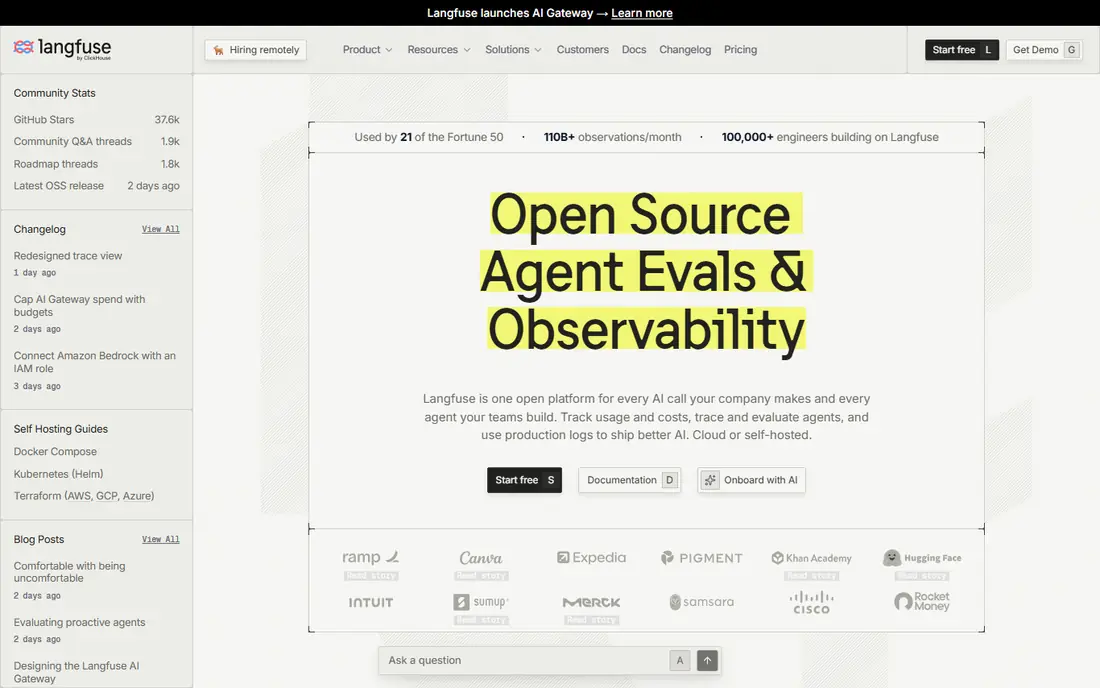
Langfuse appeals to teams that want open source control without giving up a polished hosted option. It traces language model calls, manages prompt versions and runs evaluations against datasets, with annotation queues for human review. Because it is built on OpenTelemetry concepts, it also fits teams that already think in traces and spans.
Self-hosting is a real option, but it adds operations work for updates, storage and access control. The hosted cloud plan offers a free hobby tier, while larger use needs a pricing check on the vendor site. For teams that value open source and portability, Langfuse is a strong default.
- Open source core
- Prompt management
- Dataset evals
- Self-hosting adds ops work
- Hosted pricing needs a quote check
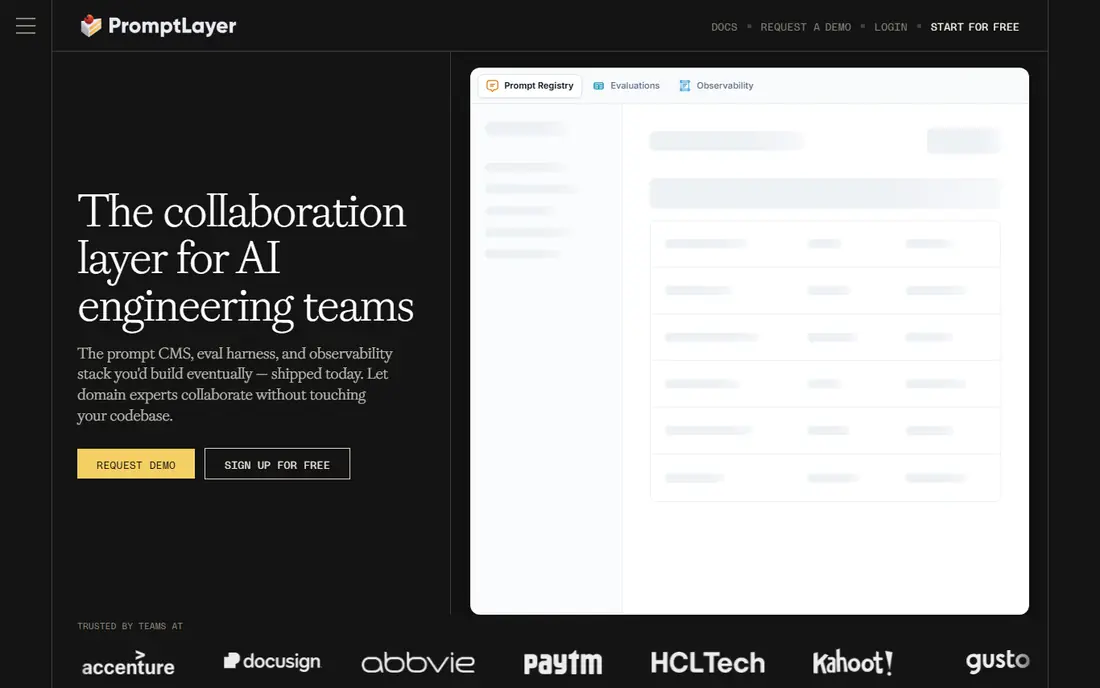
PromptLayer treats prompts as managed artefacts, not as text pasted into code. Teams can version prompts, link production traces to the exact version that ran, run regression evaluations and review changes before promotion. That trace-to-version link is useful when a user reports a bad answer and you need to know which prompt produced it.
Pricing starts free, with paid tiers reported at $49 and $500 per month in recent comparisons, so mid-size teams should check the current tier gap before committing. Enterprise controls such as role-based access and deployment approvals sit on higher plans. For product teams that edit prompts often, PromptLayer gives a clear audit trail.
- Clear prompt registry
- Production traces linked to versions
- Regression testing
- Price jumps between mid tiers
- Advanced controls are enterprise only
Promptfoo is the most code-centred tool on this list, and that is its strength for engineering teams. Prompts, providers, tests and assertions live in configuration files, so changes go through pull requests and run in CI. It supports many models and providers, and its red teaming features overlap with security testing, which helps teams catch prompt injection regressions early.
Promptfoo is less suited to non-technical collaborators who want a visual editor and approval flow. It also rewards teams that invest in good datasets: a weak test set will pass a bad prompt. For teams that already live in Git and CI, it is a fast and honest way to test prompts.
- Git friendly configs
- Broad model support
- Red teaming included
- Less visual collaboration
- Test design skill matters
Braintrust centres prompt work on evaluations rather than vibes. Teams build versioned datasets, run experiments against them, score production traces and set quality gates before a prompt ships. Unlimited users on paid plans make it easier for product, engineering and domain experts to share the same experiments without seat-count friction.
The paid Pro plan has been reported at $249 per month, so small teams should start on the free Starter plan and confirm current pricing. Braintrust also needs thoughtful eval design: scores only help if the dataset reflects real user tasks. Teams that commit to that discipline get a clear answer to whether a new prompt is better.
- Versioned datasets
- Online scoring
- Unlimited users on paid plans
- Paid Pro pricing is higher
- Setup needs eval design
Vellum suits teams where domain experts and engineers build prompts together. Its visual canvas lets people chain prompts, tools and branching logic without writing every workflow as code, while evaluations test whether changes improve outcomes. It is model agnostic, so teams are not locked to one provider when they test a new model.
Vellum offers a free starter tier, with team and enterprise plans at higher prices, so check the current plan that covers your seats and eval volume. Code-first teams may find a config-based tool faster, but cross-functional teams often move faster when non-engineers can see and test the workflow.
- Visual workflow builder
- Model agnostic
- Eval runs included
- Pricing varies by plan
- Code-first teams may prefer a CLI
Portkey combines a prompt management layer with an AI gateway, which is useful when production prompts run across many models. Teams can version prompts, route requests to the best model for cost or quality, add fallbacks and track spend in one place. That control matters when a prompt change also changes which model handles the request.
Portkey is a platform, not just an editor, so teams should plan gateway setup, keys and routing rules carefully. Advanced plans are sales led, so confirm pricing for your volume. For teams standardising prompts across services, Portkey reduces the sprawl of model calls hidden in code.
- Prompt CMS plus gateway
- Routing and fallbacks
- Cost tracking
- Gateway setup takes care
- Advanced plans are sales led
Helicone started as an observability layer and now adds prompt APIs that sit close to production code. By proxying model calls, it records traces, costs and latency, and teams can read and update prompts through APIs rather than redeploying code for every wording tweak. That makes it a good fit for indie developers and mid-size teams that want cost control first.
Helicone is stronger on observability than on deep evaluation workflows, so teams that need rich dataset evals may pair it with Promptfoo or Braintrust. The free tier makes it easy to start, with self-hosting available for teams that want control. For cost and trace clarity, it is a practical pick.
- Proxy based tracing
- Prompt read and write APIs
- Cost analytics
- Observability first
- Eval depth is thinner than dedicated eval tools
How we picked these
We compared official product pages, pricing pages and public comparisons for prompt versioning, tracing, evaluation, gateway control and collaboration. We favoured tools that are live in October 2026 and that help teams ship prompts with tests, not just edit text. We excluded tools reported as discontinued, and where pricing is quoted we wrote See website rather than repeating an old estimate.
How to choose a prompt tool
Start with how your team already builds. A LangChain team will get the most from LangSmith, an open source team from Langfuse, and a Git and CI team from Promptfoo. A cross-functional product team may prefer PromptLayer, Vellum or Braintrust, where non-engineers can review prompts and results without editing code.
Build a test set before you buy
Collect real user inputs, edge cases and failure examples before you compare tools. A prompt tool is only useful if it can run those cases and show whether a change helps. Include cases for formatting, refusal, tool use and long inputs, because those are where small wording changes cause large failures.
Promote prompts like code
Give every prompt a version, an owner and a promotion step. Test in staging, review the diff, then promote to production and keep the old version available for rollback. Link production traces to prompt versions, so a bad answer can be traced to its exact prompt and dataset result.
Watch cost and latency
Track tokens, cost and latency per prompt version, not just quality scores. A prompt that improves answers but triples cost may not be worth shipping. Set budgets, sample traces for large volumes and test cheaper models on simple tasks before defaulting to the largest model.
Frequently asked questions
What is the best platform for prompt engineering?
There is no single best platform. LangSmith leads for LangChain teams, Langfuse leads for open source teams, PromptLayer leads for a clear prompt registry, and Promptfoo leads for CI testing. Match the tool to your stack and to who edits prompts, then test it with a real prompt and dataset.
Are prompt engineering tools free?
Many tools offer free tiers or open source cores, including Langfuse, Promptfoo, PromptLayer, Braintrust, Vellum, Portkey and Helicone. Free tiers usually limit users, traces or eval volume, and paid plans add collaboration, support and scale. Check the current limits on the vendor site before you rely on a free tier in production.
What is prompt versioning?
Prompt versioning stores each prompt change as a numbered version, with a record of who changed it and when. Code pulls a named version at runtime, so you can roll back to a known good prompt if a new version performs worse. It also links production traces to the version that produced them, which makes debugging far easier.
How do prompt evals work?
Evals run a prompt against a dataset of inputs and score outputs against expected answers, rules or model-based judges. Teams compare scores across prompt versions to decide whether a change improves results. Good evals need a dataset that reflects real user tasks, not just easy examples that every prompt passes.
Can I use a prompt tool without LangChain?
Yes. Langfuse, PromptLayer, Promptfoo, Braintrust, Vellum, Portkey and Helicone are framework agnostic or work through APIs and proxies. LangSmith is most valuable inside LangChain, but other tools on this list work with any model provider or SDK. Choose based on your stack, not on a single framework.
How do I move prompts from a chat tool to production?
Copy the prompt into a versioned tool, add variables for user input, and test it against a dataset through code. Wire the production code to pull the named version, log traces and set a rollback plan. Avoid pasting chat prompts straight into production without tests, because chat behaviour and API behaviour often differ.
Sources
See where you really rank - block by block
ProMapRanker scans Google Maps across a grid of your service area. Simple monthly plans from $19, white-label on every plan.
Start freeKeep reading
 who has best internet service
Who Has the Best Internet Service in 2026
Who has best internet service for US homes? We compare fiber, cable, fixed wireless and satellite providers on speed, price, availability and terms today.
Read → which survey tool has the best analytics
Which Survey Tool Has the Best Analytics in 2026
Find which survey tool has the best analytics in 2026, comparing Qualtrics, SurveyMonkey, Typeform, Alchemer, and more on reports, text, and stats today.
Read → which streaming service has the best movies
Which Streaming Service Has the Best Movies in 2026
Answering which streaming service has the best movies, with Netflix, Max, Criterion and more compared on libraries, prices and free options in this guide.
Read →