 ProMapRanker
Best Profit and Loss Software

US small businesses wanting the widest ecosystem · Pricing starts at: $38 per month
Key takeaways
- QuickBooks Online is the safe default for US small businesses, with Simple Start at $38 per month and the widest accountant network.
- Wave offers a free Starter plan for core bookkeeping, with Pro at $16 per month billed annually for automatic bank imports.
- Zoho Books is the best value subscription plan, with Standard at $15 per month billed annually and a free plan under $50,000 revenue.
- Xero Early at $27 per month includes unlimited users, but caps invoices at 20 and bills at 5 per month.
- FreshBooks Lite at $23 per month fits freelancers and service businesses that invoice constantly.
Quick comparison
| Pick | Great for | Pricing starts at | Free tier | |
|---|---|---|---|---|
| QuickBooks Online | US small businesses wanting the widest ecosystem | $38 per month | Free trial (30 days) | Visit |
 Xero | Growing businesses wanting clean reconciliation | $27 per month | Free trial (30 days) | Visit |
 FreshBooks | Freelancers and service businesses that invoice | $23 per month | Free trial (30 days) | Visit |
 Wave | Solo owners wanting accounting at zero cost | Free | Yes | Visit |
 Zoho Books | Best value for Zoho users | $15 per month | Yes | Visit |
 Sage | Cash-flow forecasting without a separate tool | quote only | Free trial | Visit |
 ZarMoney | Small teams wanting simple per-user pricing | $20 per month | Free trial (14 days) | Visit |
The best profit and loss software
QuickBooks Online
Great for: US small businesses wanting the widest ecosystem

QuickBooks Online is the safe default for a US small business for one practical reason: whoever does your books probably already knows it. Invoicing, expense tracking, bank feeds, sales tax and more than 100 standard reports cover what most businesses need, and the app marketplace fills the gaps for industry-specific workflows. Simple Start costs $38 per month for one user plus two accountants, with Essentials at $85, Plus at $140 and Advanced at $340 per month. A 30-day free trial lets a business test the reports before committing.
The honest catch is cost creep. The headline plan price is only the start: payroll, payment processing and advanced features each add their own monthly fee, and Intuit has a habit of raising prices on renewals. There is also no published free plan with usable limits. For a business that wants the tool its accountant already uses and the largest ecosystem of add-ons, QuickBooks Online is still the default choice.
- Widest app marketplace and accountant network
- 100-plus standard reports including profit and loss
- Cost creep from payroll, payments and add-ons
- Renewal price increases are common
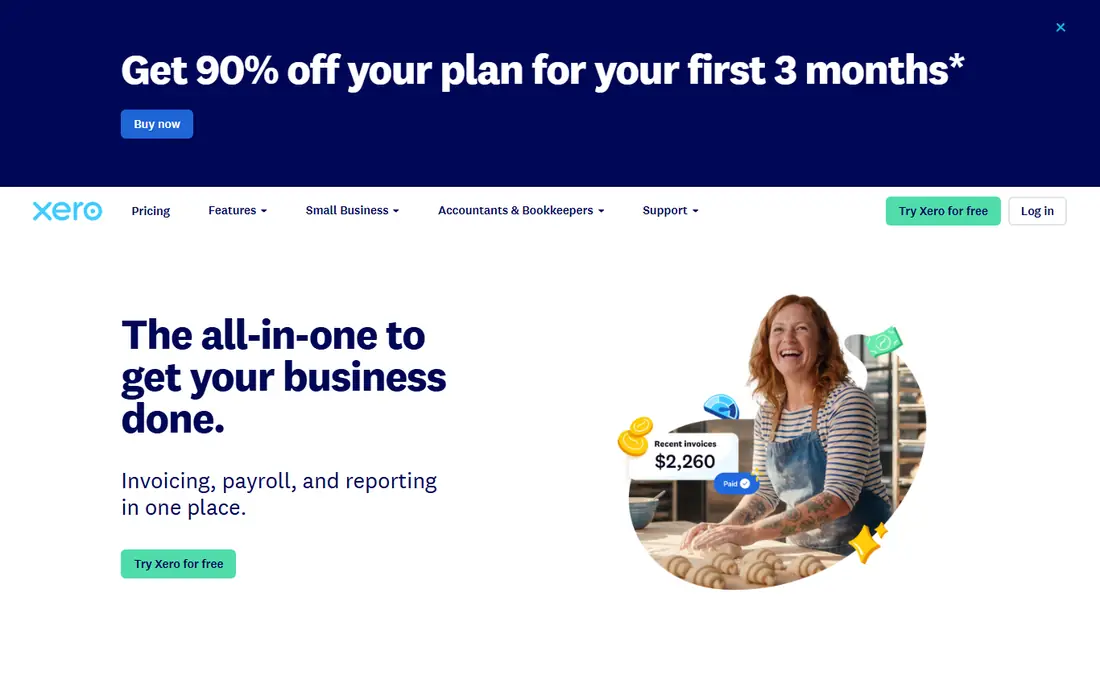
Xero is the modern alternative to QuickBooks, built with tech-forward businesses in mind. The single biggest structural difference is that Xero does not charge per-user license fees: every tier includes unlimited users, which makes it cheaper than QuickBooks as a team grows. The Early plan costs $27 per month and covers bank reconciliation, invoicing and profit and loss reporting, with a 30-day free trial.
The trap in the entry plan is the cap. Early limits a business to 20 invoices or quotes and 5 bills per month, which a busy service business can hit in a single week. Growing plans remove the caps, but buyers should budget for the step up rather than the entry price. For a growing business that wants clean reconciliation and no per-user fees, Xero is a strong alternative to QuickBooks.
- Unlimited users on every plan
- Fast, clean bank reconciliation
- Early plan caps invoices at 20 and bills at 5 per month
- No free plan
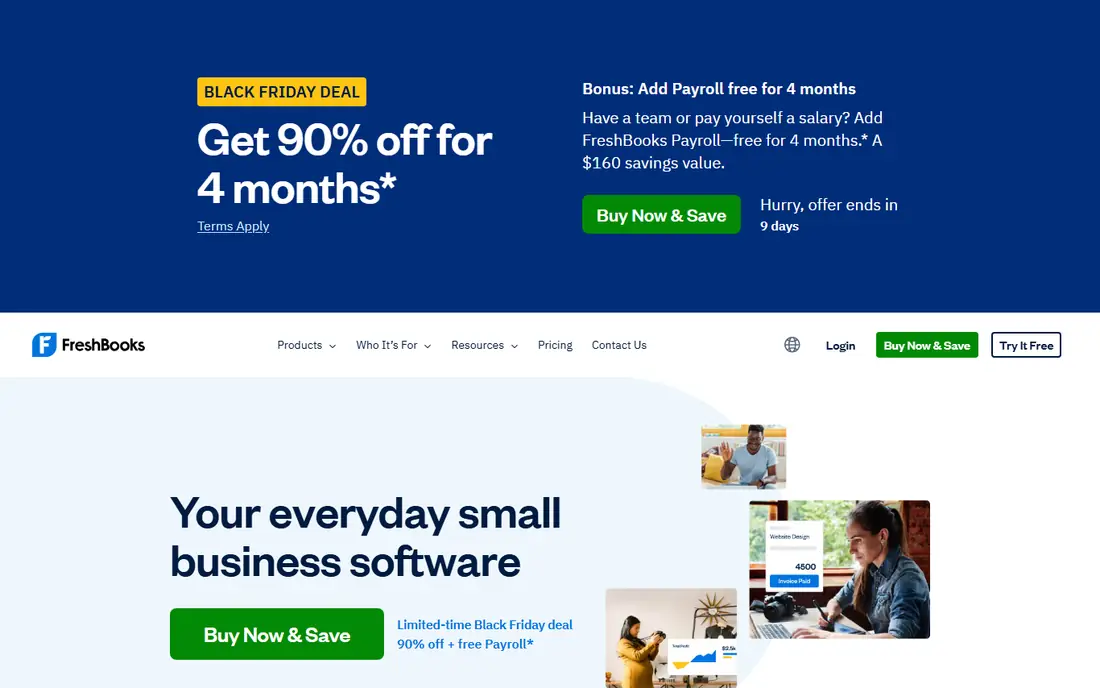
FreshBooks is built for freelancers and service businesses that invoice constantly. The Lite plan starts at $23 per month and covers invoicing, expense tracking, time tracking and profit and loss reporting, with a 30-day free trial. Its interface is simpler than QuickBooks, which suits owners who do their own books without an accounting background. Time tracking ties directly to invoices, so billable hours turn into sent invoices with little extra work.
The limit is depth. FreshBooks handles inventory and multi-user accounting less well than QuickBooks or Xero, and the Lite plan caps the number of billable clients, so a growing agency will need a higher tier. For a freelancer or a small service business that lives on invoices, it is the easiest tool here to run day to day.
- Fast invoicing with time tracking built in
- Simple interface for non-accountants
- Weaker inventory and multi-user accounting than QuickBooks
- Client limits on the Lite plan
Wave is the genuine free option in this list. The Starter plan costs nothing and includes unlimited estimates, invoices, bills and bookkeeping records, with real double-entry accounting behind them. For a solo owner or a micro-business that needs a profit and loss statement without a monthly bill, it is the only tool here that charges zero for core accounting.
The change to note came in June 2026, when Wave restricted the free Starter plan to core manual bookkeeping features. Automatic bank feed syncing, receipt scanning and accountant access now need the Pro plan, which costs $16 per month billed annually or $19 monthly. Even so, Wave Pro is still the cheapest way to get automated bank imports. For a cash-strapped solo operator, Wave is the best place to start.
- Free Starter plan with unlimited invoices and bookkeeping
- Real double-entry accounting
- Automatic bank imports need the Pro plan at $16 per month
- Fewer integrations than QuickBooks
Zoho Books gives a business more for the money than any tool here. The free plan covers one user plus one accountant while annual revenue stays under $50,000, and it includes invoices, quotes, bank reconciliation, recurring invoices, 1099 filing and more than 50 reports. The Standard plan costs $15 per month billed annually, or $20 monthly, with Professional at $40 and Premium at $60 per month billed annually.
The catch is ecosystem fit. Zoho Books shines for businesses already running Zoho CRM, Inventory or other Zoho apps, and its accountant network is smaller than the one QuickBooks offers. A business that plans to hire a bookkeeper should check that the bookkeeper works with Zoho first. For a bootstrapped founder who wants the most features per dollar, it is the best value in this list.
- Free plan while annual revenue stays under $50,000
- Standard plan is the cheapest subscription here
- Best value only inside the Zoho ecosystem
- Smaller accountant network than QuickBooks
Sage is the pick for businesses that want cash-flow forecasting without buying a separate tool. Its accounting plans include forecasting alongside invoicing, bank feeds and profit and loss reporting, which helps an owner see a cash gap weeks before it arrives. Sage has a long track record with small businesses, and its support network is well established in the US and the UK.
The drawback is transparency. Sage does not publish an entry price on its pricing page, so buyers must visit the site or talk to sales to get a quote, which makes side-by-side comparison slower. The interface also feels dated next to Xero or FreshBooks. For a business that values forecasting and a long-standing vendor, Sage is worth a quote; for a buyer who wants a published price today, Zoho Books or Wave is faster.
- Built-in cash-flow forecasting
- Long track record with small businesses
- No published entry price, so comparison needs a sales visit
- Interface feels dated next to Xero
ZarMoney is a straightforward accounting tool for small teams that want simple pricing. The Small Business plan starts at $20 per month and includes invoicing, bank feeds, inventory basics and the standard reports a small business needs, including profit and loss, balance sheet and cash flow. A 14-day free trial lets a team test the workflow before paying.
The limit is ecosystem size. ZarMoney has a smaller app marketplace than QuickBooks or Xero, and fewer accountants list it as a tool they support, so a business that relies on many integrations should check the list before committing. For a small team that wants clear per-user pricing and the core reports without the cost creep of the market leaders, it is a practical pick.
- Straightforward per-user pricing
- Profit and loss, balance sheet and invoicing included
- Smaller app marketplace than QuickBooks or Xero
- Less brand recognition with accountants
How we chose
We compared vendor pricing pages checked in October and November 2026, product documentation and independent comparisons. We favored tools with published prices, a free plan or trial, and a profit and loss report that a non-accountant can run without help. Where a vendor hides its price, we say quote only rather than repeating a third-party figure. We did not test any tool hands-on and did not rely on review scores alone.
What to check before you buy
Start with the report you actually need: a profit and loss statement by month, by class or by location, with cash or accrual basis as your accountant requires. Then check the plan limits that bite first: invoice caps, bill caps, user counts and bank connections all vary by tier, and Xero Early shows how a $27 plan can run out of room in a week. Confirm whether payroll, payment processing and accountant access cost extra, since those add-ons are where QuickBooks bills grow.
| Business size | Best starting pick | Monthly cost at entry | What to watch | | Solo owner, no budget | Wave | Free | Bank imports need Pro at $16 | | Freelancer billing hours | FreshBooks | $23 | Client limits on Lite | | Small team, best value | Zoho Books | $15 | Revenue cap on the free plan | | Growing team, unlimited users | Xero | $27 | Invoice cap on Early | | US business with an accountant | QuickBooks Online | $38 | Add-on fees and renewals |
Check the migration path before you commit: export your chart of accounts and a year of transactions from your current tool, and test the import during the trial. A cheap plan that cannot import your history will cost more in bookkeeper hours than it saves in subscription fees.
Frequently asked questions
What is the best profit and loss software for a small business?
QuickBooks Online is the best overall pick for most US small businesses, with plans from $38 per month and the widest accountant support. Zoho Books at $15 per month billed annually is the best value, and Wave is the best free option for solo owners. The right choice depends on whether you need an accountant-friendly ecosystem or the lowest cost.
Is there free profit and loss software?
Yes. Wave offers a free Starter plan with unlimited invoices and bookkeeping, and Zoho Books offers a free plan while annual revenue stays under $50,000. Both include profit and loss reporting. Wave Pro at $16 per month billed annually adds automatic bank imports, which most businesses want within a few months.
How much does profit and loss software cost?
Entry prices run from free with Wave to $38 per month for QuickBooks Online Simple Start. Most small businesses land between $15 and $27 per month with Zoho Books, FreshBooks or Xero. Payroll, payment processing and extra users add to the bill, so model the full monthly cost, not just the headline plan.
What is the difference between cash and accrual profit and loss reports?
A cash-basis report counts income when money arrives and expenses when money leaves. An accrual report counts income when it is earned and expenses when they are incurred, even if cash has not moved. Most tax filings for small businesses use cash basis, while lenders often ask for accrual reports. Check that your tool supports both before you buy.
Can profit and loss software replace a bookkeeper?
No, for most businesses. The software records transactions and builds the reports, but a bookkeeper checks categorization, reconciles accounts and spots errors. A simple solo business can run on Wave or Zoho Books alone, while a business with payroll, inventory or multiple entities still benefits from professional help.
Which accounting software do accountants prefer?
Most US accountants prefer QuickBooks Online, because it is the tool they were trained on and the one with the largest ecosystem. Xero is the common second choice, especially for tech-forward firms. If your accountant has a strong preference, follow it: the hours saved on their side usually outweigh a small difference in subscription price.
Sources
See where you really rank - block by block
ProMapRanker scans Google Maps across a grid of your service area. Simple monthly plans from $19, white-label on every plan.
Start freeKeep reading
 best scheduling software for med spas
Best Scheduling Software for Med Spas in 2026
Compare the best scheduling software for med spas, with real prices and calendar features, so you can run staff schedules and waitlists without double bookings.
Read → best scheduling software for law firms
Best Scheduling Software for Law Firms
Compare the best scheduling software for law firms, with real 2026 prices, intake forms, and calendar sync, so clients can book easily without phone tag.
Read → best scheduling software for gyms
Best Scheduling Software for Gyms in 2026
Compare the best scheduling software for gyms, with real prices and timetable features, so you can run classes, coaches and waitlists without double bookings.
Read →