 ProMapRanker
Best Print on Demand Companies in 2026

Key takeaways
- Printful and Printify remain the safest starting points for most sellers, because both offer a free plan and wide store integrations.
- Gelato is the strongest choice for sellers with buyers in many countries, since production can happen closer to the customer.
- Gooten and Spreadconnect suit sellers who want a broader home and lifestyle range or fast apparel fulfillment from the United States or Europe.
- Marketplace options such as Redbubble, Amazon Merch on Demand, and TeePublic bring traffic, but they give you less control over branding and pricing.
- Base cost plus shipping decides profit, so always price one real product, with shipping, before choosing a platform.
Quick comparison
| Pick | Great for | Pricing starts at | Free tier | |
|---|---|---|---|---|
 Printful | Consistent quality and branding | Free | Yes | Visit |
 Printify | Lowest base cost across a wide catalog | Free | Yes | Visit |
 Gelato | Global production close to buyers | Free | Yes | Visit |
 Gooten | Home and lifestyle products at scale | Free | Yes | Visit |
 Spreadconnect | Fast apparel fulfillment in the US and Europe | Free | Yes | Visit |
 Redbubble | Artists who want built-in marketplace traffic | Free | Yes | Visit |
 Amazon Merch on Demand | Designers who want Amazon traffic | Free | Yes | Visit |
 Fourthwall | Creators who want a store and checkout included | Free | Yes | Visit |
 TeePublic | Designers who want a simple marketplace listing | Free | Yes | Visit |
The best print on demand companies
We compared companies that print and ship only after a customer orders, so you do not hold stock. Each option below works in October 2026 and fits sellers who design products and sell them online.
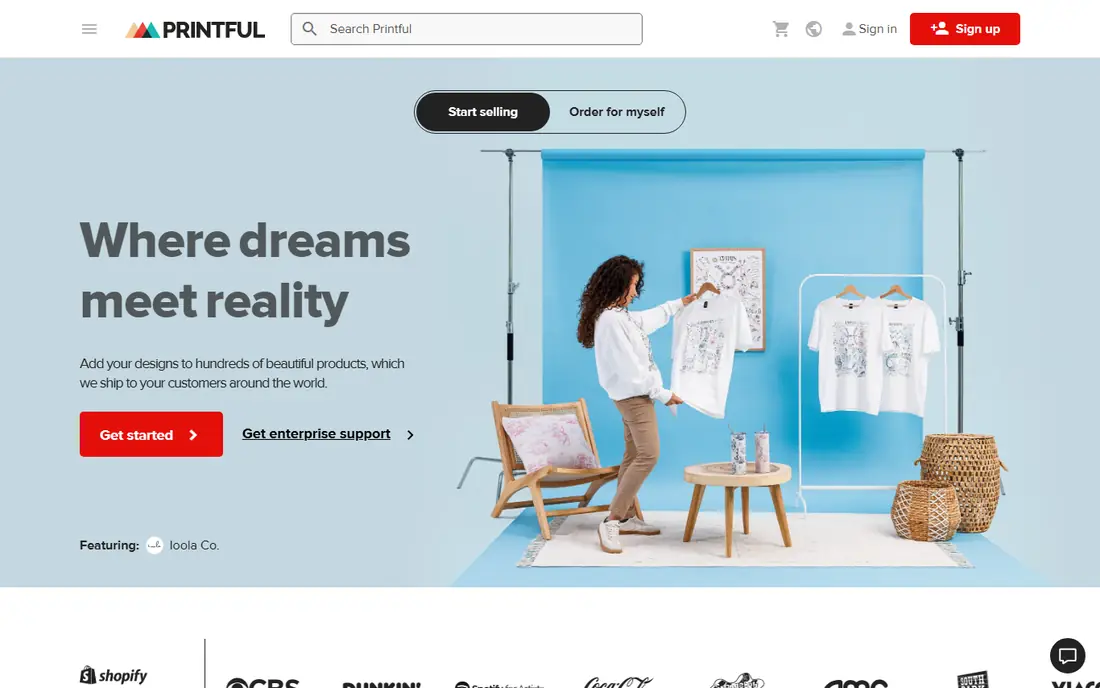
Printful suits a seller who cares about how every parcel looks when it arrives. Because it runs its own fulfillment centers, quality and branding tend to stay more consistent than on a brokered network. You can add custom packing slips and, on some products, branded packaging, which helps a small brand feel more finished.
The trade-off is cost on certain items. Printful offers a free plan, with a paid Growth plan that cuts product prices, so a high-volume apparel seller may need that plan to match rivals. For a brand-led store, the consistency is often worth the extra check on margins.
- In-house production in many locations
- Strong branding options such as packing slips
- Wide store integrations
- Base costs can be higher than network rivals on some items
- Paid Growth plan is needed for the deepest discounts
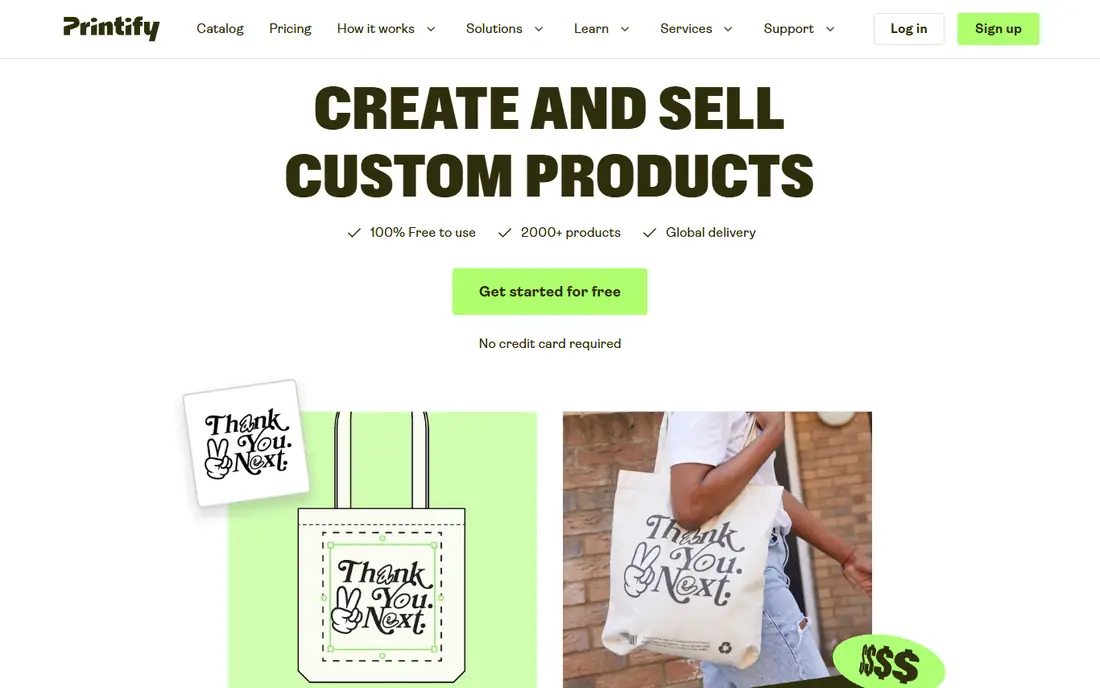
Printify works like a network rather than a single factory. You pick a print provider for each product, which gives you control over base cost and shipping speed. That choice is useful when you sell a wide mix, from shirts and mugs to posters and home goods, and want the lowest workable cost for each item.
The catch is variation. One provider may print and pack better than another, so ordering samples matters more here than on an in-house platform. Sellers who test providers and keep notes tend to get the best results from Printify.
- Very large catalog of more than 2,000 products
- Choice of print providers for many items
- Paid Premium plan cuts costs further
- Quality can vary by provider
- You must manage provider choice and shipping differences
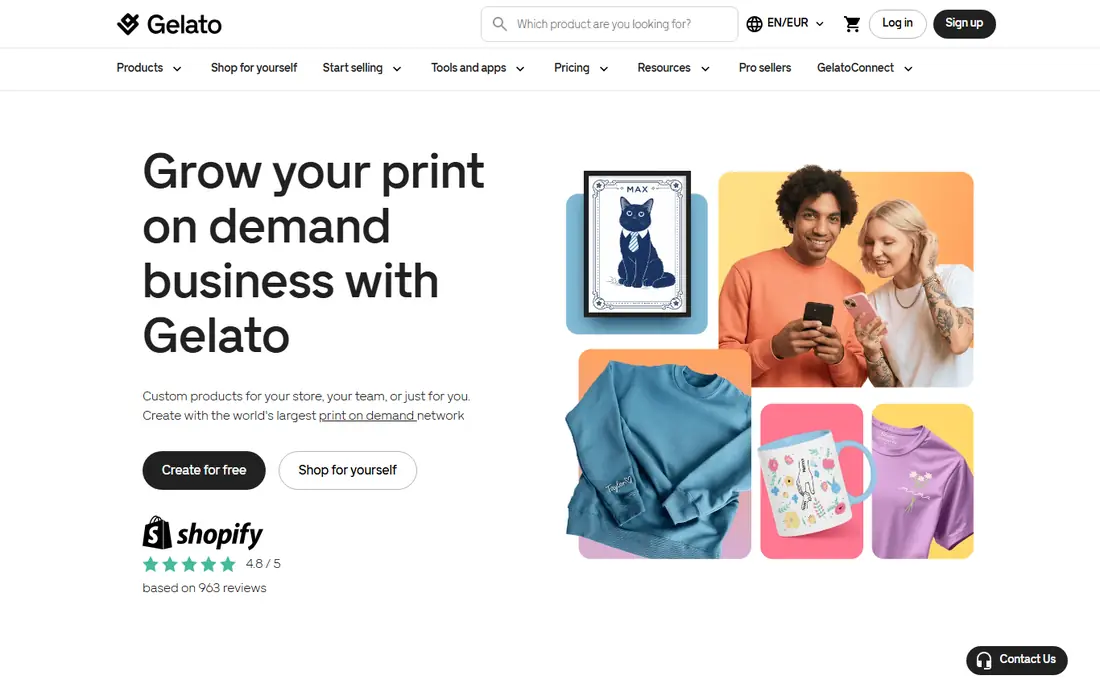
Gelato is built for sellers whose customers live in many countries. Its network routes orders to a print partner near the buyer, which can shorten delivery times and reduce cross-border shipping problems. That is a real advantage for a store that sells worldwide rather than in one market.
You should still check product availability in each country you target, since the catalog is not identical everywhere. For a global store, though, local production often beats shipping every order from one country.
- Large global print network
- Local production can shorten delivery and cut shipping costs
- No setup fee on the free plan
- Catalog and pricing vary by country
- Paid Gelato+ plan is needed for the best discounts
Gooten suits a seller who wants to move past shirts and mugs into home goods, wall art, and lifestyle items. Its network model keeps fixed costs low, because you pay a base cost only when an order arrives. That makes it easy to test new product ideas without buying stock.
As with any network, results depend on the supplier behind each order. Order samples for your best sellers, check print quality and packaging, and keep a short list of products that pass your own standard before you promote them widely.
- No monthly fee on the free plan
- Strong home and lifestyle range
- Order routing across its supplier network
- Less well known for apparel branding
- Seller support and provider quality need sample checks
Spreadconnect, from the Spreadshop group, focuses on apparel fulfillment rather than trying to cover every product type. For a shirt-led brand, that focus can mean faster production and simpler decisions. You pay the base product plus print cost and shipping per order, with an extra charge for each additional print area.
The limit is range. If you plan to sell many home goods or niche items, you may need a second platform beside it. For apparel first, it is a clean and practical option.
- Fast apparel fulfillment from US and European facilities
- No monthly fee to start
- Clear per-print pricing for extra areas
- Narrower focus than full catalog platforms
- Extra print areas add cost per item
Redbubble fits an artist who wants buyers to find the work, rather than building a store from scratch. You upload a design once, and Redbubble applies it to many products and handles production, shipping, and customer service. That simplicity is valuable when your main skill is design, not ecommerce operations.
The trade-off is control. You do not own the storefront experience, and your margin is set within Redbubble rules. Many artists use it beside their own store, as a discovery channel rather than their only income source.
- Marketplace traffic without running your own store
- Simple upload process
- Wide product range for one design
- Lower control over pricing and branding
- Earnings depend on marketplace rules and artist margin settings
Amazon Merch on Demand puts your designs in front of Amazon shoppers without the work of running a store. You upload artwork, set a price, and Amazon handles printing, shipping, and service. Royalties depend on the product and price, so a higher retail price does not always mean a higher profit per sale.
New accounts start in a lower tier with a limited number of live designs, and tiers rise as sales grow. Content rules are also strict, so trademarked phrases and copied artwork can lead to rejections. Designers who follow the rules and build slowly can still find it a useful channel.
- Access to Amazon shoppers
- No upfront stock cost
- Royalty paid per sale
- Tier limits control how many designs you can list at first
- Strict content rules and review times
Fourthwall suits a creator who already has followers and wants merch without building a separate store. It bundles the storefront, checkout, and fulfillment, so a fan can buy without leaving your branded page. There is no monthly fee for physical products, which keeps the start-up cost at zero.
If you do not yet have an audience, the built-in store alone will not bring traffic. In that case, a marketplace or a store with strong search traffic may work better until your audience grows.
- Storefront and checkout included
- No monthly fee for physical products
- Useful for creators with an existing audience
- Less suited to a standalone brand with no audience yet
- Product range is narrower than the largest networks
TeePublic is a straightforward marketplace for designers who want to list art and move on. You create an artist shop, upload designs, and TeePublic handles the rest. It is a low-effort way to test whether a design style sells before investing in your own store.
The limit is the same as other marketplaces. You compete with many designs, and promotion often decides which listings get seen. Treat it as a testing and discovery channel, and keep your best work for channels where you control price and presentation.
- Simple marketplace setup
- Artist storefront included
- Handles printing and shipping for you
- Limited branding control
- Earnings depend on sales volume and marketplace promotion
How we picked these
We compared official product pages, pricing pages, and public catalog information for companies that are live in October 2026 and that print on demand without requiring stock. We kept companies that serve US sellers, offer a clear way to start, and cover apparel or a broader product range. Where a monthly plan exists beside a free plan, we noted it in the write-up rather than presenting the free plan as the full cost.
How to choose a print on demand company
Start with one product and one buyer location, then work out the full cost. Base cost plus shipping plus any platform fee is the number that decides your retail price. A platform that looks cheap on a shirt can lose that advantage once shipping to your main market is added.
Order samples before you scale
A sample shows print sharpness, fabric feel, color accuracy, and packaging quality that a product photo cannot show. Order your top two or three designs on the products you plan to promote, wash a shirt if you sell apparel, and photograph the result. If a provider fails that test, switch providers or platforms before you spend on ads.
Decide how much control you need
An in-house platform such as Printful gives more consistent branding, while a network such as Printify gives more provider choice and often lower base costs. A marketplace gives traffic but less control. Many successful sellers use two options at once, such as a branded store for their main range and a marketplace for discovery.
Protect your margins
Set a retail price that leaves room for returns, discounts, and ad costs, not just the base cost. Check shipping costs for your top buyer countries, and watch for extra print area charges. If a product only works at a price your buyers will not pay, drop it and test another item rather than selling at a loss.
Frequently asked questions
Which print on demand service is best for beginners?
Printful or Printify are good first choices, because both offer a free plan, store integrations, and a wide catalog. Printful suits brand-led stores, while Printify suits sellers who want the lowest base cost and provider choice.
What is the best print on demand company for t-shirts?
Printful, Printify, and Spreadconnect all work well for t-shirts, but the best choice depends on your priorities. Choose Printful for consistent branding, Printify for provider choice and cost, and Spreadconnect for fast US and European apparel fulfillment.
Is print on demand free to start?
Yes, most platforms listed here offer a free plan, and you pay a base cost plus shipping only when a customer orders. Paid plans can cut base costs, but they are optional for a new seller testing an idea.
How much profit can you make per print on demand sale?
Profit depends on base cost, shipping, retail price, and any platform or payment fees. Always work out one real product in full before setting a price, and leave room for returns and promotions.
Do I need my own website for print on demand?
No. Marketplaces such as Redbubble, TeePublic, and Amazon Merch on Demand let you sell without your own store. A branded store gives more control, but it also means you must bring your own traffic.
Sources
See where you really rank - block by block
ProMapRanker scans Google Maps across a grid of your service area. Simple monthly plans from $19, white-label on every plan.
Start freeKeep reading
 twitch alternatives
Twitch Alternatives in 2026
Explore the best Twitch alternatives in 2026 for live streaming, with free platforms, monetisation options, audiences, chat tools, and tips for new streamers.
Read → firebase alternatives
Best Firebase Alternatives in 2026
Looking for Firebase alternatives? We compare 9 backend platforms for auth, databases, realtime, storage, functions, self-hosting, and pricing for your app.
Read → companies with best work life balance
Companies With Best Work Life Balance in 2026
See companies with best work life balance in 2026, ranked by employee ratings, with flexible work options, benefits, and what to check before applying.
Read →