 ProMapRanker
Best Platforms to Learn Skills in 2026


Career certificates and structured courses · Pricing starts at: $59 per month
Key takeaways
- Coursera and edX suit learners who want university or company credentials, while Udemy suits a single practical skill bought once.
- Khan Academy and the free tiers on several platforms make it possible to start without paying, so test a course before you commit to a subscription.
- Creative learners get more from Skillshare and MasterClass, while Codecademy, DataCamp, and Pluralsight serve people who need hands-on technical practice.
- Certificates vary in weight, so check what an employer or client in your field actually values before paying for a paid certificate.
- Our pick for most people is Coursera for structured career learning, with Khan Academy as the free starting point for foundations.
Quick comparison
| Pick | Great for | Pricing starts at | Free tier | |
|---|---|---|---|---|
| Coursera | Career certificates and structured courses | $59 per month | Yes | Visit |
 Udemy | One-off practical skills | See website | Yes | Visit |
 edX | University courses and verified certificates | Free | Yes | Visit |
 LinkedIn Learning | Workplace skills tied to a profile | See website | Free trial | Visit |
 Skillshare | Creative project classes | See website | Free trial | Visit |
 Khan Academy | Free academic foundations | Free | Yes | Visit |
 Codecademy | Interactive coding practice | See website | Yes | Visit |
 DataCamp | Data and AI skills | See website | Yes | Visit |
 Pluralsight | Structured tech skill paths | See website | Free trial | Visit |
 MasterClass | Learning from well-known practitioners | See website | No | Visit |
The best platforms to learn skills
These ten platforms cover career change, creative work, coding, and school-level foundations. Start with your goal, then pick the format that keeps you finishing courses.
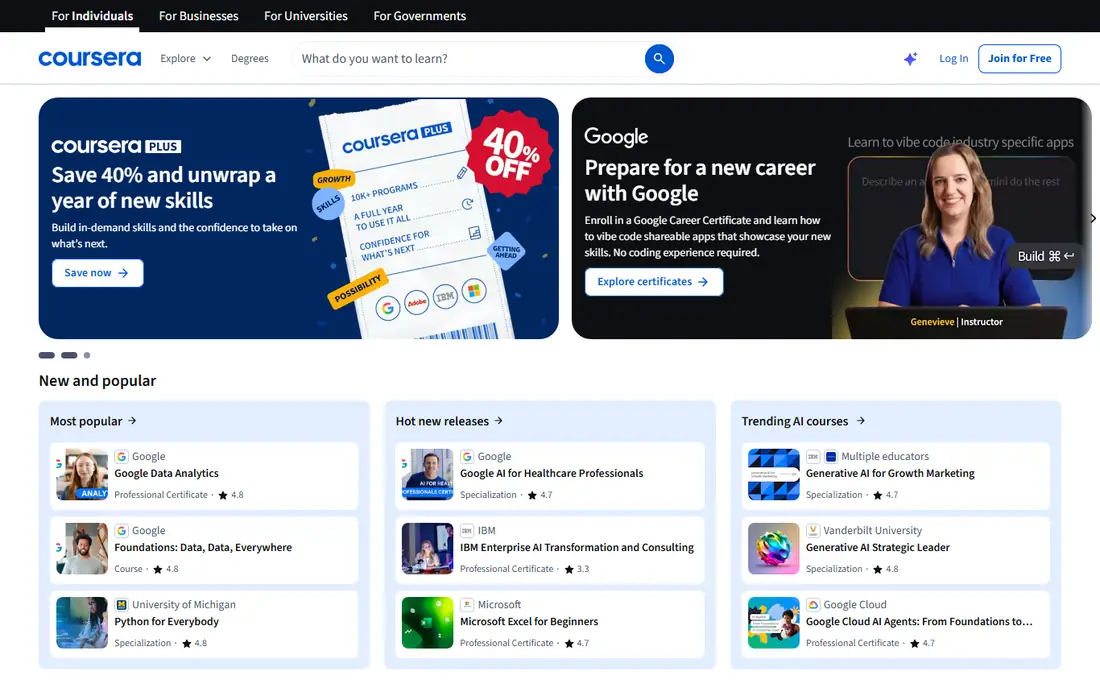
Coursera works best when you want a clear path rather than a pile of unrelated videos. Its courses come from universities and companies, and many lead to professional certificates or degree-related programs. That structure helps if you are changing roles or need proof of study for an employer.
The catch is cost and commitment. Free audit access often covers viewing lessons, while graded assignments and certificates sit behind payment. Coursera Plus is listed at $59 per month in recent comparisons, so check the current price on the pricing page before you sign up. If you finish one focused program, the value is clear. If you browse without a plan, a subscription can quietly run on.
- Courses from universities and companies
- Structured programs and professional certificates
- Audit access on many courses
- Paid certificates and graded work add cost
- Longer programs need steady time each week
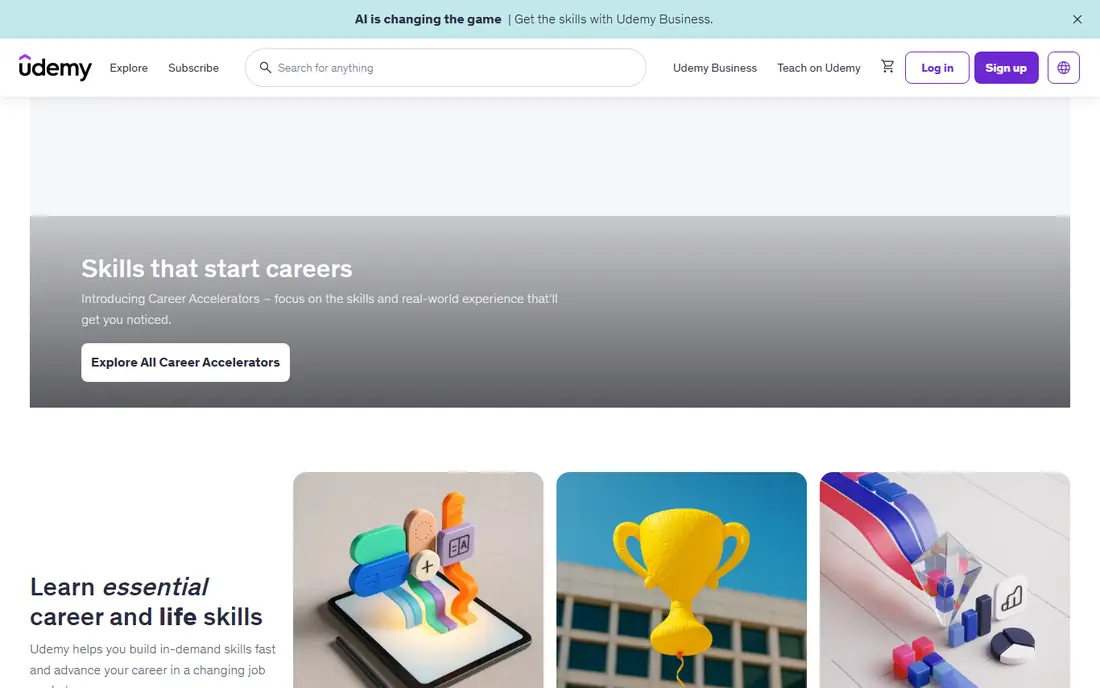
Udemy is the pick for a single, concrete task, such as learning a spreadsheet tool, a photo editor, or a presentation skill. You buy a course once and return to it when you need it, which suits people who dislike subscriptions. The catalog is huge, so previews, recent reviews, and the course outline matter more than the headline rating alone.
Quality is the honest trade-off. Courses are made by many independent instructors, so two courses on the same topic can differ a lot. Watch the free preview, check when the course was last updated, and look for a course that matches your level. A small number of free courses also exist, which is a useful way to test an instructor.
- Very wide course catalog
- Pay once per course
- Lifetime access to purchased courses
- Quality varies by instructor
- Sale prices change often
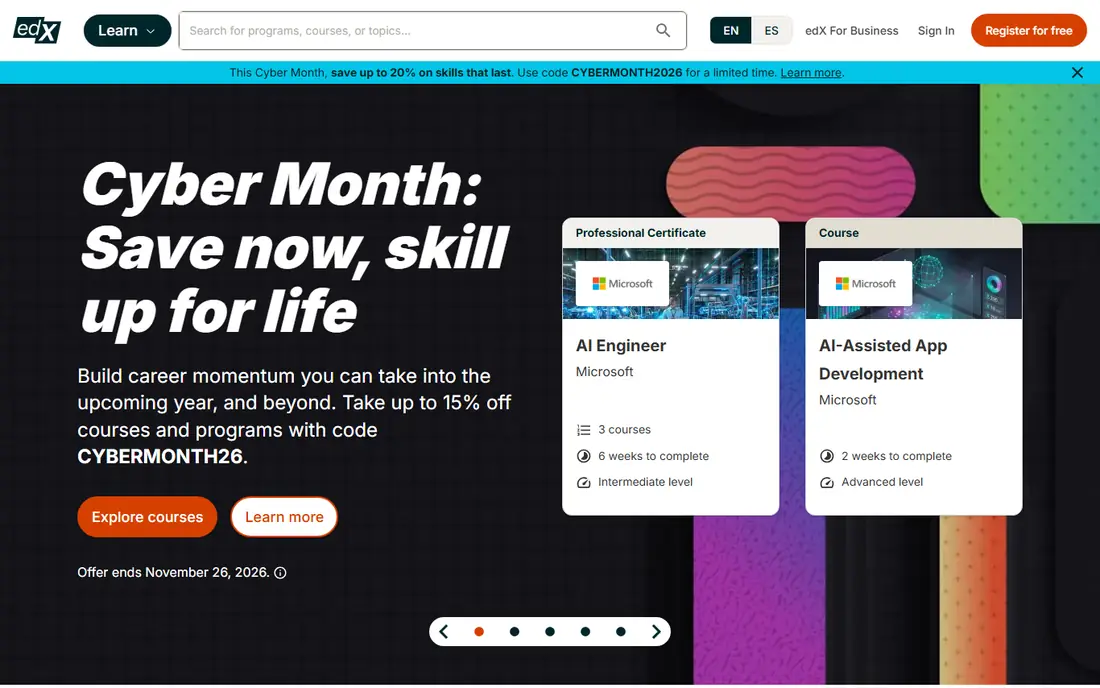
edX suits learners who want academic depth and are comfortable with reading, assignments, and a slower pace. Many courses can be audited for free, which is ideal if you want knowledge without a certificate. Verified certificates and program tracks cost more, with prices that vary by course.
This is a strong second choice alongside Coursera, especially for subjects such as computer science, economics, and the sciences. The workload can be heavier than short video libraries, so it fits people who like structured study. Check the course page for audit availability and certificate pricing, since both vary.
- University-backed courses
- Free audit on many courses
- Verified certificates and microcredentials
- Verified certificates cost extra
- Some courses follow fixed schedules
LinkedIn Learning is built for workplace skills: management, communication, software tools, and role-based paths. Courses tend to be short and practical, which helps when you need a skill for a current job rather than a full qualification. Completed courses can be added to a LinkedIn profile, which is useful for visibility with recruiters.
The limit is depth. These are completion certificates, not graded university credentials, so they carry less weight in fields that require formal proof. A free trial lets you test the library, but confirm the current monthly price and trial length on the site before you start, since both change by region.
- Short professional courses and learning paths
- Certificates can be shown on a LinkedIn profile
- Strong business and software coverage
- Certificates are completion-based
- Less academic depth than university platforms
Skillshare is the creative counterpart to the career platforms above. Classes focus on making something, such as a design portfolio piece, a short video, or a set of illustrations, rather than passing an exam. Lessons are short, and the project format helps learners who learn by doing.
It is not the right place for a formal credential. If your goal is a portfolio or a new creative habit, that trade-off is fine. If you need a certificate an employer will check, pair Skillshare with a platform such as Coursera or edX. Check the current trial and annual price on the pricing page before subscribing.
- Project-based creative classes
- Strong design, illustration, and photography coverage
- Short lessons
- Certificates carry limited hiring weight
- Less suited to formal technical credentials
Khan Academy remains the best free starting point for foundations in math, science, reading, and related school-level subjects. Lessons are short, practice is built in, and progress tracking helps learners see gaps. For adults returning to study, it is a low-pressure way to rebuild basics before tackling a paid course.
The limit is credential value. Khan Academy does not issue formal certificates in the way Coursera or edX do, and its catalog does not cover every professional topic. Use it as a foundation builder, then move to a paid platform when you need a certificate or an advanced track.
- Completely free core lessons
- Practice exercises and mastery tracking
- Strong math and science coverage
- No formal certificates
- Limited advanced professional courses
Codecademy suits people who want to learn by writing code, not just watching someone else write it. Lessons run in the browser, with exercises that check your work as you go. Guided paths cover languages and career tracks, which helps beginners avoid the problem of not knowing what to learn next.
A free basic tier covers introductory material, while fuller paths and projects sit behind paid plans. Confirm the current plan prices on the site, since Codecademy has offered both monthly and annual billing. If you already know the basics, a project-based course elsewhere may suit you better.
- Interactive coding in the browser
- Guided paths for languages and careers
- Free basic tier
- Paid plans needed for full paths and projects
- Less suited to non-coding topics
DataCamp focuses on data work, including Python, R, SQL, and newer AI-related topics. Its interactive exercises suit learners who want steady practice with data rather than long lectures. Skill tracks and career tracks give structure, which is helpful for people moving into analyst or data roles.
The focus is also its limit. It does not cover design, business, or general creative skills, so it works best as a specialist tool alongside a broader platform. Use the free tier to test the exercise style, then check paid pricing if you want full tracks and certifications.
- Interactive data exercises
- Courses in Python, R, SQL, and AI topics
- Career and skill tracks
- Narrower than general platforms
- Advanced work may need real projects outside the platform
Pluralsight is built for technology teams and individual developers who want a structured path through software, cloud, and IT topics. Skill assessments help you find your starting level, and paths order courses in a sensible sequence. That structure is its main advantage over buying single courses at random.
It is less useful for non-technical learners, and it is a subscription product, so it pays to use it steadily. A trial period lets you test the assessment and path features. Teams often use Pluralsight for staff training, while individuals use it to prepare for a new technical role.
- Structured technology paths
- Skill assessments
- Strong software and IT coverage
- Geared to technical learners
- Pricing is subscription-based
MasterClass is different from the rest of this list. Its lessons are taught by well-known practitioners and focus on craft, ideas, and inspiration rather than graded assessment. That makes it a good choice for creative writing, cooking, music, and similar topics where watching a skilled practitioner think through their work is valuable in itself.
It is not a credential platform, and it does not offer the practice exercises found on Codecademy or DataCamp. Treat it as inspiration and technique, not as a qualification. Since there is no free plan, use the money-back terms listed on the site and confirm the current annual price before joining.
- Engaging lessons from well-known practitioners
- Strong creative and lifestyle coverage
- High production quality
- No free plan
- Limited graded practice and formal credentials
How we picked these
We compared official course catalogs, pricing pages, free tiers, and certificate options, plus app store listings and public course descriptions. We favored platforms that are live in October 2026, cover a clear learner goal, and state their pricing and certificate terms openly. We left out platforms that had closed, pivoted away from learning, or could not be verified as current.
How to choose the right platform for your goal
Start with the outcome, not the brand. If you need a certificate for a job application, shortlist Coursera and edX and check which one offers a program in your exact field. If you need one skill this week, Udemy or a free Khan Academy sequence will usually get you there faster and cheaper than a subscription.
Match the format to how you actually learn
Video-only learning suits some people, but many learners finish more when practice is built in. Coders and data learners should favor Codecademy, DataCamp, or Pluralsight, where exercises check your work. Creative learners should favor Skillshare or MasterClass, where projects and examples carry the lesson.
Test before you pay
Use free audits, free tiers, and trials to check three things: the teaching style, the time each lesson needs, and whether you return after a few days. A platform that looks good on day one but feels like a chore on day four is the wrong pick, even if the catalog is large. Set a calendar reminder before any trial ends so you are not charged by accident.
Plan for finishing
Pick one course or path at a time, set two or three study slots per week, and pair learning with a real task at work or in a personal project. Certificates help on a profile, but a finished project or a work sample usually convinces a hiring manager more than a list of half-finished courses.
Frequently asked questions
What is the best app to learn new skills?
The best app depends on the skill. Coursera suits career certificates, Udemy suits a single practical skill, Skillshare suits creative projects, and Khan Academy suits free foundations. Pick the platform that matches your goal, then test it with a free lesson or trial before paying.
Are free platforms enough to learn new skills?
Free platforms can be enough for foundations and for testing a topic. Khan Academy, free audits on edX, and free tiers on Codecademy and DataCamp cover a lot of ground. Paid certificates, graded work, and full paths usually require payment, so free access is best when you want knowledge rather than proof.
Do online course certificates help with jobs?
Certificates can help, especially when they come from a university or a known company program, but they are not a guarantee of a job. Employers tend to weigh a certificate alongside a portfolio, work samples, and interview performance. Check job listings in your field to see which credentials, if any, are actually requested.
How much do the best platforms to learn skills cost?
Costs range from free to a monthly subscription or a one-off course fee. Coursera Plus is listed at $59 per month in recent comparisons, while Udemy charges per course and Khan Academy is free. Always check the vendor pricing page, since prices and trial terms change by region and over time.
Is Skillshare or MasterClass better for creative skills?
Skillshare is better for project-based practice with short lessons and a portfolio outcome. MasterClass is better for inspiration and technique from well-known practitioners, with high production quality. Many creative learners use Skillshare to practice and MasterClass to get ideas, rather than choosing only one.
Can I learn coding for free?
Yes, for the basics. Codecademy, Khan Academy, and DataCamp all offer free introductory material, and free audit options exist on larger platforms. Paid plans add full paths, projects, and certificates, which matter more once you move past the basics and want structured progress.
Sources
See where you really rank - block by block
ProMapRanker scans Google Maps across a grid of your service area. Simple monthly plans from $19, white-label on every plan.
Start freeKeep reading
 who has best internet service
Who Has the Best Internet Service in 2026
Who has best internet service for US homes? We compare fiber, cable, fixed wireless and satellite providers on speed, price, availability and terms today.
Read → which survey tool has the best analytics
Which Survey Tool Has the Best Analytics in 2026
Find which survey tool has the best analytics in 2026, comparing Qualtrics, SurveyMonkey, Typeform, Alchemer, and more on reports, text, and stats today.
Read → which streaming service has the best movies
Which Streaming Service Has the Best Movies in 2026
Answering which streaming service has the best movies, with Netflix, Max, Criterion and more compared on libraries, prices and free options in this guide.
Read →