 ProMapRanker
Best Platform to Sell Online Courses in 2026

Key takeaways
- Teachable, Thinkific, and Podia are the easiest hosted platforms for a first paid course.
- Kajabi suits creators who want courses, email, and a website in one system, but it costs far more.
- LearnWorlds suits interactive courses with assessments, while Udemy suits reach over control.
- Gumroad and Payhip are best for validating a course idea fast, before committing to a monthly plan.
Quick comparison
| Pick | Great for | Pricing starts at | Free tier | |
|---|---|---|---|---|
 Teachable | First paid course | Free | Yes | Visit |
 Thinkific | Multi-course creators | Free | Yes | Visit |
 Kajabi | Full creator business | See website | No | Visit |
 Podia | Courses, downloads, and memberships | Free | Yes | Visit |
 LearnWorlds | Interactive courses and assessments | See website | No | Visit |
 Udemy | Marketplace reach | See website | No | Visit |
 Gumroad | Fast digital product sales | Free | Yes | Visit |
 Payhip | Low-cost course sales | Free | Yes | Visit |
 Mighty Networks | Courses plus community | See website | No | Visit |
 Skool | Community-based courses | $99 per month | No | Visit |
The best platforms to sell online courses
We compared hosting, checkout, transaction fees, student tools, and pricing. All ten platforms below let you sell a course today, and we note where a free plan carries a per-sale fee.
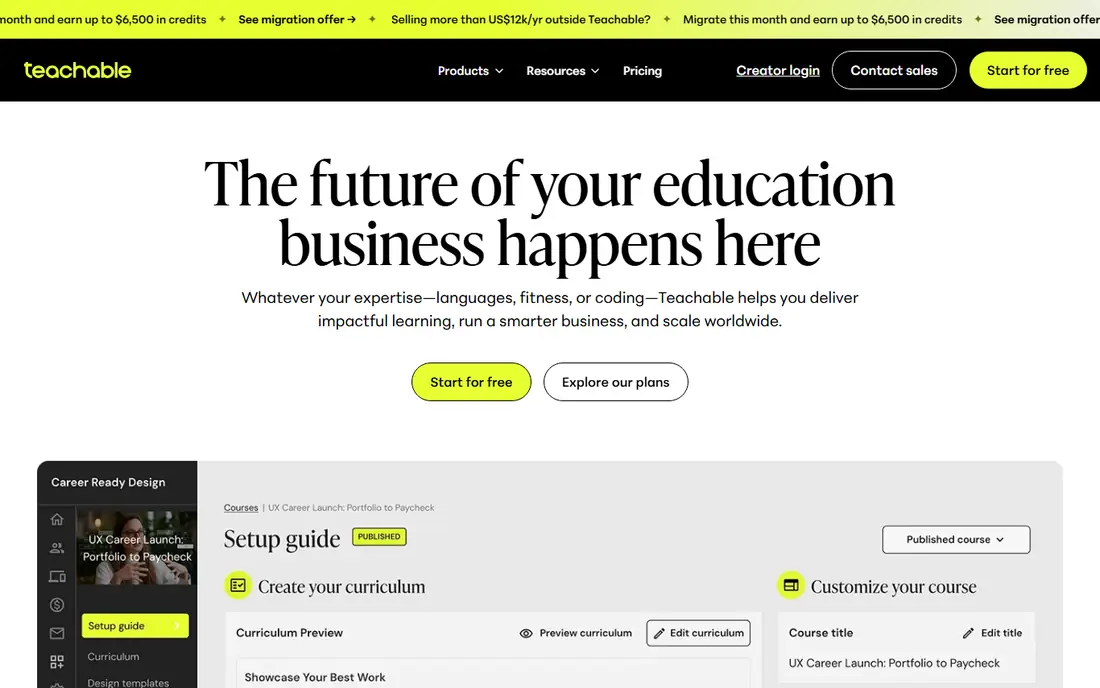
Teachable is the simplest path from an idea to a course you can charge for. It hosts your videos and lessons, provides a checkout page, and manages student access, so you do not need to build a website or connect a separate payment system to start. The free tier lets you publish and sell before committing to a subscription, which is useful for testing demand.
The catch is the per-sale fee on lower tiers. A cheap monthly plan can cost more than a higher plan once sales grow, because the platform takes a share of each sale on top of card processing. Price your expected sales against the next tier before you settle, and check whether the fee drops to zero on a paid plan.
- Easy course setup
- Hosted checkout
- Handles payments and student management
- Lower tiers take a per-sale fee
- Design control is limited
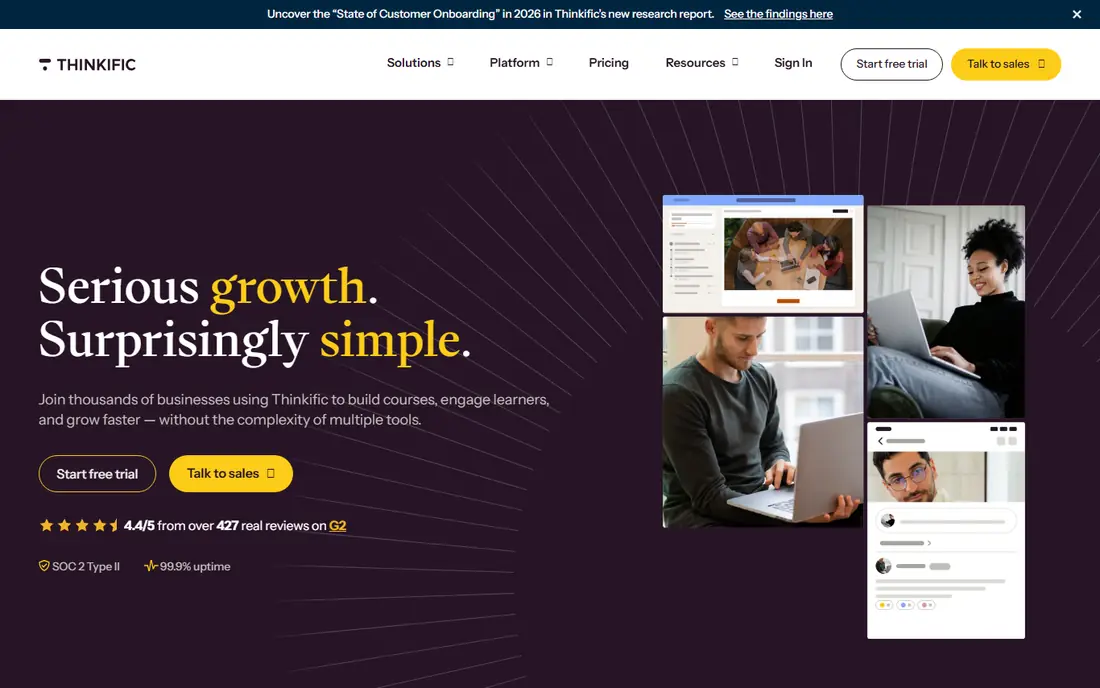
Thinkific suits educators who plan to sell several courses over time. The free tier covers a first course, and paid plans allow unlimited courses, with no platform transaction fee when you use its own payment system. Student tools, drip content, and course structuring are straightforward, which helps teachers who want to focus on lessons rather than setup.
Higher plans are needed for certificates, assignments, memberships, and payment plans, and removing Thinkific branding also needs a higher tier. That makes the entry price only part of the story if you need those features. For a multi-course catalog without a marketplace cut, Thinkific is a strong, predictable choice.
- Free tier for a first course
- No platform fee on paid plans with its own payments
- Unlimited courses on paid plans
- Certificates and memberships need higher plans
- Branding removal needs a higher plan
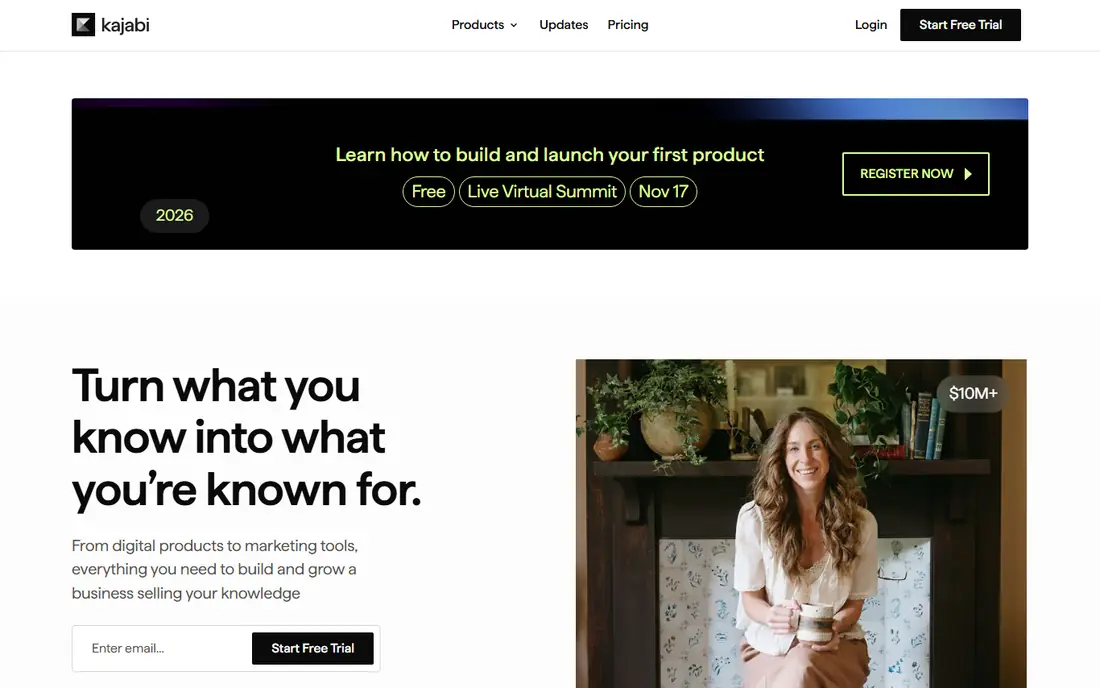
Kajabi is not just a course host. It combines courses, a website, email marketing, landing pages, and funnels in one system, which can replace several separate tools for a full-time creator business. When you use its own payment system, it takes no platform share of sales, so high-volume sellers keep more of each sale after card processing.
The entry price is far higher than Teachable or Thinkific, so it only makes sense when you will use the wider system and sell at volume. For a single course or a first launch, a cheaper host plus a separate email tool will usually cost less. Choose Kajabi when the whole business lives on one platform.
- Courses, email, website, and funnels in one system
- No platform cut with its own payments
- Strong marketing tools
- Highest entry price here
- Overkill for a single course
Podia is a good fit for creators who sell more than courses. You can offer a course, a download, and a membership from one storefront, with email tools included, which keeps a small product business tidy. Setup is simple, and the interface stays friendly for sellers who do not want to manage plugins or code.
The lower paid plan takes a per-sale fee, so sellers with steady volume should price the higher plan with no fee. Course features are also simpler than LearnWorlds, with less depth for assessments and interactive lessons. For mixed digital products, Podia is a practical all-rounder.
- Sell courses, downloads, and memberships together
- Simple storefront
- Email tools included
- Lower plan takes a per-sale fee
- Course features are simpler than LearnWorlds
LearnWorlds stands out for courses that need more than video playback. Interactive video, quizzes, assignments, and certificates help teachers check understanding and keep students engaged, and the student experience feels polished. That depth suits training providers, coaches, and educators who sell structured programs.
The entry plan charges a flat fee per paid enrollment, which hurts on low-priced courses and barely matters on expensive ones. Higher plans remove that fee, so the right plan depends on your course price and sales volume. Run the numbers on your own prices before choosing a tier.
- Interactive video and assessments
- Certificates
- Strong student experience
- Entry plan charges a per-enrollment fee
- Pricing varies by billing period
Udemy is a marketplace, not a hosted storefront you fully control. That difference brings reach: students already browse Udemy for courses, so a new instructor can find buyers without building an audience first. Hosting, checkout, and student management are handled for you, which lowers the technical barrier.
The trade-off is revenue share and control. Udemy keeps a large share of sales it brings through its marketplace, and a much smaller share when you bring the student yourself through your own link. Prices and discounts are also shaped by Udemy promotions. Use Udemy for reach and discovery, and use a hosted platform when you want full price control.
- Large built-in audience
- Handles hosting and checkout
- Good for first-time exposure
- Marketplace takes a large share of sales it brings
- Pricing and discounts are controlled by Udemy
Gumroad is the fastest way to sell a course file or a simple video course without a monthly bill. You can list a product, share a link, and take payments, with tax handling on many sales. That simplicity suits a first launch, a workshop recording, or a small course sold alongside other digital products.
The per-sale fee is high compared with a paid hosted platform, and course structure is limited, with no deep student progress or assessment tools. Once sales become steady, a hosted platform with a monthly plan and no per-sale fee will usually cost less. Start on Gumroad to validate, then move when volume justifies it.
- Free to start
- Simple checkout
- Handles tax on many sales
- Flat per-sale fee plus processing
- Limited course structure
Payhip is a strong low-cost alternative to Gumroad for selling courses and downloads. The free plan lets you list unlimited courses with no monthly fee, and the paid plan lowers the per-sale fee while adding more features. The storefront is simple, and tax handling on many sales reduces admin work for solo sellers.
Course tools are basic compared with Thinkific or LearnWorlds, so it suits simple video courses and downloads rather than structured programs with assessments. For a creator who wants to start free and keep costs low, Payhip is one of the best first steps in this list.
- Free plan with no monthly fee
- Simple storefront
- Handles tax on many sales
- Paid plan still takes a small per-sale fee
- Course tools are basic
Mighty Networks suits creators who sell learning inside a community, not just a set of videos. Members can discuss lessons, join events, and follow a feed, which helps retention for cohort courses, memberships, and coaching programs. The mobile experience keeps community and course content in one place.
The platform costs more than a simple course host, and full course features need a paid plan, so it is not the cheapest way to sell a single standalone course. Choose it when community interaction is part of the product, and when students will return for discussion as well as lessons.
- Courses inside a community
- Member discussions and events
- Mobile app for members
- No free plan for full courses
- Pricing depends on plan and features
Skool combines a community, a course area, and a calendar in a simple layout that many creators find easy to run. Gamification, such as member levels, can encourage participation, and the flat monthly price makes budgeting clear. For cohort programs and paid communities with lessons, that simplicity is a real advantage.
The price is high for a single course with no community element, and advanced course tools such as detailed assessments are thinner than on LearnWorlds. If your course is really a community with lessons attached, Skool fits well. If it is a standalone video course, a cheaper host will serve you better.
- Simple community and course setup
- Gamification for engagement
- Clear monthly price
- Higher price for a single course
- Fewer advanced course tools than LearnWorlds
How we picked these
We compared official pricing pages, transaction fee disclosures, and course features, and we kept only platforms that let you sell a course today. We used See website where pricing depends on billing period or plan, and where published figures conflicted across recent sources. We left out learning systems built only for internal company training, since they do not fit public course sales.
How to choose a course platform
Start with your course shape. A single video course fits Teachable, Thinkific, Podia, Gumroad, or Payhip. A structured program with quizzes fits LearnWorlds. A community program fits Mighty Networks or Skool. A full creator business with email and funnels fits Kajabi, if the price is justified by volume.
Price the per-sale fee, not just the monthly fee
Multiply your expected sales by the platform fee, then add card processing, and compare that total with the next plan up. A cheap plan with a per-sale fee can cost more than a pricier plan with no fee once sales grow. Also check refund handling, tax support, and whether you can export your student list if you move later.
Frequently asked questions
What is the best platform to sell online courses for beginners?
Teachable, Thinkific, and Payhip are strong beginner picks, because they offer free tiers and simple setup. Gumroad is also good for a first launch. Start with a free plan, sell a small version of your course, and move to a paid plan only when sales justify it.
What is the best platform for selling online courses with no transaction fees?
Thinkific, Kajabi, and Podia offer no platform transaction fees on their higher plans when you use their own payment systems, while Payhip charges a small fee even on its paid plan. Card processing still applies on every platform. Check the fee terms on the pricing page before you choose.
Can I sell online courses without a website?
Yes, all hosted platforms in this list provide a storefront, checkout, and course delivery, so you do not need a separate website to start. A custom domain is usually available on paid plans. A separate website helps later for branding and search, but it is not required for a first sale.
What is the best online platform to sell courses and build a community?
Mighty Networks and Skool are built for courses plus community, with discussions, events, and member feeds. Podia also supports memberships alongside courses. Choose Mighty Networks or Skool when community interaction is central to the course, not just an extra.
Is Udemy or Teachable better for selling courses?
Udemy is better for reach, since students already browse its marketplace, but it takes a large share of marketplace sales. Teachable is better for control, since you set prices and keep more of each sale on paid plans. Many instructors use both: Udemy for discovery and a hosted platform for their own audience.
Sources
See where you really rank - block by block
ProMapRanker scans Google Maps across a grid of your service area. Simple monthly plans from $19, white-label on every plan.
Start freeKeep reading
 best tour operator software
Best Tour Operator Software in 2026
Compare the best tour operator software for bookings, channel management, waivers and payments, with pricing models for day tours and multi-day trips.
Read → best time clock app for small business
Best Time Clock App for Small Business in 2026
We compare the best time clock app for small business options, with free plans, GPS clock ins, scheduling and payroll links for hourly teams and payroll help.
Read → best test automation tools
Best Test Automation Tools in 2026
Compare the best test automation tools, from Playwright and Selenium to Cypress, Katalon and BrowserStack, with prices, languages and best uses explained.
Read →