 ProMapRanker
Best Plant Identifier App in 2026


All-round identification and care · Pricing starts at: $39.99 per year
Key takeaways
- PictureThis is our pick for most gardeners, with fast identification plus care, diagnosis, and toxicity notes.
- PlantNet and Seek are the best free options, with PlantNet suited to wild plants and Seek suited to families and beginners.
- No app is perfect on close look-alikes, so use several photos and confirm before acting on an identification.
- Never eat a wild plant based on an app result alone, and check toxicity for pets and children with a second source.
Quick comparison
| Pick | Great for | Pricing starts at | Free tier | |
|---|---|---|---|---|
| PictureThis | All-round identification and care | $39.99 per year | Yes | Visit |
 PlantNet | Free scientific identification | Free | Yes | Visit |
 Seek by iNaturalist | Free family-friendly identification | Free | Yes | Visit |
 PlantSnap | Large species catalog | $21.99 per year | Yes | Visit |
 Planta | Identification plus care reminders | $35.99 per year | Yes | Visit |
 Greg | Simple watering and care | $29.99 per year | Yes | Visit |
 Flora Incognita | Accurate wild plant identification | Free | Yes | Visit |
 LeafSnap | Simple leaf-based identification | Free | Yes | Visit |
 iNaturalist | Community-confirmed identification | Free | Yes | Visit |
The best plant identifier app
We compared apps by identification coverage, accuracy signals, care features, diagnosis, toxicity information, price, and free access. All are live in October 2026 on iOS or Android, with some variation by region.
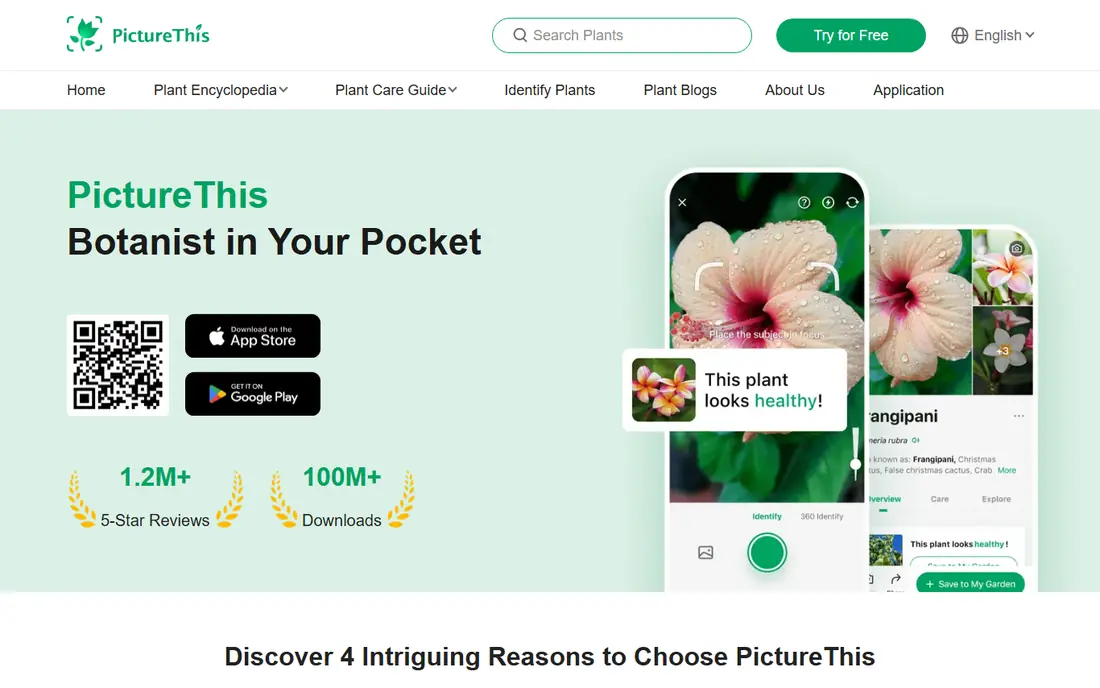
PictureThis is the easiest all-round choice for houseplants and garden plants. Point the camera at a plant, get a name, and then see care advice, watering guidance, and toxicity notes in the same app. Diagnosis tools also help when leaves show spots, yellowing, or pests.
The free tier is limited, and the premium price can differ by store and region, so check the price shown in your app store before subscribing. Some users also find the upgrade prompts frequent. If you identify plants often and want care help in one place, the paid plan is still good value.
- Fast photo identification
- Care schedules
- Diagnosis and toxicity notes
- Premium price varies by region
- Free tier limits identifications
- Upsells can be pushy
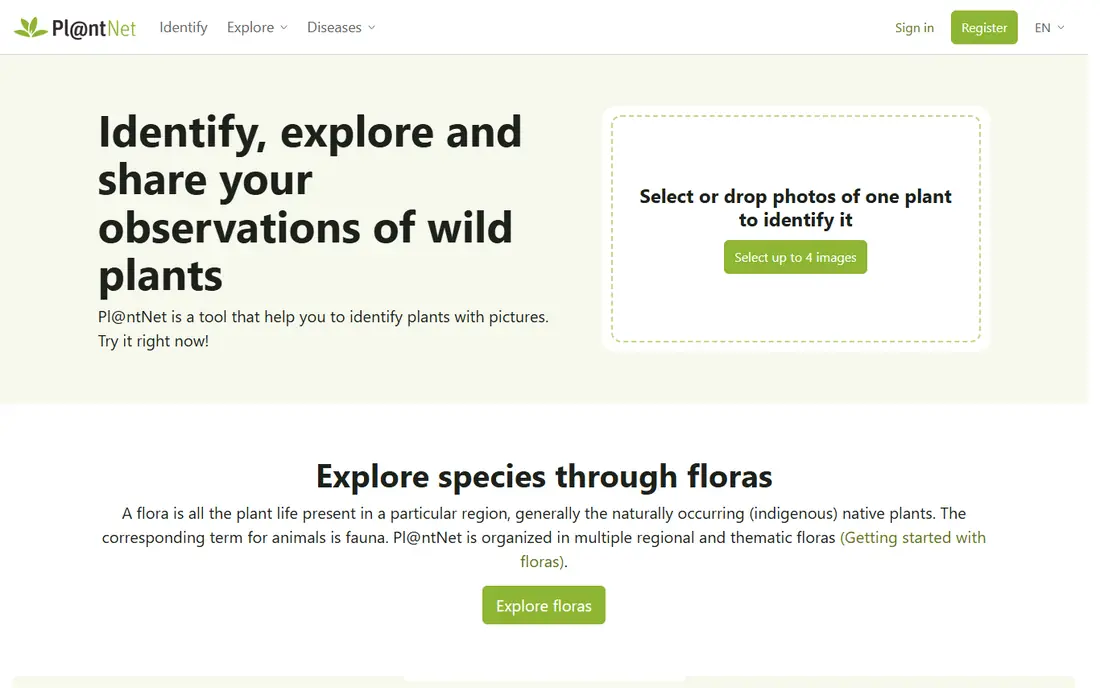
PlantNet is the best free option for wild plants and for users who like a scientific approach. It is built as a citizen science project, with observations contributed by users and reviewed by the community. Showing several possible matches with confidence signals helps you judge a close call.
It is less focused on houseplant care than PictureThis or Planta, and the interface can feel technical for beginners. If your main question is what wild plant you saw on a walk, PlantNet is an excellent free starting point.
- Free to use
- Citizen science database
- Confidence scores and multiple suggestions
- Focus on wild flora
- Interface is less polished
- Care features are limited
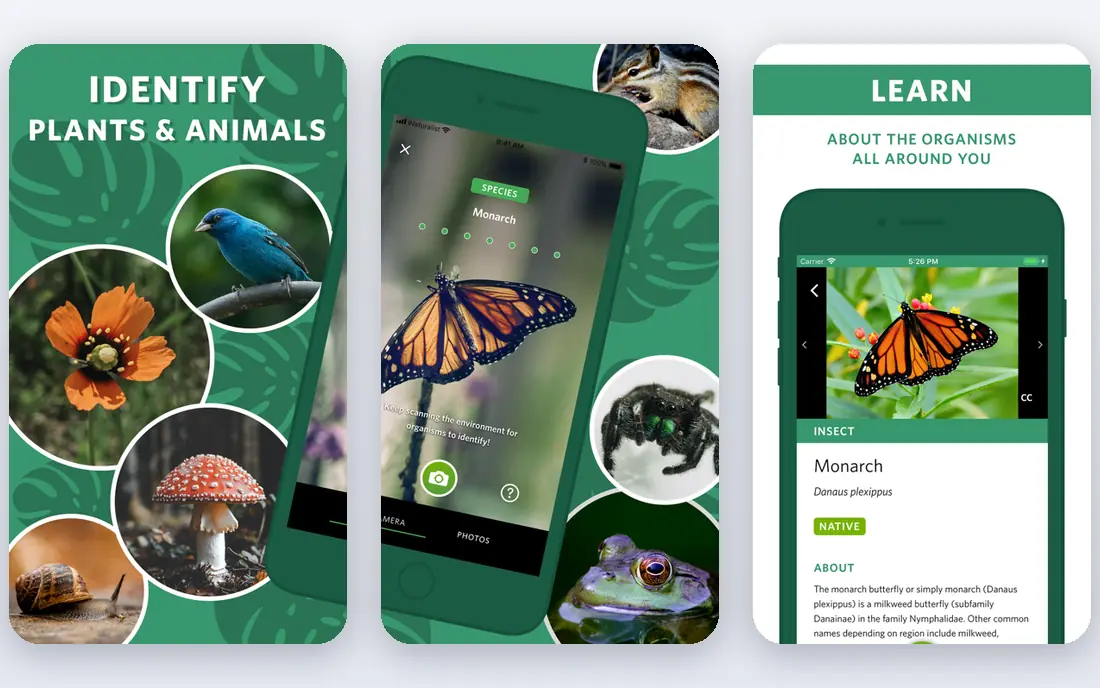
Seek is the friendliest free app for beginners and families. You point the camera at a plant or animal and get a suggestion, with challenges that make learning fun for children. It also covers animals and fungi, which makes a nature walk more interesting.
Accuracy drops on rare plants and close look-alikes, and there is no human expert behind each guess. Use Seek for curiosity and learning, then confirm important identifications in iNaturalist or a field guide. For safety decisions, never rely on Seek alone.
- Free
- Easy camera identification
- Identifies plants, animals, and fungi
- No account needed for basic use
- Less precise on rare species
- No diagnosis or care planner
- Identification is a starting point, not proof
PlantSnap appeals to users who want broad coverage, with a claimed catalog of hundreds of thousands of species. That breadth helps when you travel or encounter plants outside a local guide. Identification is simple: take a photo and review the suggested match.
A large catalog also raises the risk of a close but wrong match, so check photos and descriptions before accepting a result. Care and diagnosis features are more basic than PictureThis. PlantSnap is best as a broad identification tool, paired with a care app if you need reminders.
- Very large claimed catalog
- Global coverage
- Simple photo identification
- Accuracy varies on similar species
- Premium pricing varies
- Care tools are basic
Planta is the pick if care matters more than a one-off identification. After you identify a plant, it builds a care schedule with watering, fertilizing, and other tasks, and reminders adapt to light and season where supported. The light meter helps you place a plant in a suitable spot.
Identification alone is not Planta strongest feature, and full care tools sit behind a paid plan. If you already know most of your plants and mainly need help keeping them alive, Planta is a better fit than a pure identification app.
- Photo identification
- Watering and care reminders that adapt to conditions
- Light meter
- Premium needed for full care features
- Price varies by plan
- Identification is secondary to care
Greg keeps plant care simple. It focuses on watering schedules that adjust for pot size, light, and plant type, which is the task most new plant owners get wrong. The interface is calm and easy to follow, with no clutter from unrelated features.
The free plan covers only a small number of plants, so collectors will need the paid plan. Greg also does little identification or diagnosis compared with PictureThis. Pair it with PlantNet or Seek for identification, and use Greg for daily care.
- Simple plant care
- Watering advice based on pot, light, and plant type
- Clean interface
- Free plan covers only a few plants
- Identification is limited
- Diagnosis is not the focus
Flora Incognita is a research-backed app for wild plant identification, with strong accuracy claims for plants in its supported regions. It suits walkers, students, and naturalists who want a reliable name for a wild flower or leaf. The app is free, which makes it easy to try alongside PlantNet.
Coverage depends on region, so it may be less useful outside its main areas. It also lacks the care reminders and diagnosis tools of consumer garden apps. For wild plant identification in a supported region, it is one of the best free choices.
- Free
- Research-backed identification
- Strong for wild plants in supported regions
- Regional coverage varies
- No houseplant care planner
- Interface is academic in style
LeafSnap is a simple option when you have a leaf photo and want a quick name. It is free with ads, and the focus on leaves makes it approachable for beginners who do not know botanical terms. That simplicity suits occasional use on walks or in a garden.
It does not match the depth of PictureThis for care, nor PlantNet for scientific review. Ads can also interrupt the free experience. Use LeafSnap as a quick second opinion, and confirm a result with photos of flowers, bark, or the whole plant where possible.
- Free with ads
- Leaf-focused identification
- Simple for beginners
- Ad-supported free use
- Accuracy varies
- Fewer care and diagnosis features
iNaturalist is the best choice when confirmation matters. You post an observation, the app suggests a name, and community members can agree or correct it. Over time, observations can reach research grade, which is valuable for citizen science and for tricky identifications.
That confirmation takes time, so it is not the fastest app for an instant answer. It also lacks the care planners of garden apps. Use Seek for a fast guess on a walk, then post to iNaturalist when you want a human-checked identification.
- Free
- Community experts can confirm identifications
- Large observation database
- Research-grade confirmation takes time
- Less focused on garden care
- Interface suits enthusiasts
How we picked these
We compared official app store listings, product pages, and public pricing summaries for apps live in October 2026. We favored apps with a clear identification feature, a free or low-cost entry point, and distinct strengths for wild plants, gardens, families, or care. We did not claim hands-on testing, and where prices varied by region we used the most commonly listed US figure or noted variation.
How to get a better identification
Take several photos, not just one leaf. Include the whole plant, leaves, flowers or fruit if present, bark for trees, and the setting. A single blurry leaf rarely separates close species, while several clear organs help both AI and human reviewers.
Compare, do not accept blindly
Read the description, check the photos, and look at the confidence or alternative suggestions. If two species look alike, search for the distinguishing feature, such as leaf arrangement or flower shape, before deciding.
Safety first
Never eat a wild plant based on an app identification alone, even if the app calls it edible. Use a field guide, an expert, and multiple sources. For pets and children, check toxicity with a second source, such as a vet or poison control guidance, before allowing contact.
Frequently asked questions
What is the best plant identifier app?
PictureThis is our pick for most people because it combines fast identification with care, diagnosis, and toxicity notes. PlantNet is the best free scientific option, and Seek is the best free family option.
Is there a free plant identifier app?
Yes. PlantNet, Seek, Flora Incognita, and iNaturalist are free, and PictureThis, PlantSnap, and Planta offer free tiers with limits. Free apps usually limit identifications, care features, or show ads.
Can plant apps identify a plant from a leaf photo?
Often, yes for common species, but a leaf alone is less reliable than several photos. Add flowers, fruit, bark, and the whole plant for a better result, and confirm close matches.
Are plant identifier apps accurate?
They are good for common plants and weaker for rare plants and close look-alikes. Treat a result as a strong suggestion, not proof, and confirm safety-critical identifications with another source.
What is the best plant app for plant care?
Planta and Greg are best for care, with Planta offering broader reminders and Greg offering simpler watering advice. PictureThis also combines identification with care schedules for gardeners who want one app.
Sources
See where you really rank - block by block
ProMapRanker scans Google Maps across a grid of your service area. Simple monthly plans from $19, white-label on every plan.
Start freeKeep reading
 twitch alternatives
Twitch Alternatives in 2026
Explore the best Twitch alternatives in 2026 for live streaming, with free platforms, monetisation options, audiences, chat tools, and tips for new streamers.
Read → firebase alternatives
Best Firebase Alternatives in 2026
Looking for Firebase alternatives? We compare 9 backend platforms for auth, databases, realtime, storage, functions, self-hosting, and pricing for your app.
Read → companies with best work life balance
Companies With Best Work Life Balance in 2026
See companies with best work life balance in 2026, ranked by employee ratings, with flexible work options, benefits, and what to check before applying.
Read →