 ProMapRanker
Best PIM Software in 2026

Key takeaways
- Plytix is the most accessible starting point for small teams, with a free tier for up to 500 SKUs and a clear paid step up.
- Akeneo and Pimcore suit teams that want open-source flexibility, but both need technical time or partner help to run well.
- Salsify, Syndigo and inRiver are stronger for retailer syndication and large, multi-channel catalogs, and all are quote-priced.
- Sales Layer and Pimberly sit in the middle, with structured catalogs and data quality as their main strengths.
- Count SKUs, channels and users before you compare prices, because those three numbers drive most PIM quotes.
Quick comparison
| Pick | Great for | Pricing starts at | Free tier | |
|---|---|---|---|---|
 Plytix | Small and mid-size catalogs | Free | Yes | Visit |
 Akeneo | Flexible enterprise catalogs | See website | Yes | Visit |
 Salsify | Retailer syndication | See website | No | Visit |
 Pimcore | Open-source PIM, DAM and CMS | See website | Yes | Visit |
 inRiver | Complex B2B catalogs | See website | No | Visit |
 Sales Layer | Easy-to-use B2B PIM | See website | Free trial | Visit |
 Syndigo | Multi-channel syndication | See website | No | Visit |
 Pimberly | Structured enterprise catalogs | See website | No | Visit |
The best pim software
A product information management system gives every product one home for names, specs, images, prices and channel rules. The platforms below differ mainly in catalog size, channel reach and how much technical help they need.
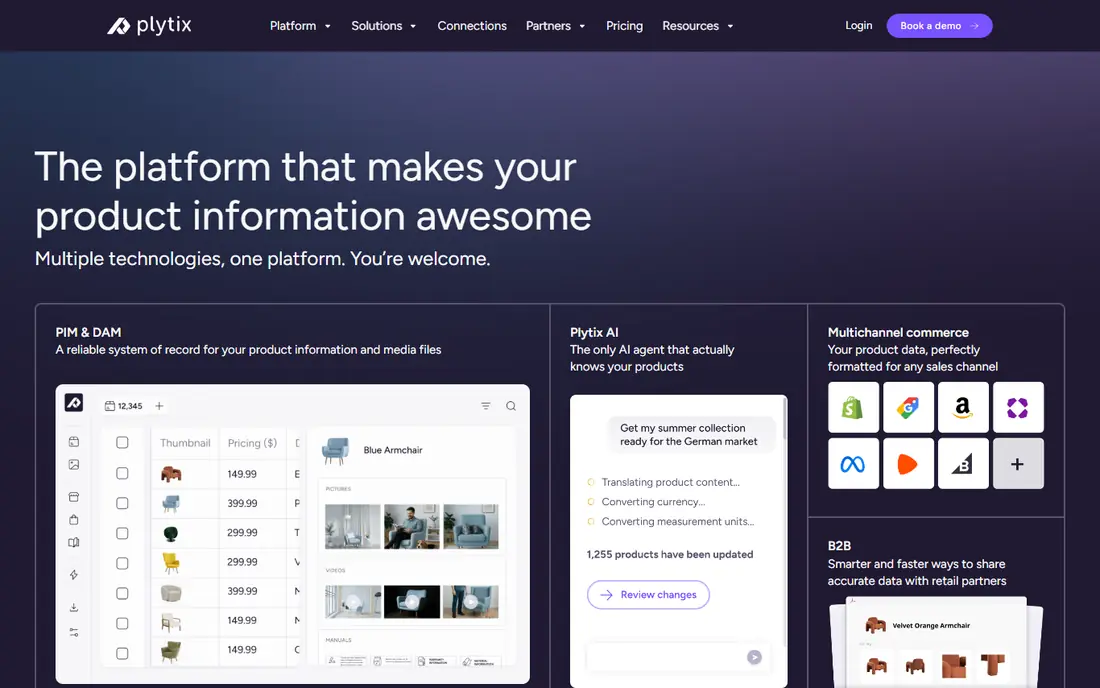
Plytix is the easiest PIM to start with if your catalog lives in spreadsheets today. You can import products, attach images and files, and clean up attributes in a grid view that feels familiar to spreadsheet users. The built-in asset library means product photos and documents sit beside the data they describe, which cuts down on the usual hunt through shared folders.
The free tier is genuinely usable for a small catalog, but check the add-ons before you budget. Product feeds to marketplaces and brand portals are priced separately, so a team that sells on several channels should price the full setup, not just the base plan. For a single store or a small wholesale catalog, that trade-off is still favorable, and the unlimited user count helps small teams share the work.
- Free tier for up to 500 SKUs
- Built-in digital asset management
- Unlimited users on published plans
- Channel feeds are a paid add-on
- Pro tier is a large jump from free
- Onboarding help is often an extra cost
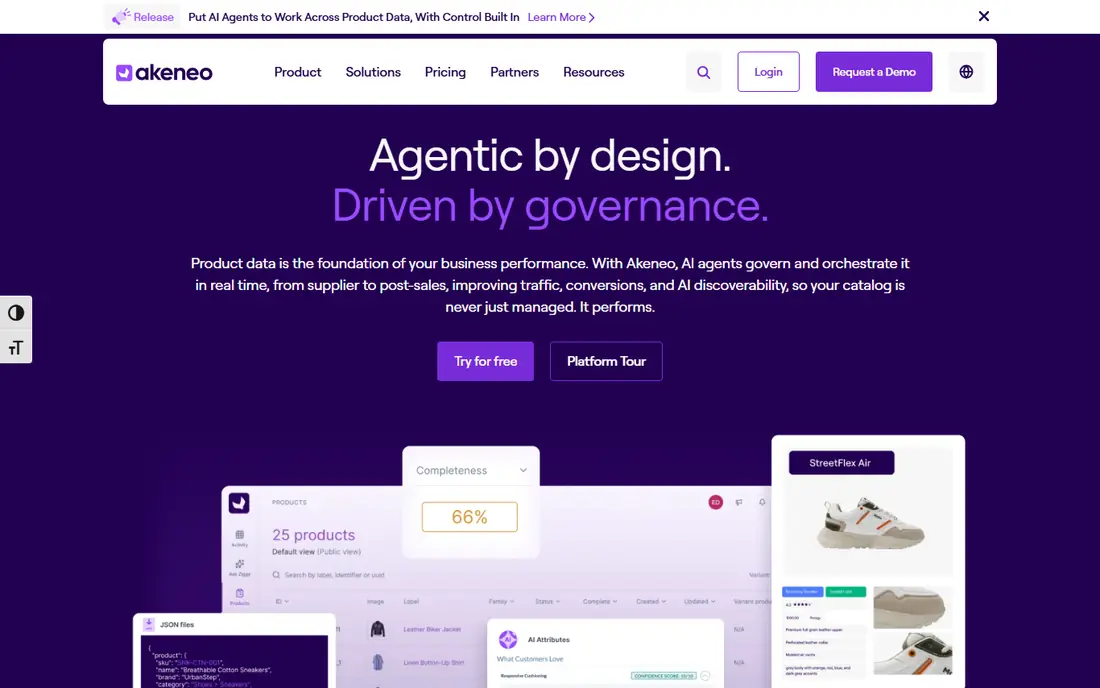
Akeneo has long been a default shortlist pick for brands that need structured product data across many channels and languages. Its completeness scores show which products are missing key fields before they go live, which helps teams catch gaps early. Workflows and approval steps suit larger teams where marketing, product and channel owners all touch the same record.
The choice is really between the free Community Edition and a paid SaaS package. Community gives control and no license fee, but you carry hosting, upgrades and support. The paid tiers remove that burden and add managed services, at a quoted price that depends on catalog size and needs. Teams without in-house technical help should budget for a partner or choose the SaaS route.
- Community Edition is free to self-host
- Strong data quality and completeness scoring
- Wide channel and marketplace options
- Commercial pricing is quoted
- Self-hosting needs technical resources
- Implementation can take time

Salsify is aimed at brands whose main problem is getting correct, complete product content onto retailer sites and keeping it correct there. Syndication, content validation and digital shelf checks are the core, not just storing attributes. If a retailer rejects a listing for a missing field, that cost lands in lost sales, and Salsify is built to reduce those rejections.
That focus means it is often more platform than a small brand needs. Pricing is quoted, and the sales process will ask about SKU count, channels and users. For a brand selling through many retailers, the time saved on manual uploads and fixes can justify it. For a brand with one store, a simpler PIM will do the same job for less.
- Broad retailer and marketplace syndication
- Digital shelf analytics
- Strong for consumer brands
- Quote-only pricing
- Built for larger brands
- Smaller teams may not use its full depth
Pimcore suits teams that want one data platform behind products, assets and content, and that have developers to shape it. Its data modeling handles complex product relationships, variants and hierarchies well, which matters for technical catalogs and configurable products. Because it is open-core, you can adapt workflows and integrations rather than waiting for a vendor roadmap.
The cost is complexity. A team that wants a ready-made PIM with a short setup should look elsewhere, because Pimcore rewards technical investment. The Community Edition is free for eligible use, while paid editions add support and cloud options. Budget for implementation time as carefully as you budget for the license.
- PIM, digital asset management and CMS in one platform
- Open-core model allows deep customization
- Strong data modeling
- Needs developer time to get the most from it
- Paid editions are quoted or start at a high annual figure
- Setup is heavier than SaaS PIMs
inRiver is a strong fit for manufacturers and distributors with deep catalogs, many variants and strict channel rules. Product data, media and syndication sit together, and the platform handles the kind of multi-level structures that break a simple spreadsheet. Digital shelf analytics help teams see how product content performs once it reaches a channel.
As with other enterprise PIMs, pricing is quoted and the project will need a proper implementation plan. That is not a flaw, but it does mean the total cost includes services and change management, not just a monthly fee. Teams with simpler catalogs should compare it against Plytix or Sales Layer first, and only move up if the catalog structure demands it.
- Built for complex B2B product structures
- Syndication and digital shelf tools included
- Strong for manufacturers and distributors
- Quote-only pricing
- Enterprise-leaning scope
- Smaller catalogs may find it heavy
Sales Layer earns its place for teams that want a PIM their product and marketing staff will actually use each day. The interface is built around catalogs, channels and assets, without forcing every user to learn a developer tool. That matters because a PIM only works if the people who own product data keep it updated, and a confusing tool quietly becomes an empty tool.
Pricing is quoted, with a free trial available, so ask for a quote based on your SKU count, channel count and user count, and test the trial with real products, not demo data. Check how it handles your hardest channel, whether that is a marketplace feed, a B2B portal or a print catalog, since that channel often decides the shortlist.
- Clear interface for product teams
- Good for manufacturers and B2B distributors
- Digital asset control included
- Quote-only pricing
- Less public pricing detail than rivals
- Channel depth varies by plan
Syndigo is best understood as a syndication platform with PIM capability, rather than a pure PIM that adds syndication later. It validates product content, distributes it to retailer and marketplace networks, and helps brands keep listings consistent across channels. For consumer packaged goods brands, that network reach is the main reason to shortlist it.
Teams should be clear about which job they are buying. If the core need is internal catalog management for one store, a simpler PIM may fit better. If the core need is getting validated content to many retailers on time, Syndigo's network and validation steps carry more weight than a lower base price elsewhere. Ask which retailers and marketplaces are covered for your categories before you sign.
- Retailer and marketplace content syndication
- Content validation before distribution
- Useful for consumer packaged goods brands
- Quote-only pricing
- PIM depth varies by package
- Best value comes with broad channel use
Pimberly suits enterprise teams that need a structured, cloud-native PIM for large catalogs and global channels. Data quality tools, workflow support and localization help teams manage the same product across languages and markets without duplicating records. That structure pays off when catalog size grows, because ad hoc fixes stop scaling long before the product count does.
The main caution is the same as for other enterprise PIMs: total cost depends on catalog size, channels and services, and the sales process will shape the package around those numbers. Run a pilot with a real slice of your catalog, including your messiest products, and judge the platform on how it handles those, not on a clean demo set.
- Cloud-native PIM with structured data modeling
- Data quality and localization support
- Strong for large catalogs
- Pricing is quoted for enterprise tiers
- Implementation planning needed
- Smaller teams may find it more than they need
How we picked these
We compared official product and pricing pages, recent PIM comparisons and vendor documentation, and we favored platforms that are actively sold in October 2026 and that cover distinct catalog sizes and channel needs. We checked free tiers and published starting prices where vendors list them, and we wrote See website where pricing is quoted, so the list reflects what a buyer can actually verify before a sales call.
What to check before you choose a PIM
Count before you shop. Write down your SKU count including variants, the number of channels you sell through, the number of languages, and how many people will edit product data. Those four numbers shape nearly every quote, and they also tell you if a free tier or a mid-market plan can hold your catalog at all.
Test with your messiest products
A demo with clean data hides the real work. Import a sample that includes variants, missing images, long spec tables and channel-specific fields, and see how the PIM handles completeness checks, bulk edits and approvals. If the messy sample is easy to fix, the platform will hold up when the full catalog arrives.
Price the whole setup, not the base plan
Ask what is included and what is an add-on: feeds, brand portals, onboarding, migration and AI enrichment can each change the monthly total. Also ask about user limits, storage and API limits, since those caps often force an upgrade sooner than SKU growth does. A written quote that lists each add-on is worth more than a low headline price.
Plan who owns the data
A PIM needs an owner for each product group, a rule for who approves changes, and a schedule for completeness checks. Without that, even the best platform drifts back into spreadsheet habits. Start with one product group, prove the workflow, and then roll the rest of the catalog in stages.
Frequently asked questions
What is the best pim software for a small business?
Plytix is a practical starting point, because its free tier covers up to 500 SKUs and its paid plans are published. If your catalog is larger or you sell through many retailers, shortlist Akeneo, Salsify or Syndigo and compare quoted totals.
What is the best product information management software for retailers?
Salsify and Syndigo are strong for retailer syndication, because they focus on getting validated content onto retailer sites and tracking it there. Check which retailers in your categories each platform covers before you decide.
Are there top rated pim software options with a free tier?
Yes. Plytix offers a free tier, Akeneo has a free Community Edition, and Pimcore has a free Community Edition for eligible use. Free tiers suit smaller catalogs and self-hosted setups, while larger teams usually need a paid plan for support and channel features.
How much does the best pim software cost?
It varies widely. Small teams can start free or at a published mid-market price, while enterprise PIMs are quoted based on SKUs, channels and users. Ask for a total that includes feeds, onboarding and any add-ons you need, rather than comparing base prices alone.
What is the best pim platform for B2B distributors?
Sales Layer and inRiver are both built with B2B catalogs in mind, with structured data, channel distribution and asset control. Compare them on your variant structure and your hardest channel, since those details decide which one fits better.
Sources
See where you really rank - block by block
ProMapRanker scans Google Maps across a grid of your service area. Simple monthly plans from $19, white-label on every plan.
Start freeKeep reading
 best tour operator software
Best Tour Operator Software in 2026
Compare the best tour operator software for bookings, channel management, waivers and payments, with pricing models for day tours and multi-day trips.
Read → best time clock app for small business
Best Time Clock App for Small Business in 2026
We compare the best time clock app for small business options, with free plans, GPS clock ins, scheduling and payroll links for hourly teams and payroll help.
Read → best test automation tools
Best Test Automation Tools in 2026
Compare the best test automation tools, from Playwright and Selenium to Cypress, Katalon and BrowserStack, with prices, languages and best uses explained.
Read →