 ProMapRanker
Best Payment Processing Companies in 2026


Online-first and developer checkouts · Pricing starts at: 2.9% + $0.30 per online transaction
Key takeaways
- Stripe and Square suit most small businesses that want no monthly fee and published flat rates for online and in-person sales.
- PayPal suits checkout conversion, but its wallet and card rates run higher than Stripe on many orders, so check average order value.
- Helcim suits growing firms that want interchange-plus pricing without a monthly fee, while Adyen suits global enterprise volume.
- This guide is general information only, not financial advice, and published rates change, so confirm the current rate card before signing.
Quick comparison
| Pick | Great for | Pricing starts at | Free tier | |
|---|---|---|---|---|
| Stripe | Online-first and developer checkouts | 2.9% + $0.30 per online transaction | No | Visit |
 Square | In-person and omnichannel retail | 2.9% + $0.30 per online transaction | No | Visit |
 PayPal | Buyer-trusted checkout | 2.99% + $0.49 per card transaction | No | Visit |
 Adyen | Global enterprise commerce | See website | No | Visit |
 Helcim | Interchange-plus without monthly fee | Interchange + 0.50% + $0.25 online | No | Visit |
 Authorize.net | Classic gateway for existing merchant accounts | $25 per month + 2.9% + $0.30 | No | Visit |
 Braintree | PayPal-backed developer payments | 2.89% + $0.29 per transaction | No | Visit |
 Checkout.com | Global online payment performance | See website | No | Visit |
 Worldpay | Mid-market and enterprise scale | See website | No | Visit |
The best payment processing companies
Payment processing companies move money from a customer card or wallet to a business bank account, handling authorization, fraud checks, and payouts. Flat-rate, interchange-plus, and quote-based models suit different volumes, so the cheapest option depends on card mix and sales channel. This article is general information only, not financial advice, and no rate here is promised for a specific business.
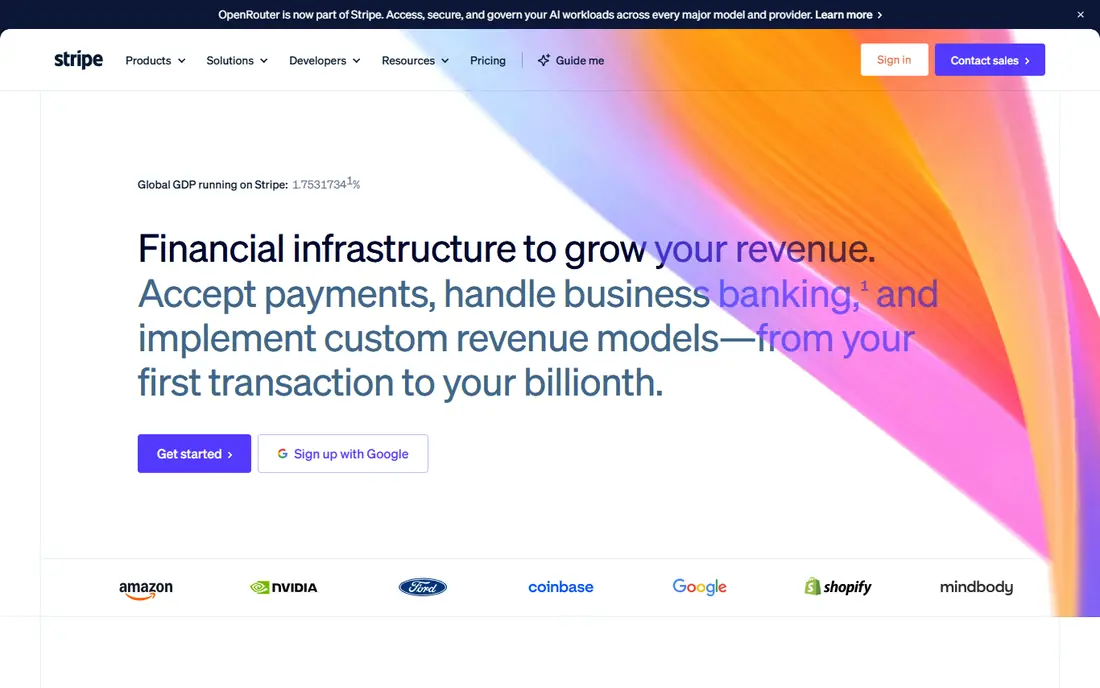
Stripe suits online stores, SaaS firms, and marketplaces that need a developer-friendly checkout, subscriptions, and Connect for platforms. Its standard US online rate is listed at 2.9 percent plus 30 cents per successful card transaction, with no monthly fee for standard Payments, which makes budgeting simple for early-stage firms. Its documentation and tooling are a major reason developers choose it first.
The catch is add-on costs. International cards, currency conversion, and disputes add fees, and new or high-risk accounts can face holds or reviews. Stripe fits best when a team can use its APIs and wants predictable flat pricing, while firms that need in-person POS hardware may prefer Square.
- No monthly fee for standard Payments
- Strong APIs and checkout tools
- Wide currency support
- International and dispute fees add cost
- Account holds can affect new sellers

Square suits shops, cafes, and service firms that sell in person and online, because its POS hardware, inventory, loyalty, and online store tools share one system. Its free plan has no monthly fee, with in-person rates from 2.6 percent plus 15 cents and online rates from 2.9 percent plus 30 cents in recent summaries. That simplicity helps owners who want to start selling the same day.
The limit is plan variation. Square Plus and Premium POS plans add monthly fees per location, and online rates vary by plan, so a growing multi-location firm should compare total POS cost, not only the card rate. Square fits best for omnichannel small businesses that value one vendor for hardware and software.
- No monthly fee on free plan
- POS hardware and software in one system
- Fast setup
- Online rate higher on some plans
- Paid POS plans add monthly cost
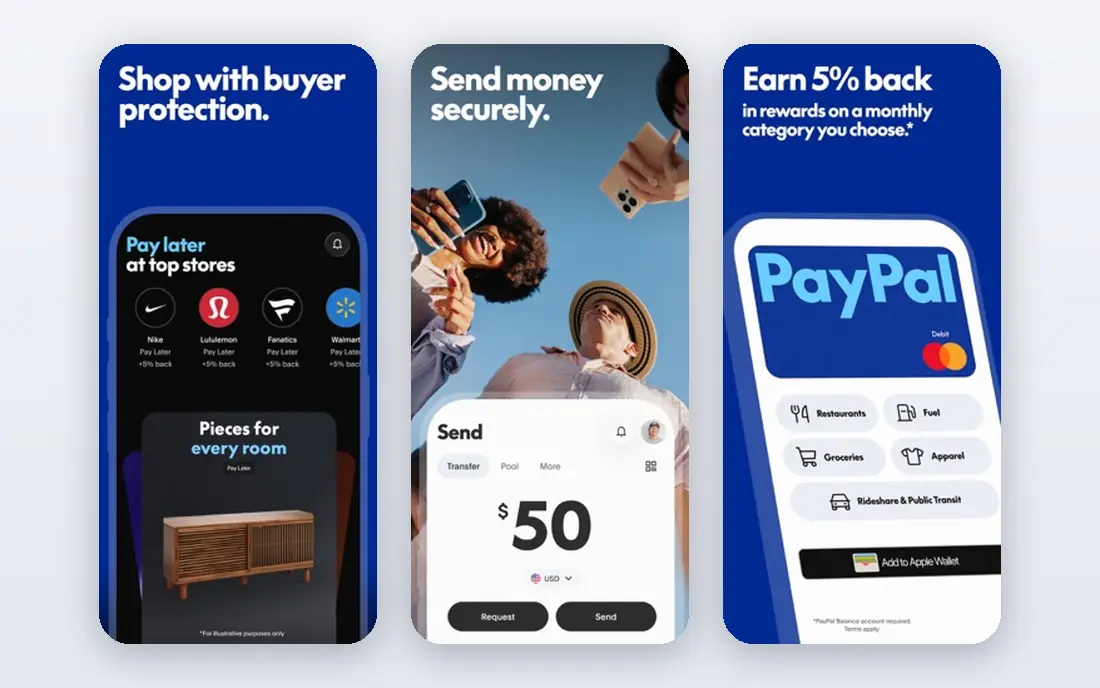
PayPal suits stores that want buyer trust at checkout, because many shoppers already hold a PayPal or Venmo balance and saved payment details. Its standard card rate is listed at 2.99 percent plus 49 cents in recent summaries, while PayPal and Venmo checkout rates run higher at 3.49 percent plus 49 cents. That trust can help conversion, especially for new stores without a known brand.
The trade-off is price. On a typical order, PayPal card and wallet fees can exceed Stripe by a meaningful margin, so stores with high volume should model the difference on their average order value. PayPal fits best as an added checkout option or a primary option for trust-led sales, not as an automatic cheapest choice.
- Buyer recognition can lift conversion
- PayPal and Venmo checkout options
- No monthly fee for standard products
- Wallet rates higher than card rates
- Dispute and currency fees add cost
Adyen suits large merchants, marketplaces, and global platforms that need one acquirer for online, mobile, and in-store payments across many countries. Its model uses interchange plus a processing markup, reported around 0.60 percent plus 13 cents in recent summaries, with support for many currencies and local payment methods. That breadth helps firms that sell across regions without stitching together local acquirers.
The barrier is scale. Adyen pricing is quoted, minimum invoice terms can apply, and onboarding takes more effort than a self-serve Stripe or Square account. Small firms will usually pay more in time than they save in rate, while large global firms gain from unified reporting and routing.
- Unified acquiring across channels
- Many currencies and local methods
- Interchange-plus model
- Quote-based with minimum invoice terms
- Enterprise onboarding effort
Helcim suits growing US and Canadian firms that want transparent interchange-plus pricing without negotiating or paying a monthly fee. Its entry online markup is listed at interchange plus 0.50 percent plus 25 cents, with in-person markup lower, and volume discounts apply automatically as processing grows. Free invoicing and a virtual terminal help service firms that do not need a full developer platform.
The limit is e-commerce depth. Helcim integrations are fewer than Stripe or Shopify, and its API is less mature for complex custom checkouts. Firms that need deep developer tooling should compare Stripe, while firms that want a lower effective rate at growing volume will find Helcim attractive.
- No monthly fee
- Automatic volume discounts
- Free invoicing and virtual terminal
- Online rate markup higher than in-person
- API less mature than Stripe
Authorize.net suits established businesses that already have a merchant account or use software that integrates with its gateway. Its all-in-one option is listed at $25 per month plus 2.9 percent plus 30 cents per transaction, with a gateway-only option for firms that bring their own processor. That wide support helps firms with legacy systems or specific software needs.
The monthly fee is the catch. At low volume, $25 per month plus transaction fees can exceed a no-monthly-fee flat-rate option, so the math only favors Authorize.net once volume passes a few thousand dollars per month. Firms that need a classic gateway and already use compatible software will value it most.
- Widely supported gateway
- All-in-one option
- Long track record
- Monthly fee makes it costly at low volume
- Gateway fee per transaction on some plans
Braintree, owned by PayPal, suits developers and marketplaces that want cards, PayPal, Venmo, Apple Pay, and Google Pay through one integration. Its standard rate is listed at 2.89 percent plus 29 cents in recent summaries, with tools for subscriptions, vaulting, and marketplace payouts. That combination helps apps and platforms that need flexible payment methods without managing several gateways.
The limit is product variation. Rates and features differ by Braintree product and region, and some merchants report support differences by account size. Developers should confirm the exact rate card, payout timing, and dispute fees for their product before building on Braintree.
- PayPal and Venmo in one integration
- Subscription and marketplace tools
- No monthly fee
- Rates vary by product
- Support experience varies by account size
Checkout.com suits digital-native firms and global online merchants that focus on authorization rates and payment performance across countries. It supports many currencies and local payment methods, with routing and analytics tools that help large merchants improve approval rates. That focus matters for firms where a small approval gain translates into large revenue.
Pricing is quoted, and onboarding suits larger merchants rather than a solo store that wants same-day setup. Small firms should start with Stripe, Square, or PayPal, while global firms with dedicated payments staff will gain more from Checkout.com performance tools.
- Global acquiring
- Many currencies and local methods
- Performance and routing tools
- Quote-based pricing
- Enterprise-leaning onboarding
Worldpay suits mid-market and enterprise merchants that process high volumes across channels and countries, with coverage reported across many countries and currencies. Its omnichannel support helps retailers that sell online, in store, and through platforms, and smart routing can improve authorization and cost at scale. It is now part of Global Payments, which broadens its acquiring reach.
The trade-off is process. Pricing is negotiated per merchant, onboarding is sales-led, and small firms may face minimums or terms that do not suit low volume. Worldpay fits best once volume and global reach justify a negotiated contract and dedicated account support.
- Wide country and currency coverage
- Omnichannel retail support
- Smart routing
- Custom pricing
- Sales-led onboarding
How we picked these
We compared official pricing pages and October 2026 rate summaries for Stripe, Square, PayPal, Adyen, Helcim, Authorize.net, Braintree, Checkout.com, and Worldpay. We favored companies with current US availability and published or widely reported rate cards over firms with no public pricing path.
We did not promise any rate for a specific business, because card mix, industry risk, volume, and region change the final effective rate. Where pricing is quoted, we write See website, and readers should request a full fee schedule covering monthly, dispute, chargeback, and currency fees before signing.
How to choose a payment processor without overpaying
Start with sales channel and volume. Online-only firms need strong checkout and subscription tools, retail firms need POS hardware, and global firms need currency and local method coverage. A processor that excels in one channel can be weak in another, so match the shortlist to where sales actually happen.
Model the effective rate on real orders, not only the headline rate. Pull last month card mix, average order value, refund rate, and international share, then apply each fee schedule to those orders. A low headline rate can lose to a higher flat rate when fixed fees, monthly fees, or dispute fees dominate small tickets.
Read the full fee schedule
Ask for monthly fees, gateway fees, PCI fees, statement fees, early termination terms, equipment leases, and payout timing in writing. Check how long payouts take, what triggers a reserve or hold, and how card data can be exported if you switch processors later. Those terms matter more than a small rate difference.
Test checkout before switching fully
Run a new processor on a small share of traffic first, and check authorization rates, payout timing, and support response. Confirm refunds, disputes, and subscription handling work as expected, and keep the old processor live until the new one proves stable. A staged switch avoids a checkout outage.
Frequently asked questions
What is the best payment processing company?
Stripe suits online-first firms, Square suits retail and omnichannel firms, PayPal suits trust-led checkout, Helcim suits growing interchange-plus buyers, and Adyen suits global enterprise firms.
How much does payment processing cost?
Most small firms pay a flat rate around 2.9 percent plus 30 cents online, while interchange-plus firms pass through card costs plus a markup. Total cost depends on card mix, volume, refunds, and international share.
What is the difference between flat-rate and interchange-plus pricing?
Flat-rate pricing charges the same percentage on every card, which is simple but can overcharge on cheap debit cards. Interchange-plus passes through the card network cost plus a fixed markup, which is harder to read but often cheaper at higher volume.
Do payment processors charge a monthly fee?
Some do and some do not. Stripe, Square free, PayPal standard, and Helcim have no monthly fee for standard products, while Authorize.net charges $25 per month and some enterprise processors negotiate monthly minimums.
Is this financial advice?
No. This guide is general information only, not financial advice for a specific business. Check current rate cards and terms with each processor, and speak to an accountant or payments adviser for decisions tied to your business.
Sources
See where you really rank - block by block
ProMapRanker scans Google Maps across a grid of your service area. Simple monthly plans from $19, white-label on every plan.
Start freeKeep reading
 who has best internet service
Who Has the Best Internet Service in 2026
Who has best internet service for US homes? We compare fiber, cable, fixed wireless and satellite providers on speed, price, availability and terms today.
Read → which survey tool has the best analytics
Which Survey Tool Has the Best Analytics in 2026
Find which survey tool has the best analytics in 2026, comparing Qualtrics, SurveyMonkey, Typeform, Alchemer, and more on reports, text, and stats today.
Read → which streaming service has the best movies
Which Streaming Service Has the Best Movies in 2026
Answering which streaming service has the best movies, with Netflix, Max, Criterion and more compared on libraries, prices and free options in this guide.
Read →