 ProMapRanker
Best Payment Apps for Small Business in 2026

Key takeaways
- Square and Stripe are our top picks for most small businesses, with no monthly fee on their entry plans and clear flat-rate pricing.
- Helcim and Stax suit businesses with higher volume, since interchange-plus and subscription pricing can beat flat rates once sales grow.
- PayPal and SumUp win on buyer familiarity and simple mobile selling, while Clover and Toast suit shops that need a full point-of-sale system.
- Fees and terms vary by card type, channel, and volume, so compare quotes on your real sales mix before you sign anything.
Quick comparison
| Pick | Great for | Pricing starts at | Free tier | |
|---|---|---|---|---|
 Square | Simple in-person and online selling | Free | Yes | Visit |
 Stripe | Online checkout and developers | Free | Yes | Visit |
 PayPal | Buyer trust and invoicing | Free | Yes | Visit |
 Helcim | Transparent interchange-plus pricing | Free | Yes | Visit |
 Stax | High-volume subscription pricing | $99 per month | No | Visit |
 Clover | Retail and service point of sale | See website | No | Visit |
 SumUp | Simple mobile card payments | Free | Yes | Visit |
 Toast | Restaurants | See website | No | Visit |
 Shopify Payments | Stores already on Shopify | See website | No | Visit |
The best payment apps for small business
This is not financial advice. Processing fees, hardware costs, and contract terms vary by provider, card type, and sales channel, so treat the figures below as starting points and confirm the current rate on each provider's pricing page. We compared these apps on monthly fees, transaction rates, hardware, online tools, and how well they fit a small team.
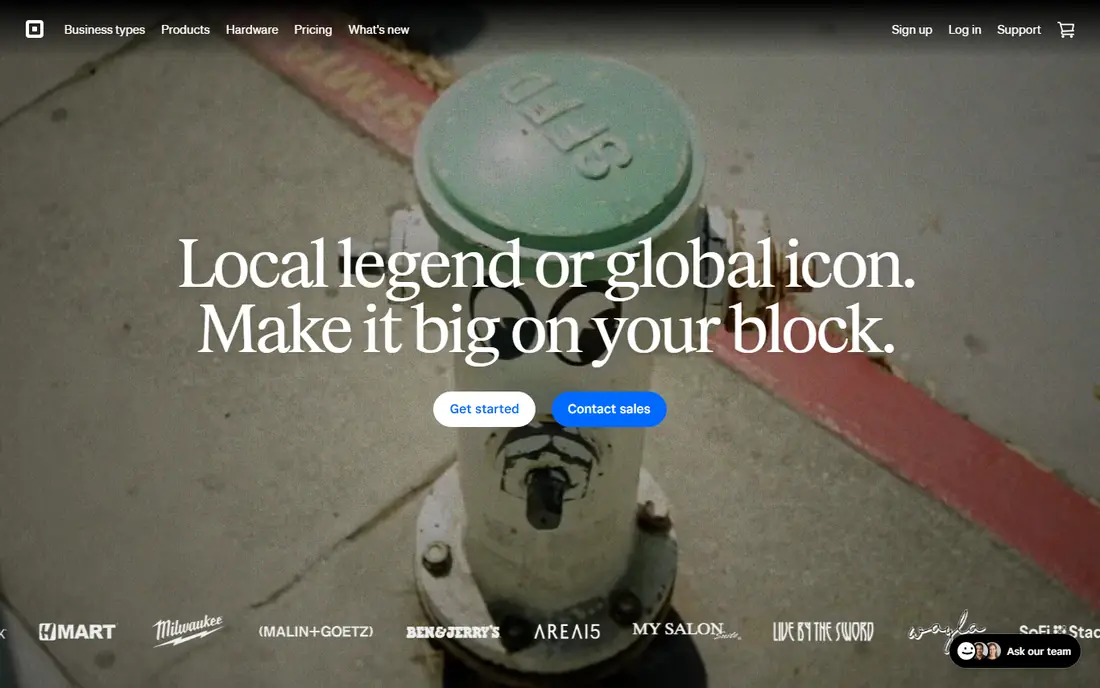
Square is our pick for most small businesses starting out, because you can take cards in person and online with no monthly fee and a simple setup. The free plan includes point-of-sale software, payment links, and invoicing, and the published in-person rate of 2.6% plus 15 cents and online rate of 2.9% plus 30 cents are easy to understand. For a shop, market stall, or service business with modest volume, that simplicity is worth more than a small rate saving.
The catch shows up as volume grows. Flat-rate pricing means you pay the same percentage on cheap debit cards and premium rewards cards, so a high-volume business may save money on interchange-plus pricing instead. Square also reserves the right to hold funds in fraud cases, which is standard in the industry but painful if it happens. Start with Square, and revisit pricing once monthly card sales pass the point where a quote saves real money.
- No monthly fee on the free plan
- Free card reader to start
- Point of sale, online store, and invoicing in one account
- Flat rates get costly at high volume
- Account holds can frustrate some sellers
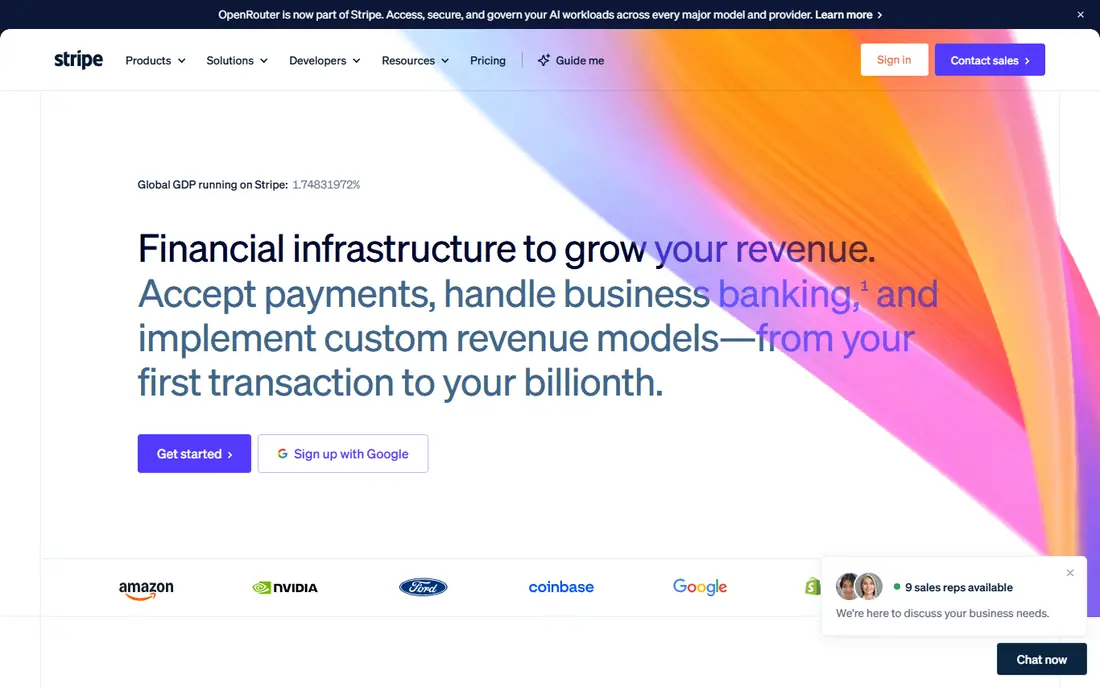
Stripe is the best payment app for small businesses that sell mainly online. Its published US online rate is 2.9% plus 30 cents, with no monthly fee on the standard plan, and its checkout, payment links, invoicing, and subscription tools cover most online selling needs without a separate gateway. Developers get thorough documentation and a large library of integrations, which is why so many online stores and software businesses build on Stripe.
The trade-off is that Stripe assumes more technical comfort than Square. A non-technical owner can still use payment links and invoices, but a fully custom checkout needs a developer. In-person selling also means buying Stripe Terminal hardware separately. If your sales are mostly online, Stripe is the default shortlist pick.
- Strong online checkout and APIs
- No monthly fee to start
- Wide payment method support
- Needs developer help for custom setups
- In-person hardware is an add-on
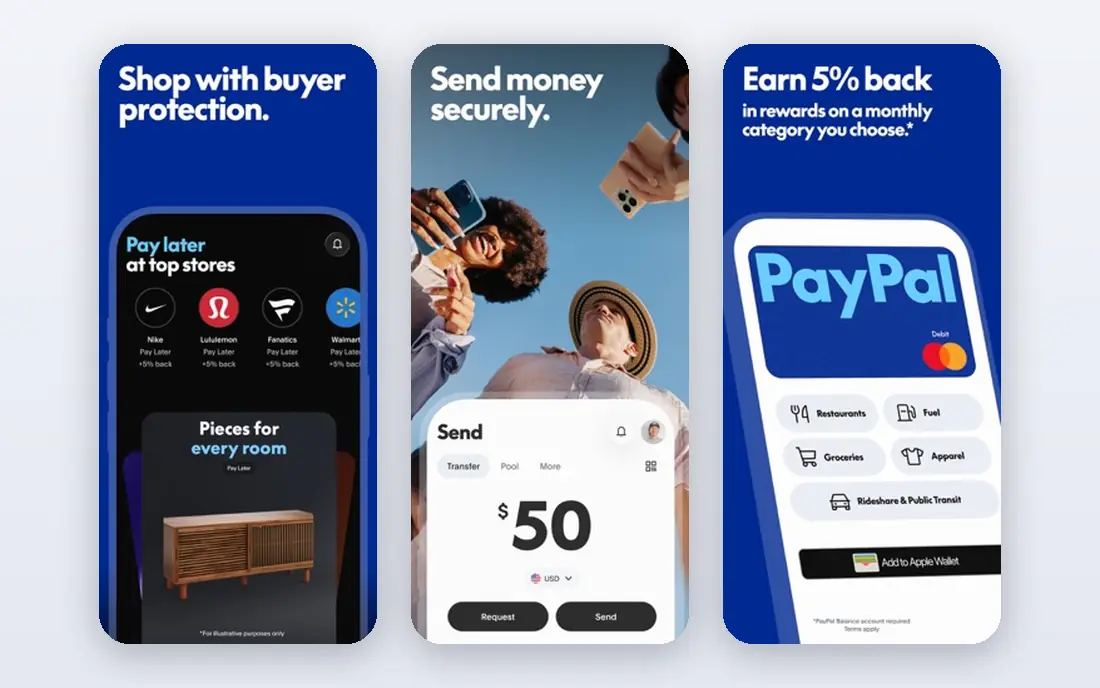
PayPal remains a strong choice because customers recognize it and many already hold a balance or saved card. A small business can send invoices, share payment links, and accept cards online with no monthly fee, and the published US online rate is 2.99% plus 49 cents for many transactions, with in-person rates lower through PayPal Zettle hardware. That familiarity can lift checkout completion, especially for freelancers and online sellers dealing with new customers.
The downside is cost and support. Online rates run higher than Stripe or Square for comparable sales, and sellers sometimes report slow dispute handling. PayPal works best as a complement to a main processor, or as the main option for a business that values buyer trust over the lowest rate. Keep an eye on the fee page for your exact transaction type, since rates differ by channel.
- Buyers already trust the brand
- Invoicing and payment links included
- Broad international reach
- Online rates are higher than Stripe for many sellers
- Holds and disputes can be slow to resolve
Helcim is our pick for growing businesses that want to see exactly what they pay. Instead of a flat rate, Helcim passes through the card networks' interchange cost and adds a published markup of 0.40% plus 8 cents in person and 0.50% plus 25 cents online, with no monthly fee. That transparency makes it easier to compare against a current statement, and automatic volume discounts reduce the markup as sales grow.
The catch is familiarity. Customers will not recognize Helcim the way they recognize PayPal, though that matters little when you run your own checkout or terminal. Hardware is also bought separately. If you process more than a few thousand dollars a month and want a clear, auditable fee structure, Helcim deserves a quote next to Square and Stripe.
- No monthly fee
- Interchange-plus pricing with published markups
- Volume discounts that grow automatically
- Less name recognition than Square or PayPal
- Hardware costs extra
Stax flips the usual model: you pay a monthly subscription and then interchange at cost plus a small flat fee of 8 cents in person or 15 cents online. The entry tier is $99 per month for businesses processing up to $150,000 a year, rising with volume. For a business with steady, high card sales, that structure can beat flat-rate pricing by a clear margin, since the percentage markup disappears.
The math only works above a threshold. On $3,000 a month in card sales, a $99 fee alone is a heavy burden, so small or seasonal businesses should stay with a no-monthly-fee option. Stax also sells hardware separately, so budget for terminals on top of the subscription. Get a quote using a real statement before switching, because card mix changes the saving.
- No markup on interchange
- Flat per-transaction fees
- Next-business-day funding on plans
- Monthly fee is hard to justify at low volume
- Hardware is quoted separately
Clover suits shops that want a proper countertop system rather than a phone and a reader. Its terminals, registers, and app marketplace cover inventory, staff permissions, gift cards, and loyalty, and published in-person rates start around 2.3% plus 10 cents depending on the plan and provider. For a busy retail or service counter, that hardware and software depth is a real advantage over a bare-bones reader.
The warning is distribution. Clover is often sold through resellers, and contract length, monthly software fees, and exit terms can vary a lot between them. Read the full agreement, confirm who provides support, and compare the direct offer where available. If you buy Clover, buy it for the point-of-sale system, not just the rate.
- Strong hardware range
- App marketplace for add-ons
- Published in-person rates from 2.3% plus 10 cents
- Pricing often runs through resellers with varying terms
- Software plans add monthly cost
SumUp is a good fit for mobile sellers, market traders, and small service businesses that need to take cards on a phone. There is no monthly fee on the free plan, readers are inexpensive, and the published US in-person rate is 2.60% plus 10 cents. Setup is fast, and the app covers payment links and basic sales history without a complex back office.
The limits appear as the business grows. SumUp lacks the deeper inventory, staff, and restaurant tooling of Clover or Toast, and its online rate of 3.50% plus 15 cents is higher than its in-person rate. For a business that sells mostly face to face and wants the simplest possible card setup, SumUp is hard to fault. For a larger shop, look at Square or Clover instead.
- No monthly fee on the free plan
- Low-cost readers
- Quick setup for mobile sellers
- Fewer advanced point-of-sale features
- Online rate is higher than in-person rate
Toast is the restaurant specialist on this list, with tools for table management, menu changes, kitchen display, online ordering, and tips built into one system. Its published in-person processing starts at 2.49% plus 15 cents on some plans, and the starter plan carries no monthly software fee in some offers, though hardware and higher tiers are quoted. For a cafe or restaurant, that fit matters more than a small rate difference.
The catch is focus. A general retailer will pay for restaurant features it never uses, and Toast hardware is part of the package, so switching later takes more work than swapping a reader. If food service is your business, Toast should be on the shortlist. If it is not, skip it.
- Restaurant-specific tools for tables, menus, and online ordering
- Published in-person rate from 2.49% plus 15 cents
- Built for restaurants, not general retail
- Hardware and plan costs need a quote
Shopify Payments is the natural choice for a business already running a Shopify store, because it removes the extra transaction fee Shopify charges when you use an outside provider. Published rates are 2.9% plus 30 cents online and 2.6% plus 10 cents in person on the Basic plan, and checkout, payouts, and fraud checks live in the same dashboard as the store. That single-dashboard convenience saves time every week.
The limit is obvious: it only works with Shopify, so it is not a general payment app for a business that also sells elsewhere. You also pay the Shopify subscription on top of processing fees. If your store is on Shopify, use its own payments option. If it is not, one of the standalone apps above will serve you better.
- No extra transaction fee on Shopify plans
- Checkout matches the store
- Fraud tools included
- Only works inside Shopify
- Store subscription cost sits on top of processing
How we picked these
We compared official pricing pages and recent processor comparisons, focusing on published monthly fees and transaction rates for US small businesses, plus hardware, online tools, and contract terms. We kept only providers that actively serve US small businesses and that publish enough pricing to compare, and we wrote "See website" where pricing runs through resellers or quotes. We did not run live transactions, and fees change, so confirm the current rate before you commit.
Choosing the right payment app for your business
Start with how you sell. In-person sellers should weigh hardware and countertop software, online sellers should weigh checkout quality and developer tools, and mixed sellers should check both rates, since in-person and online rates often differ. A business that sells mostly in person can lose money on an app chosen for its online rate, and the reverse is also true.
Compare on your real sales, not the headline rate
Ask each provider for a quote based on a recent statement, with your average ticket size, card mix, and split between in-person and online sales. A flat rate looks simple but can cost more on debit-heavy sales, while interchange-plus looks cheap until you add the markup to real interchange. Also check chargeback fees, instant payout fees, and hardware costs, since those add up over a year.
Check the contract before the rate
Confirm the contract length, cancellation terms, monthly software fees, and who provides support. Resold systems can carry long terms and exit fees, while direct providers like Square, Stripe, and Helcim are month to month. A slightly higher rate with no contract is often safer for a new business than a low rate locked in for three years.
Plan for growth, then revisit yearly
The best payment app for a business doing $3,000 a month is rarely the best at $50,000 a month. Set a yearly review: pull a statement, compare two quotes, and switch if the saving beats the hassle. Keep customer payment details and subscription records in mind when switching, since moving stored cards takes planning.
Frequently asked questions
What is the best payment app for small business overall?
For most small businesses, Square is the best starting point because it has no monthly fee, simple hardware, and covers in-person and online selling in one account. Stripe is the better pick for online-first businesses, and Helcim or Stax may win once volume grows. The right answer depends on your sales channel and monthly volume.
What is the best payment platform for small business with no monthly fee?
Square, Stripe, PayPal, Helcim, and SumUp all offer entry plans with no monthly fee, though transaction rates still apply on every sale. That makes them good for new, small, or seasonal businesses. Check hardware costs separately, since a free plan does not always mean free hardware.
How do I choose the best payment software for small business?
List how you sell, your monthly card volume, your average ticket, and if you need point-of-sale hardware or just online checkout. Then compare two or three providers on your real numbers, including chargeback and payout fees, and read the contract terms. A short trial with real sales, where possible, tells you more than a demo.
What is the best app for small business payments on the go?
SumUp and Square are the simplest mobile options, with low-cost readers and no monthly fee on entry plans. PayPal Zettle is another mobile reader option for businesses that already use PayPal. Pick the one whose app your staff finds easiest, since a reader that staff avoid using costs more than a small rate gap.
Do payment apps charge for online and in-person sales at the same rate?
Usually not. In-person rates are typically lower because the card is present, while online rates are higher to cover fraud risk. For example, Square and Stripe both publish different in-person and online rates, so check both figures against your sales split before you choose.
Sources
- https://www.squareup.com
- https://www.stripe.com
- https://www.paypal.com
- https://www.helcim.com
- https://www.staxpayments.com
- https://www.clover.com
- https://www.sumup.com
- https://www.toast.com
- https://www.shopify.com
- https://www.helcim.com/guides/processors-with-the-lowest-credit-card-processing-fees/
- https://www.novo.co/software/payment-processing
See where you really rank - block by block
ProMapRanker scans Google Maps across a grid of your service area. Simple monthly plans from $19, white-label on every plan.
Start freeKeep reading
 best tour operator software
Best Tour Operator Software in 2026
Compare the best tour operator software for bookings, channel management, waivers and payments, with pricing models for day tours and multi-day trips.
Read → best time clock app for small business
Best Time Clock App for Small Business in 2026
We compare the best time clock app for small business options, with free plans, GPS clock ins, scheduling and payroll links for hourly teams and payroll help.
Read → best test automation tools
Best Test Automation Tools in 2026
Compare the best test automation tools, from Playwright and Selenium to Cypress, Katalon and BrowserStack, with prices, languages and best uses explained.
Read →