 ProMapRanker
Best Outreach Tools in 2026


Prospecting plus outreach in one tool · Pricing starts at: $49 per user per month
Key takeaways
- Apollo.io suits teams that want prospecting data and outreach sequences in one subscription.
- Outreach and Salesloft suit enterprise teams that need orchestration, coaching and forecasting depth.
- Instantly, Saleshandy, Woodpecker and Smartlead suit high-volume cold email at lower entry prices.
- Lemlist, Reply.io, Mailshake and Snov.io suit smaller teams that want personalisation and multichannel sequences.
- Review outreach needs a different approach from sales outreach, with consent, timing and platform rules at the centre.
Quick comparison
| Pick | Great for | Pricing starts at | Free tier | |
|---|---|---|---|---|
| Apollo.io | Prospecting plus outreach in one tool | $49 per user per month | Yes | Visit |
 Outreach | Enterprise sales orchestration | See website | No | Visit |
 Salesloft | Enterprise multichannel outreach and coaching | See website | No | Visit |
 Lemlist | Personalised multichannel outreach | $55 per user per month | No | Visit |
 Instantly | High-volume cold email sending | $37 per month | No | Visit |
 Reply.io | Small and mid-size multichannel sequences | $49 per user per month | Free trial | Visit |
 Saleshandy | Budget cold email outreach | $25 per month | No | Visit |
 Mailshake | Simple outreach with a dialer | $59 per user per month | Free trial | Visit |
 Snov.io | Lead finding plus outreach on a budget | $39 per month | Free trial | Visit |
 Woodpecker | Deliverability-focused cold email | $29 per month | Free trial | Visit |
The best outreach tools
Outreach tools cover two related jobs: finding prospects and running sequences that turn them into conversations, and asking happy customers for reviews at the right moment. Sales outreach tools dominate this list, since that is where most buyers start, and the final sections explain how review outreach differs. Every tool here should be used with accurate data, honest messaging and respect for spam rules and recipient consent.
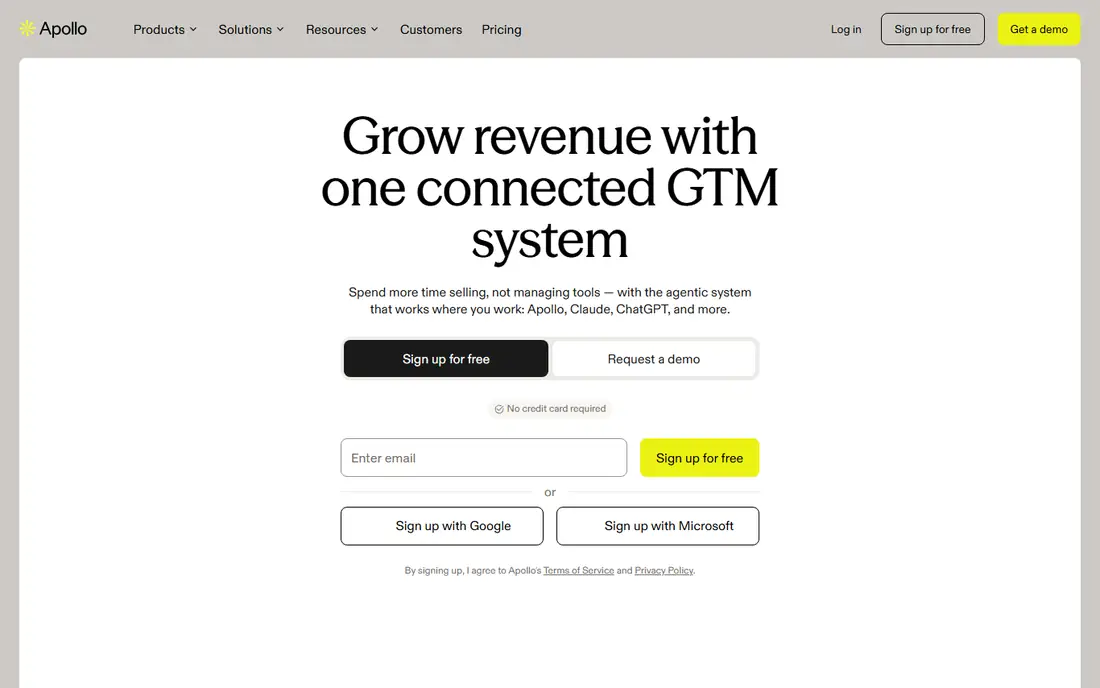
Apollo.io is the default starting point for many business-to-business teams because it combines a large contact database with email sequences, a dialer and meeting scheduling. A team can find prospects, enrich records and run sequences without buying a separate data vendor first. A free tier lets small teams test the workflow before paying.
Data quality is the honest catch. Bounce rates vary by segment, and credit mechanics mean phone-heavy or research-heavy teams burn credits faster than email-only teams. Apollo suits teams that want one affordable platform and will verify data before sending, rather than teams needing the cleanest data in the market.
- Large contact database plus sequences and dialer
- Free tier for testing
- CRM integrations
- Data accuracy varies by segment
- Credit limits can throttle high-volume work
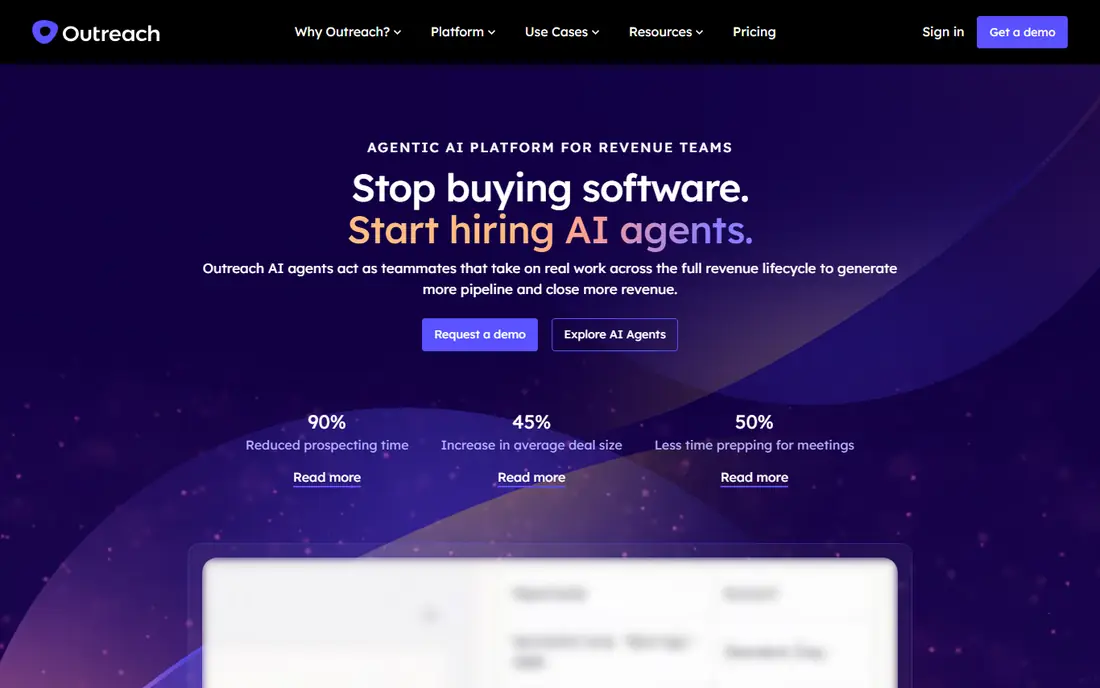
Outreach suits enterprise sales teams that need more than a sequencer. Multi-step sequences across email, calls and tasks combine with analytics, coaching insight and forecasting tools that help managers see pipeline health, not just activity counts. Integrations with major CRMs keep outreach data close to deal data.
Smaller teams will find Outreach heavy and expensive, with pricing that requires a sales conversation. Its value shows at scale, where consistent playbooks, governance and reporting across many reps matter. Teams below that scale usually get faster results from a simpler tool.
- Deep sequence orchestration and analytics
- Forecasting and deal insight
- Strong enterprise integrations
- Quote-based pricing
- Implementation and admin effort for smaller teams
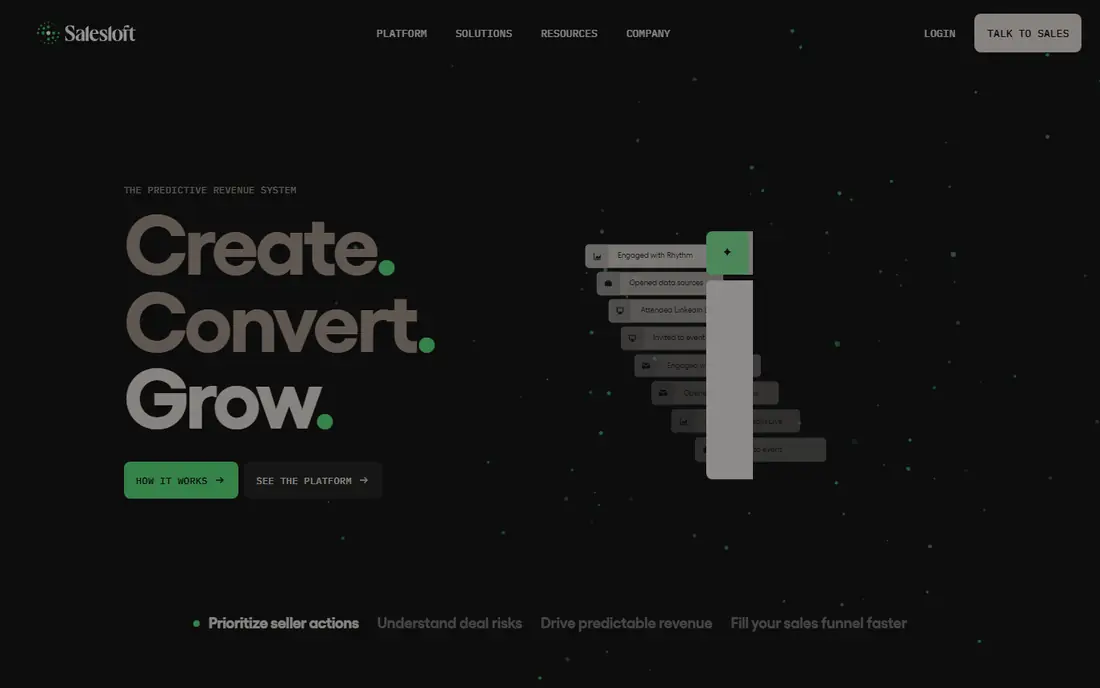
Salesloft serves enterprise teams that run multichannel cadences with coaching built in. Email, calls and social steps sit in one cadence, while conversation intelligence surfaces what works in real calls. Managers get coaching workflows and analytics that go beyond reply rates into deal outcomes.
Pricing is quote-based and enterprise-scale, and a full rollout needs training and change management. For a large sales organisation, that investment buys consistency and insight. For a small team, simpler sequencers deliver meetings sooner and cheaper.
- Multichannel cadences across email, calls and social
- Conversation intelligence and coaching
- Strong analytics
- Quote-based pricing at enterprise levels
- Rollout takes time and training
Lemlist suits teams that want outreach to feel personal rather than templated. Personalised images, videos and landing pages sit inside multichannel sequences across email and LinkedIn, with deliverability features to protect sender reputation. That personal touch helps in crowded inboxes where generic sequences get ignored.
Personalisation costs effort. A team must create assets and write genuinely relevant copy, or the features add cost without adding replies. Lemlist rewards teams willing to do that work, and it suits agencies and sales teams selling higher-value deals where each reply matters.
- Personalised images, videos and landing pages
- Multichannel sequences
- Deliverability tools
- Price rises with team size
- Personalisation features need content effort
Instantly is a favourite for high-volume cold email because its sending plans start low and scale with inboxes. Deliverability tools, warmup and inbox management help teams protect domains while sending at volume, and the interface stays focused on the sending job. Agencies running many campaigns value that focus.
The headline price covers sending only. A separate database product and a separate CRM product each add cost, so teams wanting an all-in-one stack should total the full price. Instantly suits teams that already have verified data and want a strong sender, rather than teams needing data and CRM too.
- Low entry price for high-volume sending
- Unlimited inboxes on higher plans
- Deliverability features
- Database and CRM are separate paid products
- Volume needs careful domain setup
Reply.io suits small and mid-size teams that want multichannel sequences without enterprise complexity. Email, LinkedIn and call steps combine in one cadence, AI tools help draft and personalise messages, and analytics show which steps drive replies. That balance makes it a practical middle ground between budget senders and enterprise suites.
Reply.io does not solve data quality on its own. Teams still need verified prospect lists, and the best results come from careful targeting rather than larger blasts. For teams with good data and a need for multichannel reach, Reply.io is a strong, approachable pick.
- Multichannel sequences across email, LinkedIn and calls
- AI-assisted writing
- Solid analytics
- Advanced features sit on higher tiers
- Data quality depends on the source list
Saleshandy suits budget-conscious teams that need reliable cold email without paying for an enterprise suite. Sequences, tracking, deliverability tools and a built-in lead database cover the core workflow at a low monthly price. Setup stays simple, which helps small teams start sending in days rather than weeks.
All-in-one depth is thinner here than in Apollo or Reply.io, and teams needing deep prospect intelligence will add a data tool. For a small team or solo founder with a clear target list, Saleshandy delivers the essential outreach job at a price that leaves room for data and domains.
- Low entry price
- Deliverability and tracking features
- Simple sequence setup
- Database features are thinner than all-in-one rivals
- Advanced automation sits higher
Mailshake suits teams that want email and phone outreach in one simple tool. Sequences combine with a built-in power dialer, so reps can work calls and emails from the same list without switching apps. Deliverability guidance and tracking help small teams protect domains while learning what messaging works.
The price sits above budget senders, so teams sending email only may find cheaper options. Mailshake earns its price for teams that actually call prospects as part of sequences, since the dialer removes a separate subscription. Teams that never call should compare email-only tools first.
- Simple sequence and dialer workflow
- Good deliverability guidance
- Phone and email in one tool
- Price is higher than budget senders
- LinkedIn automation is limited
Snov.io combines lead finding, email verification and outreach sequences in one affordable platform. Teams can find prospects, verify addresses, run drip campaigns and track replies without stitching several tools together. That combination suits small teams and agencies that need a complete workflow on a budget.
Database coverage varies by industry and region, so teams in niche markets should test finder accuracy on their own target lists first. Verification helps, but it does not fix a weak list. For teams with a clear niche and a need for an affordable all-rounder, Snov.io is a practical choice.
- Email finder and verifier plus sequences
- Affordable entry pricing
- CRM features included
- Database coverage varies by market
- Advanced automation needs higher tiers
Woodpecker suits teams that care most about landing in the inbox. Bounce protection, warmup and deliverability monitoring sit at the centre, with simple campaign setup that avoids the clutter of larger platforms. Agencies and small teams that have burned domains before will appreciate that discipline.
Multichannel depth is thinner than in Lemlist or Reply.io, and Woodpecker does not lead on prospect data. Teams wanting LinkedIn steps or a large database should pair it with another tool or choose a multichannel platform. For email-first outreach with inbox health as the priority, Woodpecker is a focused pick.
- Strong deliverability focus
- Bounce protection and warmup
- Simple campaign setup
- Multichannel features are thinner than rivals
- Database is not the main strength
How we picked these
We compared official product and pricing pages, documentation and public reviews, and kept only tools that exist and work in October 2026 and truly support outreach sequences. We covered all-in-one suites, enterprise platforms and budget senders, because buyers choose across those tiers. Where vendors do not publish pricing, we wrote See website rather than estimating.
Sales outreach versus review outreach
Sales outreach and review outreach share tools but not rules. Sales outreach targets cold or warm prospects with sequences that earn a reply, and success depends on accurate data, relevant messaging and careful domain management. Review outreach targets existing customers after a good experience, and success depends on timing, simplicity and platform rules.
Review platforms forbid incentives for positive reviews and penalise selective solicitation, so a review campaign must invite all customers fairly and never script the content. Tools built for sales sequences can send review requests, but the message, timing and follow-up need a different design. Keep review asks short, send them soon after delivery or service, and make the link easy to find. Never offer payment or discounts in exchange for a positive rating, and never filter out unhappy customers from the invitation list.
Deliverability applies to both jobs. Warm up new domains, verify lists, respect unsubscribe requests, and follow anti-spam law in each market you contact. A tool can automate sending, but it cannot fix a purchased list, a misleading subject line or a message sent to people who never agreed to hear from you.
Frequently asked questions
What is the best outreach software for small teams?
Apollo.io, Reply.io and Snov.io suit many small teams, since each combines prospecting or sequencing without enterprise pricing. Saleshandy and Woodpecker suit email-only teams on tighter budgets. Choose by whether you need data, multichannel steps or deliverability most.
What are the best sales outreach tools for enterprises?
Outreach and Salesloft lead for enterprise teams, with deep orchestration, coaching and forecasting. Apollo.io also scales for larger teams that want data and sequences together. Enterprise picks need a rollout plan, CRM integration work and admin ownership.
What is the best review outreach tool?
Review outreach works best as a process inside a sales or email tool, or inside a dedicated reputation platform, rather than as a sales sequence alone. Use short, fairly sent requests soon after a good experience, and follow each review platform's rules on incentives and solicitation. Never pay for positive reviews or hide unhappy customers from invitations.
How much do outreach tools cost?
Entry prices here range from $25 per month for Saleshandy and $29 for Woodpecker, to $37 for Instantly, $39 for Snov.io, $49 per user per month for Apollo.io and Reply.io, $55 for Lemlist and $59 for Mailshake. Enterprise platforms are quote-based. Add data, domains and verification costs to the subscription price.
Does Apollo.io replace a separate data vendor?
For many teams, yes at the start, since Apollo combines a large database with sequences and a dialer. Teams in niche markets or targeting senior buyers often still add a specialist data vendor for accuracy. Test bounce rates on your own segments before relying on one source alone.
How do teams protect deliverability in cold outreach?
Warm up new domains slowly, verify email addresses before sending, keep lists targeted, and monitor bounce and spam complaint rates daily. Use separate domains for cold outreach rather than risking the main company domain. Stop and fix the list when bounces rise, since reputation damage is slow to repair.
Sources
See where you really rank - block by block
ProMapRanker scans Google Maps across a grid of your service area. Simple monthly plans from $19, white-label on every plan.
Start freeKeep reading
 who has best internet service
Who Has the Best Internet Service in 2026
Who has best internet service for US homes? We compare fiber, cable, fixed wireless and satellite providers on speed, price, availability and terms today.
Read → which survey tool has the best analytics
Which Survey Tool Has the Best Analytics in 2026
Find which survey tool has the best analytics in 2026, comparing Qualtrics, SurveyMonkey, Typeform, Alchemer, and more on reports, text, and stats today.
Read → which streaming service has the best movies
Which Streaming Service Has the Best Movies in 2026
Answering which streaming service has the best movies, with Netflix, Max, Criterion and more compared on libraries, prices and free options in this guide.
Read →