 ProMapRanker
Best Native ERP Integration Platforms in 2026

Key takeaways
- Celigo leads for NetSuite shops, while SAP Integration Suite and Oracle Integration Cloud lead inside their own ERP estates.
- Only Zapier, Make and Tray.ai publish a clear entry price, so most enterprise buyers should expect a sales quote.
- Per-task and per-credit billing can change the monthly bill fast, so count the actions in each flow before you sign.
- Native ERP connectors cut setup time, but they do not remove the need for data mapping, error handling and testing.
- Small teams get the best value from Zapier or Make, while large estates get more from Workato, Boomi or MuleSoft.
Quick comparison
| Pick | Great for | Pricing starts at | Free tier | |
|---|---|---|---|---|
 Celigo | NetSuite integrations | quote only | Yes | Visit |
 Workato | Enterprise automation at scale | quote only | No | Visit |
 Boomi | Broad enterprise integration | quote only | Free trial (30 days) | Visit |
 MuleSoft Anypoint Platform | API-led integration | quote only | Free trial (30 days) | Visit |
 Jitterbit | Mid-market ERP and CRM links | quote only | Free trial (30 days) | Visit |
 Tray.ai | AI-assisted integration building | $50 per month | Free trial (30 days) | Visit |
 Zapier | Quick no-code links | $19.99 per month | Yes | Visit |
 Make | Visual multi-step scenarios | $9 per month | Yes | Visit |
 Oracle Integration Cloud | Oracle ERP estates | quote only | Yes | Visit |
 SAP Integration Suite | SAP ERP estates | quote only | Free trial (90 days) | Visit |
The best native ERP integration platforms
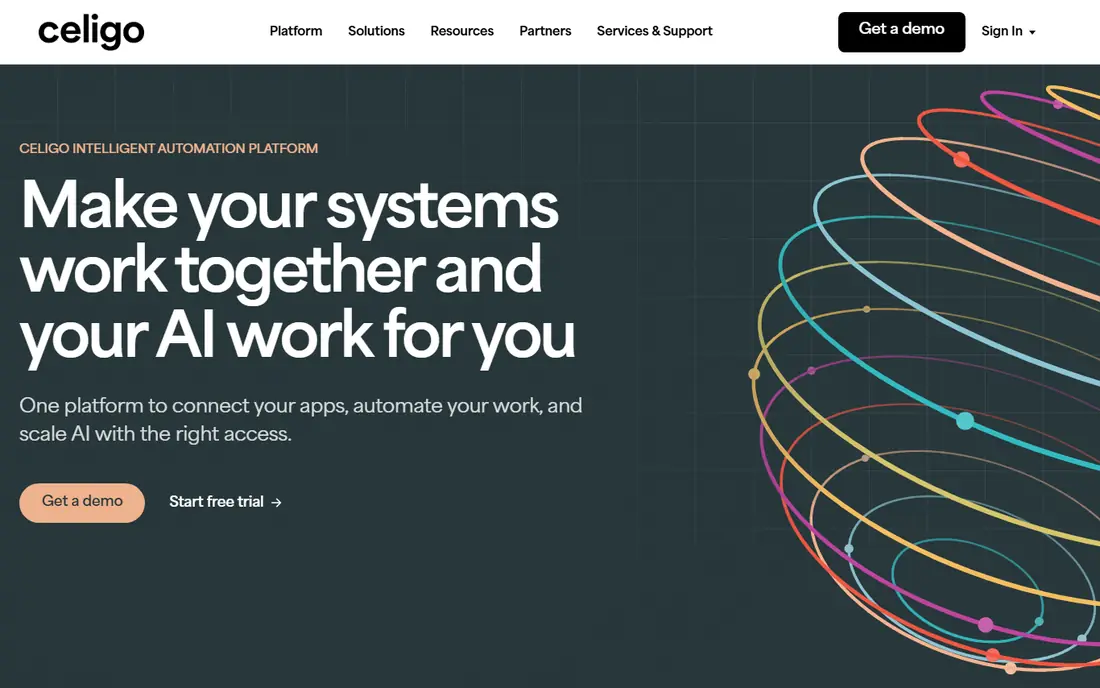
Celigo built its name on NetSuite. Its integrator.io platform ships with a NetSuite SuiteApp and a library of prebuilt integration apps that link NetSuite to Shopify, Salesforce, Amazon, HubSpot and other common systems. For a team that runs NetSuite as its core system, that focus shortens the path from signed contract to live data flow, since the standard order, inventory and customer syncs already exist as templates.
Pricing is quote based and scales with the number of flows and the volume that passes through them. Independent estimates put entry bundles near $600 a month and enterprise plans above $5,000 a month, but Celigo does not publish list prices on its own site, so treat those figures as a guide only. A free edition covers two endpoints and one flow, which is enough to test a single sync. The main limit is scope. Outside standard NetSuite patterns the platform is less flexible, and unusual workflows may need custom code or a different tool.
- Deep NetSuite SuiteApp with hundreds of prebuilt flows
- Flat fees with no per-transaction charges
- Weaker outside standard NetSuite use cases
- Custom work may need coding
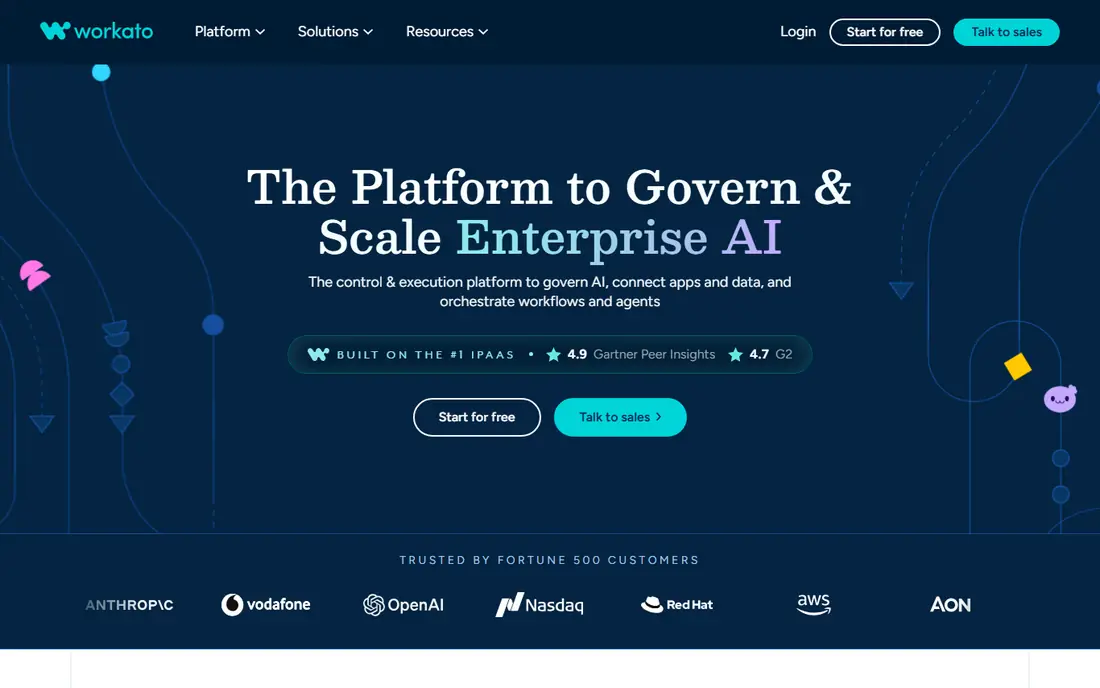
Workato is an enterprise automation platform built around recipes, which are visual workflows that link apps, move data and trigger actions. It covers NetSuite, SAP, Oracle, Salesforce and hundreds of other systems, and its connector library is one of the widest in this list. Teams use it to connect ERP data with CRM, finance, HR and support tools without writing custom middleware for each link.
Pricing is custom and starts near $10,000 a year by independent reports, which puts Workato out of reach for many small firms. There is no free tier, so evaluation runs through a sales-led trial. The platform earns its price on governance, with role-based access, audit logs and version control that matter once dozens of people build flows. The cost to watch is usage. Recipe runs and task volume grow with the business, and the bill follows, so buyers should model a full year of runs before they commit.
- Large connector library and recipe-based building
- Strong governance and AI-assisted flow building
- Entry cost is high for small teams
- Usage-based pricing can climb fast
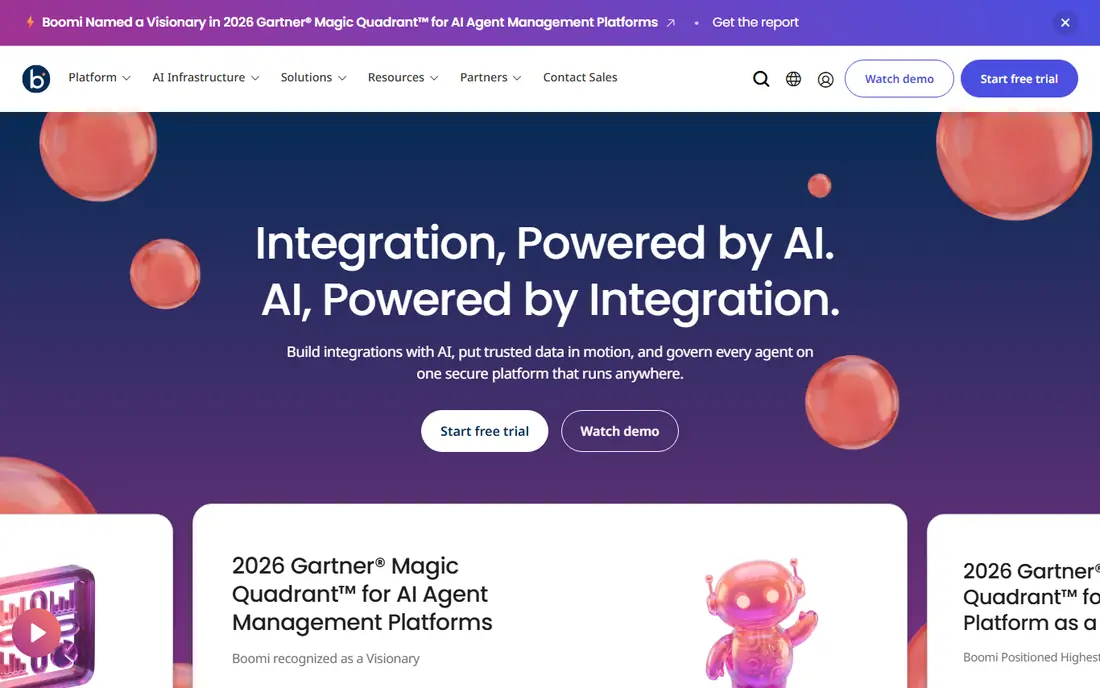
Boomi is a long-running integration platform that links ERP, CRM, cloud apps and on-premise systems through a visual designer. Flows run on Atoms, which are lightweight runtimes that can sit in the cloud or behind a firewall. That design suits firms with a mix of old and new systems, since the same flow model covers cloud-to-cloud links and links back into legacy databases.
Boomi does not publish list pricing, and enterprise bundles often pass $100,000 a year by independent reports. A 30-day trial lets a team test the designer and a small set of flows. The platform covers a lot of ground, including API management, master data and EDI, which makes it a single-vendor answer for firms that want one integration stack. The trade is complexity. Large projects still need skilled developers, and the breadth of the platform can slow down a team that only needs a handful of simple syncs.
- Visual low-code designer and Atom runtime
- Broad connector and API management coverage
- Enterprise bundles can pass $100,000 a year
- Complex projects need skilled developers
MuleSoft Anypoint Platform, from Salesforce, takes an API-led approach. Instead of point-to-point links, teams build reusable APIs for each system, then compose those APIs into new flows. That model fits large firms with many systems, since one SAP or Oracle API can serve a dozen downstream apps. The platform also covers API design, testing, security and monitoring in one place.
Pricing is quote only, and independent reports put typical costs from $1,500 to more than $15,000 a month, which makes MuleSoft one of the most expensive options here. A 30-day trial is available for evaluation. The platform is a strong pick for regulated industries that need full API governance and audit trails. The limit is skill. Running it well needs developers who know API design and the Anypoint tooling, so small teams without that skill set will move slowly and pay for help.
- Full API lifecycle management in one platform
- Strong fit for large, regulated estates
- Among the most expensive options
- Needs specialist developers to run well
Jitterbit Harmony links ERP, CRM, ecommerce and other systems through a low-code designer, and it adds API management, EDI and app building in the same platform. That breadth suits mid-market firms that need more than simple syncs but cannot fund a Boomi or MuleSoft rollout. Its ERP connectors cover NetSuite, SAP, Microsoft Dynamics and Sage, with templates for common order and customer flows.
Pricing is quote only, though independent reports place entry costs below the big enterprise suites. A 30-day trial covers evaluation. The platform is a sound middle ground between the low-cost automation tools and the enterprise suites, with enough depth for serious integration work. Two limits stand out. The user community is smaller than Workato or MuleSoft, so answers and third-party guides are thinner. Some advanced features, including parts of the API and EDI tooling, sit in higher tiers, so buyers should confirm which tier holds the features they need.
- Harmony platform covers integration, API management and EDI
- Lower entry cost than the big suites
- Smaller community than the market leaders
- Some advanced features sit in higher tiers
Tray.ai, formerly Tray.io, is a cloud integration platform with a visual builder and an AI assistant that drafts flows from plain-language descriptions. Its connector library covers more than 700 apps, including NetSuite, SAP, Salesforce and HubSpot. The newer Tray Helix Builder Edition, which starts at $50 a month, targets teams that want AI-built apps and integrations on a managed runtime.
The core iPaaS plans, Pro, Team and Enterprise, are quote only, so the published $50 entry price covers the Helix edition rather than the full platform. A 30-day trial with one million tasks lets a team test the builder and the connector library. The AI drafting is a real time saver for standard flows, and the platform scales from simple syncs to multi-system automation. The limit is usage. Task caps and log retention vary by tier, and busy flows can hit limits sooner than buyers expect, so check the task allowance against real monthly volumes.
- AI-assisted flow building and more than 700 connectors
- Helix Builder Edition starts at $50 a month
- Core iPaaS plans need a sales quote
- Usage limits can bite on busy flows
Zapier is the best-known no-code automation tool, and it is the fastest way to link an ERP to the apps around it. Its directory covers more than 7,000 apps, so the odds are good that a buyer finds ready connectors for NetSuite, SAP Business One, QuickBooks, Salesforce and Slack. Building a flow means picking a trigger, then adding action steps, with no code needed for standard cases.
The Starter plan costs $19.99 a month billed annually and includes 750 tasks a month, multi-step Zaps and premium apps. Monthly billing costs $29.99 a month. A free tier covers 100 tasks a month and five single-step Zaps, which is enough for a small test. The main limit is the billing model. Every action step in a flow counts as one task, so a three-step flow that runs 400 times a month uses 1,200 tasks and needs a higher tier. ERP syncs with many steps can get costly, so count the steps in each flow before choosing a tier.
- More than 7,000 app integrations and the fastest setup
- Simple trigger and action model
- Per-task billing punishes multi-step flows
- The free tier caps at 100 tasks a month
Make, formerly Integromat, is a visual automation platform where flows, called scenarios, are drawn as branching diagrams with routers, filters and error handlers. That visual model suits ERP work, where one order may need to split into inventory, invoicing and shipping steps. The platform covers NetSuite, SAP, Microsoft Dynamics and other ERP systems, plus CRM, ecommerce and finance apps.
The Core plan costs $9 a month billed annually for 10,000 credits, with most module actions costing one credit. Monthly billing costs $10.59 a month. A free tier covers 1,000 credits a month. At the entry level Make is far cheaper per action than Zapier, which makes it the value pick for teams that run many steps per flow. Two limits apply. The app library is smaller than Zapier, so some niche ERP connectors may be missing. The visual builder is simple at first, but complex scenarios with routers and error paths take time to learn and to debug.
- Visual builder with branching and routing
- Credit pricing is cheap per action
- Smaller app library than Zapier
- Learning curve rises with scenario complexity
Oracle Integration Cloud is Oracle's integration platform, and it is the natural pick for firms that run Oracle Fusion Cloud ERP or NetSuite. It ships with prebuilt adapters for Oracle apps, plus connectors for Salesforce, SAP, Workday and other common systems. Flows are built in a visual designer, and the platform also covers API management, process automation and file transfer.
Pricing is usage based and quote only for larger use, though an Oracle Cloud free tier gives a starting point for testing. That model suits Oracle shops, since integration spend can sit inside the same cloud bill as the ERP itself. The platform is deep on Oracle-to-Oracle flows, with strong mapping and monitoring for Fusion and NetSuite data. The limit is fit. Outside Oracle estates the value drops, since much of the prebuilt content assumes Oracle apps, and setup assumes the team already knows Oracle Cloud. Non-Oracle buyers will find better value elsewhere on this list.
- Native links to Oracle Fusion and NetSuite
- Usage-based pricing with a free tier
- Best value only inside Oracle estates
- Setup assumes Oracle knowledge
SAP Integration Suite runs on SAP Business Technology Platform and is the native integration choice for SAP S/4HANA and SAP ERP estates. It ships with prebuilt integration content packages for SAP apps and for common third-party systems, covering order, finance, HR and supply chain flows. The suite also covers API management, event handling and business-to-business links in one service.
Pricing is quote only, and sales cycles are long, so buyers should start the conversation early. A 90-day trial through SAP BTP lets a team test the tooling and the prebuilt packages. Governance is a strength, with central monitoring, security and transport controls that suit large SAP estates. The limit is scope. The suite is built for SAP first, so firms with little SAP in their stack will pay for depth they never use. Teams should also confirm which content packages their SAP licences already cover, since some carry separate terms.
- Native SAP connectors and prebuilt content packages
- Runs on SAP BTP with strong governance
- Quote-only pricing with long sales cycles
- Weaker fit outside SAP systems
How we chose
We compared vendor pricing pages, product docs and connector catalogs for each platform, and we checked which ERP systems each one covers natively. A platform earned a place here if it ships a native ERP connector or a prebuilt ERP content package, not just a generic API or webhook. We ranked ease of setup, connector depth, billing model and governance, and we noted where the vendor hides its price. No hands-on testing was done for this guide, and prices were read from vendor pages and vendor-cited sources in November 2026. Prices change, so confirm the current figure on the vendor pricing page before you budget.
What to check before you buy
Start with the ERP you run. A native connector for NetSuite, SAP or Oracle cuts weeks from setup, while a generic connector means custom mapping and more testing. Count the actions in each flow, not just the flows, since per-task and per-credit billing turns a three-step flow into three charges per run. Ask which tier holds the features you need, since API management, EDI and advanced monitoring often sit above the entry tier. Check data residency and security terms if you move customer or finance data, and confirm how errors surface, since a failed order sync that no one notices costs more than the subscription.
| Team size | Monthly budget | Best pick | Why | | 1 to 10 people | Under $50 | Make or Zapier | Low entry price, fast setup, no sales call | | 11 to 50 people | $50 to $1,000 | Celigo or Tray.ai | ERP depth without enterprise cost | | 51 to 500 people | $1,000 to $10,000 | Jitterbit or Workato | Governance plus broad connectors | | Over 500 people | Over $10,000 | Boomi or MuleSoft | API management and full lifecycle control |
Frequently asked questions
What is a native ERP integration platform?
A native ERP integration platform ships ready connectors and prebuilt flows for a specific ERP, such as NetSuite, SAP or Oracle, instead of asking you to build each link from a generic API. That saves setup time and keeps field mapping consistent, though you still need to test each flow with real data before it goes live.
Which platform is best for NetSuite?
Celigo is the strongest pick for NetSuite, since it was built by former NetSuite staff and ships a NetSuite SuiteApp with hundreds of prebuilt flows. Workato, Boomi and Jitterbit also cover NetSuite well. Small teams that only need a few syncs can start with Zapier or Make and move to Celigo as volume grows.
How much does ERP integration software cost?
Entry prices range from $9 a month for Make Core to quote-only enterprise platforms that start near $10,000 a year. Most enterprise tools hide their prices, so expect a sales quote. Per-task and per-credit billing means the real monthly cost depends on how many actions your flows run, not just the plan you pick.
Do I need developers to run these tools?
Zapier and Make need no coding for standard flows, while Celigo, Jitterbit and Tray.ai suit admins with some technical skill. Boomi, MuleSoft and SAP Integration Suite need developers for large projects, since API design, mapping and error handling grow complex at enterprise scale.
Can I connect an ERP without an integration platform?
Yes, you can build direct API links or use the ERP vendor's own tools, but that means writing and maintaining code for each system pair. An integration platform replaces that code with visual flows, prebuilt connectors, monitoring and error handling, which is why most teams pick one once they pass a handful of links.
Sources
- https://www.celigo.com/
- https://www.workato.com/
- https://boomi.com/
- https://www.mulesoft.com/
- https://www.jitterbit.com/
- https://tray.ai/pricing
- https://zapier.com/pricing
- https://www.make.com/en/pricing
- https://www.oracle.com/integration/
- https://www.sap.com/products/technology-platform/integration-suite.html
See where you really rank - block by block
ProMapRanker scans Google Maps across a grid of your service area. Simple monthly plans from $19, white-label on every plan.
Start freeKeep reading
 best scheduling software for med spas
Best Scheduling Software for Med Spas in 2026
Compare the best scheduling software for med spas, with real prices and calendar features, so you can run staff schedules and waitlists without double bookings.
Read → best scheduling software for law firms
Best Scheduling Software for Law Firms
Compare the best scheduling software for law firms, with real 2026 prices, intake forms, and calendar sync, so clients can book easily without phone tag.
Read → best scheduling software for gyms
Best Scheduling Software for Gyms in 2026
Compare the best scheduling software for gyms, with real prices and timetable features, so you can run classes, coaches and waitlists without double bookings.
Read →