 ProMapRanker
Best Multi Vendor Marketplace Platforms in 2026

Key takeaways
- Sharetribe is the fastest way to test a marketplace idea, while CS-Cart Multi-Vendor gives you more control over the code and hosting.
- Shopify only becomes a true marketplace when you add a marketplace app, so budget for both the store plan and the app.
- Enterprise options such as Mirakl and Marketplacer are built for large retailers, and their pricing is handled by sales teams rather than published plans.
- Vendor onboarding, commission splits, and payout handling matter more than the storefront design, so check those three features first.
- Self-hosted software can cost less over time, but you or your developer will own hosting, updates, and security.
Quick comparison
| Pick | Great for | Pricing starts at | Free tier | |
|---|---|---|---|---|
 Shopify | Stores adding a vendor layer | See website | Free trial | Visit |
 Sharetribe | Fast marketplace launches | $39 per month | No | Visit |
 CS-Cart Multi-Vendor | Self-hosted product marketplaces | $725 per year | Free trial | Visit |
 Mirakl | Large enterprise marketplaces | See website | No | Visit |
 YoKart | Product marketplaces with a one-time license | See website | No | Visit |
 Arcadier | Hosted service and product marketplaces | See website | Free trial | Visit |
 Marketplacer | Retailers adding third-party sellers | See website | No | Visit |
 Webkul | Marketplace extensions and custom builds | See website | No | Visit |
 Dokan | WordPress marketplaces on WooCommerce | See website | Yes | Visit |
The best multi vendor marketplace platforms
We compared hosted tools, self-hosted software, and enterprise platforms on vendor tools, commission handling, and total cost, so you can match the platform to the size of marketplace you actually plan to run.

Shopify is the sensible starting point when you already sell online and want to add other sellers without rebuilding your store. Its checkout, discount tools, and payment handling are familiar to buyers, and that familiarity can help a new marketplace look credible from day one. The trade is that Shopify was built as a store platform first, so vendor dashboards, commission rules, and payout splits come from third-party marketplace apps rather than from Shopify itself.
That app layer shapes the whole decision. A simple setup with a small number of vendors can work well, but a large catalog with complex commission rules will push against what an app can do cleanly. Before you commit, list the vendor tasks you need, such as separate seller logins, product approval, order routing, and commission reports, and test them in the app you plan to use. If those tasks feel forced, a marketplace-first platform will save you work later, even if Shopify feels easier at the start.
- Huge app and theme ecosystem
- Familiar checkout for buyers
- Strong inventory, discount, and payment tools
- No built-in multi-vendor system
- Marketplace apps add cost and limits
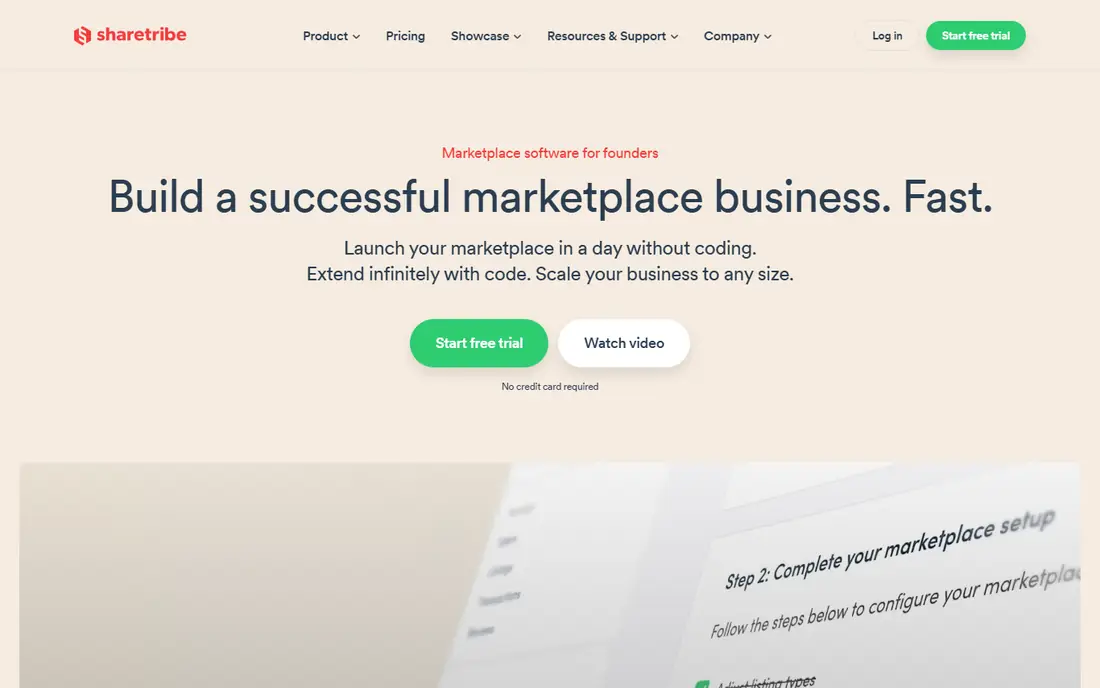
Sharetribe is built around the marketplace problem itself, which is why it suits founders who want to test an idea in weeks rather than months. Vendor profiles, listings, booking or ordering flows, messaging, and commission settings are part of the core product, so you do not have to assemble them from separate apps. Its lower-priced build plan is aimed at working in a test environment, while going live sits on a higher plan, so read the plan limits before you publish.
The honest limit is scale and retail depth. Sharetribe works well for service marketplaces, rentals, peer-to-peer sales, and niche product marketplaces, but a very large retail catalog with complex product variants may feel constrained. If your marketplace grows past that point, you may need custom development or a move to a different platform.
- Built for two-sided marketplaces
- No platform transaction fee on paid plans
- No-code building tools
- Less depth for large product catalogs
- Advanced custom work needs developers
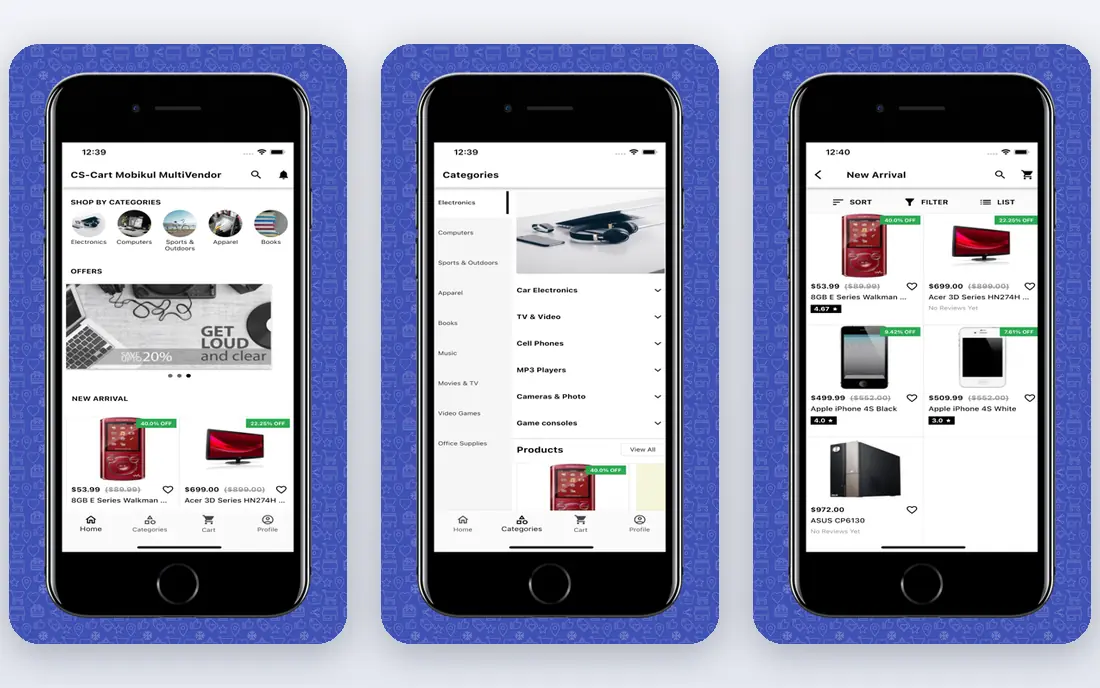
CS-Cart Multi-Vendor is the clearest choice for a team that wants to own its marketplace software and know the license cost up front. You install it on your own server, you control the code, and you can extend it with add-ons for shipping, payments, vendor tools, and design. Annual plans start at the Standard level, with higher tiers adding more features, and lifetime licenses are also listed on the vendor site.
Ownership brings work, and that work should be priced into your plan. Your team handles hosting, backups, security patches, and upgrades, and some workflows will still need an add-on or a developer. For a small team with technical help, that trade is often a good one, because you are not paying a monthly platform fee that grows with your sales. For a non-technical founder, the same trade can become a burden, so be honest about who will maintain the site after launch.
- You own the software and hosting choice
- Wide add-on library
- Clear published license pricing
- You run hosting, updates, and security
- Add-ons add cost
Mirakl is not a tool for a first marketplace, and that is exactly its strength for the right buyer. It is designed for retailers and brands that already have traffic and want to add many third-party sellers, manage large catalogs, and run seller onboarding at scale. Its catalog, payout, and seller management tools are built for teams with operations staff, not for a solo founder testing an idea. If you fit that profile, the depth here is hard to match with a small-business tool.
The cost and timeline reflect that scope. Pricing is handled through sales, and implementation usually involves planning, integration, and migration work. A small marketplace would pay for capacity it does not need and would likely find the setup heavy. For a large retailer, though, the same structure is the point, because it keeps seller quality, catalog data, and payments under control as the marketplace grows.
- Built for high seller volumes
- Strong seller onboarding and catalog tools
- Used by large retailers
- Enterprise pricing only
- Long implementation for most teams
YoKart suits a product marketplace owner who wants a long-term asset rather than a monthly subscription. It is self-hosted, it offers source code access depending on the package, and it covers the vendor features that matter in daily use, such as seller dashboards, product management, order handling, and commission settings. That combination appeals to teams building a marketplace they expect to run for years, because the platform cost does not keep rising with the business in the same way a subscription does.
The catch is the setup. You will need hosting and either in-house skill or a developer for installation, design changes, and maintenance. Pricing is handled through the vendor rather than a simple published plan, so get a written quote that covers the license, any mobile apps, and support. If you have that help lined up, YoKart gives you a solid product marketplace base. If you do not, a hosted option will get you live faster.
- One-time license model
- Full source code access on higher packages
- Strong vendor and product tools
- Self-hosting and setup need technical help
- Pricing is quote-based
Arcadier takes the hosted route, which means you can build a marketplace without managing servers or code. It offers templates for product and service marketplaces, vendor storefronts, and admin controls, and it is a reasonable middle ground between a simple no-code builder and an enterprise platform. For a small or mid-size team that wants to launch quickly but still needs a proper vendor system, that middle ground is often the right place to be.
The limit to watch is customization. Lower plans cover standard marketplace needs well, while unusual workflows, deep integrations, or a fully custom front end may need a higher plan or developer help. Test your exact listing type, checkout flow, and commission model during the trial, because those details decide whether Arcadier fits or whether a more open platform would suit you better. Price through a quote, so compare the full plan cost, not just the trial terms.
- Hosted setup with marketplace templates
- Supports product and service listings
- API access on higher plans
- Custom work can be limited on lower plans
- Pricing details require a quote
Marketplacer is aimed at established retailers that want to expand their range by adding third-party sellers without stocking every product themselves. Its strength is in seller onboarding, product data management, and connecting seller catalogs to an existing store, which are the messy parts of a retail marketplace. If you already run a store with steady traffic, those tools can turn a marketplace from a side project into a real sales channel.
It is not a starter tool, and small teams will find the sales-led pricing and implementation process heavy for a first launch. There is no simple self-serve plan to test the idea cheaply, so Marketplacer only makes sense when you have the traffic, team, and catalog volume to justify it. For that buyer, the focus on retail operations is a real advantage over a general marketplace builder.
- Built for retailer marketplaces
- Seller onboarding and product data tools
- Integrates with existing commerce systems
- Enterprise focus
- Not suited to small startup marketplaces
Webkul is different from most names on this list, because it mainly sells marketplace extensions and builds rather than a single standalone platform. If you already run a store on a major commerce system and want to add multi-vendor features, Webkul likely has a plugin for that system, and it also offers custom development for teams with specific needs. That makes it useful when you want to keep your current store and add a vendor layer without migrating.
The risk is that you are buying an add-on, not a complete marketplace, so the base platform still sets many limits. Check the exact extension for your platform version, read what it covers for vendor registration, commissions, shipping, and payouts, and confirm support terms before you buy. For the right existing store, Webkul is a practical shortcut. For a brand-new marketplace, a dedicated platform will usually give you a cleaner starting point.
- Wide range of marketplace plugins and apps
- Works with major commerce platforms
- Custom development available
- Quality and fit vary by product
- You still need a base platform
Dokan is the natural pick when your site already runs on WordPress and WooCommerce. It adds vendor registration, vendor dashboards, product management, order handling, and commission settings on top of the store you already have, and a free version covers basic marketplace use. That makes it a low-risk way to test whether sellers will join your marketplace before you pay for a larger platform or a custom build.
WordPress is also the limit. Your marketplace will only be as fast and stable as your hosting, theme, and plugin mix, and a large number of vendors can strain a shared hosting plan. For WordPress teams, Dokan is a strong and affordable route. For teams starting from scratch, a marketplace-first tool may be simpler to run.
- Turns WooCommerce into a multi-vendor store
- Vendor dashboards included
- Free version for basic marketplaces
- Tied to WordPress and WooCommerce
- Performance depends on your hosting
How we picked these
We compared official feature pages, pricing pages, and public marketplace guides, and we kept only platforms that are live and clearly support multiple vendors, seller dashboards, and commission or payout handling. We favored a mix of hosted tools, self-hosted software, and enterprise systems, so the list covers a solo founder, a growing product marketplace, and a large retailer. We did not count a plain store platform as a marketplace platform unless it has a credible marketplace route, and we marked prices as See website where the vendor does not publish a simple starting price.
What to check before you choose a marketplace platform
Start with the vendor side, not the storefront. A marketplace fails when sellers cannot list products easily, cannot see their orders, or cannot trust payouts, so run a full vendor test before you pay. Create a seller account, list a product, place a test order, refund part of it, and check how the commission and payout reports look. If any step needs a workaround, that friction will repeat for every seller you recruit.
Next, map your money flow. Some platforms handle split payments and payouts directly, while others leave payout timing and fees to you and your payment provider. Ask how refunds, partial refunds, and failed payments are handled, and who pays the payment processing fee on a split order. That answer affects your margins more than a small difference in monthly price, so get it in writing from the vendor.
Finally, plan for growth in stages. A hosted tool may be right for year one and too limited in year three, while a self-hosted license may be too much work in year one and the right asset later. Choose the platform that fits the next twelve months, check how you can export vendor and order data, and avoid locking your catalog into a system you cannot leave. A clean exit path is part of a good platform choice, even if you never use it.
Frequently asked questions
What is the best multi vendor marketplace platform for beginners?
Sharetribe is the easiest starting point for most beginners, because vendor tools and commission settings are built in and you do not manage servers. Dokan is also a good beginner route if you already run WordPress and WooCommerce. Pick the one that matches the site you already have, rather than learning a new system for no reason.
What is the best marketplace software for a product marketplace?
CS-Cart Multi-Vendor and YoKart are strong product marketplace choices, because both are built around product catalogs, vendor dashboards, and order handling. Sharetribe can also work for smaller product catalogs, but it is stronger for services and rentals. Test your product variants and shipping rules before you commit.
What is the best multi vendor ecommerce platform for a large retailer?
Mirakl and Marketplacer are built for large retailers adding many third-party sellers, with seller onboarding and catalog tools at scale. Both use sales-led pricing, so expect an implementation project rather than a quick signup. If you are not at that scale yet, a hosted or self-hosted tool will be faster and cheaper.
How much does a multi vendor marketplace platform cost?
Costs range from a free Dokan start on your own WordPress hosting to a few hundred dollars a year for a CS-Cart license, to enterprise pricing for Mirakl and Marketplacer. Add payment processing fees, hosting where relevant, and any marketplace apps or add-ons. Always compare the total first-year cost, not just the headline plan price.
Can I build a multi vendor marketplace with Shopify?
Yes, but only by adding a marketplace app, because Shopify does not include a full multi-vendor system by itself. That route works well for a store adding a small vendor layer, and it keeps the familiar Shopify checkout. For a large marketplace with complex commissions, a marketplace-first platform is usually a better fit.
What is the best software marketplace for selling digital products?
For digital products, check whether the platform supports file delivery, license keys, and download limits, because not every marketplace tool does. A WordPress and Dokan setup or a custom build can handle digital delivery well, while some hosted tools are aimed mainly at physical goods. Confirm digital delivery before you choose, since it is hard to add later.
Sources
See where you really rank - block by block
ProMapRanker scans Google Maps across a grid of your service area. Simple monthly plans from $19, white-label on every plan.
Start freeKeep reading
 best tour operator software
Best Tour Operator Software in 2026
Compare the best tour operator software for bookings, channel management, waivers and payments, with pricing models for day tours and multi-day trips.
Read → best time clock app for small business
Best Time Clock App for Small Business in 2026
We compare the best time clock app for small business options, with free plans, GPS clock ins, scheduling and payroll links for hourly teams and payroll help.
Read → best test automation tools
Best Test Automation Tools in 2026
Compare the best test automation tools, from Playwright and Selenium to Cypress, Katalon and BrowserStack, with prices, languages and best uses explained.
Read →