 ProMapRanker
Best Medical Software in 2026

Key takeaways
- athenahealth suits practices that want managed billing tied to collections, while SimplePractice suits solo therapists and small behavioural health teams.
- DrChrono suits mobile-first practices, and Practice Fusion suits budget-minded clinics that want straightforward charting.
- Epic and Oracle Health suit hospitals and large health systems, not small clinics, because implementation and cost are far higher.
- Price the full bundle, including EHR, billing, e-prescribing, telehealth and support, and check HIPAA, certification and clinician review before you sign.
Quick comparison
| Pick | Great for | Pricing starts at | Free tier | |
|---|---|---|---|---|
 athenahealth | Managed billing and revenue | See website | No | Visit |
 SimplePractice | Solo therapists and small teams | $49 per month | Free trial | Visit |
 DrChrono | Mobile-first practices | $199 per provider per month | No | Visit |
 Practice Fusion | Budget charting | $199 per provider per month | Free trial | Visit |
 Tebra | Small practices with marketing | See website | No | Visit |
 Epic | Hospitals and large systems | See website | No | Visit |
 Oracle Health | Large health systems | See website | No | Visit |
 AdvancedMD | Multi-specialty groups | See website | Free trial | Visit |
The best medical software
Medical software covers a wide range, from a solo therapist booking app to a hospital-wide record system. The tools below are grouped by fit, not just features, because a hospital system will overwhelm a small clinic and a small-practice tool will fail a large group. This article is general information only, not medical advice, and practices should check compliance, certification and clinician review for their specialty and state before choosing.
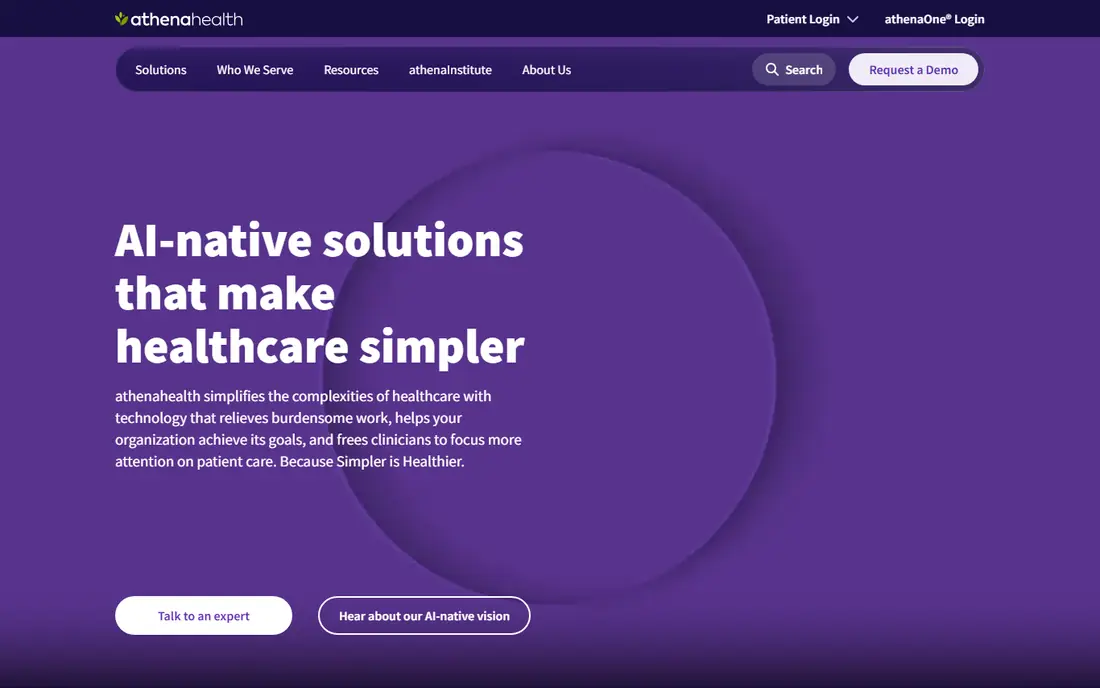
athenahealth, sold as athenaOne, suits independent practices that live or die on clean claims and steady cash flow. Its managed billing service handles claims, denials and collections work, while the EHR and practice management tools keep scheduling, charting and patient communication in one place. That combination helps practices with meaningful claim volume that want billing expertise without hiring a full revenue team.
The pricing model is the key decision. athenahealth typically prices as a percentage of collections, which aligns the vendor with getting you paid but can cost more than a flat monthly EHR at high revenue. Very small solo offices may find a flat-price tool cheaper. If billing workload and denial rates are your main pain, athenahealth is a strong shortlist pick, with a detailed quote at your collection volume.
- Managed billing and claims handling
- Practice management and EHR in one system
- Analytics for revenue
- Priced as a percentage of collections
- Quote-based
- Less suited to very small solo offices

SimplePractice is the clearest pick for solo therapists, counsellors and small behavioural health teams. It combines scheduling, client portal, secure messaging, documentation, billing and telehealth in a system designed for therapy workflows, including notes and treatment planning. The $49 Starter plan and 30-day trial make it easy to test without a large commitment.
The limit is specialty scope. SimplePractice is less suited to primary care, procedural or multi-specialty medical practices that need deep lab, imaging or complex billing workflows. AI note tools and some billing features are add-ons, so price the full bundle you will use. For behavioural health, it is a practical, low-cost home. For general medical care, compare DrChrono, Tebra or athenahealth first.
- Low starting price
- Scheduling, portal and billing for behavioural health
- 30-day free trial
- Built mainly for behavioural health
- Medical billing depth is thinner than large EHRs
- AI note tools are add-ons
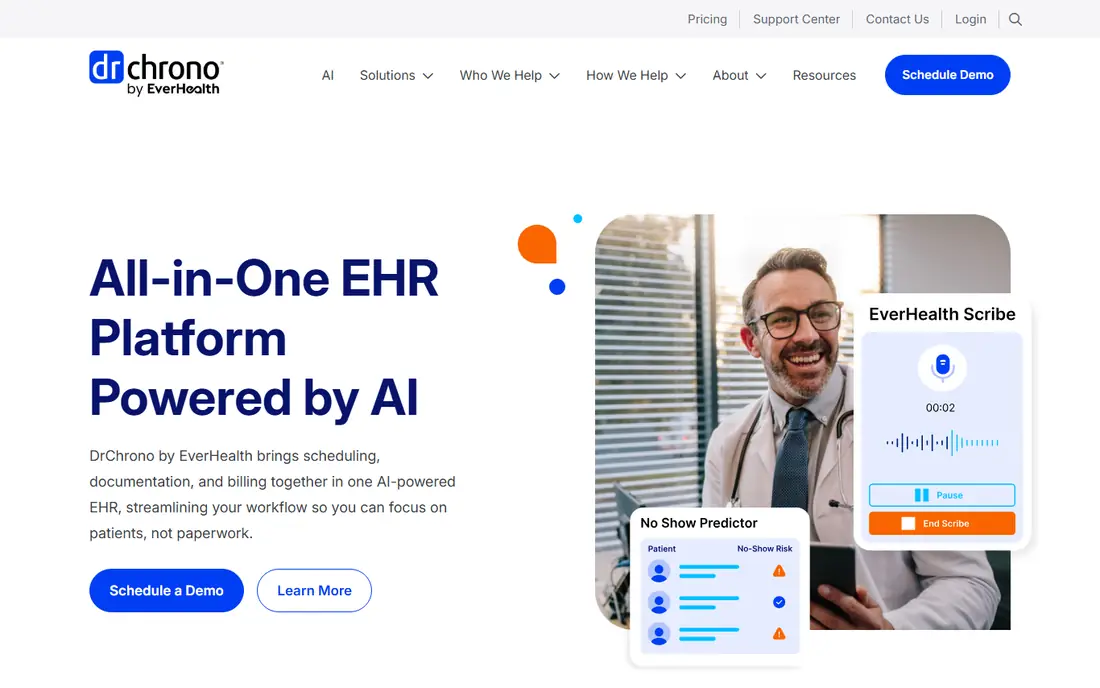
DrChrono suits practices that chart on the move, especially on iPad, and want custom forms for their specialty. Mobile charting, e-prescribing, scheduling and billing sit in one cloud system, and API options help connect labs and other tools. That mobility helps urgent care, procedural and fast-paced clinics where clinicians move between rooms.
The cautions are billing support and contract terms, which some users report as mixed, so read the agreement and ask about billing help, support hours and exit terms before signing. Implementation also takes time for custom templates. If mobile charting is central to your day, DrChrono is worth a demo. If billing simplicity matters more, compare athenahealth or SimplePractice on support terms.
- IPad and mobile charting
- Customisable clinical forms
- Telehealth and lab integrations
- Billing support reviews are mixed
- Contract terms need checking
- Setup can take time
Practice Fusion suits budget-minded clinics that want a certified EHR without heavy overhead. Charting, e-prescribing, lab connections and a patient portal cover the core record work, and onboarding is faster than large hospital systems. A 14-day trial helps small teams test templates and workflows before committing.
The limits are practice management depth and billing. Built-in billing is thinner than full practice management suites, and many clinics pair Practice Fusion with a billing partner or service. That adds cost and a second vendor to manage. If charting is the main need and billing is already handled elsewhere, Practice Fusion is a sound low-overhead pick. If you need one system for charting and billing, price a fuller bundle first.
- Straightforward cloud charting
- E-prescribing and patient portal
- Fast onboarding for small clinics
- Limited built-in practice management
- Billing often needs a partner
- Price has risen from its former free model
Tebra, formerly Kareo, suits solo providers and small independent practices that want clinical, billing and marketing tools together. Its EHR and practice management system covers scheduling, charting, claims and patient messaging, while built-in marketing tools help attract and retain patients. That combination helps small practices without a separate marketing team.
The drawbacks are quote-based pricing and variable support, so get a written quote for the exact bundle, including EHR, practice management and revenue services. Complex specialties may also find customisation limited compared with larger systems. For a small general practice that wants one vendor for care and growth, Tebra is a practical pick. For highly specialised workflows, test templates with your own cases first.
- EHR, practice management and billing in one system
- Built-in patient engagement and marketing
- Claims handling
- Quote-based pricing
- Support responsiveness varies
- Customisation is limited for complex specialties
Epic is the hospital standard for large health systems, academic centres and multi-hospital groups. Its EHR covers inpatient, outpatient, emergency, specialty and research workflows, with a patient portal, interoperability tools and analytics at scale. For a health system that needs one record across many sites and specialties, Epic depth is unmatched in this list.
Epic is not a small-practice tool. Implementation takes months to years, costs are far higher than flat monthly EHRs, and it needs dedicated IT, training and governance. Small clinics should not shortlist Epic unless they join a larger system that already uses it. For hospitals and large groups, it remains the benchmark against which other enterprise systems are judged.
- Deep hospital EHR
- Strong interoperability and patient portal
- Wide specialty and research support
- Very high implementation cost and time
- Overkill for small clinics
- Needs dedicated IT and training
Oracle Health, formerly Cerner, suits large health systems that need an enterprise EHR with population health, analytics and cloud infrastructure. It covers hospital, ambulatory and specialty workflows, and its scale helps systems that manage many sites, payers and data sources. For a large organisation already invested in Oracle systems, the fit can be strong.
The same enterprise scale makes it a poor fit for small clinics. Migration, training and ongoing IT needs are substantial, and pricing is enterprise-negotiated. Small and mid-size practices should choose a practice-sized EHR from this list instead. Large systems comparing Epic and Oracle Health should run a detailed pilot on their own workflows, data migration and reporting needs.
- Enterprise EHR for hospitals and large groups
- Population health and analytics
- Oracle cloud infrastructure
- Enterprise implementation cost and time
- Complex migration
- Small practices will find it oversized
AdvancedMD suits small to mid-size multi-specialty groups that need depth and configurability. Its EHR, practice management and billing tools cover scheduling, charting, claims and reporting across specialties, with templates and workflows that can be adapted to different clinic types. That breadth helps groups that outgrow a single-specialty tool but do not need a hospital system.
The trade-off is complexity. Learning the system and implementing it well takes time, and add-ons can raise the total cost beyond the starting quote. Get a full quote including implementation, training, billing and support, and test the system with your highest-volume workflows. For a growing multi-specialty group, AdvancedMD is a strong middle ground between small-practice tools and hospital systems.
- EHR, practice management and billing depth
- Strong reporting
- Configurable for many specialties
- Learning curve
- Implementation can be lengthy
- Add-on costs can accumulate
How we picked these
We compared official product pages, pricing and trial terms, EHR and practice management features, billing models, telehealth and e-prescribing coverage, and fit for solo, small, group and hospital settings for software live in October 2026. We required a real medical record or practice system, not just a booking app, and we favoured a mix of small-practice, group and enterprise tools. This article is general information only, not medical advice. Practices should check HIPAA compliance, ONC certification, state rules and clinician review for their specialty before choosing or changing a system.
How to choose medical software without disrupting care
Start with your daily workflows, not a feature list. Map scheduling, intake, charting, e-prescribing, labs, billing, patient messaging and telehealth for your busiest clinic day, and test each shortlisted tool on those exact steps. A system that handles your core specialty well will save more time than a system with a longer feature list that needs workarounds for routine visits.
Next, price the full bundle and the migration. Add EHR, practice management, billing services, e-prescribing, telehealth, patient portal, training and support, plus data migration and downtime planning. Ask about contract length, exit and data export terms, uptime, security controls and support hours. Run a pilot with a small team, keep old records accessible, and involve clinicians in template review before a full rollout, because a rushed switch can disrupt care and billing at the same time.
Frequently asked questions
What is the best medical software for small practices?
For small practices, athenahealth suits billing-led teams, SimplePractice suits solo therapists, DrChrono suits mobile-first clinics, and Practice Fusion suits budget charting. The best pick depends on specialty, claim volume and whether billing is handled in-house or by a service.
What are the best medical apps for solo doctors?
SimplePractice, Practice Fusion, DrChrono and Tebra all serve solo and small practices, with different strengths in therapy, charting, mobile work and marketing. Test the trial on your own templates and billing workflow, and check contract and data export terms before signing.
Which medical software is best for hospitals?
Epic and Oracle Health are the main enterprise picks for hospitals and large health systems, because they cover inpatient, outpatient and specialty workflows at scale. Implementation cost and time are far higher than small-practice tools, so they suit large organisations with dedicated IT teams.
What is the top hospital management software for large groups?
For large groups that are not full hospital systems, AdvancedMD offers a strong middle ground with EHR, practice management and billing depth across specialties. Epic and Oracle Health remain the hospital-scale options when inpatient and multi-site complexity is the main need.
Is medical software HIPAA compliant?
Most established EHR vendors offer HIPAA-compliant hosting, access controls and audit tools, but compliance also depends on how your practice configures access, trains staff and handles devices. Ask for the vendor security documentation, business associate agreement and certification details, and review them with your compliance lead.
How much does medical software cost?
Small-practice tools in this list start around $49 per month for SimplePractice and around $199 per provider per month for DrChrono and Practice Fusion, while athenahealth prices as a percentage of collections and Epic and Oracle Health use enterprise pricing. Always price the full bundle, including billing, telehealth and support, at your provider count.
Sources
See where you really rank - block by block
ProMapRanker scans Google Maps across a grid of your service area. Simple monthly plans from $19, white-label on every plan.
Start freeKeep reading
 best tour operator software
Best Tour Operator Software in 2026
Compare the best tour operator software for bookings, channel management, waivers and payments, with pricing models for day tours and multi-day trips.
Read → best time clock app for small business
Best Time Clock App for Small Business in 2026
We compare the best time clock app for small business options, with free plans, GPS clock ins, scheduling and payroll links for hourly teams and payroll help.
Read → best test automation tools
Best Test Automation Tools in 2026
Compare the best test automation tools, from Playwright and Selenium to Cypress, Katalon and BrowserStack, with prices, languages and best uses explained.
Read →