 ProMapRanker
Best Medical Dictation Software in 2026

Key takeaways
- Dragon Medical One remains the classic choice for clinicians who dictate directly and want precise control over wording.
- Suki, DeepScribe, and Abridge suit clinicians who want ambient or voice-driven notes with less typing after visits.
- Freed, Heidi Health, and DeepCura suit solo clinicians and small practices that need fast setup and lower monthly cost.
- EHR integration decides real value, so confirm Epic, Oracle Health, athenahealth, or eClinicalWorks support before buying.
- Every AI note is a draft that a clinician must review, and a signed business associate agreement is essential for patient data.
Quick comparison
| Pick | Great for | Pricing starts at | Free tier | |
|---|---|---|---|---|
 Dragon Medical One | Classic medical dictation | See website | No | Visit |
 Suki | Voice-driven EHR control | See website | No | Visit |
 DeepScribe | Specialty ambient notes | See website | No | Visit |
 Abridge | Hospital ambient AI notes | See website | No | Visit |
 Freed | Fast setup for small practices | $79 per month | Free trial | Visit |
 Heidi Health | Low-cost AI notes with a free tier | Free | Yes | Visit |
 Sunoh.ai | eClinicalWorks-friendly AI notes | See website | No | Visit |
 Augmedix | Human-reviewed ambient notes | See website | No | Visit |
 DeepCura | All-in-one notes for independent practices | $129 per month | No | Visit |
The best medical dictation software
These nine tools cover classic dictation, ambient AI scribes, and hybrid voice control. We compared official product pages, integration lists, and pricing material, and we focused on US clinical use. This article is general information only, not medical advice, and clinicians should confirm privacy, compliance, and EHR fit with their own organization before use.
Dragon Medical One is the long-standing standard for clinicians who prefer to dictate notes word by word. Its medical vocabulary covers drugs, anatomy, and clinical abbreviations better than general speech tools, which reduces cleanup for specialists such as radiologists and surgeons. It integrates with major EHR systems, including Epic and Oracle Health environments.
The modern version is cloud-based, and Mac users typically access it through a browser or mobile app rather than a native desktop app. Pricing varies by contract, so we list it as See website. For high-volume dictators who want control over every sentence, Dragon remains a dependable choice.
- Strong medical vocabulary
- Works inside many EHR workflows
- Precise dictated control
- Cloud-based, so it needs a stable connection
- Pricing is quoted, not listed plainly
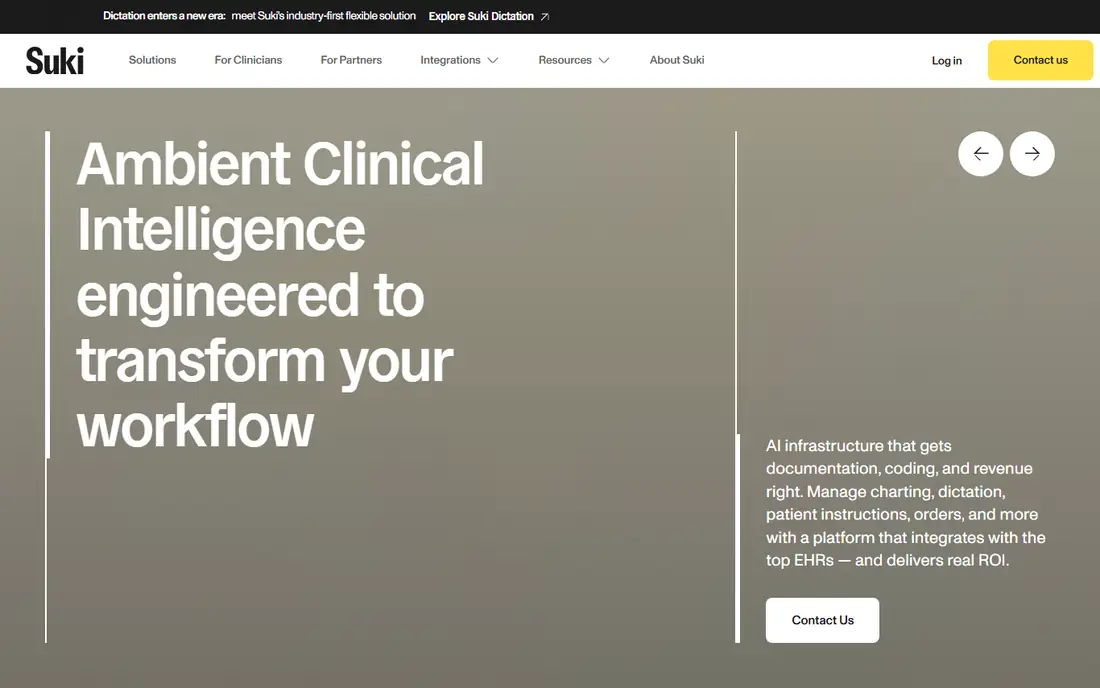
Suki goes beyond dictation by letting clinicians use voice to pull up records, place orders, and complete common EHR tasks. That voice-first design suits clinicians who spend more time clicking through charts than talking to patients. Ambient note features can also draft visit notes from conversation, with clinician review.
Pricing is typically quoted rather than listed as a single public rate, and larger deployments may need IT coordination. Solo clinicians should ask about self-serve options and contract length. For busy ambulatory clinicians, Suki can cut both typing and clicking.
- Voice commands for EHR tasks
- Ambient note support
- Works with major EHR systems
- Pricing is quoted per organization
- Setup can need IT support in larger groups
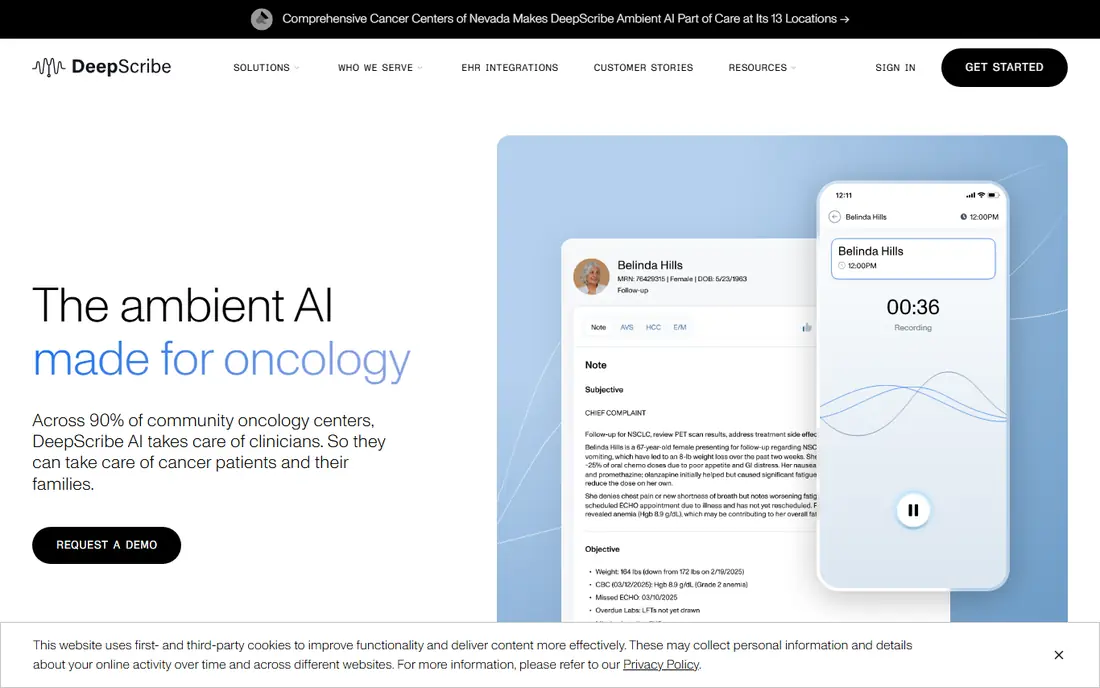
DeepScribe listens to a visit, with patient consent and proper privacy controls, and produces a structured clinical note for review. Its specialty templates help in fields where note structure matters, such as cardiology and oncology, and it connects with systems including Epic, athenahealth, and eClinicalWorks. Human review layers aim to catch errors before a note reaches the chart.
Cost is quoted per practice, and published third-party ranges vary, so confirm a written quote. DeepScribe suits practices that want ambient notes without building their own workflow. Smaller clinics should compare it directly with Freed or Heidi Health on total monthly cost.
- Specialty-aware ambient notes
- Human quality review options
- Broad EHR support
- Pricing is quoted
- Best fit is larger or specialty practices rather than casual use
Abridge is built for health systems, with deep Epic integration and audio linked to note sections so a clinician can check a claim against what was actually said. That verification link matters for trust, since AI drafts must be reviewed before signing. Its health-system footprint has grown rapidly, which helps IT teams who want a vendor with large-scale deployment experience.
The drawback for small practices is access. Abridge sells mainly through enterprise contracts, so a solo clinician may not be able to buy a single seat easily. Hospital and large-group buyers should ask about deployment time, specialty coverage, and audit controls.
- Deep Epic integration
- Strong health-system adoption
- Linked audio for verification
- Enterprise-focused, so small practices may face contract hurdles
- Pricing is quoted
Freed suits solo clinicians and small clinics that want an AI scribe without a long IT project. Signup is fast, notes are generated from visit audio, and the clinician reviews and edits before moving text into the chart. Published pricing starts at $79 per month for Core in recent material, with higher tiers adding features.
The trade is integration depth. Freed works with browser-based EHRs through push or copy workflows, but it does not offer the deep native embedding of an enterprise platform. For small practices that value speed and price, that trade is reasonable. Confirm the current tier prices before subscribing, since plans change.
- Quick self-serve signup
- Simple note workflow
- Lower entry price than enterprise scribes
- EHR transfer relies on copy or browser tools in many setups
- Fewer deep integrations
Heidi Health gives clinicians a low-risk way to test AI notes. A free tier lets a user try transcription and note generation before paying, and paid tiers add templates, team features, and deeper integrations. Multilingual support helps clinics serving diverse patient groups.
Free does not mean unlimited. Note volume, templates, and integrations are limited on the free plan, and paid pricing should be confirmed on the vendor site. Heidi suits cost-sensitive clinicians, telehealth users, and small teams that want to test ambient notes without an enterprise contract.
- Free tier for testing
- Fast setup
- Supports many languages and note formats
- Free tier has limits
- Deeper EHR features sit on higher tiers
Sunoh.ai is the ambient AI scribe from eClinicalWorks, which makes it a natural shortlist item for practices already on that EHR. It captures visit conversation, drafts notes, and supports orders and documentation steps inside a familiar workflow. Multi-specialty support helps mixed practices that do not want a separate tool per specialty.
Pricing is quoted rather than listed as a simple monthly rate, so eClinicalWorks customers should ask for bundled pricing. Practices on other EHR systems should confirm integration depth before choosing Sunoh over a more EHR-neutral scribe.
- Built by eClinicalWorks
- Ambient notes for multi-specialty use
- EHR-friendly workflow
- Pricing is not listed plainly
- Best value is inside eClinicalWorks practices
Augmedix pairs ambient AI with trained medical documentation specialists who review and refine notes. That human layer suits hospitalists, emergency clinicians, and high-volume practices where note quality and turnaround matter more than the lowest price. It connects with major EHR systems, including Epic and Oracle Health environments.
Cost is the main barrier. Augmedix is priced as an enterprise service, not a low-cost app subscription. Practices that struggle with documentation backlog, or that need near-ready notes after each visit, may find the higher price justified by time saved.
- Human specialists review notes
- Supports high-volume and hospital workflows
- Major EHR links
- Higher cost than self-serve scribes
- Pricing is quoted per organization
DeepCura targets independent practices that want more than a note generator. Alongside ambient notes, it offers tools for scheduling, intake, and practice operations, with EHR write-back for systems including athenahealth, eClinicalWorks, AdvancedMD, Epic, and others. Browser access makes it usable on Mac and Windows alike.
Published pricing starts around $129 per month in recent third-party material, so confirm the current plan on the vendor site. DeepCura suits practices that want one platform for notes and operations. Clinicians who only need simple dictation may find a cheaper single-purpose tool enough.
- Ambient notes plus broader practice tools
- Wide EHR write-back list
- Mac-friendly browser access
- Monthly cost is higher than the cheapest scribes
- Feature breadth needs setup time
How we picked these
We compared vendor product pages, EHR integration lists, and pricing material, and we favored tools that are actively sold in the United States in October 2026 with clear HIPAA-related claims and a business associate agreement. We included classic dictation, ambient scribes, and hybrid voice tools so different clinical workflows are covered. We left out generic speech-to-text apps without medical vocabulary or clinical privacy controls.
What to check before you buy
Start with your EHR and your workflow. A tool that cannot write back cleanly to your system will create copy work that erases time savings. Test with real visit types, including complex cases, accents, and multi-speaker visits, and check how the tool handles corrections. Also confirm where audio and transcripts are stored, how long they are kept, and who can access them.
Privacy, consent, and review
Get a signed business associate agreement before any patient audio is processed, and confirm patient consent practices for your state and organization. Treat every AI draft as unfinished until a clinician reviews, edits, and signs it. Check whether the vendor uses visit data to train models, and whether you can opt out. Those answers matter more than a small price difference.
Cost beyond the monthly fee
Add up per-clinician fees, implementation time, training, and any human review charges. A low monthly price with heavy editing time can cost more than a higher price with cleaner notes. Pilot with a small group, measure editing time per note, and only then roll out to a full practice.
Frequently asked questions
What is the best medical dictation software overall?
Dragon Medical One remains the best classic dictation choice for clinicians who want precise dictated control. For ambient notes, Suki, DeepScribe, and Abridge lead for larger practices, while Freed and Heidi Health lead for small practices. The best pick depends on EHR, visit volume, and budget.
What is the best medical transcription software for small practices?
Freed and Heidi Health are strong small-practice picks because setup is fast and entry cost is lower than enterprise scribes. DeepCura suits independent practices that also want broader practice tools. Test the free tier or trial with real visits before committing to a yearly plan.
Is AI medical dictation safe for patient privacy?
It can be, when the vendor signs a business associate agreement, encrypts data, limits retention, and follows your organization policies. Confirm data storage location, training-data use, and access controls in writing. Never use a consumer voice tool without clinical privacy controls for patient visits.
Do clinicians still need to review AI-generated notes?
Yes. AI notes are drafts, and the clinician remains responsible for accuracy, diagnosis wording, and billing-related content. Review every note, correct errors, and check linked audio when a detail is uncertain. Skipping review risks errors entering the permanent record.
Which tool works best with Epic?
Abridge and Dragon Medical One, including its Copilot line, have deep Epic integration, and Suki, DeepScribe, and Augmedix also support Epic workflows. Confirm whether integration is native, browser-based, or copy-based for your specific Epic build, since depth varies by deployment.
Sources
See where you really rank - block by block
ProMapRanker scans Google Maps across a grid of your service area. Simple monthly plans from $19, white-label on every plan.
Start freeKeep reading
 twitch alternatives
Twitch Alternatives in 2026
Explore the best Twitch alternatives in 2026 for live streaming, with free platforms, monetisation options, audiences, chat tools, and tips for new streamers.
Read → firebase alternatives
Best Firebase Alternatives in 2026
Looking for Firebase alternatives? We compare 9 backend platforms for auth, databases, realtime, storage, functions, self-hosting, and pricing for your app.
Read → companies with best work life balance
Companies With Best Work Life Balance in 2026
See companies with best work life balance in 2026, ranked by employee ratings, with flexible work options, benefits, and what to check before applying.
Read →