 ProMapRanker
Best Loyalty Program Software in 2026

Key takeaways
- Smile.io is our pick for small Shopify stores launching a first points and referral program quickly.
- LoyaltyLion and Yotpo suit growing brands that need tiers, VIP logic and deeper segmentation.
- Talon.One suits enterprises that need a promotion rules engine across many channels, not just a Shopify widget.
- Most loyalty apps tier by monthly orders, so price your plan on forecast volume, not on the headline entry price.
Quick comparison
| Pick | Great for | Pricing starts at | Free tier | |
|---|---|---|---|---|
 Smile.io | Small Shopify stores launching fast | $15 per month | Yes | Visit |
 LoyaltyLion | Growing DTC brands with tiers and VIP logic | $199 per month | Yes | Visit |
 Yotpo | Loyalty plus reviews and SMS in one suite | $199 per month | Yes | Visit |
 Talon.One | Enterprise promotion and loyalty rules | See website | No | Visit |
 Gameball | Gamified loyalty beyond Shopify | $34 per month | Yes | Visit |
 Okendo | Loyalty plus reviews and surveys | $19 per month | Yes | Visit |
 Marsello | Retail chains with POS and online stores | $60 per month | No | Visit |
 Joy | Flexible loyalty programs at scale | See website | Yes | Visit |
 Growave | Loyalty plus wishlists and reviews | See website | Yes | Visit |
The best loyalty program software
These are the best loyalty software picks we found for 2026, from free starter plans to enterprise engines. The right choice depends on your platform, your order volume and whether you need loyalty alone or loyalty bundled with reviews, SMS and referrals.
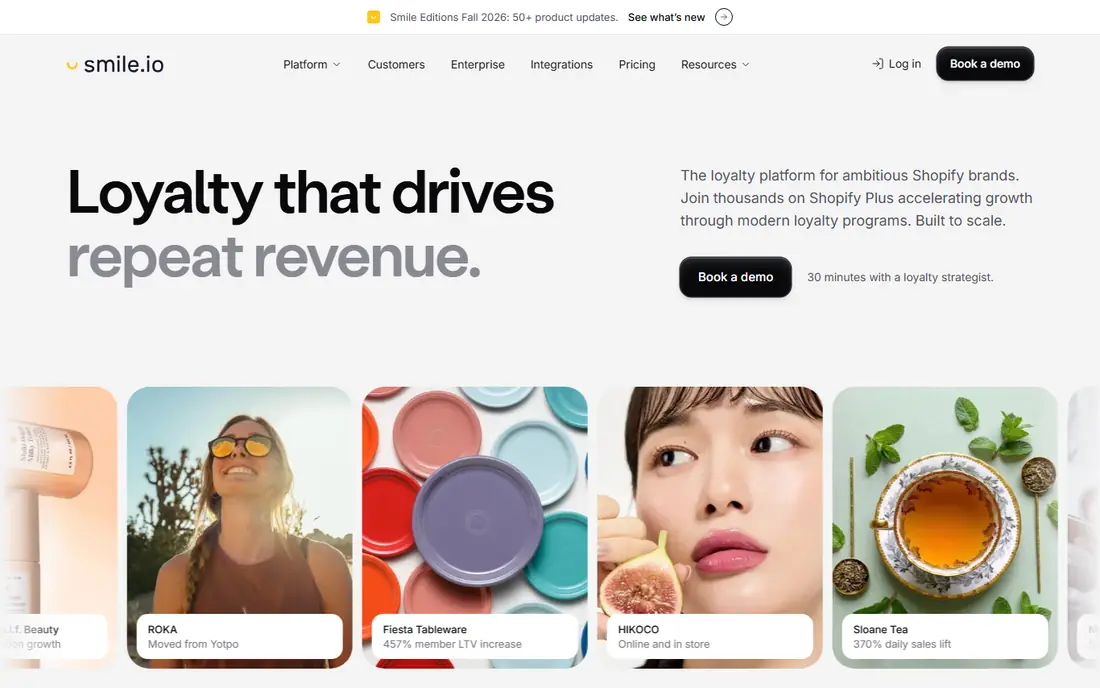
Smile.io is the easiest first loyalty program for a small Shopify store. Points for purchases, referrals and social actions can be live quickly, and customers see their balance and rewards in a familiar widget without a custom build. VIP tiers add a simple path to reward best customers more, without needing a developer for every rule change.
The limit appears as a store grows. Advanced segmentation, complex reward logic and deeper email integration need higher plans, and order-based tiers can push the monthly cost up faster than expected. For a first program, Smile.io is still the best loyalty program software for most small stores. For a mature retention strategy, compare LoyaltyLion or Yotpo before renewing at a higher tier.
- Fast Shopify setup
- Points, referrals and VIP tiers
- Clear customer widget
- Feature ceiling at larger scale
- Costs rise sharply with order volume
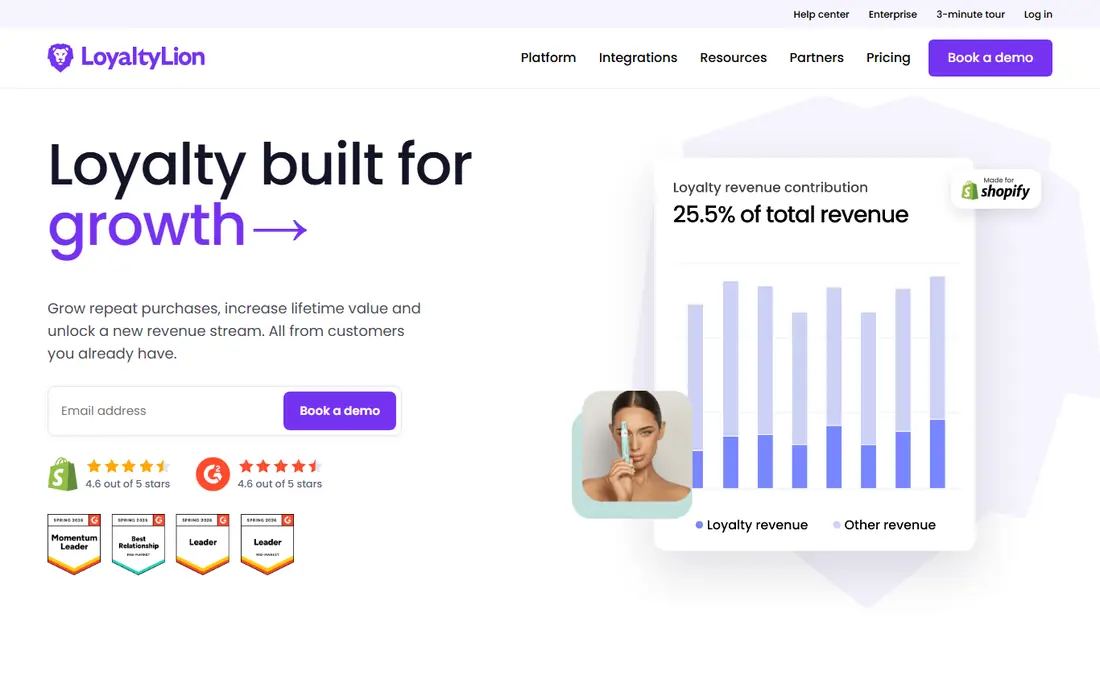
LoyaltyLion suits brands that have outgrown a basic points widget. Tier rules, VIP perks, referral logic and segmentation can be shaped around customer behavior, not just purchase count, and the Shopify and email sync keeps tier changes visible across marketing tools. That depth helps a brand reward high-value customers differently from one-time buyers, which is where loyalty programs earn their keep.
Small stores will feel the price. The entry paid plan is far above a starter widget, and getting the most from the platform needs planning around tiers, rewards and email flows. If your store does a few hundred orders a month and you mainly need points and referrals, start smaller. If retention is already a core growth lever, LoyaltyLion is a strong step up.
- Flexible tiers and VIP rules
- Deep Shopify and email sync
- Strong segmentation
- High entry price for small stores
- Setup takes more planning than a simple widget
Yotpo makes sense when a brand wants fewer vendors. Loyalty, reviews, SMS marketing and subscriptions can run in one retention suite, with customer data shared across products instead of stitched together through separate tools. Referral campaigns and reward flows sit beside review requests, so a happy customer can be asked to review, refer and return in a coordinated sequence.
The catch is value when you use only one module. Loyalty pricing on its own can look high compared with a focused loyalty app, and the suite argument only pays off if reviews or SMS are also in use. Brands already using Yotpo reviews will find loyalty an easy add. Brands that only need loyalty should compare Smile.io and LoyaltyLion first.
- Loyalty, reviews and SMS in one ecosystem
- Referral campaigns
- Strong Shopify presence
- Best value only when you use several Yotpo products
- Loyalty alone can feel expensive
Talon.One is not a plug-and-play widget. It is a promotion and loyalty engine that lets enterprises build complex rules for discounts, points, tiers and campaigns across web, app, POS and other channels. That API-first design suits companies with a custom stack, multiple brands or markets, and promotion logic that a Shopify app cannot express.
For a single Shopify store, Talon.One is more platform than needed, and custom pricing plus engineering time will slow a launch. For an enterprise team that needs one rules engine to feed every channel, it is one of the top loyalty program software options. Expect a sales-led process and a planned rollout, not a same-day install.
- Powerful API-first rules engine
- Works across channels
- Handles complex promotions
- Custom pricing only
- Needs engineering and onboarding time
Gameball adds game mechanics to loyalty, with challenges, missions and levels beside points and tiers. That style suits brands that want repeat engagement, not just a discount at checkout, and the platform can serve a mobile app, a second storefront or another product from the same member wallet. Shopify plans start with a free tier and a low paid starter plan, while direct plans for larger setups are priced higher.
A small store that only needs points and a referral link may find Gameball more complex than necessary. The value shows up when gamification, challenges and cross-channel loyalty are part of the plan. If your loyalty idea includes missions and progress, Gameball is worth a trial before choosing a simpler widget.
- Points, tiers, challenges and referrals
- Gamification mechanics
- Works beyond Shopify
- More platform than a single-store widget needs
- Direct plans are priced higher
Okendo bundles loyalty with reviews, quizzes and surveys, which helps a store learn why customers buy and what they think, not just how often they return. A review or survey can feed a reward, and loyalty data can sit beside review content for a fuller picture of a customer. That combination suits Shopify brands that want retention and social proof from one vendor.
Pure loyalty depth is not as broad as on LoyaltyLion, and pricing tiers by order volume, so a growing store should model the next tier, not just the entry price. If reviews are already on your roadmap, Okendo is an efficient bundle. If loyalty rules alone are the priority, a focused loyalty app may offer more control for the same spend.
- Loyalty tied to reviews and surveys
- Order-volume tiers
- Strong Shopify fit
- Loyalty depth is narrower than LoyaltyLion
- Costs rise with order volume
Marsello is built for businesses that sell both in store and online. Loyalty points earned at a POS can be redeemed online, and vice versa, which matters for retail chains where customers move between channels. Email and SMS marketing tools sit in the same platform, so a loyalty segment can receive a targeted campaign without exporting lists to another tool.
Pricing is per site, so a chain with many locations needs to total that cost, not just read the single-site price. A pure online store will not use the POS strength and may find a Shopify-only app cheaper. For omnichannel retail, Marsello is one of the best loyalty apps for keeping one customer record across channels.
- POS and online loyalty in one program
- Email and SMS marketing included
- Per-site pricing
- Per-site cost adds up for many locations
- Shopify-only brands may not need POS depth
Joy is a flexible Shopify loyalty app that covers points, tiers, referrals and VIP perks with room to adjust the program as a store grows. The free tier suits a small store testing loyalty for the first time, and paid tiers add more orders, features and support as volume rises. That flexibility helps brands that do not want to rebuild a program when they move from a few hundred orders to a few thousand.
As with most order-tiered apps, the real cost depends on forecast volume, and the feature set on each tier needs a careful read before launch. Joy does not have the enterprise rules depth of Talon.One, and it does not bundle reviews as deeply as Yotpo or Okendo. For a Shopify brand that wants a flexible program without a suite commitment, Joy is a solid choice among the best loyalty program platforms.
- Flexible program design
- Free tier for small stores
- Scales to higher order volumes
- Pricing tiers change with volume
- Support and features vary by plan
Growave bundles several retention tools into one Shopify app: loyalty points, wishlists, reviews, referrals and social login features. That bundle suits a store that wants to add social proof and wishlist data beside loyalty, without installing four separate apps. Customers can save products, review purchases and earn points in a connected experience, which can help repeat visits.
Depth is the trade-off. Each bundled feature is useful, but none is as deep as a specialist tool in that area, and paid tiers rise with order volume. If you need best-in-class loyalty rules, a focused app may serve you better. If you want one app to cover loyalty, wishlists and reviews at a reasonable starting cost, Growave is a practical bundle.
- Bundles loyalty, wishlists, reviews and referrals
- Free tier available
- Good Shopify fit
- Bundled features can feel broad rather than deep
- Paid tiers rise with order volume
How we picked these
We compared official pricing pages, Shopify app listings and feature pages for loyalty platforms live in 2026. We kept only platforms that offer points, tiers or referrals as a core product, not just a discount code tool. We did not claim hands-on testing. Where pricing differed across sources because of order tiers, we used the entry figure we could verify most recently and wrote See website where a price could not be confirmed.
How to design a program that keeps margin
A loyalty program fails when rewards cost more than the repeat purchases they create. Start with a simple structure, measure repeat purchase rate and average order value, and only add tiers and perks when the data supports them. A program that is easy to understand will beat a complex program that customers ignore.
Price on forecast volume, not today volume
Most apps tier by monthly orders, so a plan that fits today may jump in price after a good quarter. Forecast orders for the next 12 months, find the tier that covers that peak, and budget that number. Add email or POS add-ons to the total before comparing apps, since those costs change the ranking.
Keep rewards simple and visible
Customers should understand how to earn and redeem in under a minute. Points per purchase, a clear referral reward and one or two VIP perks are enough to launch. Hide the rules in a help page and customers will not use the program, no matter how generous the rewards look on paper.
Measure repeat behavior, not just signups
Signups are easy to inflate with a signup bonus. Track repeat purchase rate, time between orders, redemption rate and margin after rewards. If repeat purchases rise but margin falls by more, tighten reward values or add a minimum order for redemption rather than adding more perks.
Frequently asked questions
What is the best loyalty program software for Shopify?
Smile.io is the best starting point for small Shopify stores, thanks to fast setup and a free tier. LoyaltyLion, Yotpo and Joy suit larger Shopify brands that need tiers, segmentation or bundled reviews.
What are the best loyalty apps for small businesses?
Smile.io, Gameball, Okendo and Growave all offer free tiers or low entry prices for small stores. Choose based on whether you need loyalty alone or loyalty bundled with reviews, wishlists or POS support.
Which companies have the best rewards programs for customers?
The best customer-facing programs are simple, visible and rewarding for repeat buyers, with clear points, useful rewards and VIP perks for loyal customers. Software alone does not create that experience; the reward values and communication around the program matter just as much.
How much does loyalty program software cost?
Entry prices here range from free to $199 per month, but most apps tier by monthly orders, so the real cost rises with volume. Model your forecast order count, add any email or POS costs, and compare the tier that covers your peak months.
Do loyalty programs work for retail stores as well as online stores?
Yes, if the program works across channels. Marsello is built for POS plus online loyalty, while Shopify POS tools can help online-first brands add in-store earning. The key is one customer record, so points earned in store count online and vice versa.
What is the difference between points, tiers and VIP programs?
Points reward each purchase, tiers reward cumulative spending or engagement with better perks at higher levels, and VIP programs add exclusive benefits for top customers. Many platforms combine all three, with points as the base and tiers as the path to VIP perks.
Sources
- https://www.smile.io
- https://www.loyaltylion.com
- https://www.yotpo.com
- https://www.talon.one
- https://www.gameball.co
- https://www.okendo.com
- https://www.marsello.com
- https://www.joy.so
- https://www.growave.io
- https://albato.com/blog/publications/best-customer-loyalty-software
- https://www.gameball.co/blog/rivo-alternatives
See where you really rank - block by block
ProMapRanker scans Google Maps across a grid of your service area. Simple monthly plans from $19, white-label on every plan.
Start freeKeep reading
 top custom software development company
Top Custom Software Development Company in 2026
Looking for a top custom software development company? We compare 9 firms for web, mobile, and enterprise software, covering strengths and fit for 2026.
Read → tableau alternatives
Tableau Alternatives in 2026
Compare the best Tableau alternatives for 2026, from Power BI to Metabase, with prices, hosting options, and picks for small teams and enterprises today.
Read → microsoft teams alternatives
Best Microsoft Teams Alternatives in 2026
Looking for microsoft teams alternatives? We compare 9 chat and video tools for 2026, covering free plans, pricing, meetings, and integrations for teams.
Read →