 ProMapRanker
Best Local SEO Tools for Wildlife Removal Companies in 2026
Direct answer
For most wildlife removal companies, SE Ranking is the best starting point because it combines local rank tracking, listing checks and competitor monitoring in one place, and it offers a free trial. Pricing beyond that is on its pricing page, so check before you commit. If reviews are your weak spot, look at Reviewshake; if Google Business Profile management is the priority, look at Localo.
I compared these tools from vendor documentation and public sources, and I did not run hands-on tests. My focus was on how each one fits a wildlife removal business: a small service area, urgent phone calls, seasonal demand and a steady flow of reviews from relieved homeowners.
Key takeaways
- Wildlife removal leads are urgent and local, so map pack visibility and fast review responses matter more than broad national rankings.
- A rank tracker that checks grid points across a service radius shows where you actually appear around a customer's postcode, not just at city level.
- Review request tools help because raccoon, bat and squirrel jobs often end with a relieved homeowner who is willing to leave feedback.
- Listing management keeps your name, address and phone consistent across directories, which matters when you serve several towns from one base.
- Google Business Profile tools help you post seasonal content, such as spring attic inspections or autumn chimney cap work, without logging in manually each time.
Quick comparison
| Pick | Great for | Pricing starts at | Free tier | |
|---|---|---|---|---|
 SE Ranking | All-in-one local SEO tracking | See website | Free trial | Visit |
 Localo | Google Business Profile management | See website | Free trial | Visit |
 Reviewshake | Review requests and monitoring | See website | Not stated | Visit |
 Local Dominator | Local rank tracking | See website | Not stated | Visit |
 Uberall | Multi-location listing management | See website | No free plan | Visit |
 CallTrackingMetrics | Call tracking and attribution | See website | Free trial | Visit |
 Moz Local | Listing distribution and accuracy | See website | Not stated | Visit |
The best local SEO tools for wildlife removal companies compared
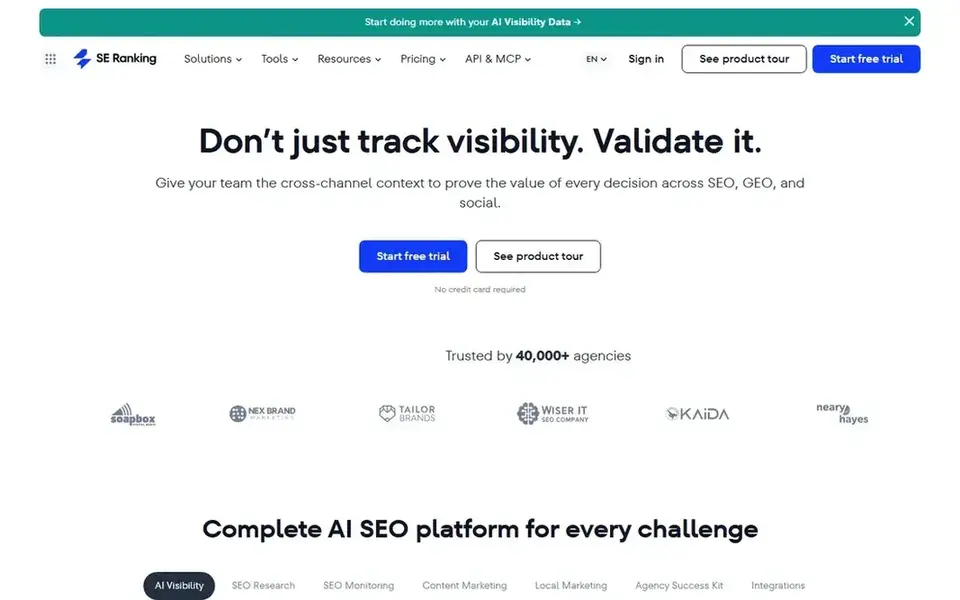
SE Ranking is a general SEO platform with a local module, and it fits a wildlife removal company that wants one place to watch rankings, competitors and citations. You add your main service towns, and the tool shows where you appear in the map results around each one.
For wildlife work, the map grid view is the useful part. A homeowner in one suburb searching "raccoon removal near me" may see you, while a customer two towns over does not. The grid shows those gaps so you can decide whether to build a page for that town or ask for more reviews from customers there.
The limits are practical: it is more tool than a single-technician business needs, and grid tracking at scale costs more. Skip it if you only want review requests and nothing else.
- Local rank tracking across a map grid
- competitor and backlink checks
- listing and review monitoring in one dashboard
- Feature-heavy for a one-van operation
- local grid checks add cost at higher volumes
Localo is built around Google Business Profile management, which suits a wildlife removal company that lives or dies by its map listing. You can plan posts, add photos of completed jobs and keep your service categories and hours current.
The workflow fits seasonal demand. In spring you can schedule posts about attic inspections and bat exclusion, and in autumn you can push chimney cap and vent screening work. Keeping the profile active with fresh posts and photos supports the listing without extra manual logins.
It is not a full SEO platform. If you need backlink analysis, content planning or deep competitor research, pair it with something else or skip it.
- GBP-focused dashboard
- post and photo scheduling
- simple local rank checks
- Narrower than a full SEO suite
- fewer reporting options for agencies
Reviewshake handles the review side of local SEO. For wildlife removal, that matters because a homeowner who has just had a raccoon family removed from an attic is often happy to leave a review if you ask at the right moment.
You can trigger a request after a job is marked complete, route happy customers to your Google Business Profile and keep an eye on new reviews across sites. It also helps you reply quickly, which is worth doing when a review mentions a specific animal or town.
The limit is scope. It does not manage listings or track rankings, so it works best alongside a broader tool. Skip it if you already get plenty of reviews without asking.
- Automated review requests by email and SMS
- multiple review site monitoring
- simple dashboards
- Review-focused only
- SMS request costs vary by volume
Local Dominator focuses on local rank tracking, which is the core question for a wildlife removal company: where do I show up around the towns I serve? It checks positions across a grid of points rather than one city-level number.
That matters when your service radius covers several suburbs and rural edges. You can see which areas are strong and which need work, then decide whether to add a town page, get more reviews from that area or adjust your Google Business Profile service areas.
It is a single-purpose tool. If you want reviews, listings and content in the same dashboard, this is not it. Skip it if you only need a rough city-level check.
- Grid-based local rank tracking
- competitor visibility checks
- location-level reporting
- Tracking only, no review or listing tools
- needs clean location data to be useful
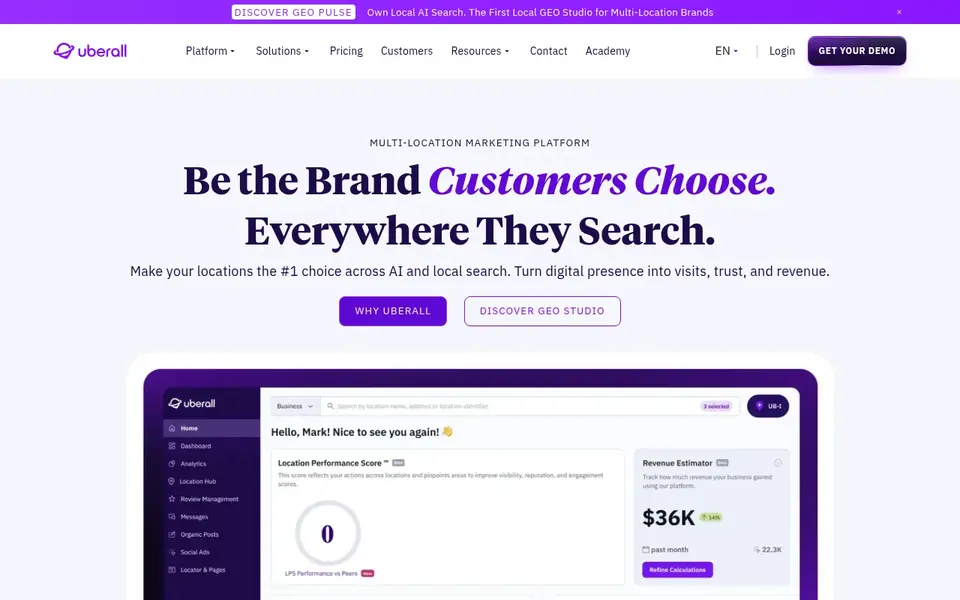
Uberall manages business listings and local pages across many directories, and it suits a wildlife removal company that has grown to several branches or franchises. Each location gets consistent name, address and phone data.
For a business with multiple offices, that consistency matters. A customer searching near one branch should see the right phone number and hours, not a mix of old addresses. Uberall also supports location pages, which can help you rank for town-specific searches.
The fit is the issue. It is designed for larger operations, and pricing is quote-based. A single-location company should skip it and use a simpler listing tool.
- Listing sync across many directories
- location pages
- review monitoring per location
- Built for larger multi-location brands
- quote-based pricing
CallTrackingMetrics tracks phone calls, which is how most wildlife removal jobs start. A homeowner with a bat in the attic is not filling in a contact form; they are calling.
The tool shows which source produced each call, whether that was a Google Ads click, an organic search or a directory listing. You can route calls to the right technician and record them for quality checks. That data helps you decide where to spend effort.
The limit is setup. Dynamic number insertion and listing numbers need care so your Google Business Profile phone stays consistent. Skip it if you already track calls well or get most jobs through referrals.
- Tracks which marketing source produced each call
- call recording and routing
- works with Google Ads and organic
- Setup takes time
- call tracking numbers need care on listings
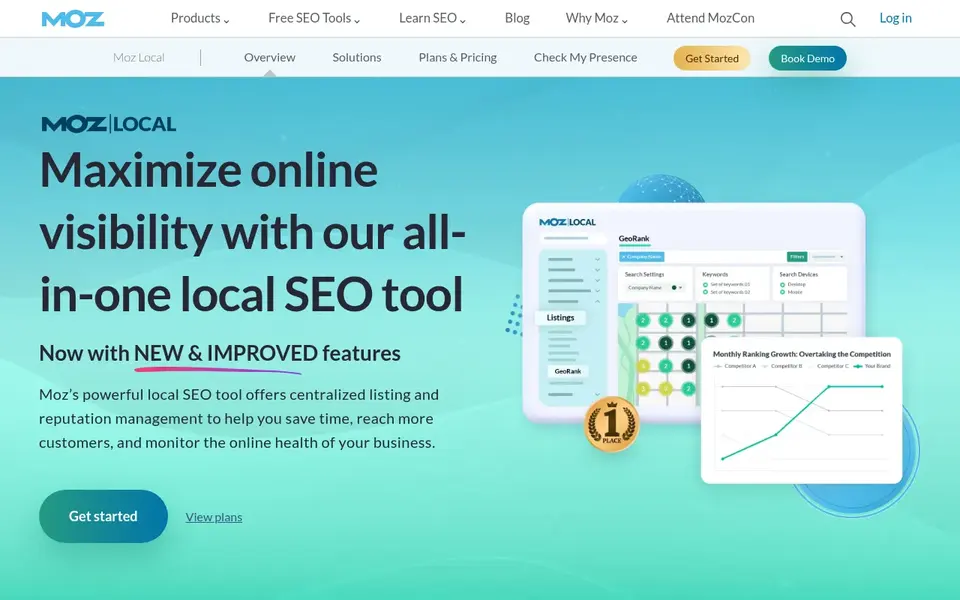
Moz Local distributes your business name, address, phone and hours to major directories and checks for duplicates. For a wildlife removal company, that keeps your details consistent when customers search across different sites.
Duplicate or outdated listings are a real problem for service businesses that move or add a second number. Moz Local helps you find and fix those, which supports trust and makes it easier for customers to reach the right number.
It is not a deep rank tracker. If map grid tracking is your main need, use a dedicated tracker. Skip it if you already have clean listings and no duplicates.
- Pushes business data to major directories
- duplicate listing checks
- simple accuracy reporting
- Limited rank tracking depth
- directory coverage varies by country
How I chose
I built this list from vendor documentation and public sources, not from hands-on testing. I read what each tool says it does, checked which features matter for a local service business and filtered out anything that only fits large brands or national e-commerce.
My main criteria were fit for a small service area, support for Google Business Profile work, review handling and call tracking. I also looked at limits: whether a tool is single-purpose, whether it needs a big setup and whether it suits one location or many. Where I was unsure about a free plan, I said so rather than guess.
What to check before you buy
- Confirm the tool tracks rankings across a grid of points, not just one city-level position, so you can see coverage around your service towns.
- Check whether review requests can be triggered after a job is completed, since timing drives response rates for wildlife removal work.
- Make sure listing management keeps your Google Business Profile phone number consistent if you also use call tracking.
- Ask whether the tool supports multiple service areas or branches, in case you expand to a second base.
- Check how the tool handles seasonal posting, so you can schedule spring and autumn content without manual logins.
- Read the cancellation and data export terms before you commit, so you are not stuck if the tool does not fit.
Frequently asked questions
Do wildlife removal companies need local SEO tools?
They help, but they are not mandatory. A wildlife removal company depends on map pack visibility and phone calls, so tools that track local rankings, manage the Google Business Profile and collect reviews save time. A small one-van operation can start with a free trial of one tool and add more only when a specific gap appears.
Which tool is best for getting more reviews?
Reviewshake is built for review requests and monitoring, and it fits a job-based business where you can ask after each completed removal. Pair it with a simple process: mark the job complete, send the request and reply to every review. Do not offer incentives or filter out unhappy customers, since that breaks Google's review policies.
Can I track rankings for several towns with one tool?
Yes. Grid-based trackers such as SE Ranking and Local Dominator check positions across many points around your service area, which suits a business covering several suburbs. City-level tracking alone can hide gaps, so check that the tool supports a map grid before you buy.
Do I need call tracking if I already use Google Business Profile?
Not always. Call tracking helps when you want to know which source produced each call, especially if you run Google Ads alongside organic search. If most of your jobs come from referrals and you already ask customers how they found you, you can skip it and keep your setup simpler.
Is listing management worth it for a single-location company?
It can be. Duplicate or outdated listings confuse customers and weaken trust, and a listing tool finds and fixes them. For one location, a simpler listing product such as Moz Local is usually enough, and you can skip the larger multi-location platforms until you open a second branch.
Sources
See where you really rank - block by block
ProMapRanker scans Google Maps across a grid of your service area. Simple monthly plans from $19, white-label on every plan.
Start freeBrowse all guides
← Best Local SEO Tools for Ski Shops in 2026Best Reputation Management Software for Auto Detailers in 2026 →
 best local seo tools for motels
Best Local SEO Tools for Motels in 2026
A practical guide to the best local SEO tools for motels in 2026, covering listing management, review requests, rank tracking and GBP control.
Read → best local seo tools for kids activity centers
Best Local SEO Tools for Kids Activity Centers (2026)
A practical guide to the best local SEO tools for kids activity centers in 2026, compared from vendor documentation and public sources.
Read → best local seo tools for duct cleaning companies
Best Local SEO Tools for Duct Cleaning Companies in 2026
A practical guide to the best local SEO tools for duct cleaning companies in 2026, covering listings, reviews, rank tracking and call tracking.
Read → local seo for car wash businesses
Local SEO for Car Wash Businesses
A local SEO guide for car wash businesses: Google Business Profile setup, reviews, and membership and location-based car wash SEO.
Read → local seo for self storage
Local SEO for Self Storage Facilities
How self storage facilities rank higher in local search and compete against national storage brands.
Read → how to add keywords to google my business
How to Add Keywords to Google My Business the Right Way
Where keywords actually help on your Google Business Profile and how to add them without risking a suspension.
Read →More in Local SEO & Google Maps · All guides A to Z by date · Latest guides