 ProMapRanker
Best Local SEO Tools for Kids Activity Centers (2026)

Core listing accuracy for one or two venues · Pricing starts at: See website
Direct answer
Moz Local is my top pick for kids activity centers because it puts the core listing work, consistent name, address, phone and category data across the directories parents actually check, in one place. It has no free plan stated, so check its pricing page before you commit. If you also want to chase reviews after a birthday party or holiday camp, look at GatherUp; if you run several venues or franchises, Uberall is the stronger fit.
I compared these tools from vendor documentation and public sources, not from hands-on tests. My aim was to match each one to how a kids activity center actually gets found: a parent searches by town, checks reviews, then calls or books. I looked at listing coverage, review workflow, location handling and reporting, and I flagged where a tool is more than a small operator needs.
Key takeaways
- Kids activity centers live or die on accurate listings, because parents search by suburb, "near me" and by activity type, and a wrong phone number or closed location loses the booking.
- Review requests matter more than most niches because parents choose a class or party venue on trust, so a review tool that sends a polite request after a session earns its place.
- Multi-location operators (soft play, trampoline parks, franchises) need a tool that handles location groups and bulk edits, not a single-listing dashboard.
- Local rank tracking shows whether you appear when a parent searches "kids art class [town]", which is different from a generic organic rank check.
- No tool fixes a thin Google Business Profile: fill in hours, age ranges, party options, photos and accessibility details first.
Quick comparison
| Pick | Great for | Pricing starts at | Free tier | |
|---|---|---|---|---|
| Moz Local | Core listing accuracy for one or two venues | See website | Not stated | Visit |
 GatherUp | Review requests after parties and classes | See website | Not stated | Visit |
 Uberall | Multi-location and franchise listing control | See website | Not stated | Visit |
 Yext | Central control of business facts | See website | Not stated | Visit |
 SE Ranking | Local rank tracking and site audits | See website | Free trial | Visit |
 Places Scout | Grid-based local rank checks | See website | Not stated | Visit |
 CallRail | Tracking calls and form leads | See website | Free trial | Visit |
The best local SEO tools for kids activity centers compared
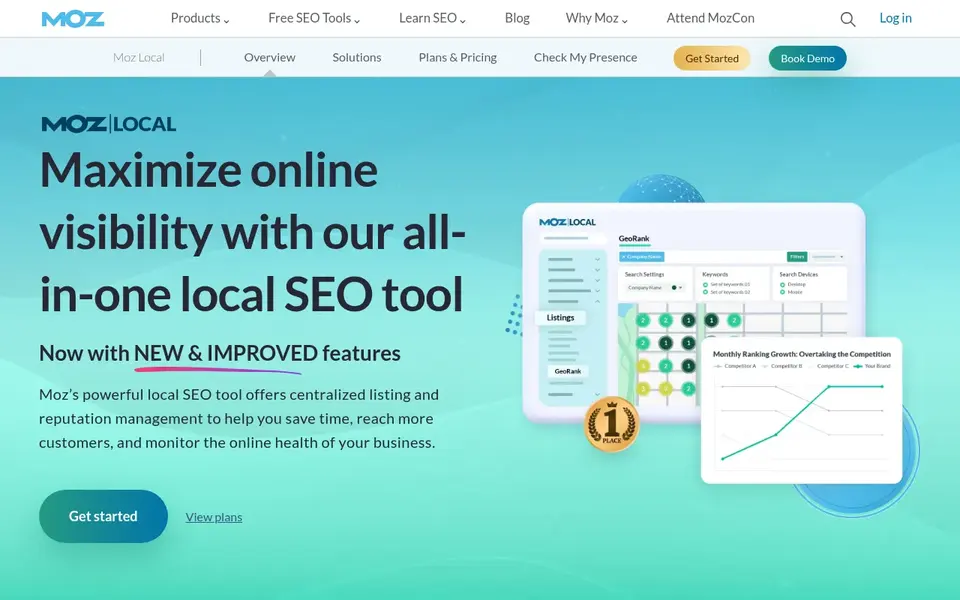
Moz Local is a listing management tool. You enter your business name, address, phone, website, hours and categories once, and it pushes that data to major directories and data aggregators. For a single soft play center or dance studio, that is the job that matters most, because parents often find you through a map result or a directory rather than your own site.
In practice, you would set your primary category carefully, something like "Children's amusement center" or "Dance school" depending on what you run, then add secondary categories for party hire or holiday camps. Moz Local helps keep those categories and your hours consistent everywhere, which matters when term-time and holiday opening hours differ. Check that your Google Business Profile matches what the tool distributes.
The limits show up if you run many sites or want a review-request engine. Moz Local is not built around post-visit review campaigns, so pair it with a review tool or handle requests manually. Skip it if you need franchise-level permissions across dozens of venues.
- Straightforward listing sync
- clear duplicate detection
- familiar Moz interface
- Review request features are thin
- less suited to large location groups
GatherUp is a customer feedback and review management tool. You import customer emails or connect a booking system, then send a request asking for feedback or a review. For activity centers, the natural trigger is the day after a birthday party or the end of a term block, when a parent is most likely to write something.
The workflow is straightforward: build a request template, choose which review sites to point people to, and let replies come back into one inbox. You can route unhappy feedback to a private form first, which is a legitimate way to catch problems, as long as you never stop anyone from posting a public review or offer incentives for positive ones. Keep requests neutral and follow Google's review policies.
GatherUp will not fix a wrong address or a missing category. If your listings are messy, sort those first. It also suits operators who can collect emails at booking; walk-in-only venues may find the list-building harder.
- Simple review request flows
- feedback capture before public posting
- multi-location support
- Not a citation distributor
- needs clean listings to work well
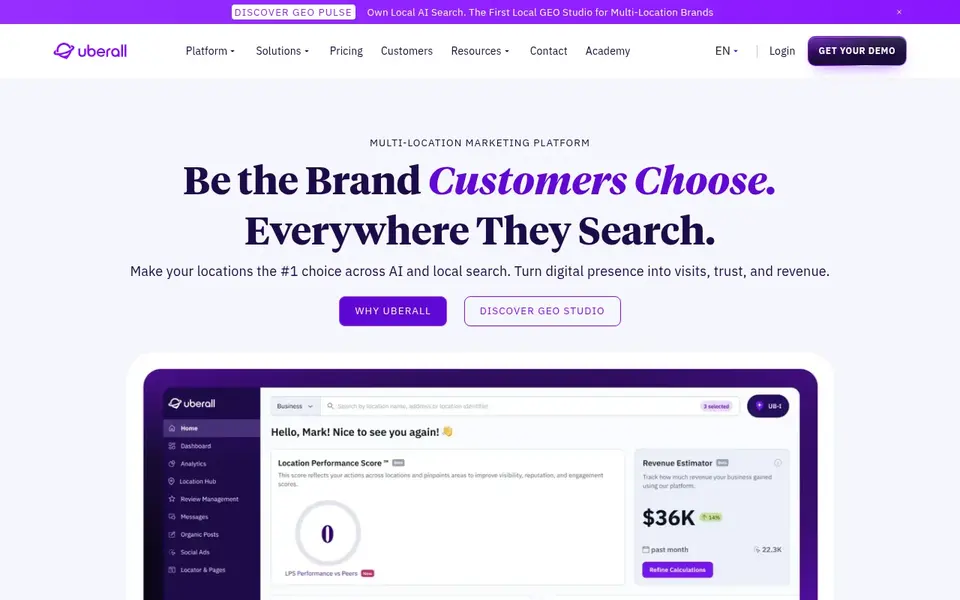
Uberall is a location marketing platform built around managing many business locations from one account. If you run several soft play sites, a trampoline park plus a cafe, or a franchise with independent operators, it lets you control what each listing says while keeping brand details consistent.
For kids activity centers, the useful part is per-location data: each venue can have its own hours, party packages, photos and landing page, while head office controls the brand name and core categories. That reduces the classic franchise problem where one site lists holiday hours and another does not. Review management sits alongside the listings, so responses can be handled centrally.
The trade-off is scale. A single independent center will find Uberall heavier than needed, and the setup asks for structured location data up front. It fits operators with a marketing team or a clear central owner.
- Strong location group management
- review and listing in one place
- good for franchise brand consistency
- Aimed at larger businesses
- more setup than a single venue needs
Yext works on a "knowledge" model: you store your business facts in one place and publish them to a network of directories, maps and apps. For an activity center with changing schedules, term-time classes, holiday camps, party slots, having one controlled record of hours and services is genuinely useful.
You would use it to keep your name, address, phone, categories, holiday hours and service descriptions aligned across the network. That helps when a parent checks a map app on a Sunday and needs to know whether you are open. It also gives you a single place to update when you add a new activity, like a toddler sensory session.
The main caution is commitment: Yext is a subscription product and the value depends on how much you rely on its network. A small single-site operator may prefer a lighter listing tool. Read the contract terms before signing.
- One source of truth for business data
- wide network of listings
- structured fields for hours and services
- Subscription commitment
- changes depend on the network
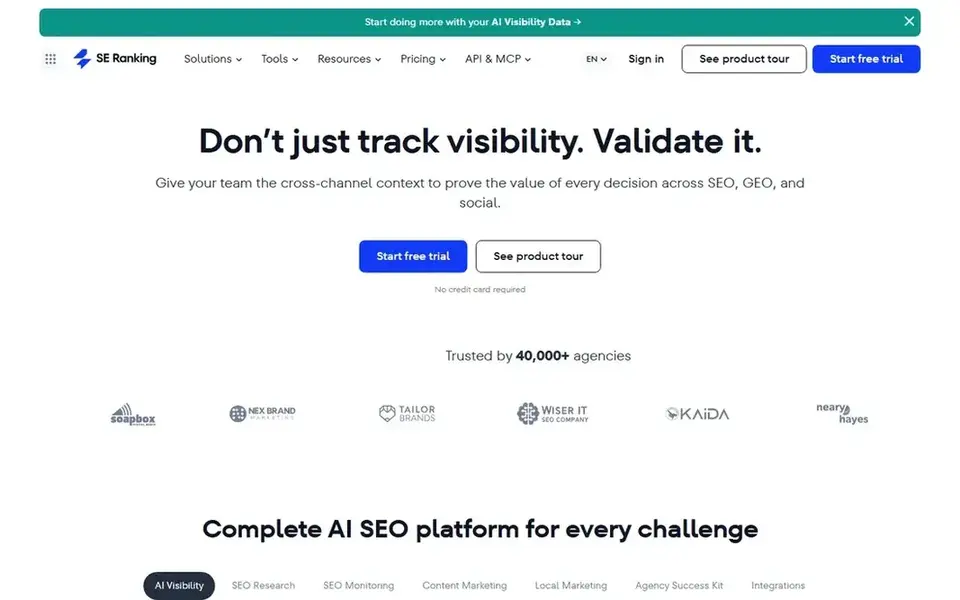
SE Ranking is an SEO platform with rank tracking, audits and keyword research. For an activity center, the useful piece is local rank tracking: you can check where your site appears for searches like "kids art class [town]" or "birthday party venue [town]" from a chosen location, rather than a national average that tells you nothing.
The workflow is to build a small keyword list around activities, age groups and nearby towns, then track them over time. Pair that with the site audit to catch broken booking links or slow pages, which matter when a parent is trying to book on a phone. You can also watch a nearby competitor's visible keywords.
It does not distribute your listings or request reviews, so it complements rather than replaces a listing tool. Skip it if you have no website content to rank and rely entirely on map results.
- Local rank checks by town
- site audit and keyword tools
- competitor tracking
- Not a citation builder
- data needs interpretation
Places Scout is a desktop rank tracking tool focused on local search. Its grid reports show how your map ranking changes across a geographic area, which is useful for an activity center drawing families from several suburbs or a wider catchment.
You would set a keyword like "soft play [town]" and see where you appear across the grid, then compare with competitors. That helps you decide whether to target nearby towns with landing pages or adjust your Google Business Profile categories. It is a diagnostic tool, not a fix, the ranking change still comes from your profile, reviews and site.
The downsides are practical: it is desktop software, the interface takes learning, and a single-venue operator may not need grid detail. It fits operators or agencies managing several locations who want to see catchment patterns.
- Grid rank maps by area
- competitor tracking
- desktop reporting
- Desktop software
- steeper learning curve
- overkill for one venue
CallRail is call and lead tracking software. You place a tracking number on your site or listings, and it records which source produced each call. For an activity center, that answers a practical question: did the booking enquiry come from the map listing, the website or a directory?
The setup is to create a tracking number, route it to your front desk, and tag sources so you can see which channels bring calls. You can also track form fills from a party enquiry page. That helps you decide where to spend effort, for example, whether fixing a directory listing is worth the time.
It does not manage listings or reviews, so it is a measurement layer. Small venues with one phone line may find it adds complexity, and you need to keep the tracking number consistent wherever it appears.
- Call tracking by source
- form and lead tracking
- recordings and routing
- Not a listing or review tool
- adds a tracking number to manage
How I chose
I picked these tools by reading vendor documentation and public sources, then matching each one to the way a kids activity center gets discovered. I did not run hands-on tests, so treat this as a shortlist to evaluate rather than a lab result. I looked at what each tool actually does, listings, reviews, rank tracking, call tracking, and whether that maps to a parent searching by town, checking reviews and then calling or booking.
I also weighed limits. A single dance studio does not need franchise permissions, and a multi-site soft play operator does not want a tool that only handles one listing. Where a product is aimed at larger businesses, I said so. Where a tool only measures and does not fix, I noted that too. My aim was to help you pick the smallest set of tools that covers your real gaps, not to list everything on the market.
What to check before you buy
- Confirm the tool covers the directories parents in your area actually use, and that it can handle your correct primary category for a kids activity center.
- Check how it deals with seasonal hours, holiday camps and term-time schedules, since wrong opening hours are a common complaint.
- Ask whether it supports multiple locations or venues if you run more than one site, and how permissions work for staff.
- Make sure any review feature follows Google's review policies: no incentives for positive reviews and no blocking negative feedback.
- Check that the tool can handle party and group booking enquiries separately from general class enquiries if that matters to your front desk.
- Read the contract length and cancellation terms, and confirm what happens to your data if you leave.
Frequently asked questions
What is the most important local SEO task for a kids activity center?
Getting your Google Business Profile and core listings accurate. Name, address, phone, categories, hours and photos should match everywhere. Parents search by town and activity, then check the map result. A complete profile with correct holiday hours and clear party information does more for bookings than most paid tools.
Do kids activity centers need review software?
It helps if you can collect emails at booking. A polite request after a party or term block is a normal way to ask for feedback. Keep it neutral, never offer rewards for positive reviews, and never filter out unhappy customers. If you cannot collect contact details reliably, manual requests and replying to existing reviews may be enough.
How do I track local rankings for a class or party venue?
Use a rank tracker that lets you set a location, such as your town or postcode, and track phrases like "kids art class [town]" or "birthday party venue [town]". Grid tools show how you appear across nearby suburbs. Treat rankings as a diagnostic: profile completeness, reviews and useful local pages drive the change.
Can one tool handle listings, reviews and rankings?
Rarely well. Listing tools focus on data consistency, review tools on feedback requests, and rank trackers on visibility. Many operators combine a listing tool with a review tool and check rankings inside a broader SEO platform. Start with the gap that costs you bookings, usually listings or reviews, then add measurement later.
Is call tracking worth it for a small activity center?
It can be, if you want to know which channel produces booking calls. It adds a tracking number to manage and a monthly cost, so it suits venues with steady enquiry volume and more than one marketing channel. A single-site operator with one phone line may get more value from fixing listings and asking for reviews first.
Sources
See where you really rank - block by block
ProMapRanker scans Google Maps across a grid of your service area. Simple monthly plans from $19, white-label on every plan.
Start freeBrowse all guides
← Best Local SEO Tools for Duct Cleaning Companies in 2026Best Local SEO Tools for Motels in 2026 →
 best local seo tools for boat repair shops
Best Local SEO Tools for Boat Repair Shops in 2026
A practical guide to the best local SEO tools for boat repair shops in 2026, covering listing management, reviews, rank tracking and call tracking.
Read → best local seo tools for animal hospitals
Best Local SEO Tools for Animal Hospitals in 2026
A practical guide to the best local SEO tools for animal hospitals in 2026, covering listings, reviews, rank tracking and GBP management for vet clinics.
Read → best local seo software for sporting goods stores
Best Local SEO Software for Sporting Goods Stores in 2026
A practical guide to the best local SEO software for sporting goods stores in 2026, covering listings, reviews, rank tracking and Google Business Profile tools.
Read → merge google business profiles
Merge Google Business Profiles: A Complete Guide
Everything you need to know about merge google business profiles: what it is, why it matters for local SEO, and exactly how to act on it.
Read → scaling local seo for agencies
How to Scale Rank Tracking Across Dozens of Local Clients
Practical systems for scaling geo-grid rank tracking across dozens of clients without ballooning costs.
Read → local rank tracker for agencies
Local Rank Tracker for Agencies: Scaling Across Many Clients
What agencies need from a local rank tracker: white-label reports, multi-client scaling, and predictable costs.
Read →More in Local SEO & Google Maps · All guides A to Z by date · Latest guides