 ProMapRanker
Best Local SEO Tools for Duct Cleaning Companies in 2026
Direct answer
Yext is my top pick for duct cleaning companies that serve several towns and need their name, address and phone number to stay identical everywhere. Pricing is quote-based, so check its pricing page. For review requests after a job, Grade.us fits well, and for tracking map positions across a service area, Local Viking is the practical choice.
I compared these tools from vendor documentation and public sources, and I did not run hands-on tests. My focus was how each one fits the way duct cleaning companies actually work: a small team, a service radius that crosses several towns, phone calls as the main lead, and reviews that decide who shows up in the map pack.
Key takeaways
- Duct cleaning is a service-area business, so consistent listings across every town you cover matter more than a single optimized city page.
- Review volume and recency drive map pack visibility for "duct cleaning near me" searches, so pick a tool that automates requests after each job.
- Call tracking shows which listings and pages actually produce phone calls, which is the main conversion for this trade.
- Local rank tracking should follow your real service radius, not just one pin at your office address.
- Google Business Profile management tools save time on posts, photos, services and Q&A, but they do not replace clean listing data.
Quick comparison
| Pick | Great for | Pricing starts at | Free tier | |
|---|---|---|---|---|
 Yext | Listing consistency across many towns | See website | Not stated | Visit |
 Grade.us | Review requests after every job | See website | Free trial | Visit |
 Local Viking | Grid rank tracking across a service area | See website | Free trial | Visit |
 Synup | Google Business Profile management at scale | See website | Not stated | Visit |
 WhatConverts | Call and lead attribution | See website | Free trial | Visit |
 Uberall | Wide service-area listing coverage | See website | Not stated | Visit |
 SE Ranking | Combined local and organic tracking | See website | Free trial | Visit |
The best local SEO tools for duct cleaning companies compared
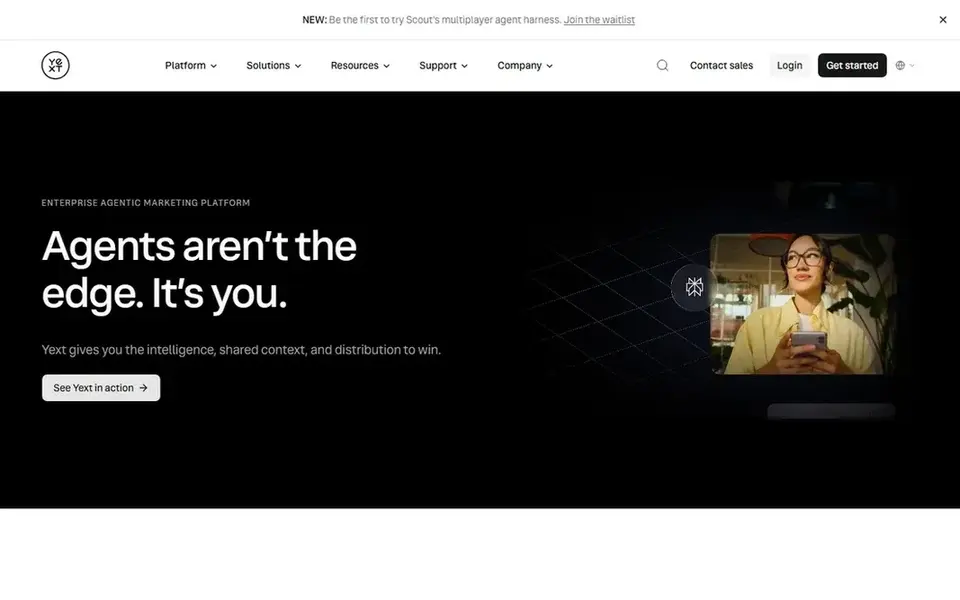
Yext is a listing management platform built around a single source of truth for your business data. For a duct cleaning company, that means your business name, address, phone, hours and service categories stay the same on Google, Apple Maps, Bing and the directories customers check before they call. It suits operators running more than one crew or covering a wide area.
The workflow is straightforward once it is set up. You update your core data in Yext, and the changes push out to connected publishers, which reduces the mismatched phone numbers and old addresses that confuse Google. You can also build location or service pages from the same data, which helps when you want a page for each town you serve without rewriting your details by hand.
The limit is cost and complexity. Pricing is quote-based, and a one-van operator with a single address may find the setup heavier than needed. Skip it if you only ever serve one town and never plan to expand.
- Central control of business data
- wide publisher network
- structured location pages
- Quote-based pricing
- setup takes real effort
Grade.us is a review management tool. Duct cleaning is a trust-heavy purchase: people let a stranger into their home and into their air vents, so recent reviews with detail carry a lot of weight in the map pack. Grade.us helps you ask every customer for a review without pestering them.
In practice you connect it to your job list or booking system, and it sends a request by email or text after the visit. You can route happy customers toward Google and keep private feedback internal, which follows Google's rules as long as you ask everyone the same way and never filter out unhappy customers before they can post. Replies to reviews can be handled from one inbox.
The limit is scope. Grade.us does reviews, not listings or rank tracking, so you still need another tool for your business data. Skip it if you already have review requests built into your field service software.
- Automated review request campaigns
- simple customer follow-up
- works with Google reviews
- Review-focused only
- needs a clean customer list
Local Viking tracks where your business ranks on Google Maps across a grid of points around your location, not just one spot. That matters for duct cleaning because a homeowner three towns away sees a different map pack than someone next door to your shop. A grid view shows which parts of your service area you actually reach.
The tool also handles Google Business Profile tasks like geo-tagged photos and posts, which can support visibility in nearby towns. I would use it to spot weak edges of your service area and then decide whether to build a town page or push for more reviews from that area. It is a diagnostic tool, not a fix on its own.
The limit is that rankings are only one signal. Local Viking will not clean up your citations or manage reviews, so pair it with a listing tool. Skip it if you serve a single small town where one rank check is enough.
- Grid-based map rankings
- geo-tagged photo posting
- GBP management features
- Ranking focus only
- grid data needs interpretation
Synup combines listing management with Google Business Profile tools, review monitoring and reporting. It fits a duct cleaning business that has grown to several locations or a franchise-style setup where each branch needs its own profile, hours and service list kept in order.
The practical benefit is one dashboard for listings, reviews and profile updates. If you run seasonal promotions, like a spring air duct cleaning special, you can push posts and offers to each location without logging into every profile separately. Review monitoring also flags new reviews so you can reply before they sit unanswered for weeks.
The limits are price and fit. Pricing is quote-based, and a single-location operator will pay for features they never touch. Skip it if you only need review requests and one profile managed.
- Listing sync plus GBP tools
- review monitoring
- location-level reporting
- Quote-based pricing
- more than small teams need
WhatConverts is a lead tracking tool that shows where calls and form fills come from. For duct cleaning companies, the phone call is the sale, so knowing whether a call came from your Google Business Profile, a town page or a directory listing tells you where to spend effort.
You place tracking numbers on your site and listings, and each lead is logged with its source, the page viewed and the call details. That lets you compare, for example, whether your "air duct cleaning [town]" pages bring calls or just traffic. Call recording and lead scoring help you judge quality, not just volume.
The limit is setup. Tracking numbers and tags need to be installed correctly, and dynamic number insertion has to be tested. Skip it if you do not answer the phone from a website and rely entirely on word of mouth.
- Tracks calls, forms and chats in one place
- ties leads to source
- call recording options
- Needs tracking numbers
- setup requires care
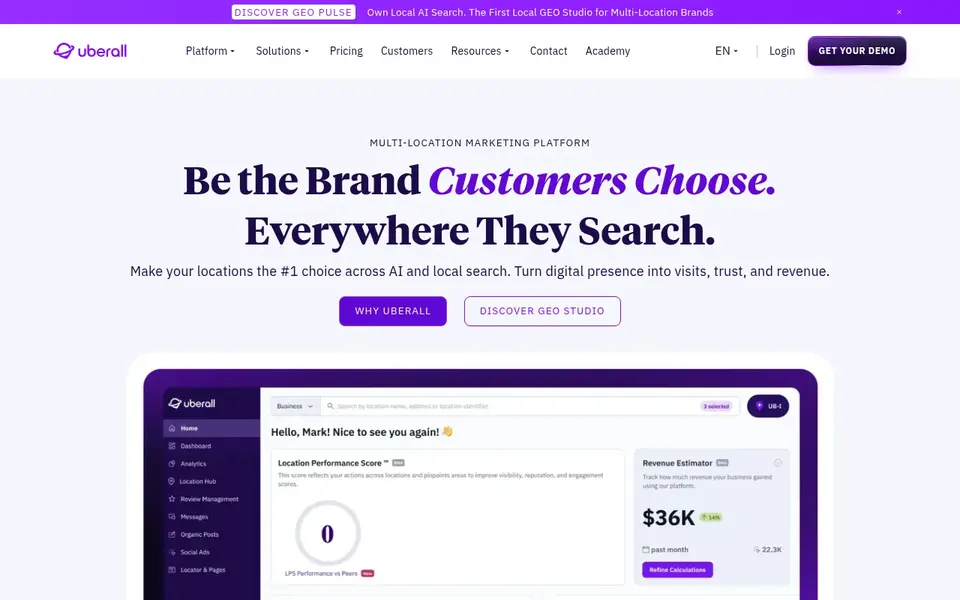
Uberall is a location marketing platform for listings, local pages and reviews. It suits duct cleaning companies that cover a large metro or several counties and want their details correct on the maps and directories customers use in each area.
The useful part for this trade is coverage. You manage core data once and it flows to many publishers, and you can create local pages for the towns you serve so searchers find a page that names their area. Review tools sit alongside, so profile updates and reputation work happen in one place.
The limits are cost and effort. Pricing is quote-based and the platform is built for multi-location operations, so a small owner-operator will find it heavy. Skip it if your service area is one town and your listings are already clean.
- Broad publisher network
- location pages
- review and profile tools
- Quote-based pricing
- setup time for small teams
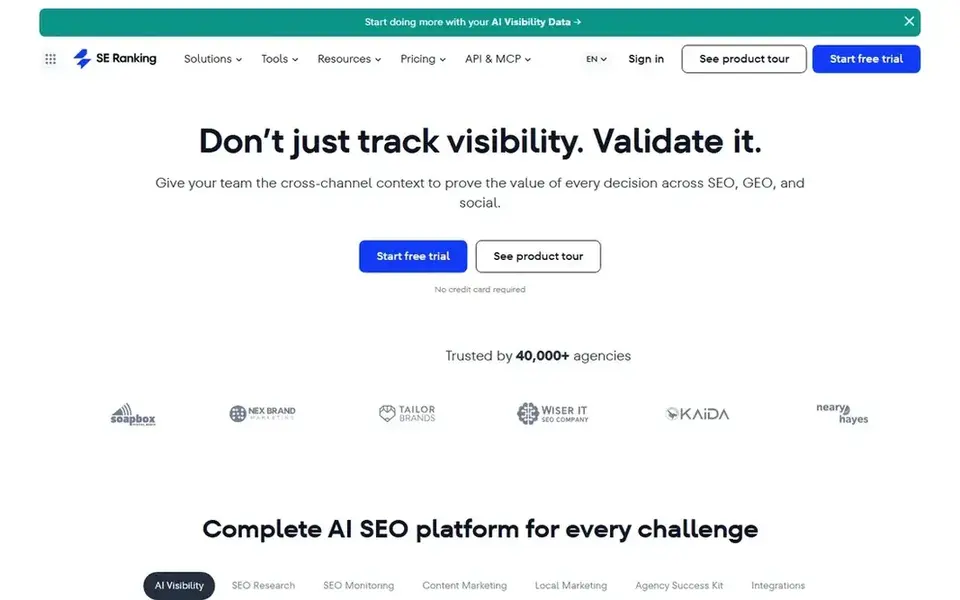
SE Ranking is an SEO platform with local rank tracking built in. It fits a duct cleaning company that wants to watch both map positions and regular search results for terms like "duct cleaning near me" and "air duct cleaning [town]" without buying two separate tools.
You set your keywords, add your location, and track positions over time, including a local pack view. Competitor tracking shows which other duct cleaners appear for the same terms, and reports can be shared with a partner or manager. It is useful for spotting whether a town page is gaining traction after you publish it.
The limit is that it does not fix your listings or manage reviews. It reports; you act. Skip it if you only want Google Business Profile management and nothing else.
- Local rank tracking alongside keyword data
- competitor tracking
- reporting
- Local features inside a larger suite
- not a listing tool
How I chose
I picked these tools by reading vendor documentation and public sources, then judging each one against how duct cleaning companies actually get customers. That means a service area that spans several towns, phone calls as the main conversion, reviews that decide map pack placement, and a small team that cannot spend hours on listings. I did not run hands-on tests, so treat the workflow notes as a guide to what each vendor documents.
I also weighed limits honestly. A tool that is excellent for a multi-location operation can be overkill for a one-van business, and a review tool will not fix messy citations. Where a product is quote-based or its free plan is unclear, I say so rather than guess. The goal is a short list you can check against your own service area, budget process and team size before you sign anything.
What to check before you buy
- Confirm the tool syncs to Google Business Profile and the maps apps your customers use, not just a generic directory list.
- Check whether it supports service-area businesses, since duct cleaners often hide a home address and list towns instead.
- Ask how review requests handle unhappy customers, and make sure the process asks everyone the same way.
- Test whether rank tracking can follow a radius or grid, not a single pin at your office.
- Confirm call tracking can use numbers that forward to your existing line without confusing customers.
- Check the contract length and cancellation terms, especially for quote-based platforms.
Frequently asked questions
Do duct cleaning companies need local SEO tools at all?
Yes, if you want to appear in the map pack when someone searches for duct cleaning in your area. Tools help keep your listings consistent, gather reviews after jobs and track which towns you actually rank in. You can do some of this by hand, but it gets hard once you cover several towns.
What is the most important local SEO task for a duct cleaning business?
Getting consistent listings and a steady flow of recent Google reviews. Homeowners compare a few companies and pick one that looks trustworthy and nearby. Mismatched phone numbers or an empty review profile costs calls, no matter how good your town pages are.
Can I ask customers for reviews without breaking Google's rules?
Yes, as long as you ask all customers the same way, do not offer incentives, and do not filter out unhappy customers before they can post. Tools like Grade.us can automate the request, but the policy is yours to follow. Never buy reviews or gate them.
How many towns should I target with local pages?
Start with the towns where you actually complete jobs and can respond quickly. A handful of solid pages with real reviews and accurate details beats dozens of thin pages. Rank tracking helps you see which towns are close to ranking before you write more.
Do I need call tracking if I already use Google Analytics?
Analytics shows form fills and page visits well, but phone calls often arrive without a clear source. Call tracking assigns a number to a listing or page so you can see which one produced the call. For a phone-driven trade, that gap is worth closing.
Sources
See where you really rank - block by block
ProMapRanker scans Google Maps across a grid of your service area. Simple monthly plans from $19, white-label on every plan.
Start freeBrowse all guides
← Best Local SEO Tools for Boat Repair Shops in 2026Best Local SEO Tools for Kids Activity Centers (2026) →
 best local seo tools for animal hospitals
Best Local SEO Tools for Animal Hospitals in 2026
A practical guide to the best local SEO tools for animal hospitals in 2026, covering listings, reviews, rank tracking and GBP management for vet clinics.
Read → best local seo software for sporting goods stores
Best Local SEO Software for Sporting Goods Stores in 2026
A practical guide to the best local SEO software for sporting goods stores in 2026, covering listings, reviews, rank tracking and Google Business Profile tools.
Read → best local seo software for orthopedic clinics
Best Local SEO Software for Orthopedic Clinics in 2026
A practical guide to the best local SEO software for orthopedic clinics in 2026, covering listings, reviews, rank tracking and GBP management.
Read → local seo for dry cleaners
Local SEO for Dry Cleaners
A local SEO guide for dry cleaners: Google Business Profile setup, reviews, and convenience and turnaround-time local SEO.
Read → google local algorithm update 2027
Google Local Algorithm Updates 2027: What Changed
A running breakdown of Google's local search and Maps algorithm changes in 2027 and how to react to each.
Read → us local search engine
Us Local Search Engine: A Complete Guide
Everything you need to know about us local search engine: what it is, why it matters for local SEO, and exactly how to act on it.
Read →More in Local SEO & Google Maps · All guides A to Z by date · Latest guides