 ProMapRanker
Best Local SEO Software for Landscape Architects in 2026

Direct answer
Moz Local is my first pick for landscape architects because it fixes the messy address and category data that sends project enquiries to the wrong listing, and it keeps that data consistent across the main directories. Pricing is quote-based, so check its pricing page. For review requests after a garden build, GatherUp fits well, and for tracking how a firm shows up across a metro area, SE Ranking is a solid alternative.
I put this comparison together from vendor documentation and public sources rather than hands-on testing. I looked at what each tool actually does for a design studio that serves several towns, how it handles listings and reviews, and where its limits sit. Landscape architecture is a referral-heavy, high-consideration service, so I weighted accuracy and review handling above raw feature counts.
Key takeaways
- Landscape architects win work through a small number of high-value local searches, so accurate listings and a complete Google Business Profile matter more than volume tactics.
- Review software helps you ask politely for feedback after a project handover, which supports the trust a design client needs before they call.
- Local rank tracking shows whether your profile appears for suburb-level searches like "landscape architect [town]" rather than only for the city name.
- Most landscape architecture studios serve a radius of several towns, so multi-location and service-area features are worth checking before you buy.
- None of these tools replace a properly filled Google Business Profile; they support it, and any tool that promises shortcuts around Google's guidelines is not worth the money.
Quick comparison
| Pick | Great for | Pricing starts at | Free tier | |
|---|---|---|---|---|
 Moz Local | Listing accuracy and duplicate cleanup | See website | No free plan | Visit |
 GatherUp | Review requests after project handover | See website | Free trial | Visit |
 SE Ranking | Local rank tracking across suburbs | See website | Free trial | Visit |
 Synup | Multi-location listing management | See website | Not stated | Visit |
 Uberall | GBP management across several offices | See website | Not stated | Visit |
 Yext | Central control of business data | See website | Not stated | Visit |
 Places Scout | Grid-based local rank tracking | See website | Free trial | Visit |
The best local SEO software for landscape architects compared
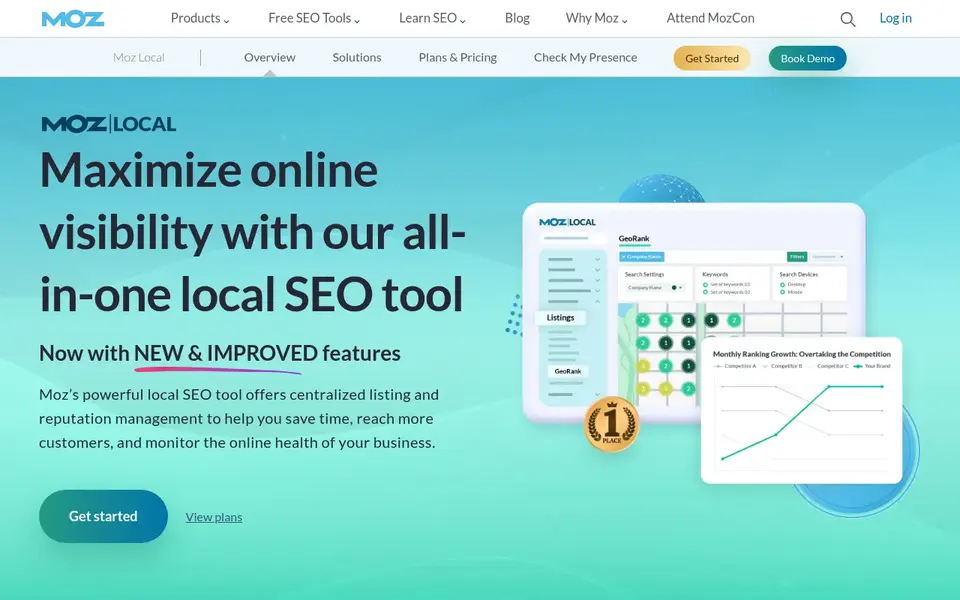
Moz Local is a listing management tool built around one job: making sure your business name, address, phone number and categories match across the directories that feed local search. For a landscape architect, that matters because a studio often moves premises or adds a second office, and old addresses linger on directory sites for years.
The workflow is straightforward. You enter your business details, the tool checks them against major data sources, and it flags inconsistencies and duplicates for correction. If your studio has appeared under an old trading name or a former address, this is where you clean it up. It suits a single-office practice that wants its core data correct without managing directories by hand.
The limit is scope. Moz Local does not handle review requests or rank tracking, so you would pair it with a review tool. Skip it if your listings are already clean and your main gap is reviews or local rankings.
- Strong duplicate detection
- clear listing accuracy scoring
- ties into Moz's local data
- Focused on listings rather than reviews
- quote-based pricing needs a sales conversation
GatherUp is a review generation and customer feedback tool. You add customer contacts, and it sends polite requests for a review after a project. For a landscape architect, the natural moment is a few weeks after a garden or courtyard scheme is finished and the client has lived with it.
That timing matters. A client who has just watched a planting scheme settle in is more likely to write something specific about the design process, which reads better to the next homeowner than a generic five-star line. The tool also collects private feedback first, so you can respond to a unhappy client directly rather than discovering the problem publicly.
It only does reviews. If your Google Business Profile categories or service areas are wrong, fix those first. It is also not a tool for gating reviews, and you should not use it to filter out negative feedback before it reaches Google, which breaks Google's rules.
- Simple review request flows
- supports multiple review sites
- customer feedback inbox
- Not a listing management tool
- needs a contact list to be useful
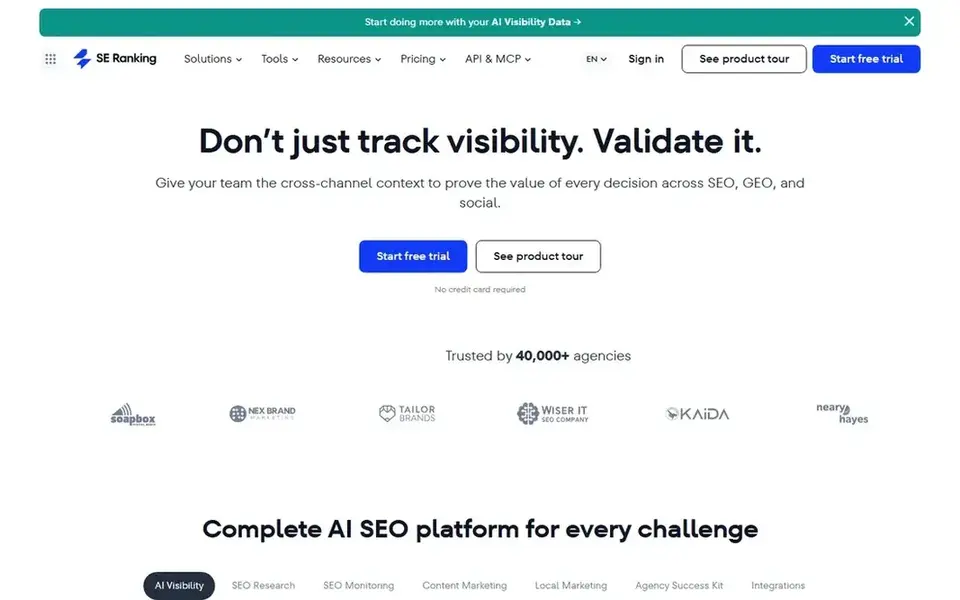
SE Ranking is an SEO platform with a local rank tracking module. You set the search location, and it shows where your profile and site appear for terms like "landscape architect near me" or "garden designer [town]" from that point on the map.
For a studio that serves a ring of towns around a city, this is useful. You can see whether you rank in the town where you are based but disappear two miles away, which is common when the profile address sits at one edge of your service area. The reporting is also handy if you pitch to developers or housing associations and want to show local visibility.
It is a broad suite, so you pay for features you may not use. If you only want grid-based local tracking, a dedicated tool may suit you better.
- Local rank tracking by location
- competitor tracking
- reporting for clients
- Local features are part of a larger suite
- setup takes some learning
Synup is a listings and local marketing platform aimed at businesses with several locations. It pushes business data to directories, monitors reviews and provides local pages. A landscape architecture firm with offices in two cities, or a practice that runs a separate studio brand, is the kind of buyer it fits.
The practical benefit is central control. You update an address or a phone number once and it propagates. For a firm that has grown by acquisition and inherited a second office with its own listing history, that saves a lot of manual correction.
For a single-principal studio, it is more than you need. The setup and cost are hard to justify unless you genuinely manage multiple locations.
- Manages listings at scale
- supports multiple locations
- review monitoring included
- Priced and built for larger operations
- overkill for a solo studio

Uberall is a location marketing platform with deep Google Business Profile management. It handles profile data, posts, review responses and location pages from one dashboard. It is built for brands with many locations, which is a step beyond most landscape architecture practices.
Where it earns its place is consistency. If your firm has a head office and a satellite studio, keeping opening hours, service categories and photos aligned across both is easier from one place. It also helps when a client searches for the studio nearest to them.
The trade-off is scale. Pricing and onboarding are aimed at larger businesses, and a two-person practice will find it heavy. Read the contract terms carefully before committing.
- Strong Google Business Profile management
- location pages
- review handling
- Enterprise orientation
- contract and pricing need a conversation

Yext is a business data platform that lets you manage your information in one place and push it to a large network of publishers. For a landscape architect, the value is in keeping the details that clients check, such as address, phone, opening hours and services, correct everywhere at once.
It suits a firm that wants one source of truth and is willing to pay for network reach. The platform also supports local pages and structured data, which can help a studio present its services clearly.
The main caution is the subscription model. Understand what happens if you stop paying, because some listings may change. A solo studio with one office may find a simpler listing tool enough.
- Wide publisher network
- central data control
- structured business information
- Subscription model and renewal terms need checking
- more than a small studio needs
Places Scout is a local rank tracking and competitor analysis tool. It runs grid-based checks so you can see how your profile ranks across a map area rather than from a single point. For a landscape architect covering a wide rural or suburban area, that view is more honest than one city-level number.
The grid shows where you are visible and where you are not. If your studio ranks well in the town centre but not in the villages where larger gardens are common, that is a signal to work on reviews and local content for those areas.
It is a specialist tool with a desktop-style interface, so expect some learning. If you want simple reporting only, a broader suite may be easier.
- Grid-based rank tracking
- competitor analysis
- reporting options
- Desktop-style interface
- steeper learning curve
How I chose
I chose these tools from vendor documentation and public sources, not from hands-on testing. I started with the jobs a landscape architecture studio actually needs: correct listings, a complete Google Business Profile, polite review requests after a project, and a way to see local visibility across several towns. I then checked each vendor's own documentation for what the tool does and where it stops.
I left out tools that only make sense for large retail chains, and I avoided anything that promises shortcuts around Google's guidelines. Pricing is quote-based or plan-based for most of these, so I did not compare prices directly; I noted free trials only where the vendor states one. Where a tool is built for multi-location brands, I said so, because a solo studio should not pay for scale it does not have.
What to check before you buy
- Confirm the tool syncs with Google Business Profile correctly and follows Google's guidelines on reviews and edits.
- Check whether it handles service-area businesses, since many landscape architects meet clients on site rather than at a studio.
- Ask how many locations and users are included, because a second office or a part-time marketing helper changes the plan you need.
- Look for review request features that let clients choose the review site, rather than gating or filtering feedback.
- Check local rank tracking by location, not just by country, so you can see suburb-level visibility.
- Read the contract and cancellation terms, especially for listing tools where data may change if you stop paying.
Frequently asked questions
Do landscape architects need local SEO software at all?
Not always. If you have one studio, a complete Google Business Profile and clean directory listings may be enough. Software helps when your address data is inconsistent, when you serve several towns and want to track visibility, or when you want a repeatable way to ask clients for reviews after a project.
Which tool is best for getting more reviews?
GatherUp is the most focused option here because review requests are its main job. The important part is the practice, not the tool: ask clients after they have lived with the finished garden for a few weeks, keep the request personal, and never offer incentives or filter out unhappy clients before they reach Google.
Can these tools help me rank in nearby towns?
Local rank tracking tools like SE Ranking and Places Scout show where you appear across a map area, which is more useful than a single city ranking. They do not create rankings on their own. Use what you learn to improve your profile, add genuine local content and earn reviews from clients in those towns.
Is Yext or Uberall worth it for a small practice?
Usually not. Both are built for businesses with several locations and a marketing team. A single-office studio will get more value from a listing tool plus a review tool. Consider the larger platforms only when you have multiple offices or a brand to manage centrally.
How do I keep my Google Business Profile within Google's rules?
Keep your business name exactly as it is in real life, with no added keywords. Choose the most accurate primary category, list genuine services, and use real photos of completed work. Respond to reviews honestly, and do not buy reviews, gate them or ask staff to post them. These rules apply whatever software you use.
Sources
See where you really rank - block by block
ProMapRanker scans Google Maps across a grid of your service area. Simple monthly plans from $19, white-label on every plan.
Start freeBrowse all guides
← Best Local SEO Software for Embroidery Shops (2026)Best Local SEO Software for Orthopedic Clinics in 2026 →
 best local seo software for bowling alleys
Best Local SEO Software for Bowling Alleys in 2026
A practical guide to the best local SEO software for bowling alleys in 2026, covering GBP management, reviews, listings and rank tracking tools.
Read → best local seo software for bounce house rentals
Best Local SEO Software for Bounce House Rentals (2026)
A practical guide to the best local SEO software for bounce house rental businesses in 2026, covering listings, GBP management, reviews and rank tracking.
Read → best local seo software for arborists
Best Local SEO Software for Arborists in 2026
A practical guide to the best local SEO software for arborists in 2026, covering listing management, review requests, GBP tools and rank tracking.
Read → geo grid rank tracking
What Is Geo-Grid Rank Tracking and Why Single-Point Tools Lie to You
Geo-grid rank tracking maps your Google Maps position across dozens of locations. Here's why single-point rank tools give you a dangerously false picture.
Read → local seo for staffing agencies
Local SEO for Staffing Agencies
A local SEO guide for staffing agencies: Google Business Profile setup, reviews, and local-market and industry-niche staffing SEO.
Read → local seo for pool service
Local SEO for Pool Service Companies
A local SEO playbook for pool cleaning and maintenance companies to rank for seasonal local searches.
Read →More in Local SEO & Google Maps · All guides A to Z by date · Latest guides