 ProMapRanker
Best Local Rank Tracking Tools for Storage Facilities in 2026

Google Business Profile geo-grid tracking · Pricing starts at: See website
Direct answer
Local Viking is my top pick for storage facilities because it scans Google Maps on a grid around each property and tracks the Google Business Profile signals that decide whether a facility shows up for "storage near me" searches. It has no free plan stated, so check its pricing page. BrightLocal suits agencies managing several facility clients, and Local Falcon fits owners who want the clearest map-grid picture of where a facility ranks.
I put this comparison together from vendor documentation and public sources rather than hands-on tests. I looked at how each tool handles map-grid scanning, Google Business Profile data, multi-location reporting and the day-to-day workflow a storage operator or their agency would actually use. Prices change, so I have not listed figures; check each vendor's site.
Key takeaways
- Storage searches are almost always "near me" or suburb-based, so a single rank number tells you little; grid-based tracking shows which sides of the facility's catchment area you actually win.
- Rank tracking only measures visibility, so pair it with Google Business Profile work such as correct categories, service areas, photos and review replies.
- Multi-location operators need a tool that groups facilities into locations and reports per property, not one blended average.
- Facilities competing in dense metro areas should track a wider grid radius, because a unit on a highway edge may rank well five miles out and poorly two miles in.
- Check that the tool reports on Google Maps and the local pack separately, since those are the two placements that send storage enquiries.
Quick comparison
| Pick | Great for | Pricing starts at | Free tier | |
|---|---|---|---|---|
| Local Viking | Google Business Profile geo-grid tracking | See website | Not stated | Visit |
 BrightLocal | Agencies managing multiple storage clients | See website | Free trial | Visit |
 Local Falcon | Clear map-grid visibility for one site | See website | Free trial | Visit |
 Whitespark | Rank tracking combined with citation building | See website | Free trial | Visit |
 Semrush | Facilities running wider SEO campaigns | See website | Free plan | Visit |
 SE Ranking | One dashboard for rankings and site checks | See website | Free trial | Visit |
 AgencyAnalytics | Reporting rankings across many facilities | See website | Free trial | Visit |
The best local rank tracking tools for storage facilities compared
Local Viking is a local SEO tool built around Google Business Profile management and geo-grid rank tracking. For a storage facility it fits well because the whole product assumes one business location with a service radius, which is exactly how self storage works: a unit on the edge of town draws customers from a defined drive-time area, not the whole country.
The workflow is straightforward. You connect each facility's Google Business Profile, set a grid size and radius, and the tool scans Google Maps from points across that area. You then see which grid points the facility ranks in for terms like "self storage", "storage units near me" or "climate controlled storage", and which points it misses. The profile audit flags missing categories, hours or attributes, and you can schedule photo posts, which matters for facilities because unit photos and gate images help searchers trust the listing.
The limits are mostly about scope. If you also want Bing or Apple Maps visibility, or organic keyword tracking for a facility website, you will need another tool. Small operators with one site and a tight budget may find the credit system more than they need.
- Map-grid scans around each facility
- Google Business Profile audit and photo scheduling
- simple per-location dashboard
- Google-focused, so little for Bing or Apple Maps
- grid scans use credits
BrightLocal is a local SEO platform that combines rank tracking, citation building, review management and reporting. It suits an agency or a multi-facility operator who wants one place to check rankings, listings and reviews rather than stitching three tools together.
For storage facilities, the useful part is the local rank tracking report: you add each facility as a location, choose keywords, and get grid-based visibility plus local pack positions. Because storage operators often run several sites in different towns, the location grouping and client reporting make it easy to see which properties are gaining or losing ground. The citation tools also help keep name, address and phone consistent across directories, which affects whether Google trusts a facility's location.
The main drawback is complexity. There is a lot on screen, and the credit model means heavy grid scanning across many facilities adds up. A single-site owner may prefer something simpler.
- Local rank tracking plus citation and review tools
- multi-location reporting
- white-label reports for clients
- Grid scans consume credits
- interface has a lot to learn
Local Falcon does one thing well: it scans Google Maps across a grid and shows the results as a heat map. For a storage facility, that visual is genuinely useful, because you can see at a glance whether the site ranks across its whole catchment or only in the streets immediately around the gate.
You enter the facility address, pick a scan radius and keyword set, and the tool returns a grid where each point shows the facility's position. Running the same scan monthly shows movement, and adding a competitor lets you see where a rival facility outranks you. That is helpful when a new storage site opens nearby and starts taking the top spots in part of your area.
The limitation is that Local Falcon is a measurement tool, not a management suite. It will not fix your Google Business Profile categories or manage reviews, so it works best alongside a profile management tool or an agency doing that work.
- Readable geo-grid heat maps
- scan scheduling
- competitor comparison on the same grid
- Focused on rank tracking rather than profile management
- limited outside local search
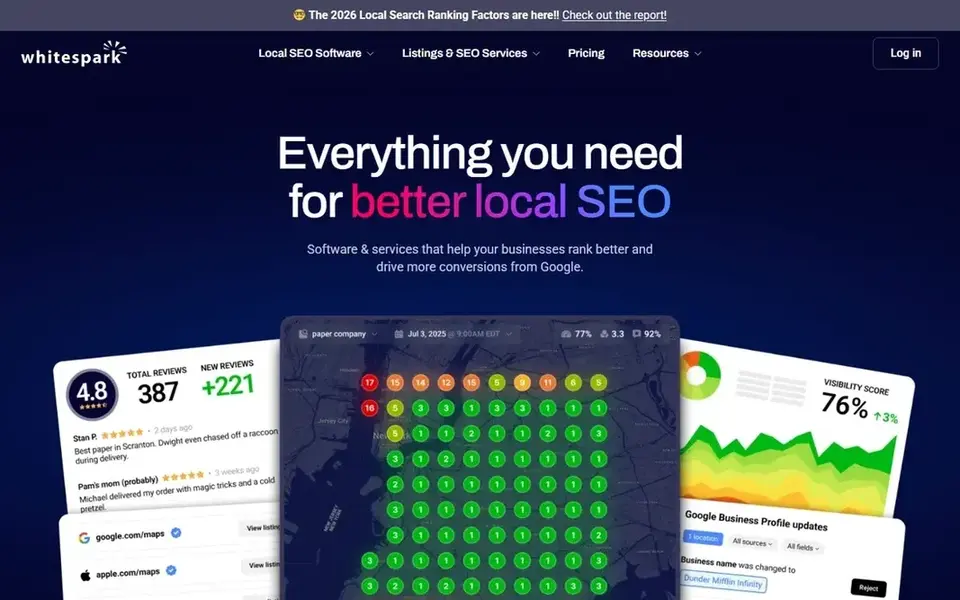
Whitespark is a local search toolkit best known for citation building, with a local rank tracker alongside it. It fits storage operators who know their directory listings are messy and want rankings and citations handled in one place.
The rank tracker reports Google local pack and Maps positions for chosen keywords, and you can view results on a grid to see how visibility changes across a facility's service area. Because storage customers often search by suburb or landmark ("storage near the airport"), tracking a keyword list that mirrors those phrases gives a realistic picture. The citation tools then help push consistent address data to the directories that feed Google's local index.
The trade-off is price and depth. Whitespark is built with agencies in mind, so a single-facility owner may pay for citation features they rarely touch. It is worth it mainly if listings are a known weak point.
- Local rank tracker with grid views
- strong citation finder and builder
- local search focus throughout
- Pricier than simple trackers
- some features are agency-oriented
Semrush is a general SEO platform with a local presence. It suits a storage business that already invests in its website, blog content about moving and packing, and paid search, and wants rankings in the same dashboard.
For local rank tracking, Semrush can monitor keywords by location and show local pack and Maps positions, and its listing management feature helps keep business details consistent. Where it earns its place for a storage operator is the wider picture: you can see which competitors rank for "storage units [city]" and what content they publish, then act on it. That is more than a pure rank tracker offers.
One limitation: fit. If all you need is a daily grid scan around one facility, Semrush is a large subscription for a small job. It makes sense when SEO is a real channel, not a checkbox.
- Broad keyword and competitor data
- local listing management add-on
- solid reporting
- Local grid tracking is not the core product
- plans are priced for full SEO use
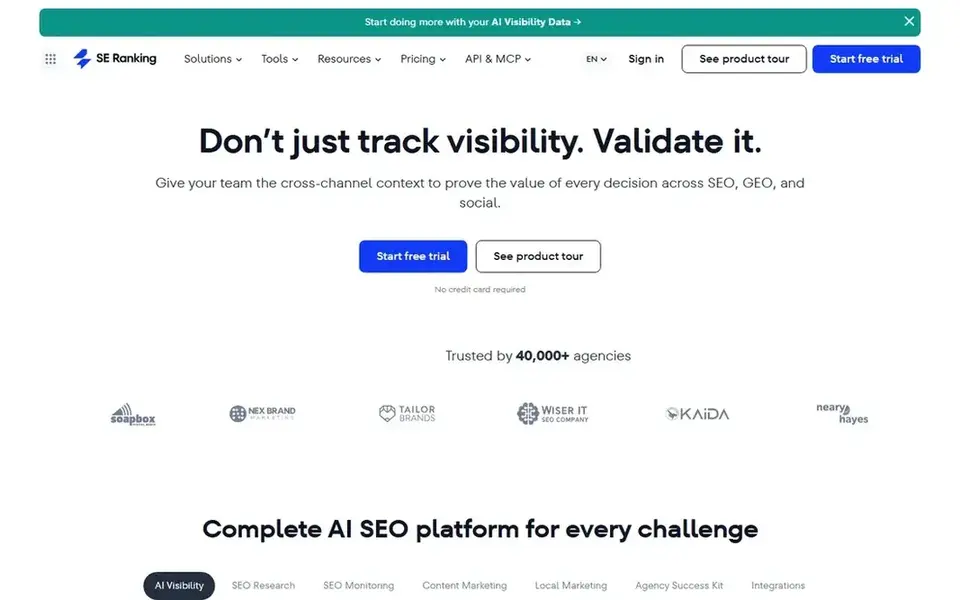
SE Ranking is an SEO platform with a local rank tracking module. It suits a storage owner who wants to watch both the facility's Google Business Profile visibility and the website's organic rankings without paying for two subscriptions.
You set up a project per facility, add keywords with a location, and the tool reports positions in Google's local results and organic listings. Because storage searches mix intent, tracking both "self storage [town]" and "how much does storage cost" tells you whether you are winning the ready-to-rent searcher or only the researcher. The site audit also catches issues like missing location pages on a multi-facility site.
Its local grid features are less developed than Local Viking or Local Falcon, so if map-grid detail is the priority, look there first. SE Ranking is the better fit when you want breadth at a moderate cost.
- Local rank tracking by location
- site audit and competitor tools included
- straightforward interface
- Local pack reporting depth varies by plan
- grid options are less central than dedicated tools
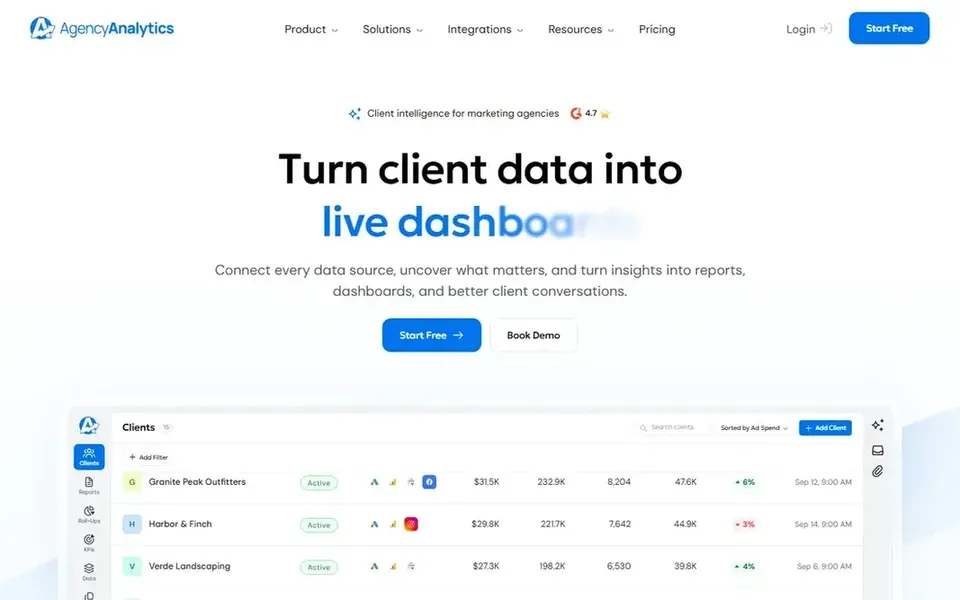
AgencyAnalytics is a reporting platform rather than a rank tracker. It fits a storage operator with several facilities, or an agency serving storage clients, who needs to show ranking progress in a clean dashboard without building spreadsheets.
You connect the rank tracking tool you already use, along with Google Business Profile and Google Analytics, and AgencyAnalytics assembles the numbers into reports you can schedule. For a storage portfolio, that means one report per facility showing local rankings, profile views and website enquiries side by side, which is what an owner actually wants to see each month.
The limit is obvious: it does not scan Google Maps on its own. If you have no rank tracking source, start with one of the tools above, then add AgencyAnalytics for presentation.
- Pulls rank data from connected tools into one report
- client-friendly dashboards
- scheduled delivery
- It does not track rankings itself
- needs another tool as the data source
How I chose
I built this list from vendor documentation and public sources, not from hands-on testing. I read each product's feature pages, help documentation and public descriptions of how local rank tracking works, then judged fit against how storage facilities actually attract customers: a defined drive-time area, "near me" and suburb searches, and a Google Business Profile that carries most of the visibility.
I also weighed limits. A tool that only scans Google Maps is fine for a single facility but thin for an operator who also wants citation cleanup, and a broad SEO suite is overkill for someone who just wants a monthly grid scan. I noted where each tool sits on that scale, and I left out anything I could not confirm as a real, operating product. No prices or scores are listed because they change and I cannot verify them at the time of writing.
What to check before you buy
- Confirm the tool scans Google Maps on a grid, not just one central point, because storage catchments are wide and uneven.
- Check whether you can set the scan radius per facility, since a rural site and a dense city site need different coverage.
- Make sure it supports multiple locations under one account if you run more than one facility.
- Ask whether Google Business Profile data such as categories, hours and attributes is included, or only rankings.
- Look at how reports are exported and whether they are clear enough to send to an owner or client without editing.
- Check the credit or scan limits against how often you plan to scan, since weekly grid scans use far more than monthly ones.
Frequently asked questions
Do storage facilities need rank tracking at all?
Yes, if you want to know whether the facility shows up when someone nearby searches "storage units near me". A single rank number is misleading for storage because visibility changes across the catchment area. Grid-based tracking shows which parts of your drive-time area you win and which you lose to a competitor.
How large a grid radius should I track for a storage facility?
It depends on the site. A rural facility may draw from a wide area, so a larger radius makes sense. An urban site with several competitors within a few miles needs a tighter, denser grid. Start with a radius that matches where most of your customers come from and adjust after the first few scans.
Can these tools track Google Business Profile rankings without a website?
Most local rank trackers work from the Google Business Profile listing, so a facility with a thin website can still be tracked. However, a complete profile with correct categories, hours, photos and service information supports better visibility, so tracking is more useful when the profile itself is in good shape.
How often should I run a local rank scan?
Monthly is enough to spot trends for most single facilities. Run a scan after any significant change, such as a new competitor opening, a profile update or a website change, so you can see the effect. Weekly scans suit agencies managing many locations or facilities in fast-moving markets.
Is rank tracking enough to improve storage facility visibility?
No. Rank tracking measures where you appear; it does not change it. Improvements come from profile work, review replies, accurate listings and useful location pages. Use the tracking data to decide where to act, then follow Google's guidelines rather than buying reviews or stuffing keywords into the business name.
Sources
See where you really rank - block by block
ProMapRanker scans Google Maps across a grid of your service area. Simple monthly plans from $19, white-label on every plan.
Start freeBrowse all guides
← Best Local Rank Tracking Tools for Real Estate Agents in 2026Best Local SEO Tools for Bike Shops in 2026 →
 best local rank tracking tools for orthodontists
Best Local Rank Tracking Tools for Orthodontists in 2026
A practical guide to the best local rank tracking tools for orthodontists, compared from vendor documentation and public sources for 2026.
Read → best local rank tracking tools for furniture stores
Best Local Rank Tracking Tools for Furniture Stores in 2026
A first-person guide to the best local rank tracking tools for furniture stores in 2026, compared from vendor documentation and public sources.
Read → best local rank tracking tools for franchises
Best Local Rank Tracking Tools for Franchises in 2026
A franchise-focused look at local rank tracking tools, how each handles multi-location reporting, and what to check before you buy in 2026.
Read → how to delete a review on google maps
How To Delete A Review On Google Maps?
Everything you need to know about how to delete a review on google maps: what it is, why it matters for local SEO, and exactly how to act on it.
Read → local seo benchmarking
Local SEO Benchmarking: How to Set and Beat Your Baselines
Set local SEO benchmarks with geo-grid baselines and learn how to measure progress against competitors.
Read → google business profile audit
Google Business Profile Audit: A Free 30-Point Checklist
Run a free Google Business Profile audit with this 30-point checklist to find quick wins.
Read →More in Local SEO & Google Maps · All guides A to Z by date · Latest guides