 ProMapRanker
Best Local Listing Management Software in 2026

Key takeaways
- Local listing software keeps your name, address, phone, hours, and services consistent across Google, Apple, Yelp, and other directories.
- Yext leads for large brands needing wide, fast updates, while BrightLocal and Moz Local suit smaller firms and agencies.
- Prices vary by location count, so model your total for every site you manage, not just one location.
- Direct publisher updates land faster than aggregator-only updates, so check how each tool actually syncs.
- Google Business Profile is free and essential, but it covers Google only, so most multi-location firms still need a sync tool.
Quick comparison
| Pick | Great for | Pricing starts at | Free tier | |
|---|---|---|---|---|
 Yext | Large brands with many locations | See website | No | Visit |
 BrightLocal | Agencies and small multi-location firms | $39 per month | Free trial | Visit |
 Moz Local | Simple listing distribution | See website | No | Visit |
 Semrush Local | Teams already using Semrush | $30 per location per month | Free trial | Visit |
 Birdeye | Review-led listing management | See website | No | Visit |
 Uberall | Franchises and large location networks | See website | No | Visit |
 Synup | Small firms wanting an all-in-one tool | See website | No | Visit |
 Whitespark | Citation building and cleanup by piece | See website | No | Visit |
The best local listing management software
Local listing management software syncs business details across directories, suppresses duplicates, tracks reviews, and reports on visibility. The eight tools below serve that job for different buyers, from a single shop that wants clean citations to a franchise with hundreds of sites. We focused on listing sync and management, not on rank tracking alone, though several tools include it.
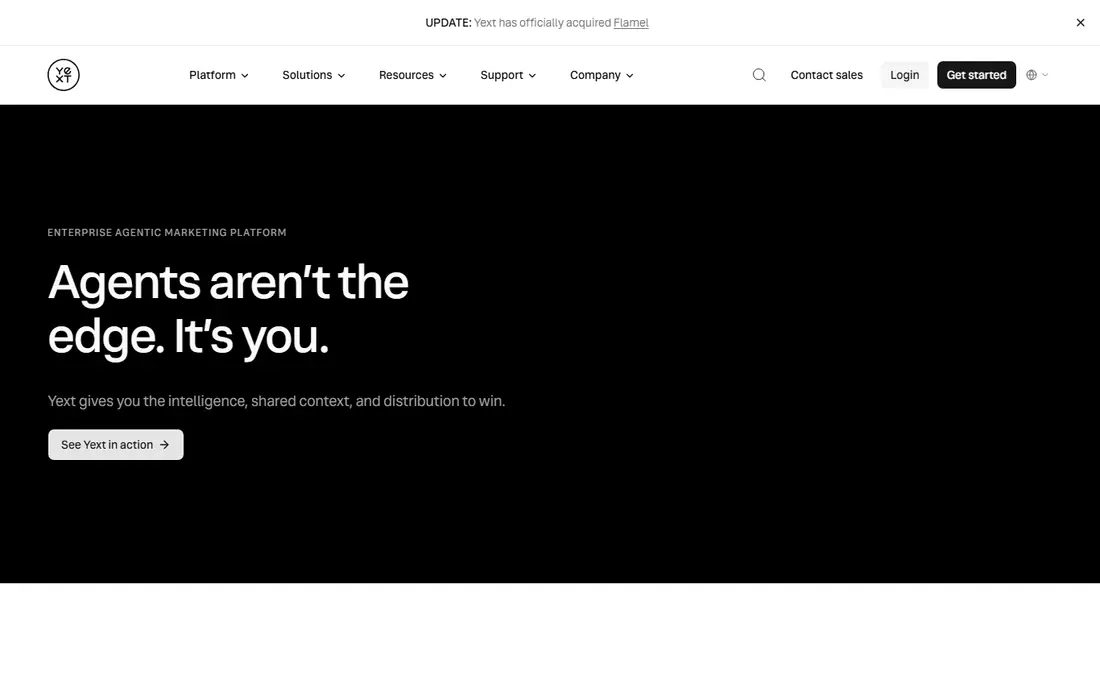
Yext is the enterprise standard for listing management, with direct integrations to a wide network of publishers, including Google, Apple Maps, Bing, and Yelp. Updates pushed from Yext land fast, duplicates can be suppressed, and head office can control fields centrally while local teams manage their own pages within set rules. Review monitoring, local landing pages, and analytics sit alongside listings.
The catch is price and fit. Yext pricing is quote-based for most buyers and scales with locations and modules, so a single-location shop will usually find better value elsewhere. It fits best for brands, franchises, and multi-location firms where consistent, fast updates across many sites matter most. Get a written quote for your full location count, and test how a hours change flows to Google, Apple, and Yelp.
- Wide publisher network with direct updates
- Strong duplicate suppression and governance
- Landing pages and review monitoring included
- Pricing is quote-based for most buyers
- Cost scales with location count
- Smaller firms may find it more than they need
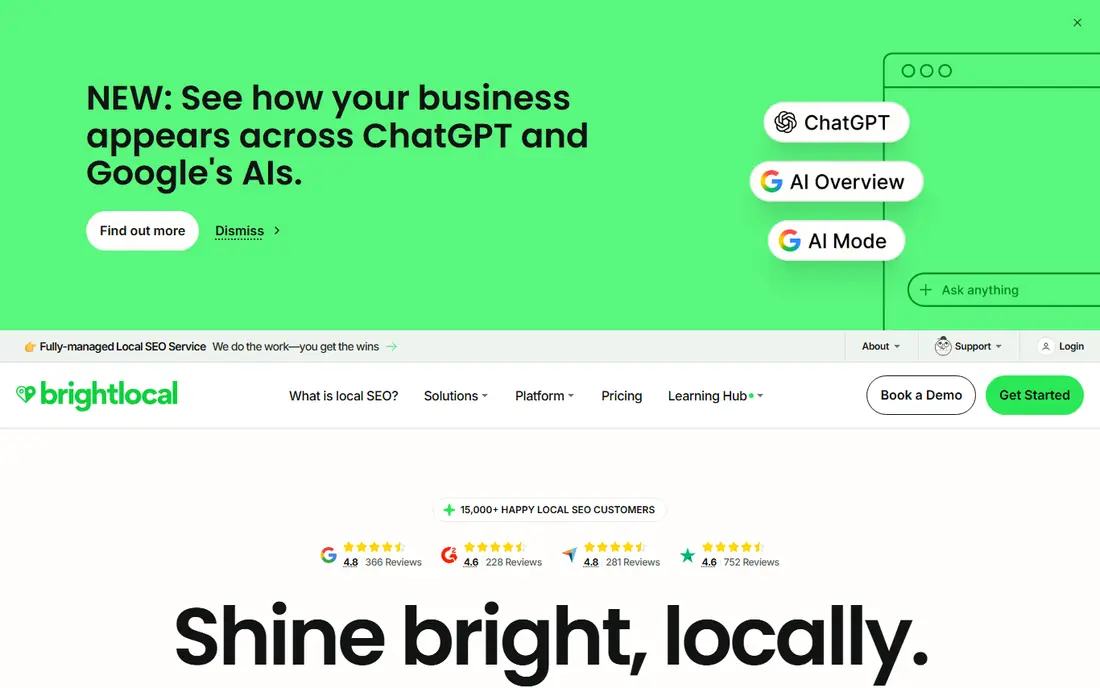
BrightLocal suits agencies and small multi-location firms that want audits, citations, rank tracking, and reviews in one place. Its citation tracker finds inconsistent listings, its builder service creates new citations, and its reports show clients what changed and what moved. A 14-day trial lets teams test the workflow before committing, and pricing starts at 39 dollars per month for one location on some plans.
The honest limit is sync speed. BrightLocal combines live sync on key platforms with citation building elsewhere, so updates may take longer to appear on smaller directories than with a direct publisher network. It fits best when reporting and audit depth matter as much as sync speed. Agencies should test client reports and citation audits on a real client before rolling it out widely.
- Citation audits, building, and tracking in one tool
- Client reporting for agencies
- Rank tracking and review tools included
- Live sync covers fewer publishers than Yext
- Citation work can need manual steps
- Costs rise with locations and services
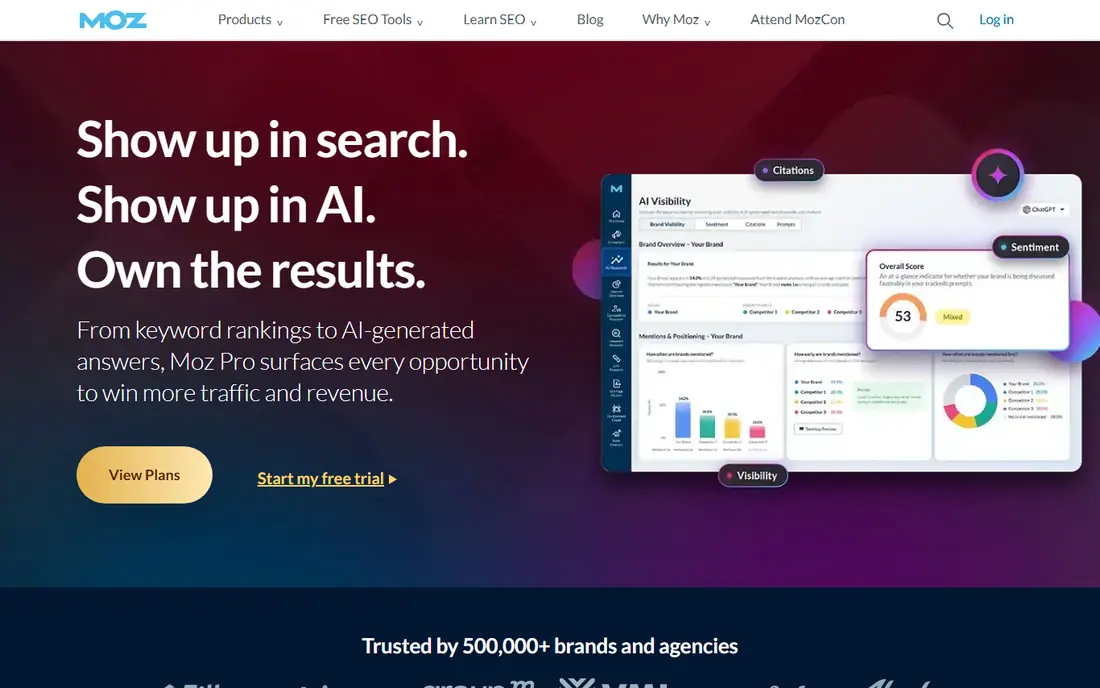
Moz Local is the simple choice for firms that want listing distribution without a long sales process. Business details are pushed to a network of directories and data aggregators, duplicates are suppressed, and reviews can be monitored on higher plans. The interface is clean, setup is fast, and a free presence check shows where a business already appears before signup.
The trade-off is breadth and extras. Moz Local focuses on listings, so firms that also want deep review generation, social posting, or landing pages may need another tool alongside it. It fits best for small firms and single-location businesses that want reliable distribution at a fair price. Check current pricing for your location count, because published figures have varied, and confirm which directories matter most to your customers are covered.
- Simple setup and clean interface
- Distribution to major aggregators and directories
- Duplicate suppression included
- Pricing varies by plan and source, so get a current quote
- Fewer advanced review and social features
- Network is smaller than Yext
Semrush Local adds listing management to the Semrush SEO platform, with profile management, directory sync, map rank tracking, and review handling. For a team already paying for Semrush keyword, audit, and competitor tools, keeping listings in the same suite saves logins and reporting work. Pricing for Local starts at 30 dollars per location per month on annual billing for some plans, with trials available through Semrush.
The catch is total cost. Firms that do not already use Semrush may find a standalone listing tool cheaper, and per-location pricing scales quickly for franchises. Semrush Local fits best for SEO-led teams that already run Semrush and want listings, rankings, and reviews reported together. Test map tracking and listing sync for your locations before adding it to a wider Semrush plan.
- Listings inside the wider Semrush SEO suite
- Map rank tracking and review tools
- Profile automation for Google and other directories
- Best value needs a Semrush subscription
- Listings are an add-on, not a standalone focus
- Per-location cost adds up fast
Birdeye is best known for reviews, but its listings tools are a real part of the platform. Business details sync to major directories, duplicates are handled, and review requests, replies, and reporting sit in the same dashboard. For firms where reviews drive calls and visits, combining listings and reviews in one tool keeps the whole local presence consistent.
The trade-off is price and focus. Birdeye pricing is quote-based, and firms that only need listing sync may pay for review and messaging features they do not use. It fits best for multi-location firms where review volume is high and listings, reviews, and messaging need one workflow. Get a written quote for your location count, and check listing sync coverage separately from review features.
- Strong review generation and management alongside listings
- Listings sync to major directories
- Messaging and customer experience tools
- Pricing is quote only
- Review focus may exceed a listings-only need
- Cost can be high for small firms
Uberall serves franchises and large location networks with listings, reviews, social posting, and local landing pages in one platform. Its directory network covers many publishers, duplicates can be suppressed, and head office can set approval rules while local teams manage day-to-day details. That governance matters when hundreds of sites must stay consistent.
The catch is scale. Uberall pricing is quote-based, and small firms will usually find BrightLocal, Moz Local, or Synup better value. It fits best for franchises, retail chains, and large service networks that need listings plus reviews and pages under one roof. Test approval workflows and a bulk update across locations in the demo, because those flows decide daily usefulness at scale.
- Listings, reviews, and local pages in one platform
- Wide directory network
- Governance and approvals for large teams
- Pricing is quote only
- Enterprise focus may exceed small firm needs
- Setup needs planning for large networks
Synup is an all-in-one local marketing tool for small firms, covering listings, reviews, social posting, and rank tracking from one dashboard. Business details sync to directories, reviews can be monitored and requested, and profiles can be managed centrally for several locations. That breadth suits a small firm that wants one tool rather than three separate subscriptions.
The honest limit is depth. Synup directory coverage and reporting are more limited than Yext or Uberall, and published pricing has varied, so confirm the current figure for your location count. It fits best for small firms and agencies that want a simple, affordable all-in-one tool. Test listing sync on Google, Apple, and Yelp, and check review workflows, before committing.
- Listings, reviews, social, and rank tracking in one tool
- Affordable for small firms
- AI-assisted profile management on newer plans
- Pricing has varied, so get a current quote
- Directory depth is smaller than Yext
- Advanced reporting is more limited
Whitespark takes a different approach: it sells local SEO tools and services by piece, rather than one all-in-one subscription. Its citation finder locates listing opportunities, its rank tracker measures local visibility, and its cleanup service fixes incorrect and duplicate citations by project. Review tools are also available separately, which suits firms that need one job done well.
The trade-off is assembly. A firm that wants listings, reviews, and rank tracking together must buy and manage several pieces, and cleanup pricing depends on the project. Whitespark fits best for local SEO professionals and firms with a specific citation problem, such as duplicates after a move or rebrand. Price the pieces you need, compare the total with BrightLocal or Moz Local, and pick the cleaner fit.
- Buy only the piece you need, from citation finder to cleanup
- Rank tracking and review tools sold separately
- Strong local SEO heritage
- Tools are sold separately, so totals vary
- Cleanup is service-based and project-priced
- Less of a single sync dashboard than Yext
How we picked these
We compared official product pages, pricing pages, and public reviews for local listing tools that exist and work today, and we kept only tools that sync, build, or clean business listings across directories. We favoured a mix of enterprise sync platforms, agency tools, all-in-one small firm tools, and a by-piece citation specialist. Where pricing varied or was quote only, we wrote See website rather than guessing. We did not claim hands-on testing, and we compared public pages, pricing, and documented features.
What to check before you buy local listing software
Start with a listing audit for every location you manage. Check Google, Apple Maps, Bing, Yelp, and Facebook for name, address, phone, hours, website, and categories, and note duplicates and errors. That audit shows which tool actually fixes your problems, because a wide network means little if it does not cover the directories your customers use most.
Next, test a live update. Change hours or a phone number in the tool, then check how fast the change appears on Google, Apple, and Yelp, and whether duplicates reappear. Also check review handling, user roles, and reporting, especially for agencies that must show clients what changed. Confirm whether updates are direct, aggregator-based, or a mix, because that decides speed.
Finally, model the total price for all locations and all modules you need, and check contract terms for adding or removing sites. A low per-location headline can still become expensive at franchise scale, while a quote-based enterprise tool can be fair value when it replaces several subscriptions. Keep Google Business Profile claimed and accurate regardless of tool, because it is free, it is the most visible listing for most firms, and no tool replaces direct control of it.
Frequently asked questions
What is the best local listing management software?
Yext is the best local listing management software for large brands, thanks to its wide direct publisher network and governance tools. BrightLocal suits agencies and small multi-location firms, while Moz Local suits firms that want simple distribution. The best choice depends on location count, directory coverage, and reporting needs.
How much does local listing management software cost?
BrightLocal starts at 39 dollars per month, and Semrush Local starts at 30 dollars per location per month on some plans, while Yext, Birdeye, and Uberall are quote-based. Always model the total for every location you manage, because per-location pricing scales fast for franchises and chains.
Do I still need Google Business Profile if I use listing software?
Yes. Google Business Profile is free, it controls your most visible listing, and it should stay claimed and accurate even when a sync tool manages it. Listing software helps keep other directories consistent and saves time, but it does not replace direct control of your Google profile, reviews, and posts.
How fast do listing updates appear?
Direct publisher updates can appear within hours, while aggregator-based updates can take days or weeks to reach smaller directories. Check how each tool syncs to Google, Apple, Bing, and Yelp, and test a real update before you judge speed. Duplicates and aggregator data can also overwrite changes if they are not suppressed.
Can listing software fix duplicate listings?
Yes, most tools in this guide offer duplicate suppression or cleanup, but methods differ. Direct tools can suppress duplicates on partner publishers, while Whitespark offers project-based cleanup for wider citation problems. After a move or rebrand, check duplicates manually as well, because no tool catches every case on its own.
Sources
See where you really rank - block by block
ProMapRanker scans Google Maps across a grid of your service area. Simple monthly plans from $19, white-label on every plan.
Start freeKeep reading
 who has best internet service
Who Has the Best Internet Service in 2026
Who has best internet service for US homes? We compare fiber, cable, fixed wireless and satellite providers on speed, price, availability and terms today.
Read → which survey tool has the best analytics
Which Survey Tool Has the Best Analytics in 2026
Find which survey tool has the best analytics in 2026, comparing Qualtrics, SurveyMonkey, Typeform, Alchemer, and more on reports, text, and stats today.
Read → which streaming service has the best movies
Which Streaming Service Has the Best Movies in 2026
Answering which streaming service has the best movies, with Netflix, Max, Criterion and more compared on libraries, prices and free options in this guide.
Read →