 ProMapRanker
Best Listing Management Software for Roofers in 2026

All-in-one local SEO for roofers · Pricing starts at: See website
Direct answer
BrightLocal is my first pick for roofers because it combines citation building and audit tools with rank tracking and review monitoring in one dashboard, which suits a business that lives on local searches. It has no free plan stated, so check its pricing page before you commit. Uberall fits roofers who want listings pushed to many directories from one place, and Moz Local suits smaller roofers who mainly want the core data sites cleaned up.
I put this comparison together from vendor documentation and public sources, not from hands-on testing. I looked at how each tool handles service-area businesses, duplicate cleanup, category control and review monitoring, because those are the parts that matter for a roofing company rather than a retail store.
Key takeaways
- Roofers need consistent name, address and phone data across directories because customers often check several sites before calling.
- Service-area businesses should list their service area rather than a fake storefront address, and the software you pick should support that.
- Duplicate and outdated listings are common after a company moves yard or changes its phone number, so audit features matter.
- Category choice on Google Business Profile and major directories affects which roofing searches you can show up for.
- No listing tool fixes a weak review profile, so pair listings work with a review request routine.
Quick comparison
| Pick | Great for | Pricing starts at | Free tier | |
|---|---|---|---|---|
| BrightLocal | All-in-one local SEO for roofers | See website | No free plan stated | Visit |
 Uberall | Multi-location and franchise roofers | See website | No free plan stated | Visit |
 Moz Local | Small roofers wanting core data fixed | See website | No free plan stated | Visit |
 Yext | Roofers who want direct publisher sync | See website | No free plan stated | Visit |
 Whitespark | Citation building done with help | See website | No free plan stated | Visit |
 Synup | Roofers managing several branches | See website | No free plan stated | Visit |
 Semrush Listing Management | Roofers already using Semrush | See website | No free plan stated | Visit |
The best listing management software for roofers compared
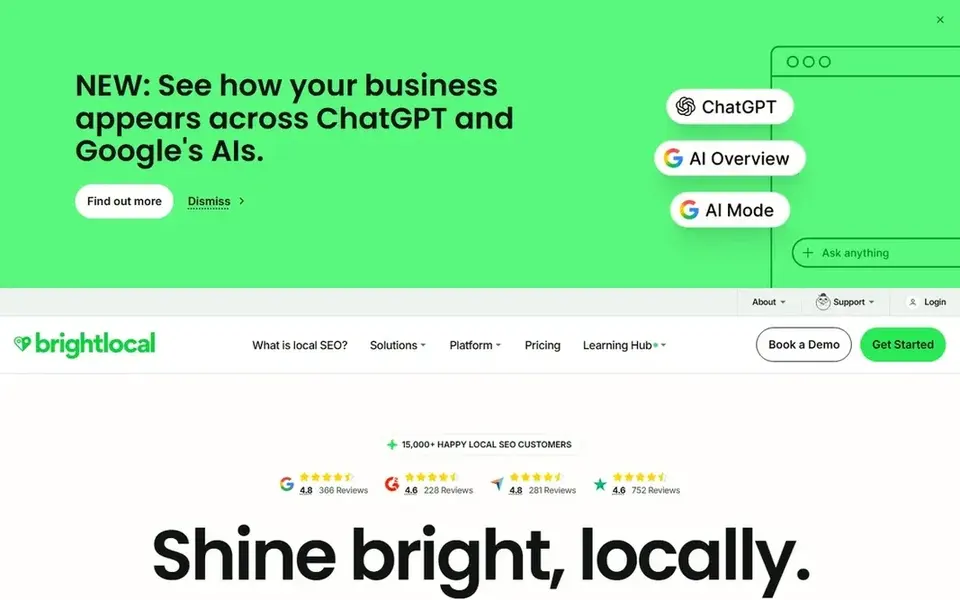
BrightLocal is a local SEO platform built around citations, rankings and reviews. For a roofer it works as a single place to check that your business details match across directories, see where you rank for searches like "roofer near me" or "roof repair [town]", and keep an eye on new reviews. It suits an owner or a small marketing helper who wants one dashboard instead of several tools.
The citation audit is the part I would use first. It scans the main data aggregators and directories, flags listings with a different phone number or an old yard address, and lets you fix them from a task list. Because roofers often work from a yard or home office while serving several towns, that cleanup step matters more than adding new directories.
Skip BrightLocal if you only want a one-time cleanup and have no interest in rankings or reviews, since you would be paying for features you never open.
- Citation audit and building in one place
- rank tracking for local search terms
- review monitoring and reputation tools
- Some citation submissions still need manual steps
- the full feature set costs more than a basic listing tool
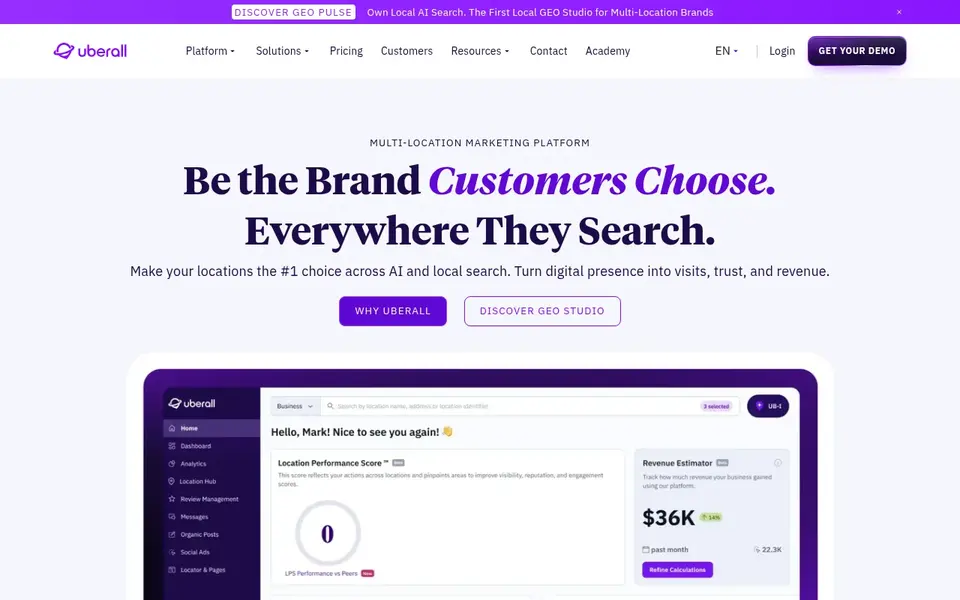
Uberall is a listings and location marketing platform used by brands with many branches. A roofing company with several offices, or a franchise network with independent crews under one brand, fits it best. Each location gets its own profile, hours and contact details, and changes push out from a central dashboard.
For roofers, the useful part is keeping branch pages consistent when one office changes its phone number or adds a new crew base. It also supports location pages on your own site, which helps when customers search for a roofer in a specific town. The trade-off is that a one-truck roofer will find it more than they need.
If you run a single location, look at a simpler tool first and come back to Uberall when you open a second office.
- Wide publisher network
- location pages and store locator tools
- review management across locations
- Setup is heavier than a single-location tool
- pricing is aimed at bigger operations
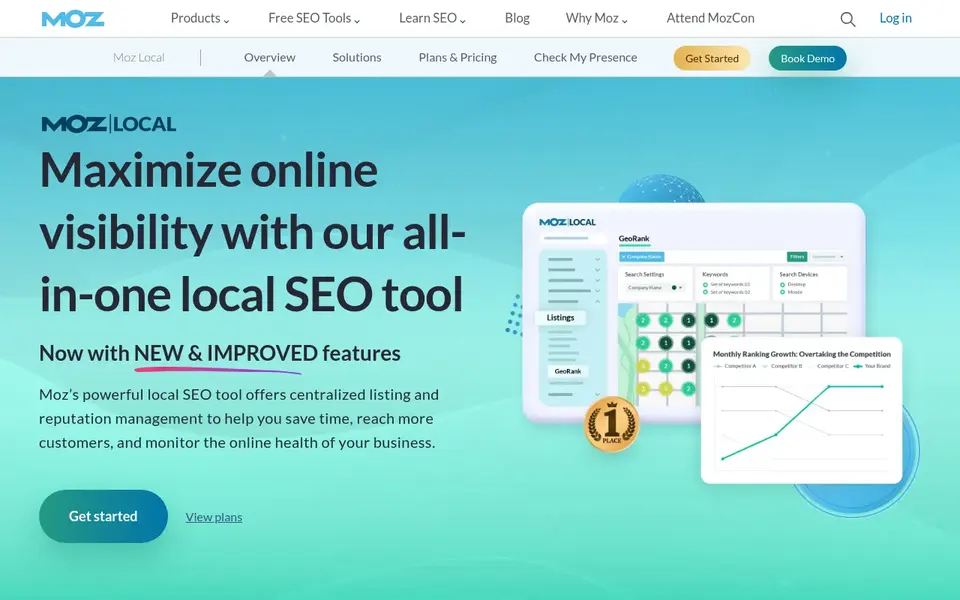
Moz Local focuses on getting your core business data right on the main aggregators and directories. For a roofer who has moved yards, changed a phone number or switched from a mobile to an office line, it is a quick way to push one correct record outward instead of editing each site by hand.
The duplicate detection is worth the price of entry for roofers who have traded under two names or kept an old listing alive after rebranding. It shows where the same business appears twice with different details, which confuses customers and search engines alike. Beyond listings, the extra features are modest.
Choose Moz Local if listings are your main problem and you do not need a full rank tracking or review suite.
- Straightforward listing sync
- duplicate detection
- ties into Moz's local tools
- Smaller directory reach than enterprise platforms
- limited extras beyond listings
Yext works on a different model from most listing tools: it holds your business facts in one place and syncs them directly to publishers that have an integration. A roofer who wants tight control over how the business name, categories and service descriptions appear across many sites will find that useful.
The model suits companies that change details often, such as adding a new service like emergency tarping or flat roof repair, because one edit flows out to connected publishers. The important thing to understand is that the sync depends on an active subscription, so budget for it as an ongoing cost rather than a one-off cleanup.
Small roofers with a single location and a stable phone number can usually get by with a cheaper tool.
- Direct connections to many publishers
- strong data control from one record
- good for brands with strict brand rules
- Subscription continues for as long as you want the sync
- can be costly for a small roofer
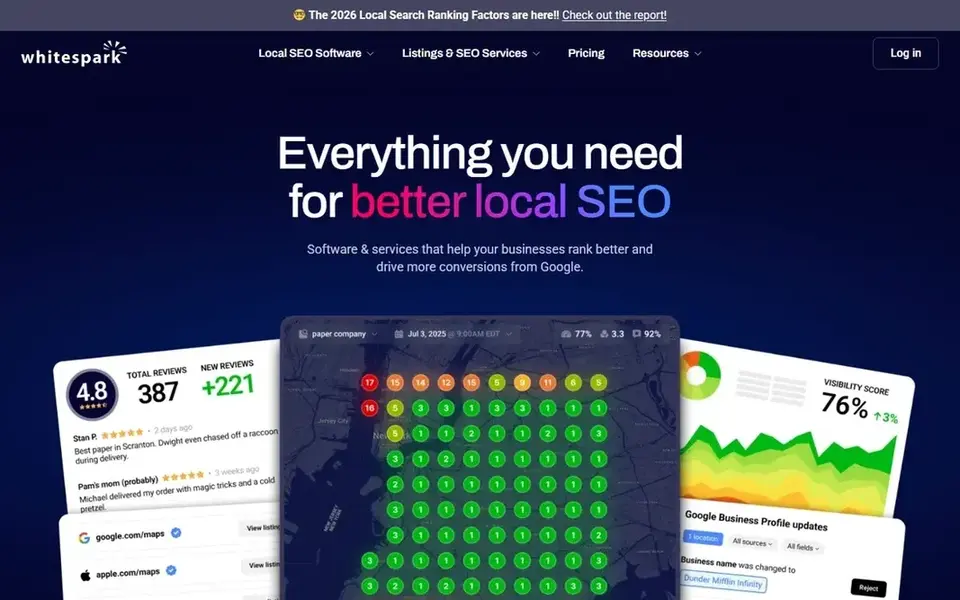
Whitespark is known for citation research and a citation building service, plus local rank tracking. For a roofer, the value is in finding the directories that actually matter for roofing searches in your area rather than submitting to a long list of sites nobody visits.
The citation building service suits owners who do not want to fill in forms themselves. You supply the business details and the team works through the list. The rank tracker then shows whether the cleanup moved you for terms like "roof replacement [town]". It is less of an all-in-one dashboard and more of a specialist.
Skip it if you want to manage everything yourself in one login, since the service side is where most of the value sits.
- Citation opportunities built from real search data
- local rank tracking
- citation building service available
- Much of the citation work is a paid service
- not a full reputation suite
Synup bundles listings, review management and local landing pages. A roofing company with a few branches across neighbouring towns can manage each location from one account, which keeps hours and phone numbers from drifting apart.
For roofers, the local pages feature is handy: you can build a page for each town you serve and keep the details in step with the listings data. The reporting gives an owner a simple view of what changed. It is a mid-weight platform, not a specialist citation service.
A one-location roofer will find it overbuilt, and the learning curve is real if you are not comfortable in marketing dashboards.
- Listings, reviews and local pages in one platform
- bulk management for multiple locations
- reporting for owners
- Interface takes some learning
- more than a single-location roofer needs

Semrush Listing Management is a module inside the wider Semrush platform. It syncs business data to major directories and aggregators and adds review monitoring. For a roofer who already uses Semrush for keyword research or competitor checks, adding listings keeps everything in one place.
The practical benefit is context: you can see local rankings, the keywords competitors target and your listing status side by side. If you are not already a Semrush user, though, paying for the whole platform just to fix citations is hard to justify, and a dedicated listing tool will be simpler.
Consider it only if Semrush is already part of how you market the business.
- Listings sit beside keyword and competitor data
- one login for SEO and local work
- review monitoring included
- Only makes sense if you already pay for Semrush
- listings are one module among many
How I chose
I started from vendor documentation and public sources for each tool, then checked how the features map to how a roofing business actually operates. That means service-area listings rather than storefront addresses, category control for roofing services, duplicate cleanup after a move or rebrand, and review monitoring because roofing customers read reviews closely before asking for a quote. I did not run hands-on tests, so treat the notes as a starting point for your own trial.
I also weighed limits honestly. Some tools are specialists, some are modules inside bigger platforms, and some are built for multi-location brands. A roofer with one yard and a stable phone number has different needs from a franchise with six branches, so I noted who should skip each tool rather than pretending every option fits everyone. Pricing changes often, which is why every entry points you to the vendor's own page.
What to check before you buy
- Confirm the tool supports service-area businesses, so you can hide a street address and list the towns you cover.
- Check how it handles duplicate listings, especially if the company has traded under more than one name.
- Look at category control: you want roofing categories on Google Business Profile and the main directories, not a generic "contractor" label.
- Ask whether citation submissions are automated or manual, since manual work takes time you may not have during storm season.
- Check that review monitoring covers the sites roofing customers actually use, and that replies can be sent from the dashboard.
- Read the cancellation terms, because some platforms stop syncing data as soon as the subscription ends.
Frequently asked questions
Do roofers need listing management software at all?
Not strictly, but it saves time. A roofer with one location can fix the main directories by hand once and check them twice a year. Software helps when you have moved, changed numbers, opened a second yard, or want ongoing monitoring without remembering to check each site yourself.
Should a roofer list a home address on directories?
Only if customers actually visit that address. Google's guidelines ask service-area businesses to hide the street address and set a service area instead. Use the same approach on directories where the option exists, and keep the address consistent wherever it is shown, such as on invoices and your website.
How long does citation cleanup take to show results?
It varies. Some directories update within days, others take weeks, and search engines need time to recrawl. Plan for a few weeks before judging results, and keep the details consistent in the meantime. New citations alone rarely move rankings much; they work best alongside a complete Google Business Profile and steady reviews.
Can listing software help with fake or duplicate listings?
Good tools flag duplicates of your own business, which you can then claim or remove. They are less reliable at catching a competitor using your name. If you spot a fake listing, report it through Google's business profile redressal form rather than relying on software to fix it.
Is it worth paying for a citation building service?
It can be, if you would otherwise never get round to it. The service handles form filling and follow-ups, which is tedious work. Check what you get for the fee, whether listings are claimed on your behalf, and whether you keep access to the accounts afterwards. Doing the top directories yourself is a reasonable alternative.
Sources
See where you really rank - block by block
ProMapRanker scans Google Maps across a grid of your service area. Simple monthly plans from $19, white-label on every plan.
Start freeBrowse all guides
← Best Listing Management Software for Pest Control in 2026Best Listing Management Software for Urgent Care Clinics (2026) →
 best listing management software for painting contractors
Best Listing Management Software for Painting Contractors in 2026
A guide to the best listing management software for painting contractors in 2026, compared from vendor documentation and public sources.
Read → best listing management software for med spas
Best Listing Management Software for Med Spas in 2026
I compare the best listing management software for med spas in 2026, based on vendor documentation, to help you keep NAP, hours and services accurate.
Read → best listing management software for home services
Best Listing Management Software for Home Services in 2026
A first-person guide to the best listing management software for home services in 2026, compared from vendor documentation and public sources.
Read → google maps proximity ranking
Google Maps Proximity Ranking: Why Distance Decides Who Customers See
Proximity is one of Google's biggest local signals. Learn how distance shapes Maps results and why geo-grid tracking reveals it.
Read → local seo for electricians
Local SEO for Electricians: More Calls From Your Service Area
An electrician's local SEO guide: service-area GBP setup, reviews, and geo-grid tracking for more calls.
Read → how to get into google 3 pack
How to Get Into the Google 3-Pack (Local Pack) in Competitive Markets
Want into the coveted Google 3-pack? Learn what separates the top 3 from everyone else and how to break in.
Read →More in Local SEO & Google Maps · All guides A to Z by date · Latest guides