 ProMapRanker
Best Listing Management Software for Pest Control in 2026

Citation building plus reviews in one place · Pricing starts at: See website
Direct answer
BrightLocal is my top pick for pest control companies because it combines citation building, listing audits and review tools in one place, which fits how a pest control business actually gets found across many towns. It has no free plan stated, so check its pricing page. Yext suits companies that want one central record pushed to many directories, and Synup fits multi-branch operators who need location-level control.
I compared these tools from vendor documentation and public sources, not from hands-on tests. I looked at how each one handles branch-level data, citation audits, review requests and directory coverage, then matched that to how pest control companies win calls across several service towns.
Key takeaways
- Pest control companies usually serve several towns, so listing accuracy matters more than for a single-location shop.
- A listing tool should let you manage branch-level names, phone numbers and service areas without duplicating records.
- Citation audits catch wrong phone numbers and old addresses that send calls to a competitor or a dead line.
- Review features matter because pest control customers often check recent reviews before booking a treatment.
- No tool fixes a bad Google Business Profile, so pair listings work with a clean, guideline-compliant profile.
Quick comparison
| Pick | Great for | Pricing starts at | Free tier | |
|---|---|---|---|---|
| BrightLocal | Citation building plus reviews in one place | See website | Not stated | Visit |
 Yext | One central record pushed to many directories | See website | Not stated | Visit |
 Synup | Multi-location pest control operators | See website | Not stated | Visit |
 Moz Local | Simple listing sync for small teams | See website | Not stated | Visit |
 Whitespark | Manual citation building with real directory research | See website | Not stated | Visit |
 Uberall | Brand-level control across many branches | See website | Not stated | Visit |
 Birdeye | Listings plus review requests in one dashboard | See website | Not stated | Visit |
The best listing management software for pest control compared
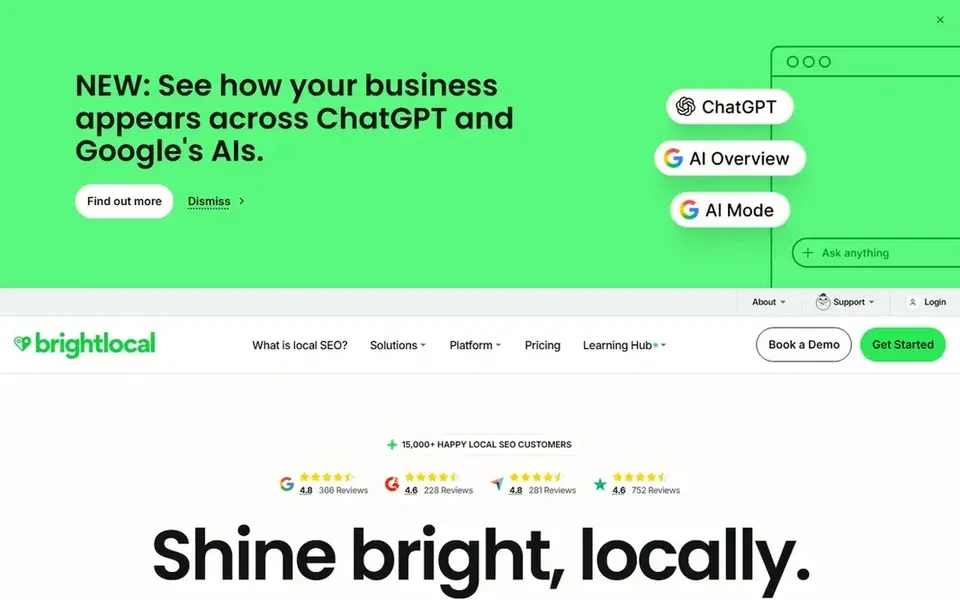
BrightLocal is a local SEO platform built around citations, reviews and local rankings. For a pest control company that covers a county or a metro, it lets you keep one record per branch and check that each directory shows the same name, phone number and address. The audit tool flags listings that disagree with your master record, which is where most wrong-number problems start.
The workflow suits pest control because customers search by town, not by brand. You can build citations for each service area, watch reviews come in after a treatment, and track whether your Google Business Profile shows up for terms like "termite inspection" plus a town name. Review requests can go out after a job, which helps because pest control buyers often read the last few reviews before calling.
The limit is that BrightLocal is not a data aggregator in the Yext sense. It submits and monitors citations but does not push a single record to every publisher network in one move. Small companies that want a simple audit and review loop will be fine; large franchises may want a heavier aggregator.
- Citation audit and building in one dashboard
- review monitoring and requests
- local rank tracking included
- Not a full aggregator push to hundreds of directories
- some features overlap with separate tools
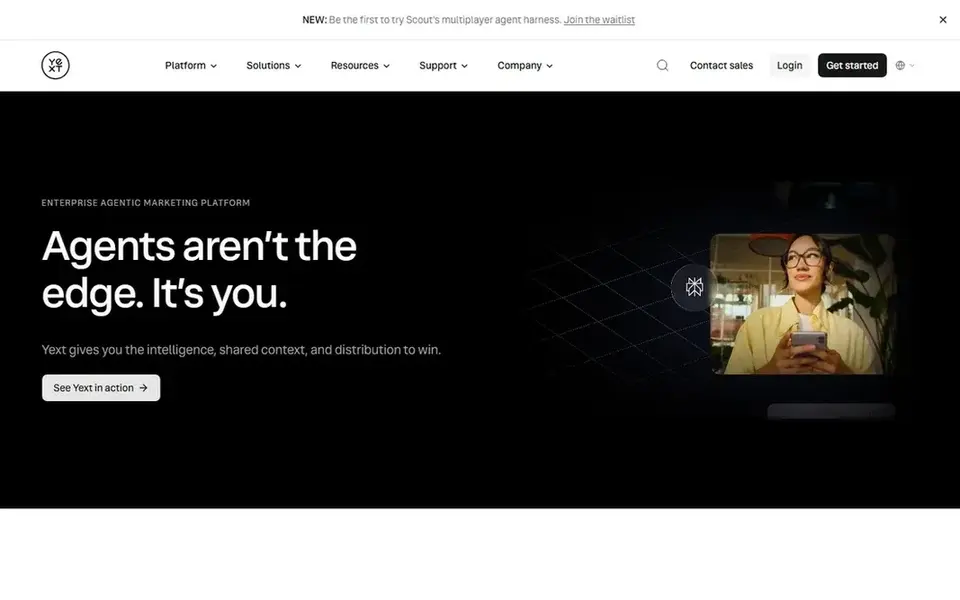
Yext works on a different model from citation builders. You store your business facts once in Yext, then it pushes those facts to the directories and apps in its network. For a pest control company with several branches, that means one update to a phone number or seasonal hours reaches every connected listing at once.
This matters when you add a new service town or change a dispatch number. Instead of editing each directory by hand, you change the record and let the sync run. Yext also feeds structured data that search engines and maps products can read, which helps when customers search for a specific pest plus a town.
The trade-off is cost and scope. Yext is a subscription tied to its network, and if you only need a dozen citations, a lighter tool may be enough. Companies that want full control over every branch record will get more from it than a one-location operator.
- Single source of truth for location data
- wide publisher network
- structured data for each branch
- Subscription tied to the publisher network
- less useful if you only need a handful of citations
Synup is built for businesses that manage many locations from one account. A pest control operator with offices in several counties can keep each branch's name, address, phone and hours separate while still applying brand-level rules. That structure fits a company that runs separate crews and phone lines per area.
The platform also handles reviews and local pages, so you can see which branch is getting attention and which one has stale listings. For pest control, that helps when one town's listing shows an old number while another is correct. You can fix the wrong branch without touching the rest.
The limit is setup time. The more branches you have, the more data you need to enter and check. A single-location company will find it heavier than needed, and a small team may prefer a simpler audit tool.
- Location-level listing control
- review management alongside listings
- reporting per branch
- Setup effort grows with branch count
- more than a small shop needs
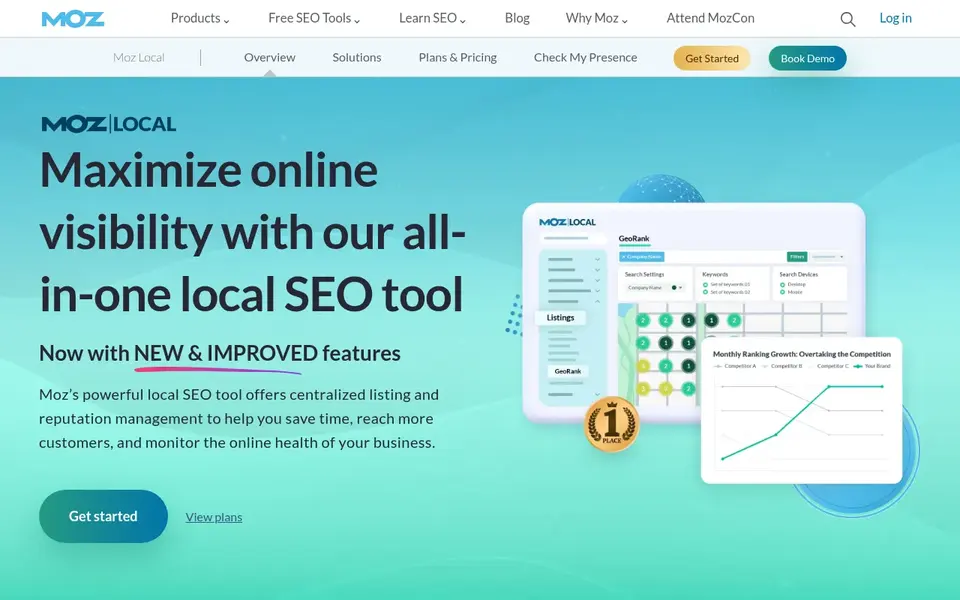
Moz Local is a listing management tool from the Moz SEO brand. It syncs your business data to major directories and data providers, then shows you where listings disagree. For a pest control company that wants a clean baseline without a long setup, it is a reasonable starting point.
The accuracy report is the useful part. You can see which directories show an old address or a disconnected phone number, then correct the source record. Because pest control leads often come from map results, a wrong number on a major directory costs real calls.
Moz Local is less flexible than citation builders that let you pick and submit individual directories by hand. If you already use Moz for other SEO work, the overlap makes it convenient. If you want deep manual citation control, look at Whitespark instead.
- Straightforward listing sync
- ties into Moz's local tools
- easy to read accuracy reports
- Fewer manual citation options than some rivals
- best value if you already use Moz
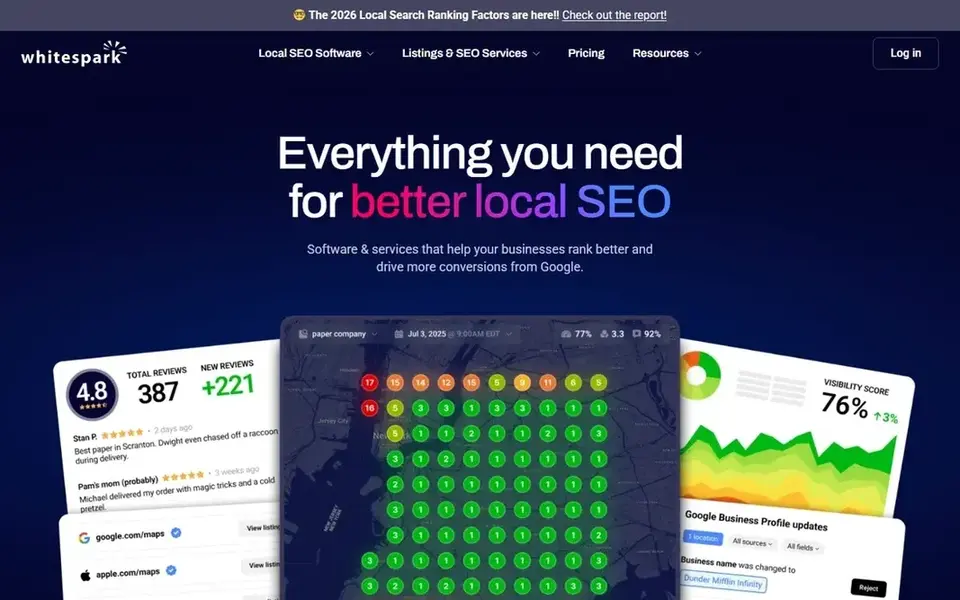
Whitespark is known for citation research and building. Its local citation finder surfaces directories that matter for a given town or industry, and its team can build citations manually. For pest control companies, that means listings on local chambers, town directories and niche sites that a generic aggregator may skip.
The manual approach fits a company that wants citations in the towns it actually serves. A pest control business in a metro with many suburbs can target directories for each suburb rather than relying on a national list. That is more work but often more relevant.
The limit is that it is hands-on. You or your agency need to manage submissions and keep records current. Companies that want a single dashboard to push data everywhere will find Whitespark slower, but the citation quality is the point.
- Human-researched citation opportunities
- local citation finder
- citation tracking
- More hands-on than a set-and-forget tool
- requires someone to do the submissions
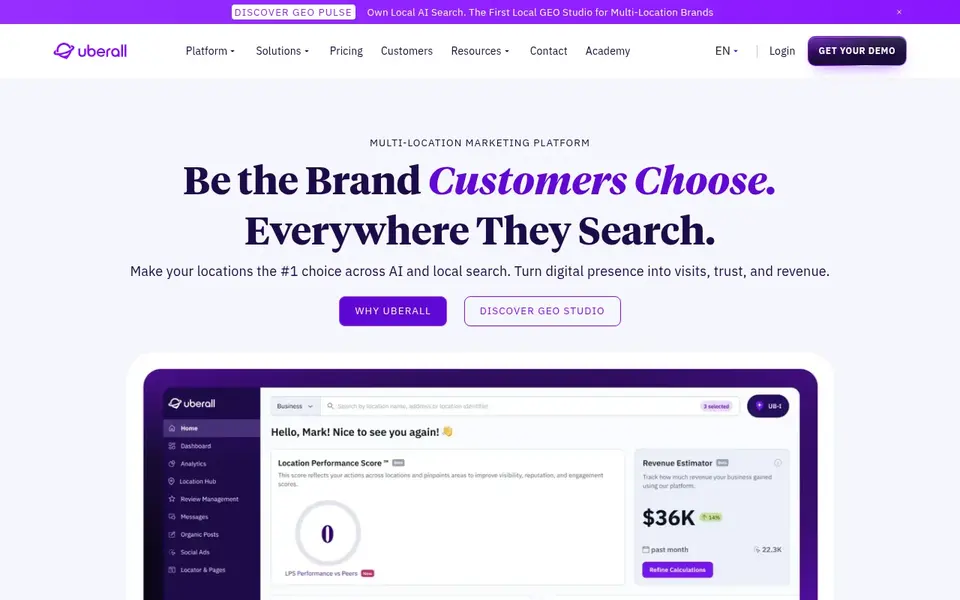
Uberall is a location marketing platform for brands with many branches. It centralizes listing data, reviews and customer messages so a head office can keep every branch consistent. A pest control franchise or a company with several regional offices fits that model well.
For pest control, the value is consistency across towns. Head office sets the brand rules, each branch keeps its own phone and hours, and the platform pushes the right data to directories and maps. Reviews can be routed to the right branch so a bad experience in one town does not get answered by another office.
The limit is scale. Uberall is built for larger operations, and a one-truck company will pay for features it does not use. It also takes time to configure branch rules properly.
- Central brand control for many locations
- listings plus review and messaging tools
- fits franchise structures
- Aimed at larger operations
- more platform than a small shop needs
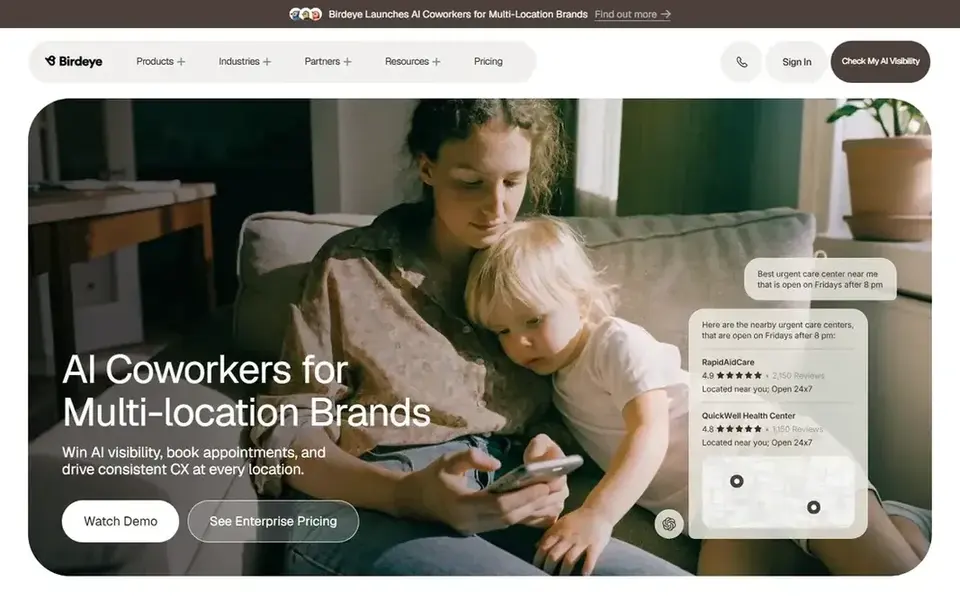
Birdeye combines listings, reviews and customer messaging. For a pest control company, the useful part is the review loop: after a treatment, you can request a review and route it to the right branch listing. That keeps recent reviews flowing, which matters because pest control buyers check recency.
The listing side syncs business data to directories and maps, so the review you earn sits on a listing that shows the correct phone and address. If a customer leaves a review on an old listing, the platform can help you spot it.
The limit is that Birdeye is a broader platform, and you may pay for messaging and other features you do not need if listings are your only goal. A company that mainly wants citation audits should look at BrightLocal first.
- Review requests tied to listings
- listing sync in the same platform
- inbox for customer messages
- Listings are one part of a wider platform
- pricing reflects the full suite
How I chose
I started from vendor documentation and public sources for each tool, then mapped features to how pest control companies actually operate: multiple service towns, branch-level phone numbers, seasonal hours and a steady flow of reviews after treatments. I did not run hands-on tests, so I relied on what each vendor publishes about directory coverage, citation audits and review workflows.
I also weighed limits. A tool that pushes data to hundreds of directories is not automatically better than one that lets you build citations by hand in the towns you serve. I favored tools that keep branch records clean and make wrong phone numbers easy to find, because that is the failure that costs pest control companies the most calls. Where a tool is built for larger operations, I said so.
What to check before you buy
- Confirm the tool supports branch-level records, not just one business profile, if you serve several towns.
- Check whether it audits existing citations for wrong phone numbers and old addresses before you pay.
- Ask how it handles seasonal hours and service-area changes, since pest control demand shifts by season.
- Confirm the review features follow Google's guidelines and do not gate or filter reviews.
- Check directory coverage against the towns you actually serve, not just national lists.
- Ask whether the tool pushes data automatically or requires manual submissions, and who does the work.
Frequently asked questions
Do pest control companies need listing management software?
Yes, if you serve more than one town. Pest control customers search by location, so a wrong phone number or old address on a directory sends calls elsewhere. Listing software keeps branch records consistent and flags errors across directories, which is hard to do by hand once you have several service areas.
What is the difference between a citation builder and an aggregator like Yext?
A citation builder like BrightLocal or Whitespark helps you find, submit and monitor listings, often with manual control. An aggregator like Yext stores your data once and pushes it to a network of publishers. Aggregators are faster for many branches; citation builders give more control over which directories you target.
Can listing software help with reviews?
Some can. BrightLocal, Synup, Uberall and Birdeye include review monitoring and request tools. They help you ask customers for reviews after a job and see what comes in. Make sure any review request follows Google's guidelines and never filters or gates customers based on how happy they are.
How many locations can these tools handle?
It varies. Moz Local and BrightLocal suit small teams and single locations, while Synup, Uberall and Yext are built for multi-branch operations. Check the vendor's documentation for location limits on each plan before you commit, since pricing and limits change.
Is listing software enough to rank in Google Maps?
No. Listings keep your business data accurate, which supports map rankings, but Google Business Profile quality, reviews, proximity and your website all matter. Use listing software as one part of a local SEO plan, and keep your profile complete and compliant with Google's guidelines.
Sources
See where you really rank - block by block
ProMapRanker scans Google Maps across a grid of your service area. Simple monthly plans from $19, white-label on every plan.
Start freeBrowse all guides
← Best Listing Management Software for Painting Contractors in 2026Best Listing Management Software for Roofers in 2026 →
 best listing management software for med spas
Best Listing Management Software for Med Spas in 2026
I compare the best listing management software for med spas in 2026, based on vendor documentation, to help you keep NAP, hours and services accurate.
Read → best listing management software for home services
Best Listing Management Software for Home Services in 2026
A first-person guide to the best listing management software for home services in 2026, compared from vendor documentation and public sources.
Read → best listing management software for daycares
Best Listing Management Software for Daycares in 2026
A practical guide to the best listing management software for daycares in 2026, covering accuracy, reviews and parent-facing search visibility.
Read → google local rank tracker
Google Local Rank Tracker: Track Maps and Organic Local Together
Track both Google Maps and organic local rankings in one place with a geo-grid Google local rank tracker.
Read → bright local seo
Bright Local SEO: A Complete Guide
Everything you need to know about bright local seo: what it is, why it matters for local SEO, and exactly how to act on it.
Read → best local seo experts
Best Local SEO Experts: A Complete Guide
Everything you need to know about best local seo experts: what it is, why it matters for local SEO, and exactly how to act on it.
Read →More in Local SEO & Google Maps · All guides A to Z by date · Latest guides