 ProMapRanker
Best Listing Management Software for Orchards in 2026

Listing cleanup and data consistency · Pricing starts at: See website
Direct answer
Advice Local is my top pick for orchards because it handles the messy parts of listing cleanup and keeps your name, address, phone, hours and categories consistent across the directories that feed maps and search. Pricing is quote-based, so check its pricing page. If reviews and pickup-season reputation matter more, look at GatherUp; if you want simple Google Business Profile posting and photo updates, look at Localo.
I compared these tools from vendor documentation and public sources, not from hands-on testing. I looked at what each one actually does with business hours, location data, reviews and Google Business Profile updates, then matched that to how an orchard operates: a fixed address, a short selling season, and customers who check hours on a phone before driving out.
Key takeaways
- Orchards live and die on accurate hours and location data, because a family driving an hour to a closed gate does not come back.
- Seasonal hour changes, u-pick dates and harvest events are the hardest listing details to keep in sync, so pick software that pushes updates everywhere at once.
- A listing tool is not a substitute for a good Google Business Profile: photos, categories and posts still need regular attention.
- Review requests sent after a visit are fine; offering rewards for reviews or filtering out unhappy customers is not.
- Check how each vendor handles multiple locations before you buy, because many orchards run a farm stand, a second picking field and a market stall.
Quick comparison
| Pick | Great for | Pricing starts at | Free tier | |
|---|---|---|---|---|
| Advice Local | Listing cleanup and data consistency | See website | Not stated | Visit |
 GatherUp | Review requests after a visit | See website | Free trial | Visit |
 Localo | Google Business Profile posting and photos | See website | Free trial | Visit |
 Synup | Multi-location listing management | See website | Not stated | Visit |
 Rio SEO | Larger orchard groups and chains | See website | Not stated | Visit |
 SE Ranking | Local rank tracking | See website | Free trial | Visit |
 Signpost | Simple review and customer messaging | See website | Not stated | Visit |
The best listing management software for orchards compared
Advice Local is a listing management platform built around getting your business data correct and keeping it that way across directories, data aggregators and maps. For an orchard, that means one place to fix the address of the farm stand, the phone number that actually gets answered in October, and the categories that describe a pick-your-own farm rather than a grocery store.
The workflow that matters most here is the audit. You feed in your current listings, the tool shows where your hours or address are wrong or duplicated, and you push corrections out. That is useful when an old listing still shows last season's closing time or a phone number that rings an empty office in winter.
The limit is scale and budget. If you run one small farm stand and just want to post photos, this is more platform than you need, and the quote-based pricing means you have to talk to sales before you know the cost.
- Strong directory data distribution
- handles multiple locations
- supports listing audits and corrections
- Quote-based pricing
- no self-serve free plan stated
GatherUp is a customer feedback and review management tool. You collect customer contact details at the till or through a booking form, and it sends a request asking for honest feedback. For an orchard, the natural moment is right after a family leaves the u-pick field or buys a bushel at the stand.
The part I like for this audience is that it asks everyone, not just the happy customers. Google's guidelines prohibit review gating, and an orchard that only invites four-star customers to review is asking for trouble. GatherUp's setup supports asking all customers and routing private complaints to you directly.
Skip it if your main problem is wrong hours scattered across directories. That is a listing problem, and GatherUp is a review tool first.
- Automated review request campaigns
- review monitoring in one inbox
- supports multiple staff and locations
- Listing sync is not the main strength
- review-focused pricing
Localo focuses on the Google Business Profile itself: posts, photos, review replies and local rank checks. For an orchard, that fits the rhythm of the season. You post "u-pick apples open Saturday" in September, add fresh field photos weekly, and reply to reviews about the pumpkin patch in October.
The posting side is where it earns its place. Google rewards profiles that stay active, and a tool that queues a week of updates saves you from doing it on a busy Saturday morning.
The trade-off is breadth. If your address is wrong on Apple Maps or a data aggregator, Localo is not the tool that fixes it.
- Simple GBP posting workflow
- photo and update scheduling
- rank tracking included
- Narrower directory coverage
- smaller vendor
Synup is a listings and local marketing platform aimed at businesses with several locations. An orchard group with a main farm, a second picking site and a weekend farmers' market stall is the kind of setup where a single dashboard earns its keep.
You can keep hours and seasonal notes separate per location, which matters when the main stand opens in August but the second field opens in September. Review monitoring and basic insights sit alongside the listing data.
For a single farm stand, it is more system than you need, and the setup effort is real.
- Manages many locations from one dashboard
- listing sync across directories
- review and insights features
- Priced and built for larger operations
- setup takes time

Rio SEO is an enterprise local marketing platform. It handles listing management, local pages and location data for brands with many sites. A large orchard business with several farms, retail partners and seasonal pop-ups could use it to keep every location consistent.
The strength is control at scale: one source of truth for addresses, hours and categories, pushed to the places that matter. The weakness for this audience is the same as its strength. It is built for organizations with marketing teams and budgets, not a family farm with one stand.
If you are a single-site orchard, skip it.
- Enterprise-grade local listing management
- strong data distribution
- built for multi-location brands
- Enterprise pricing and process
- overkill for small farms
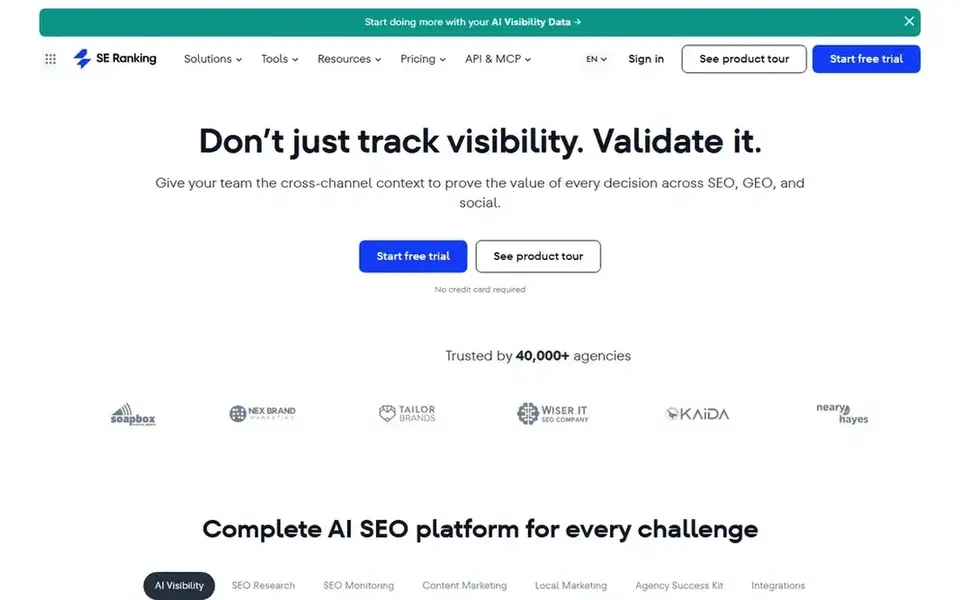
SE Ranking is an SEO platform with local rank tracking. For an orchard, the useful question is simple: when someone in the next town searches "apple picking near me," where do you show up? Local rank tracking answers that and shows whether your Google Business Profile changes moved the needle.
It does not correct your hours on directories. It tells you whether the work you did elsewhere is paying off, which is a different job.
Use it alongside a listing tool, not instead of one, and be ready to read the data rather than expect a single number to tell the whole story.
- Local rank tracking by grid or location
- competitor tracking
- keyword research included
- Does not fix listings
- rank data needs interpretation
Signpost handles review requests and customer communication in a straightforward way. For an orchard, that means sending a thank-you and review invite after a school group visit or a weekend of u-pick, without building a marketing system around it.
It is a reasonable fit for a small team that wants reviews handled and does not want to learn a full local SEO platform.
The limitation is listing data. If your hours are wrong across the web, Signpost is not the fix.
- Automated review requests
- customer messaging
- simple setup for small teams
- Limited directory data control
- fewer listing features
How I chose
I started from vendor documentation and public sources: what each platform says it does, which directories and data sources it covers, and how it handles multiple locations and hours. Then I filtered by fit for an orchard's real pattern, which is a fixed physical address, a short and intense selling season, and customers who check a phone before they drive.
I did not run hands-on tests, and I am not claiming client results. Where a tool's pricing is quote-based or unclear, I say so rather than guess. I also left out tools that are built mainly for restaurants, salons or service businesses with no listing angle, and I avoided anything that encourages review gating or buying reviews.
The final list is a mix of listing platforms, review tools and rank trackers because orchards usually need two of those jobs done, not one. Pick the listing tool first, then add reviews or rank tracking if the budget allows.
What to check before you buy
- Confirm the tool can update seasonal hours and holiday closures across Google, Apple Maps and the main data aggregators, not just one directory.
- Ask how it handles multiple locations if you run a farm stand, a second picking field and a market stall.
- Check whether review requests go to all customers, because review gating breaks Google's guidelines.
- Look at how photos and Google posts are handled, since fresh field and crop photos matter for an orchard.
- Ask what happens to your listing data if you cancel, and whether you can export it.
- Confirm the contract length and whether pricing is per location, because a short season makes annual commitments harder to justify.
Frequently asked questions
Do I need listing management software if I only have one farm stand?
Not always. If your Google Business Profile is accurate and you rarely change hours, manual updates may be enough. Software earns its place when your hours shift with the season, when old listings still show wrong details, or when you run more than one location and need one source of truth.
How do I handle u-pick season hours in my listings?
Set special hours for the picking season and update them before the season starts, not after opening weekend. Use a tool that pushes the change to Google and the main directories at once, and add a short note in your profile description about weather-dependent closures so customers know to check before driving out.
Can I ask customers for reviews at the farm?
Yes, as long as you ask everyone and do not offer incentives or filter out unhappy customers. A simple request at the till or a follow-up message after a visit is fine. Google's guidelines prohibit review gating and paid or incentivised reviews, so keep the ask neutral and let customers write what they think.
Does listing software help me rank in Google Maps?
It helps indirectly. Accurate name, address, category and hours data supports the signals Google uses for local results, and consistent listings reduce confusion. Ranking also depends on reviews, proximity and your website, so treat listing software as one part of the work rather than a ranking switch.
What is the difference between a listing tool and a review tool?
A listing tool manages your business data across directories and maps. A review tool collects and monitors customer feedback. Orchards often need both, because a family that finds correct hours still decides where to go based on what other visitors said about the picking and the farm stand.
Sources
See where you really rank - block by block
ProMapRanker scans Google Maps across a grid of your service area. Simple monthly plans from $19, white-label on every plan.
Start freeBrowse all guides
← Best Listing Management Software for Kitchen Cabinet Stores (2026)Best Local Rank Tracking Tools for Christmas Tree Farms in 2026 →
 best listing management software for cpr training centers
Best Listing Management Software for CPR Training Centers in 2026
A practical guide to the best listing management software for CPR training centers in 2026, covering Google Business Profile, citations and reviews.
Read → best listing management software for candy stores
Best Listing Management Software for Candy Stores in 2026
A practical guide to the best listing management software for candy stores in 2026, covering Advice Local, Synup, SE Ranking and other real tools.
Read → best listing management software for board game cafes
Best Listing Management Software for Board Game Cafes in 2026
A practical guide to listing management software for board game cafes, covering Google Business Profile, citations, reviews and local rank tracking.
Read → google maps visibility score
Google Maps Visibility Score: What It Is and How to Raise It
Understand your Google Maps visibility score, how it is measured across a grid, and how to improve it.
Read → brightlocal alternative
BrightLocal Alternative: A Geo-Grid-First Comparison
A BrightLocal alternative compared on geo-grid accuracy, reporting, and price for agencies.
Read → what is the google map pack
What Is the Google Map Pack? How the Local 3-Pack Really Works
What the Google Map Pack is, why only 3 businesses show, and how Google picks them.
Read →More in Local SEO & Google Maps · All guides A to Z by date · Latest guides