 ProMapRanker
Best Listing Management Software for Candy Stores in 2026

Single shops and small candy chains · Pricing starts at: See website
Direct answer
Advice Local is my top pick for candy stores because it handles directory listings, data accuracy and local presence from one dashboard that suits a single shop or a small chain. It has no free plan stated, so check its pricing page. Synup is a solid alternative for multi-location candy shops, and SE Ranking fits owners who mainly want to track local map rankings alongside listings.
I compared these tools using vendor documentation and public sources rather than hands-on tests. Candy stores have a specific pattern: foot traffic driven by "candy store near me" searches, seasonal spikes around holidays, and customers who check hours and reviews before making the trip. I judged each tool on how well it keeps those details accurate and how much work it adds to a small shop's week.
Key takeaways
- Candy stores live on "near me" searches, so consistent name, address and phone data across directories matters more than most owners expect.
- Listing management software keeps your store hours, holiday closures and seasonal specials accurate everywhere at once.
- A candy shop with one location can start with a focused tool, while a multi-location chain needs bulk editing and location-level reporting.
- Review monitoring belongs in the same workflow, because shoppers check candy store reviews before they visit.
- Always confirm pricing and plan limits on the vendor's own site before you commit.
Quick comparison
| Pick | Great for | Pricing starts at | Free tier | |
|---|---|---|---|---|
| Advice Local | Single shops and small candy chains | See website | Not stated | Visit |
 Synup | Multi-location candy stores | See website | Not stated | Visit |
 SE Ranking | Local rank tracking with listings | See website | Free trial | Visit |
 GatherUp | Collecting candy store reviews | See website | Free trial | Visit |
 Localo | Google Business Profile management | See website | Free trial | Visit |
 Signpost | Review requests and customer messages | See website | Not stated | Visit |
 CallTrackingMetrics | Tracking phone orders and enquiries | See website | Free trial | Visit |
The best listing management software for candy stores compared
Advice Local is a listing management platform aimed at local businesses, and it fits a candy store that wants one place to control how the shop appears across directories, maps and data aggregators. For an owner who would rather weigh fudge than chase duplicate listings, the appeal is a single dashboard instead of a spreadsheet of logins.
For a candy store, the practical work is keeping hours right during holiday weeks, updating seasonal descriptions, and making sure the phone number matches everywhere so a customer calling about a gift box reaches the counter. Advice Local handles that core listing work and adds presence and review features that suit a shop whose reputation travels by word of mouth. A small chain can manage each location without rebuilding the process every time.
The limit is that it is a paid platform with no free plan stated, so a very small shop should compare the cost against how much directory work it actually needs. Skip it if you only want to manage a single Google Business Profile and nothing else.
- Broad directory coverage
- dashboard built around local listings
- supports review and presence management
- No free plan stated
- pricing needs a direct check
Synup is a local marketing platform built around listings, reviews and location data. It makes most sense for a candy business with several shops, such as a main store plus mall kiosks or a seasonal pop-up, where each location needs its own accurate profile and someone has to keep them straight.
The workflow that helps a candy chain is bulk editing: change holiday hours once and push it to every location, then check that each store's listing reflects the right address and phone. Synup also brings review monitoring into the same view, which matters when a customer leaves a note about a sold-out favourite or a long weekend queue. Reporting per location helps an owner see which shop is being found.
For a single candy store, Synup is more platform than the job requires, and the setup asks for real input before it pays off. Skip it if you have one location and no plans to add another.
- Strong multi-location management
- listing and review tools in one place
- reporting for each store
- More than a single shop needs
- setup requires input
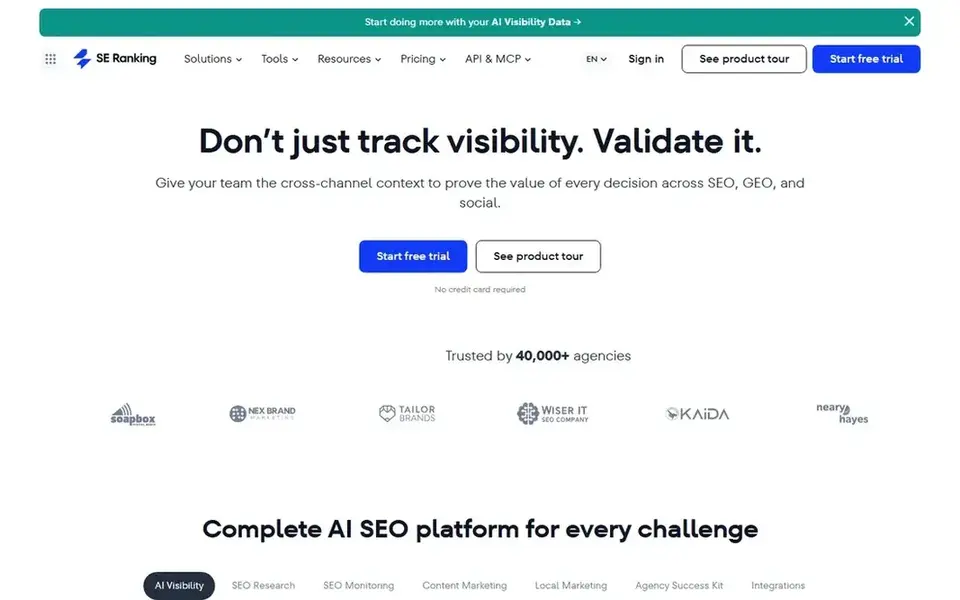
SE Ranking is an SEO platform with local features, including rank tracking for map results and listing management. It suits a candy store owner who wants to know whether the shop shows up when someone searches for candy nearby, not just whether the address is consistent.
The useful part for a candy shop is seeing movement around terms like "candy store near me" or "chocolate shop" in the local area, then connecting that to listing accuracy and Google Business Profile details. If a listing change coincides with a drop in map visibility, you have a way to notice. The platform also covers the wider site, which helps if you sell gift boxes online.
The caution is that listing management depth varies by plan, and the suite is larger than a shop that only wants directory cleanup. Skip it if rank tracking is not something you will actually check.
- Local rank tracking
- listing management features
- clear reporting
- Listing coverage depends on plan
- broader SEO suite than some shops need
GatherUp is a customer feedback and review management tool. It fits a candy store because reviews are how small shops get discovered: a parent checking a birthday treat, a visitor looking for a local sweet shop, or a gift buyer comparing options all read reviews first.
The workflow is straightforward. After a sale, the shop sends a review request by email or text, and responses land in one dashboard where the owner can reply. That is the part that matters for a candy store, since a reply to a comment about a specific truffle or a holiday queue shows the shop is paying attention. Gathering feedback privately also catches problems before they become public complaints.
GatherUp does not replace a listing manager, so a shop still needs its directory data handled elsewhere. Skip it if you already have a review process you are happy with and only need listings.
- Review request automation
- review monitoring
- simple customer feedback flow
- Not a full listing manager
- needs a review process behind it
Localo is a local SEO tool centred on Google Business Profile management, with local rank checks and profile guidance. It suits a candy store owner who wants to improve the Google listing first, since that is where most "near me" searches land.
For a candy shop, the day-to-day work is posting seasonal updates, keeping hours and photos current, and watching how the profile performs for local searches. Localo keeps that in one place and gives a clear view of what to fix. It is a reasonable starting point for an owner new to local search who does not want a large platform.
The limit is directory coverage: Localo is not a broad listings aggregator, so data consistency across many sites still needs another tool. Skip it if your main problem is duplicate listings across dozens of directories.
- Google Business Profile focus
- local ranking checks
- simple interface
- Smaller directory network
- not a full listings aggregator
Signpost is a local marketing tool that handles review requests and customer communication for small businesses. It fits a candy store that wants to build reviews and stay in touch with customers without adding another job to the counter staff's day.
The workflow is built around the customer list a shop already has: after a purchase, the tool sends a request for feedback or a review, and the owner sees responses in one place. For a candy store with repeat customers and gift buyers, that steady flow of reviews supports the local searches that bring in new visitors. Messages about seasonal offers can run through the same system.
Signpost is not a listing management platform, so it does not fix directory data. Pricing is quote-based, which means a conversation before you know the cost. Skip it if reviews are already handled and listings are the gap.
- Automated review requests
- customer communication tools
- suited to local retail
- Pricing is quote-based
- not a listings platform
CallTrackingMetrics is a call tracking and conversation analytics platform. It fits a candy store that takes phone orders, handles gift box enquiries, or wants to know which local listings and ads actually produce calls.
The useful workflow is assigning different tracking numbers to different sources, so a call from a directory listing can be told apart from a call from the website. For a shop fielding questions about custom hampers or holiday stock, that shows where the phone traffic comes from and which listings are worth maintaining. Call recordings and transcripts help the owner see what customers ask about most.
The tool does not manage listings, so it complements a listing platform rather than replacing one. Skip it if your shop gets few calls and most orders walk through the door.
- Call tracking and attribution
- conversation analytics
- works with local campaigns
- Not a listing manager
- overkill for a shop with few calls
How I chose
I built this list from vendor documentation and public sources, not from hands-on testing. I started with the job a candy store actually needs done: accurate listings across directories, correct hours through holiday weeks, and a way to see and respond to reviews. From there I checked each vendor's own site for what the product covers, which locations and directories it supports, and where the documented limits sit.
I also weighed fit against the size of the business. A single shop with one counter does not need a multi-location platform, and a small chain does not want to manage each store by hand. Where a tool only covers part of the job, such as reviews or call tracking, I said so rather than stretching it into a listing manager. I did not rank on price, because pricing changes and should be checked directly with each vendor.
What to check before you buy
- Confirm the tool covers the directories that matter for your area, not just the largest national sites.
- Check whether holiday and seasonal hours can be updated in bulk, since candy stores change hours often.
- Ask how duplicate listings are found and merged, because old addresses follow shops that move.
- Confirm review monitoring and reply features are included if reviews are part of your plan.
- Check how many locations the plan supports before you add a kiosk or pop-up.
- Read the vendor's own pricing page and terms, since plans and limits change.
Frequently asked questions
What does listing management software do for a candy store?
It keeps your shop's name, address, phone number, hours and description consistent across directories, maps and data aggregators. For a candy store, that means a customer searching nearby sees the right address and the right opening hours, including holiday changes, instead of an old listing that sends them to a closed door.
Do I need listing software if I only have one candy shop?
Not always. A single shop can manage its Google Business Profile by hand and still do well. Listing software earns its place when you want consistency across many directories, plan to add locations, or find that old addresses and phone numbers keep appearing in search results and costing you customers.
How does listing management help with holiday hours?
Most platforms let you update hours once and push the change across connected listings. For a candy store that opens late during festival weeks or closes early on Christmas Eve, that saves a manual edit on every directory and reduces the chance a customer arrives to a locked door.
Can listing software help me get more reviews?
Some platforms include review requests and monitoring alongside listings. Tools like GatherUp and Signpost focus on reviews specifically. The important part is asking every customer in a normal, non-incentivised way and replying to what they say, which follows Google's guidelines.
Is it worth paying for a multi-location plan?
Only if you have more than one shop or plan to add one soon. A multi-location plan gives bulk editing and per-store reporting, which saves time for a chain. For a single counter, a focused tool or manual management is usually enough, so check the pricing page before committing.
Sources
See where you really rank - block by block
ProMapRanker scans Google Maps across a grid of your service area. Simple monthly plans from $19, white-label on every plan.
Start freeBrowse all guides
← Best Listing Management Software for Board Game Cafes in 2026Best Listing Management Software for CPR Training Centers in 2026 →
 best listing management software for barre studios
Best Listing Management Software for Barre Studios in 2026
A practical guide to the best listing management software for barre studios in 2026, comparing tools for Google Business Profile, citations and reviews.
Read → best google business profile management software for boxing gyms
Best Google Business Profile Software for Boxing Gyms in 2026
A guide to the best Google Business Profile management software for boxing gyms in 2026, covering listings, reviews, rank tracking and call tracking.
Read → best call tracking software for thrift stores
Best Call Tracking Software for Thrift Stores in 2026
A practical guide to the best call tracking software for thrift stores in 2026, covering call attribution, donation pickup calls and store hours.
Read → geo grid scan local seo
Geo-Grid Scan for Local SEO: How a Single Scan Reveals Everything
What a geo-grid scan is, what data it returns, and how one scan exposes your real local visibility.
Read → google maps visibility score
Google Maps Visibility Score: What It Is and How to Raise It
Understand your Google Maps visibility score, how it is measured across a grid, and how to improve it.
Read → brightlocal alternative
BrightLocal Alternative: A Geo-Grid-First Comparison
A BrightLocal alternative compared on geo-grid accuracy, reporting, and price for agencies.
Read →More in Local SEO & Google Maps · All guides A to Z by date · Latest guides